Lost Cairns in the Lakes
23.10.2025
It was the last day of my Cumbrian stone hunting quest. There would be another trip at some point to visit the sites on the eastern side of the Lakes but for now I was about to walk to the Giant’s Grave just outside the village of Kirkstanton on the south west coast road. I had found a small verge near a level crossing there and could see the tops of the two standing stones over the hedgerow a couple of fields away.
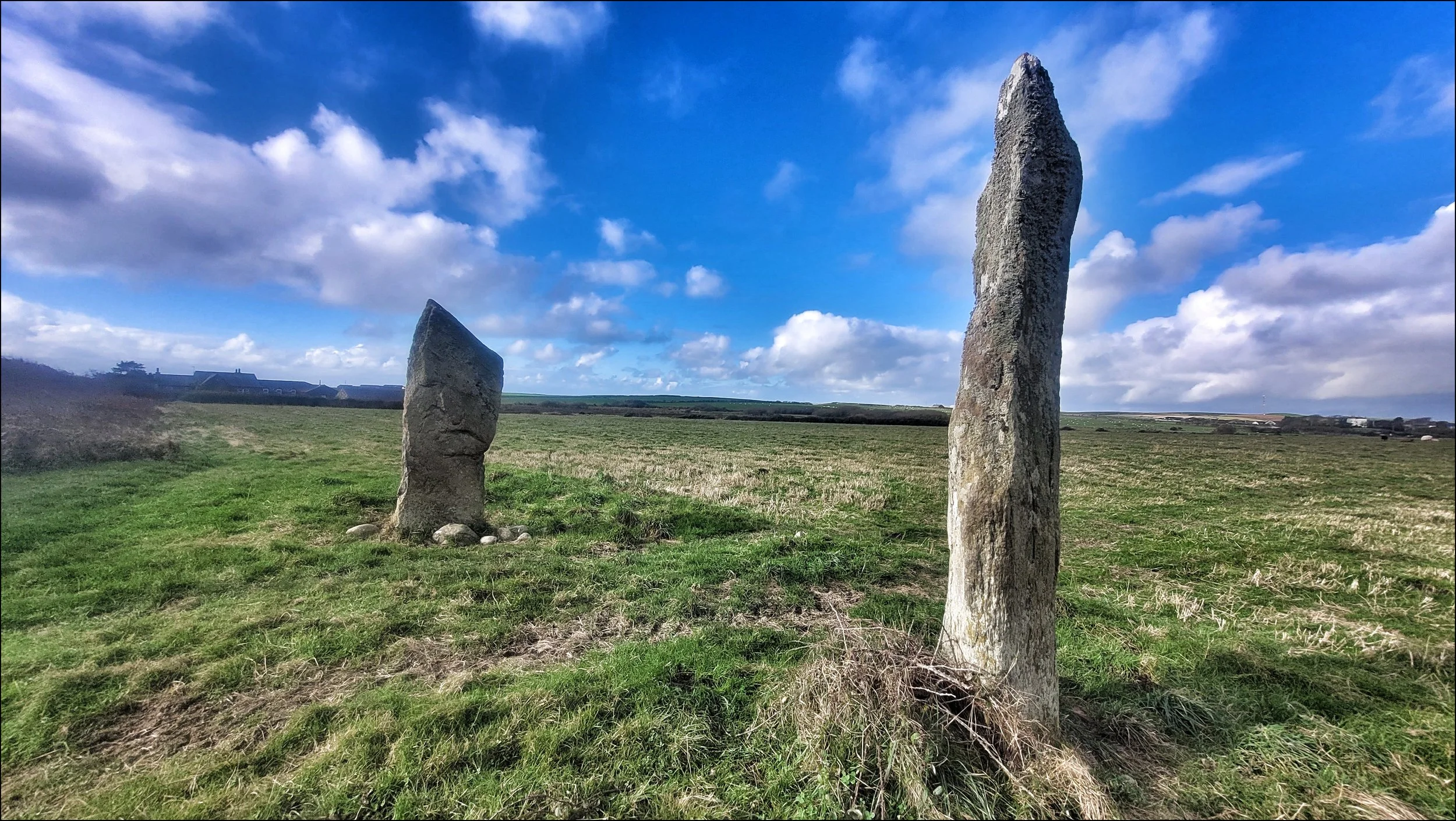
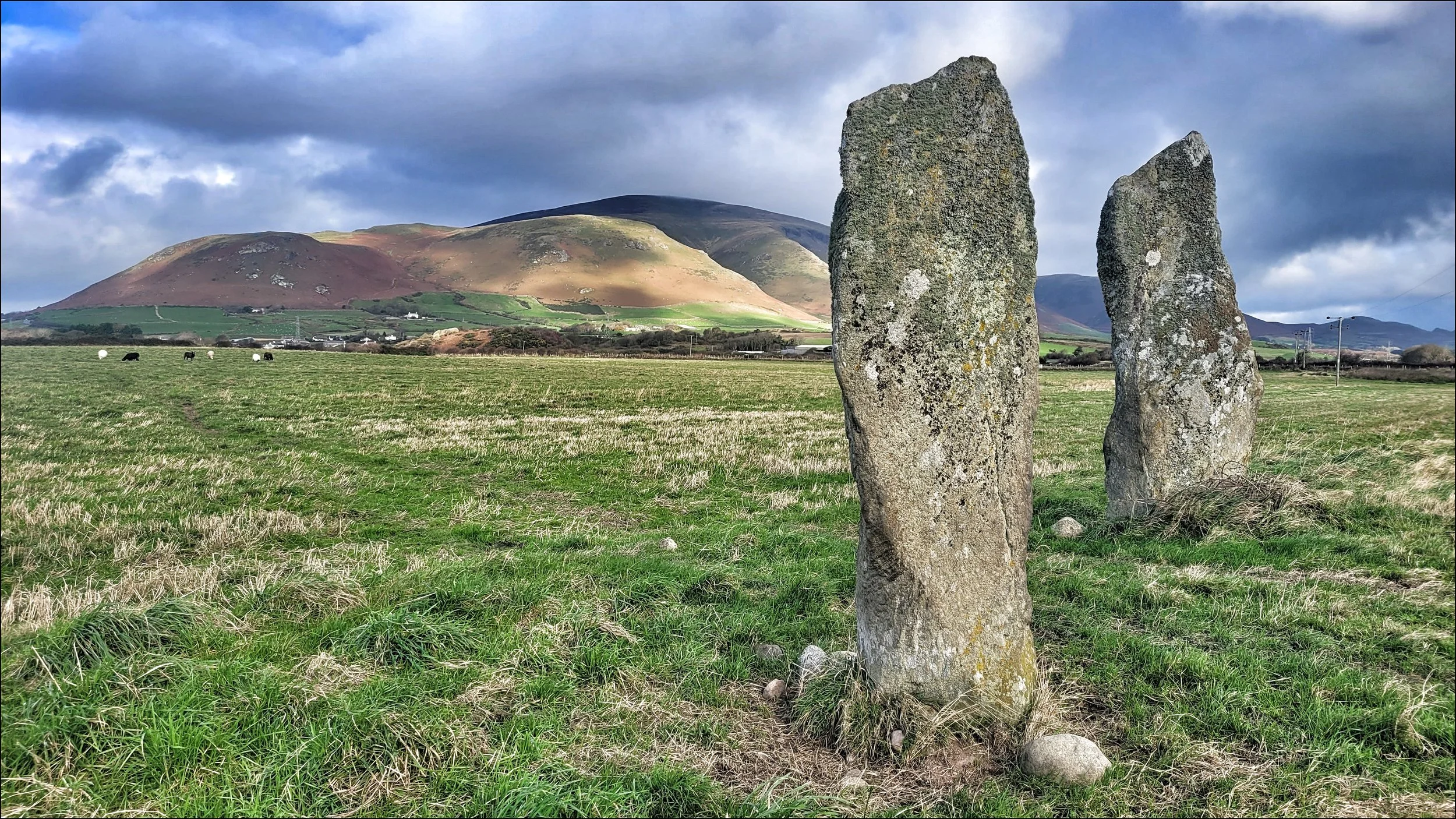
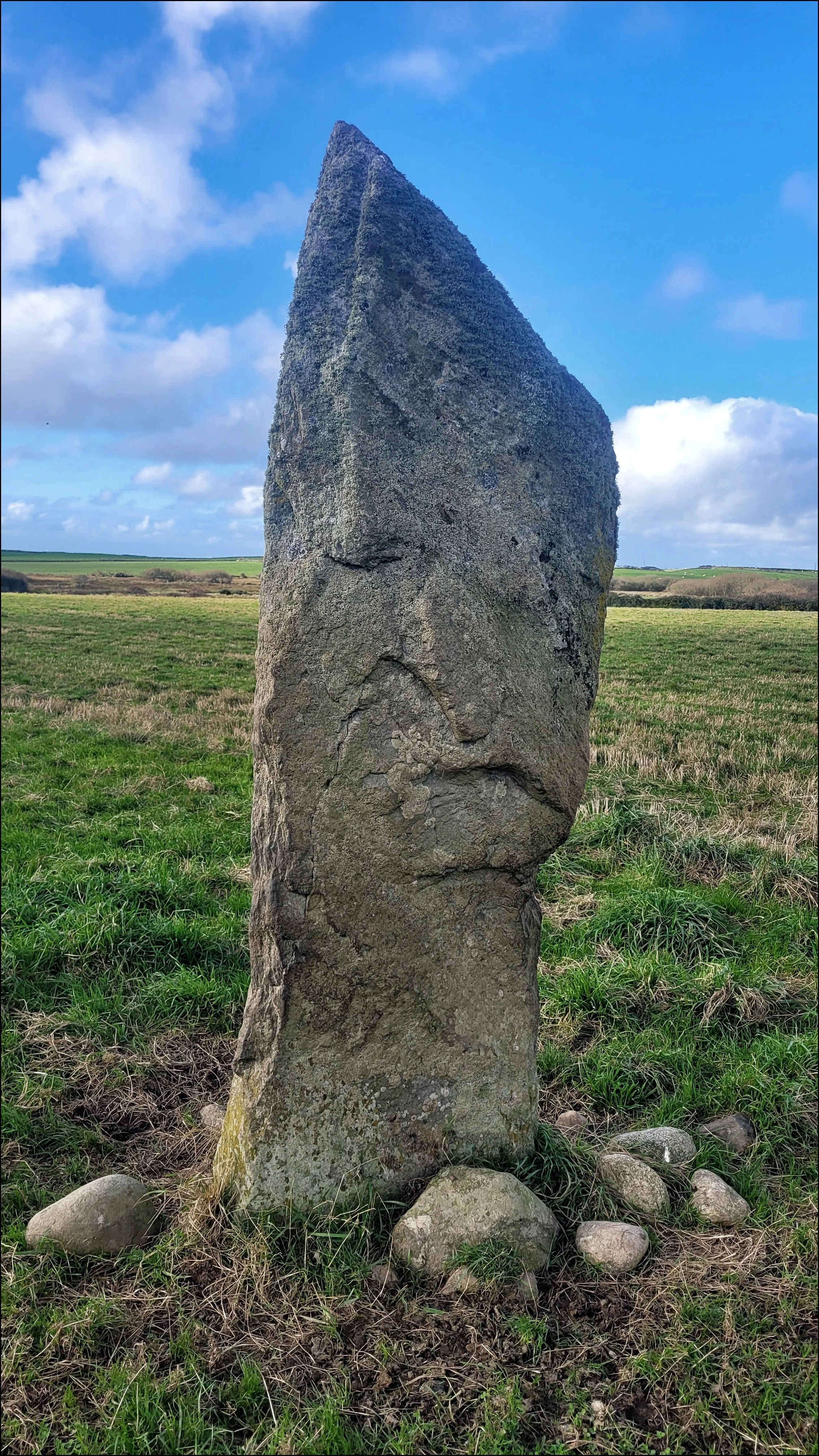
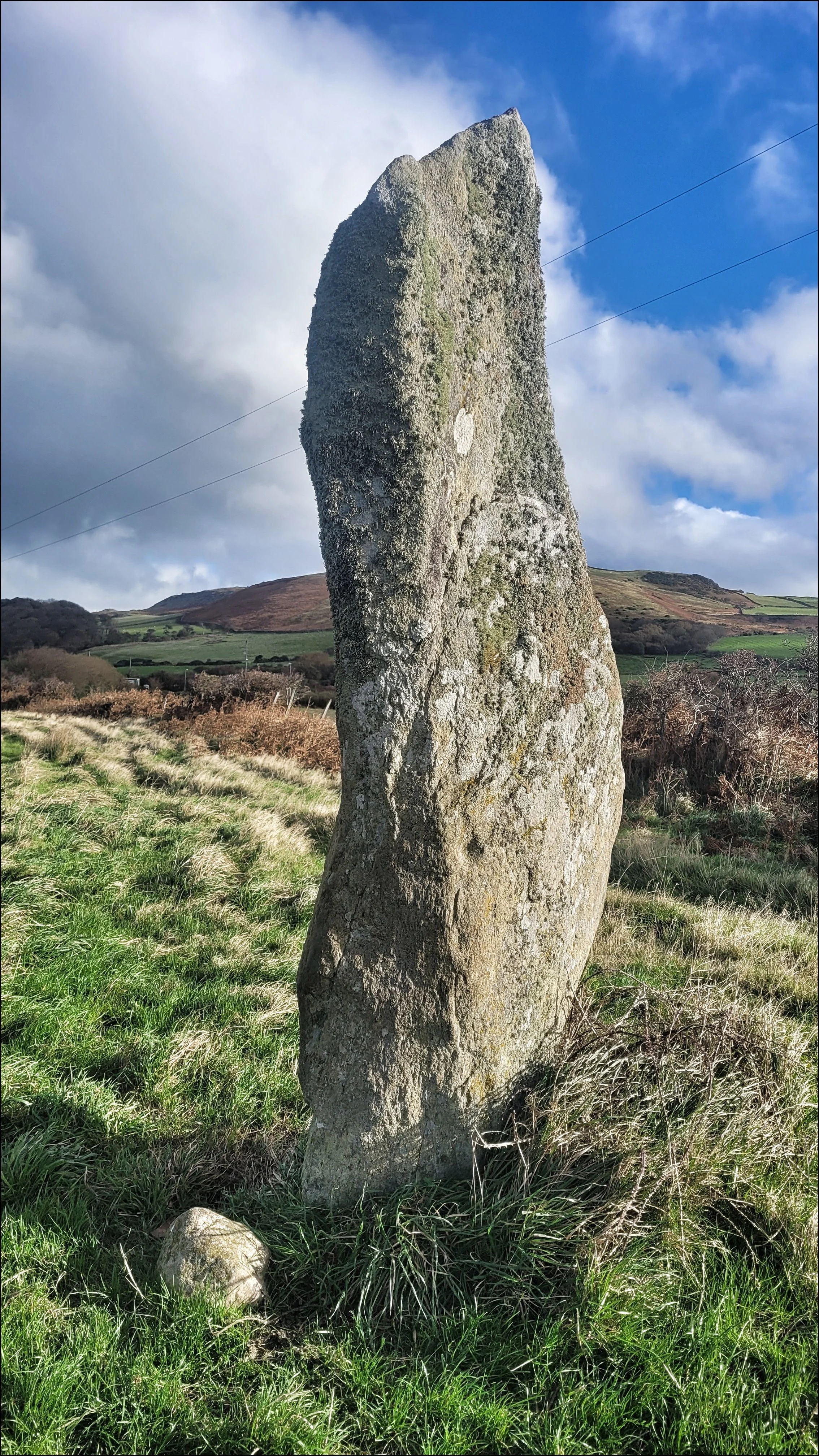
I entered the first field through a gate displaying a plastic lid with the word ‘Bull’ on it in bold writing. This was not a vacuous warning as I found out as I turned the corner to entre the second field. There was the bull on the other side of a high hedge which I noticed had a large gap in it. Un noticed I pressed on to the two waiting standing stones also known as The Portals of Eden. This bland flat soggy field was no Eden but the stones were very elegant and spaced apart to suggest an entrance way. They were both around three metres in height, one being quite thin on one edge and with the faint trace of an ‘S’ shape from top to bottom on it’s thicker face. The other was straight sided with a chamfered top edge and had what looked like a face on it’s broad side. The best view of them was from the south west with the fell of Black Combe behind them. Looking at these two, it was hard to imagine they were once part of a cairn circle. Evidence from the eighteenth century had described the stones as part of a barrow. It seemed a lot of damage had been done to Lakeland sites around this time.
I moved on to the other side of Kirkstanton and once again found another pull in spot near the railway line. From here I would climb in a north east direction up to Lacra Bank, where lying in wait was a complex of circles and stone rows.
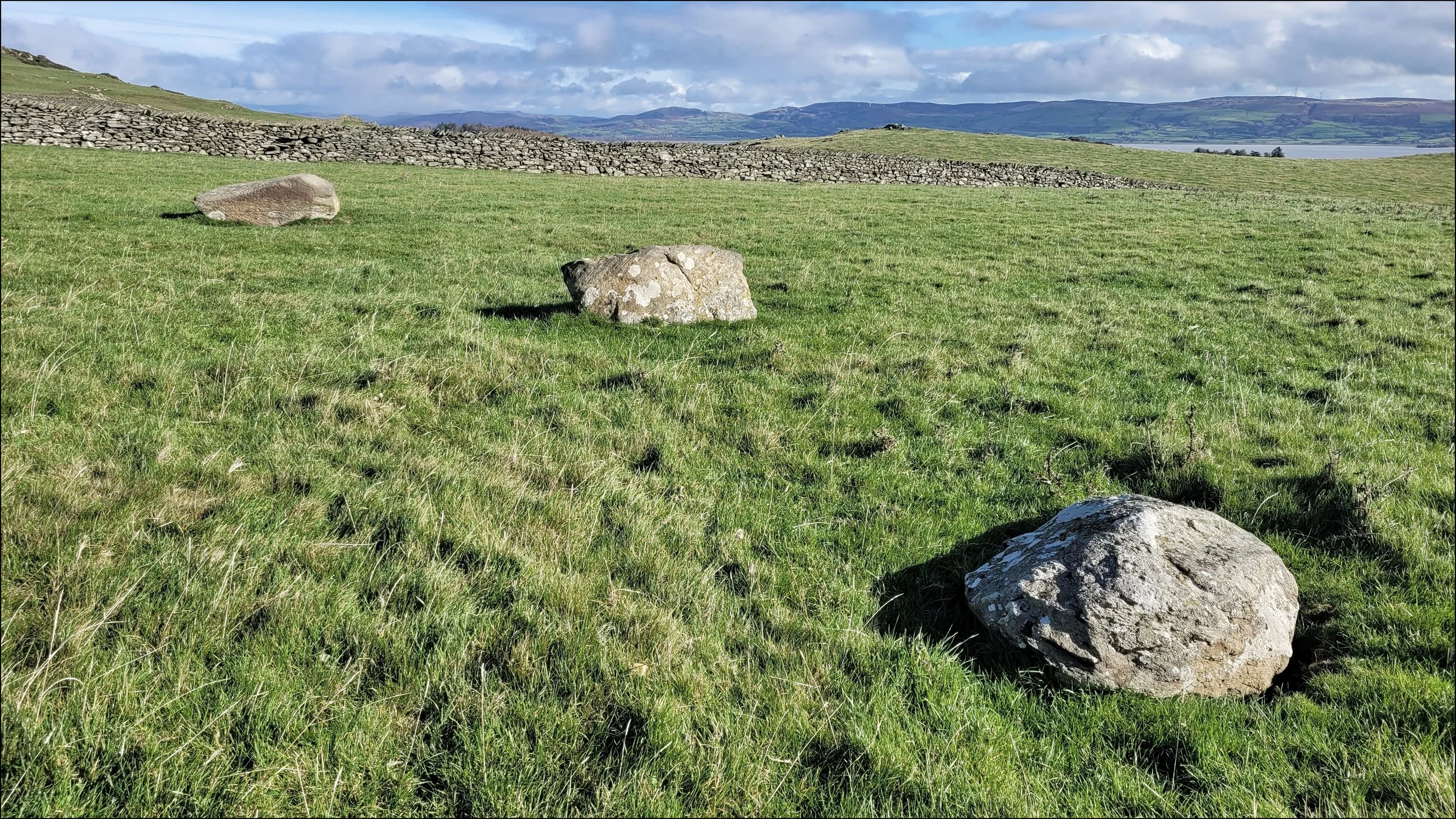
I climbed over a rusty broken gate and took a diagonal route up to the far corner of the field. A track took me further up through undulating ground of dense gorse to a drystone wall with a ladder over it. I rested here and took in the views north towards Ravensglass and the windfarms far out at sea. I then followed the wall up to a derelict farmhouse, keeping an eye on the terrain to my right for signs of a circle. The placing of the circles on OS was confusing and scatterings of large stones continually tricked the eye. Then I realised Lacra A circle was beyond the wall in front of me. When I found it I was disappointed to discover it had only five stones. It had a wide diameter and with only a handful of stones the circle was hard to decipher. However, as I got closer I could see they were in their original positions, as they had packing stones at their base.
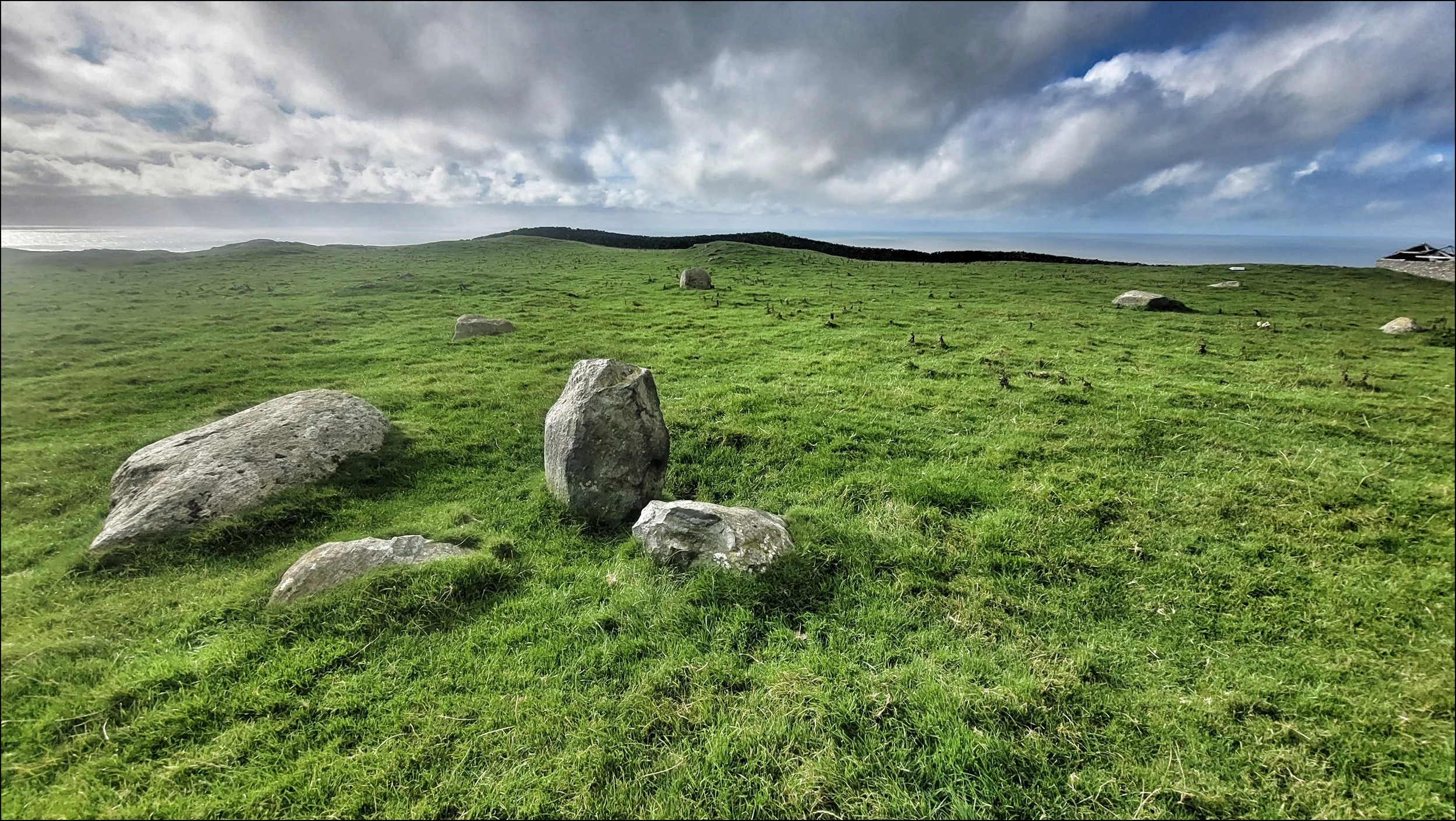
I headed due south east to where the land began to slope down to Millom. This was an even better view with Hodbarrow Sea Wall and Lighthouse below. Returning my attention to the sloping field I saw that I was in the middle of the Lacra D, the complex of a circle with a double stone row leading to it. The stone rows were clear to see and extended up the slope about fifty metres, with some of the stones the size of boulders. Again the circle was hard to make out as the stones had collapsed. It was the same diameter as Lacra A and had a large flat stone in it’s centre.
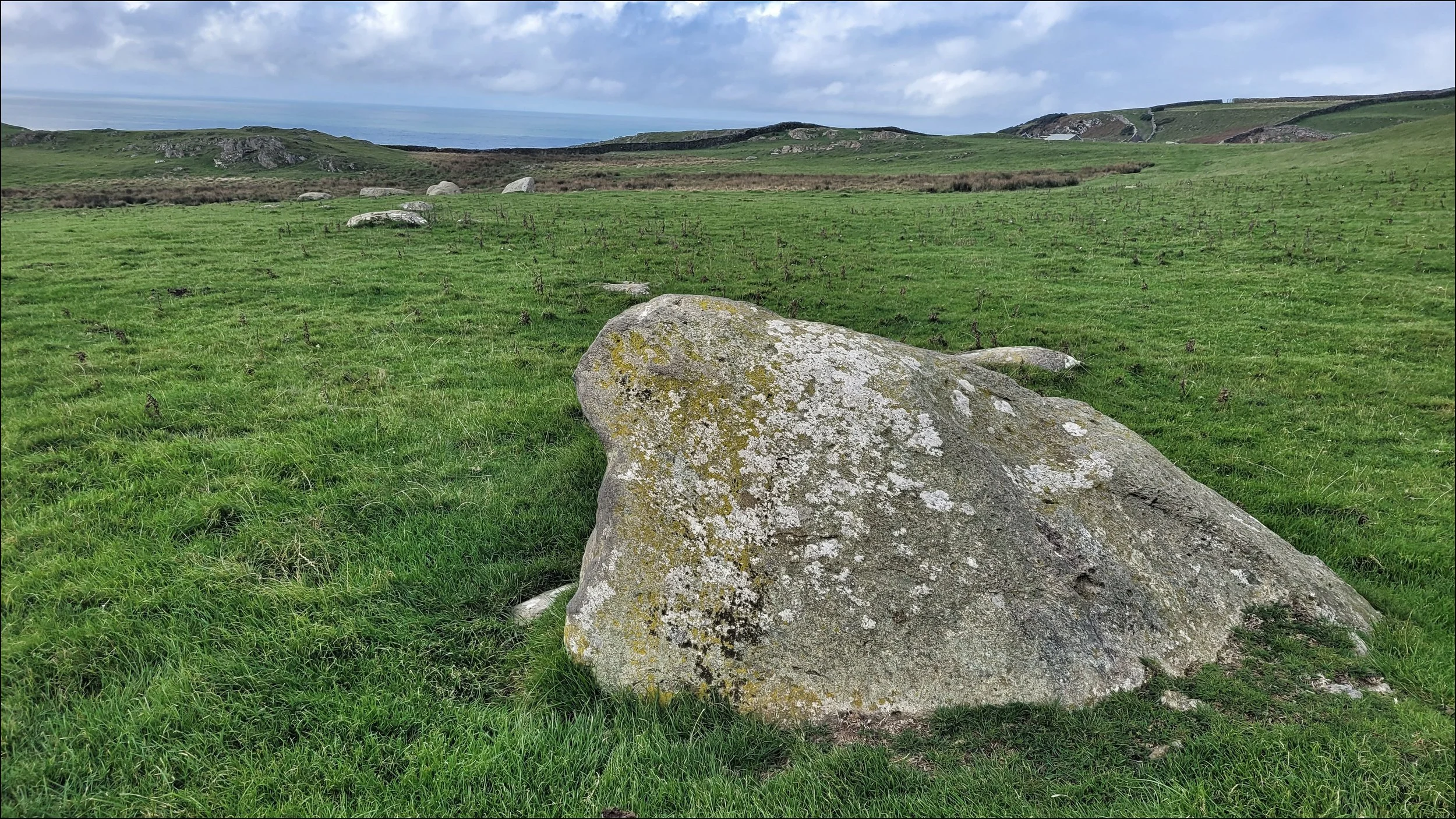
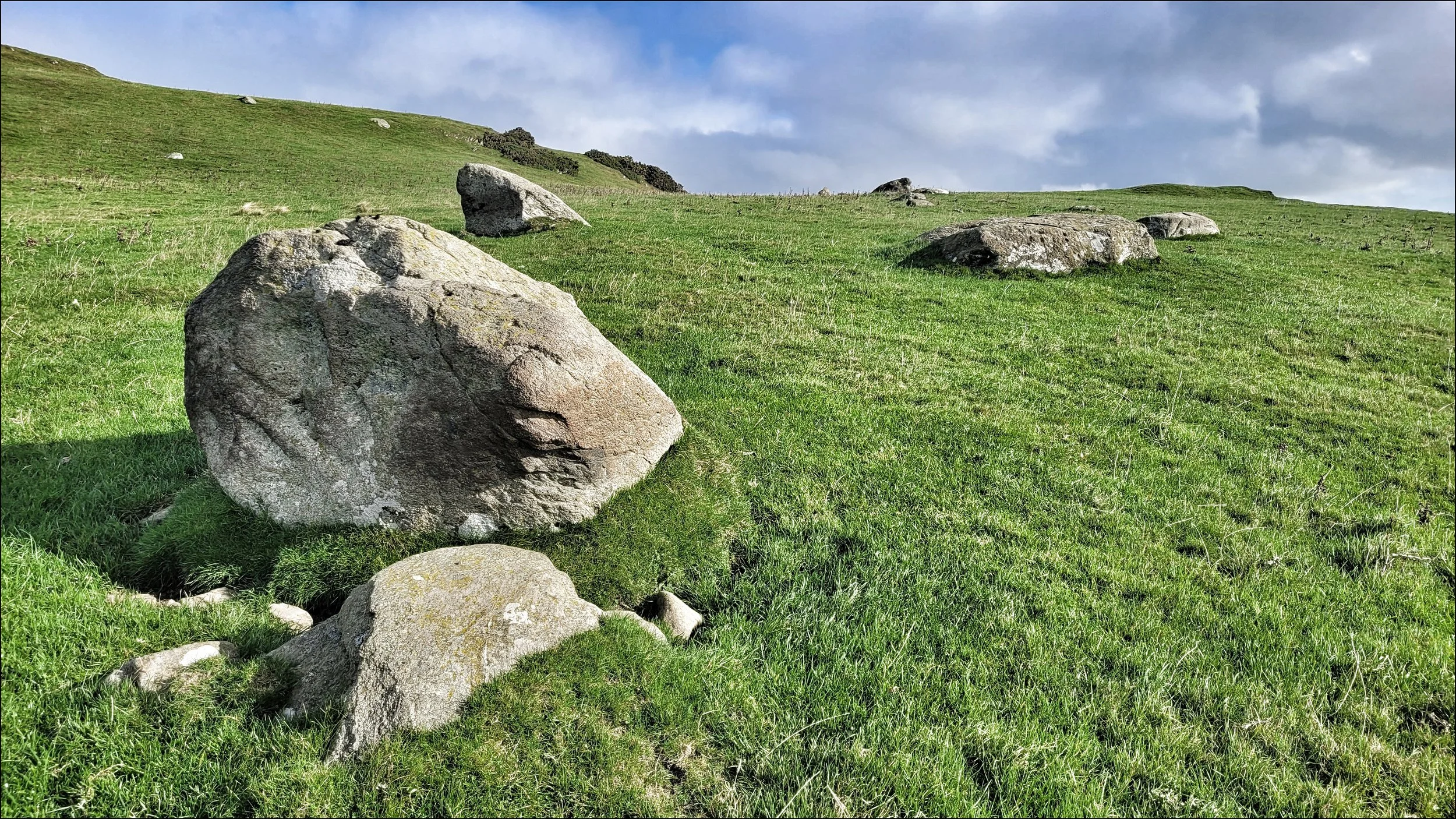
With the help of OS I descended down the hill through a gap in the wall to find the third circle of Lacra B. It didn’t take long to spot as it was in a better state than the others, even though only six stones remain of a possible eleven. It was the very same diameter as the previous two with more even spacing that formed some semblance of a circle. A burial had occurred here but there remains only a faint mound at the centre.
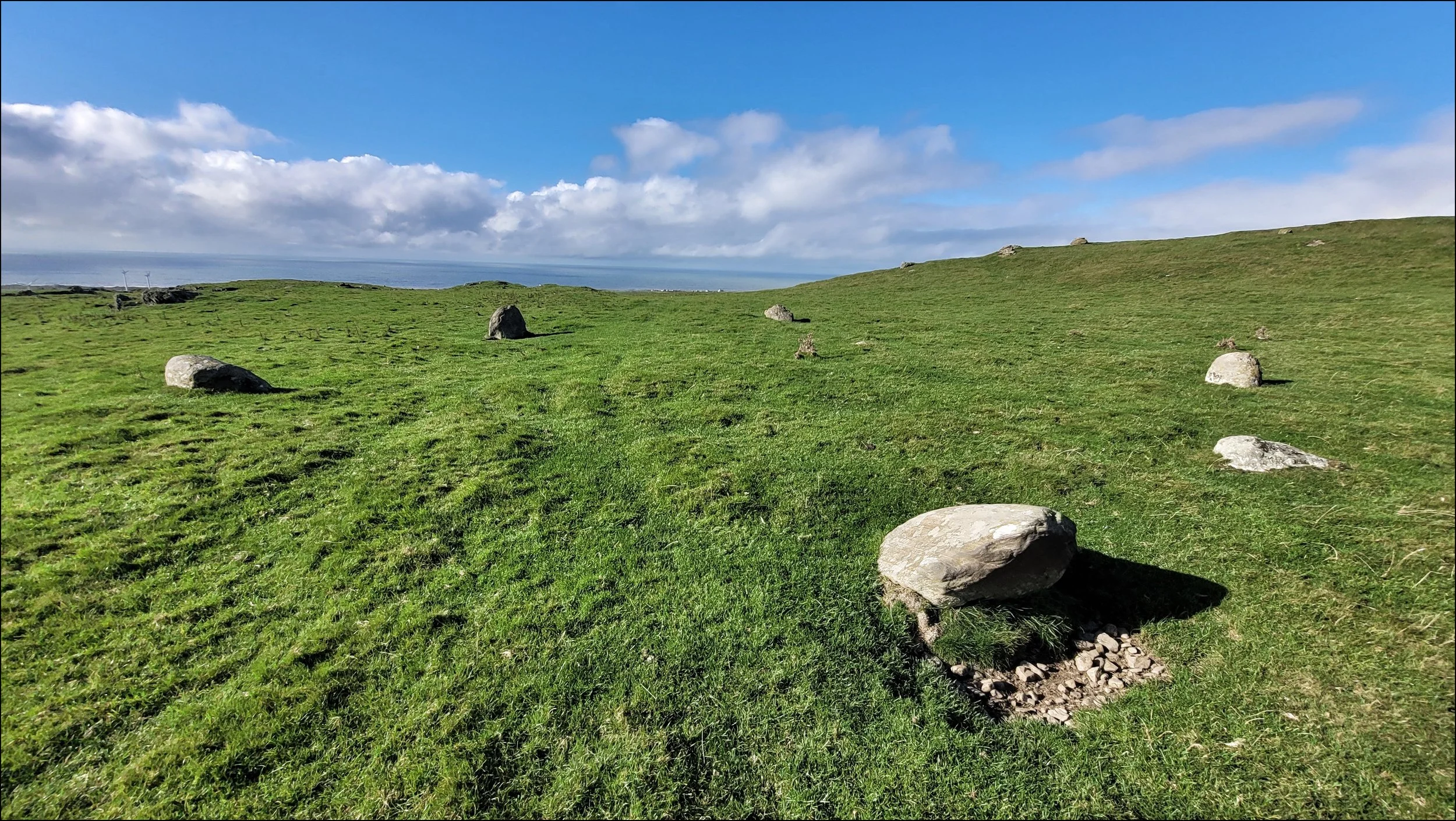
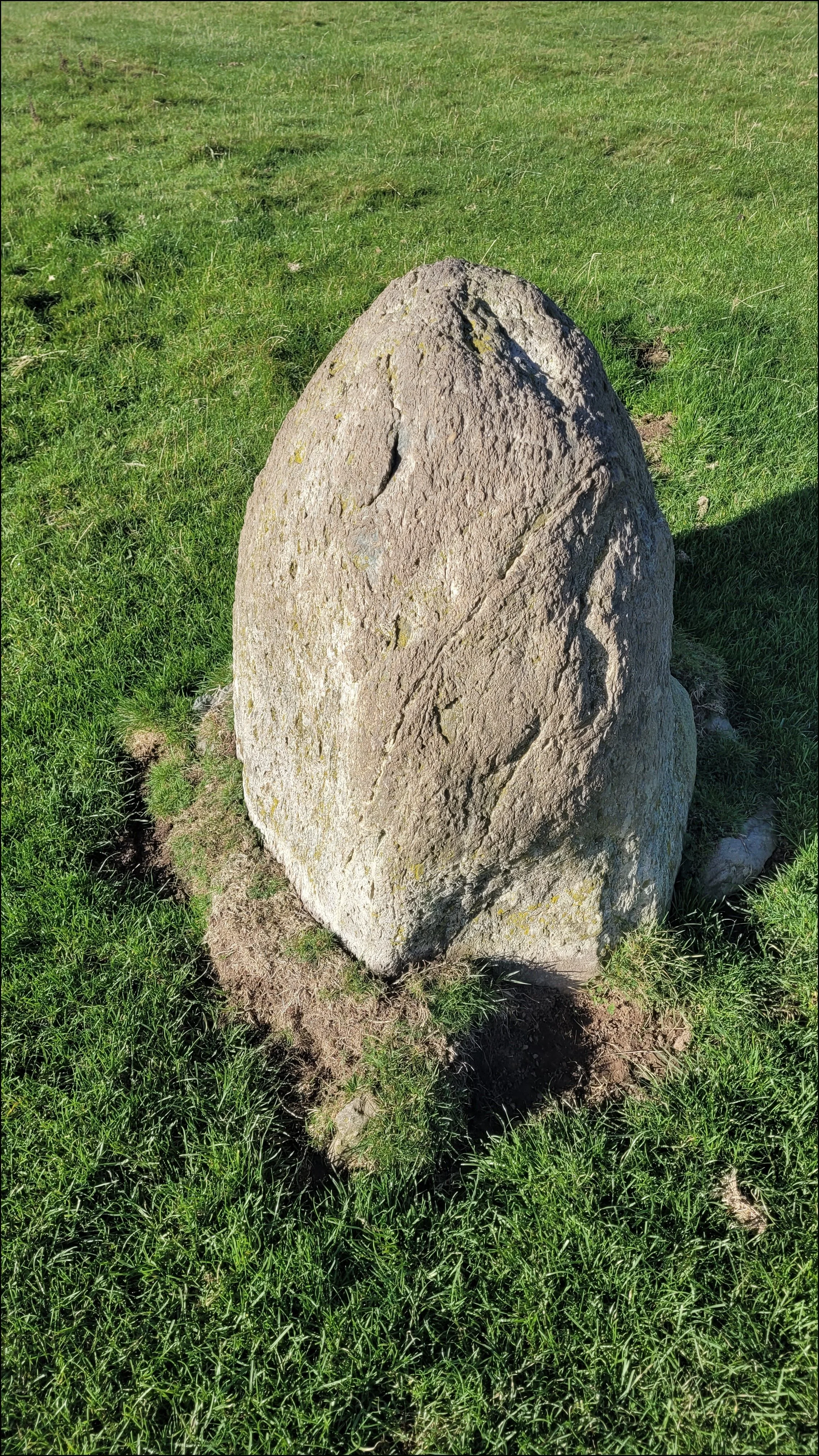
Over to the south east about two hundred metres was Lacra C. There were only three stones here and their relationship to each other suggested a former very wide diameter or some tampering or relocation. If they had been part of a large circle it seems unlikely they were in their original placing as the size of the possible circle was not in keeping with the other three. It was more likely they were part of another stone row. The sun was dropping over the Irish sea and it was time to head back and begin my exit out of the Lake District. As I headed down the hill I received a message from my network provider ‘Welcome to the Isle of Man’. Now that’s an idea I thought.