
A fitting resting place

16.06.2025
On my way out of Cornwall there was one last quoit and a stone row I wanted to see. The location of Carwynnen Quoit was above a river valley in a sloping field surrounded by woodland just south of Camborne. I made my circuitous approach over arable farmland from where I was parked up, keeping to field boundaries as much as I could. When the quoit came into view the route to it became more difficult, choosing a way through a wood of tangled branches to avoid a hedge of thick brambles. I rock hopped over a wide boggy stream and emerged out the other side with only minor scratches, then passed through a gate to make my way up to the quoit.
Carwynnen seemed to command center stage within the very English countryside around it. It’s sturdy appearance belied the fact it had collapsed on two occasions, in 1842 and 1967 from an earth tremor. It had been lovingly restored in 2014 by Pip Richards, founder of the Sustainable Trust who’s grave was only a short distance away in the corner of the field.
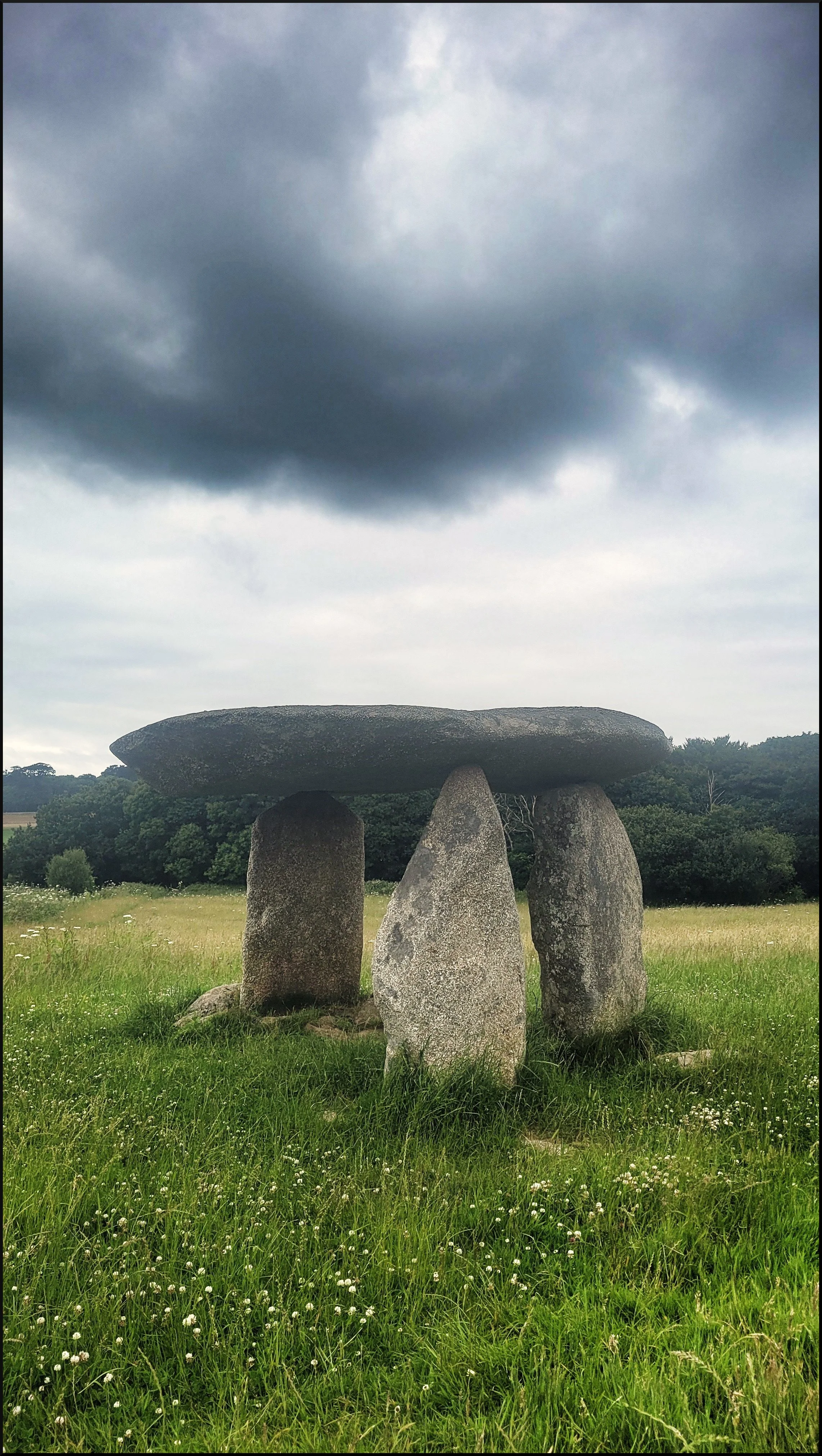
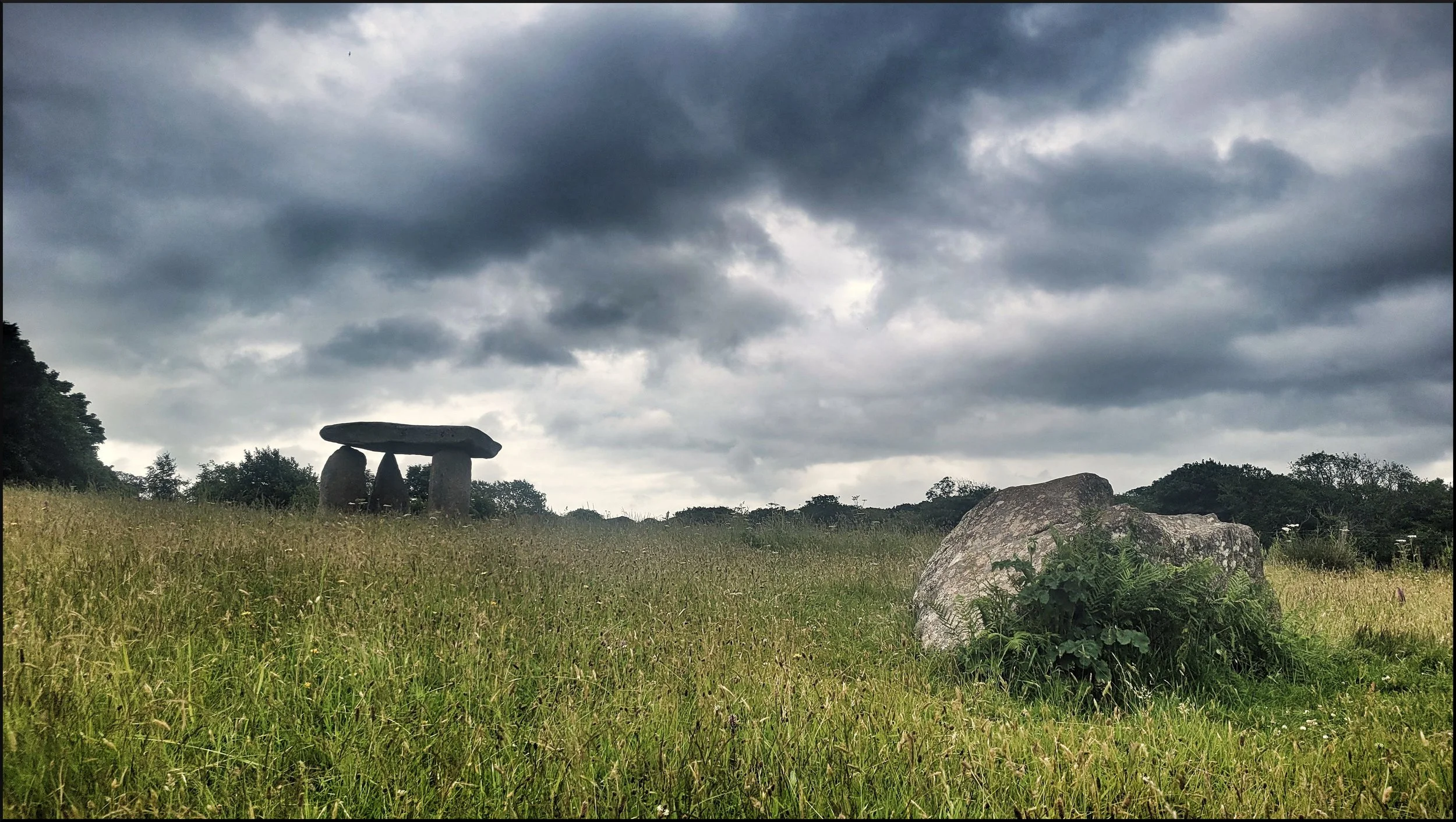
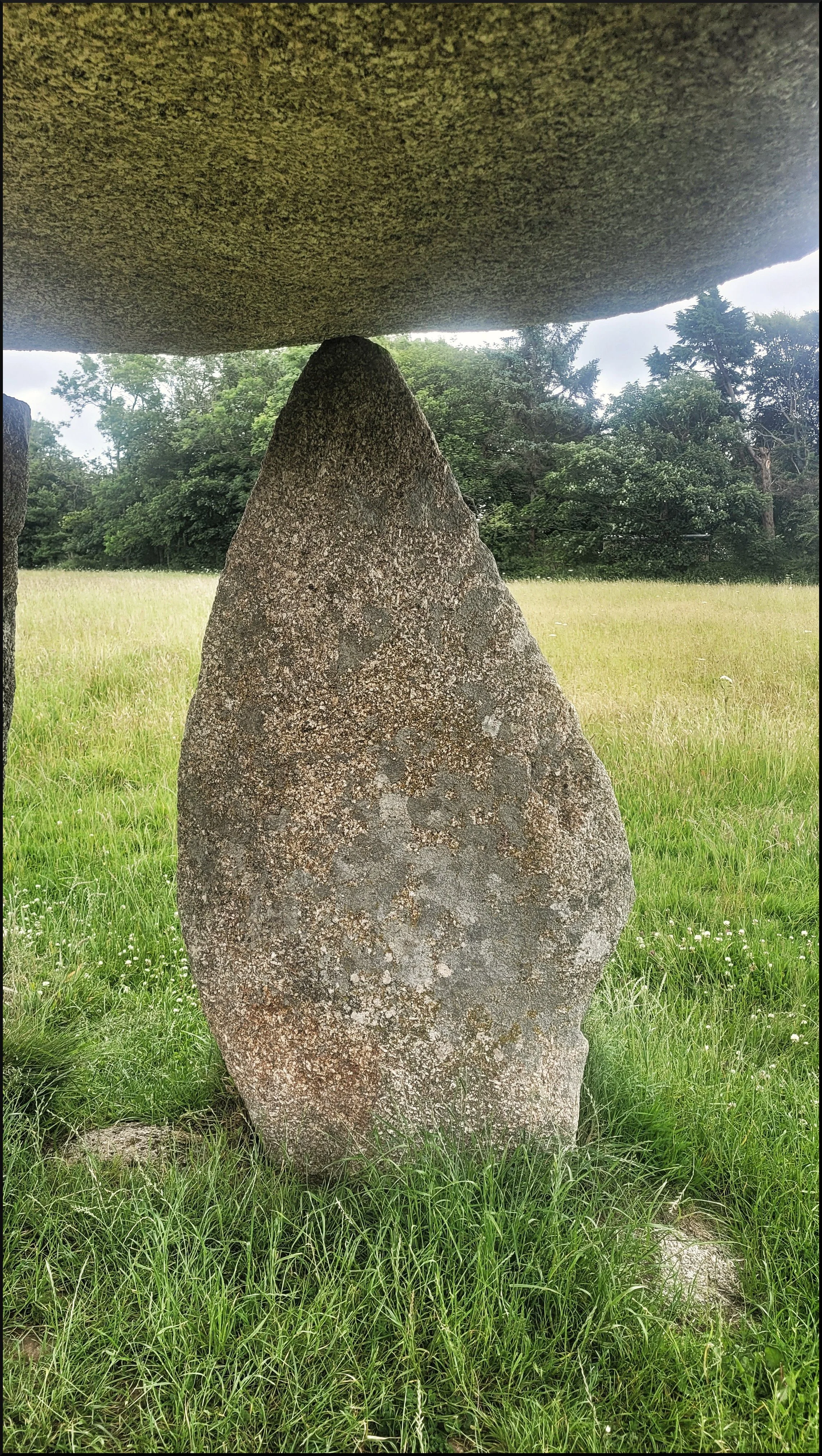
I stood underneath the thick capstone supported by three chunky uprights and noticed the absence of lichen, which I thought odd considering they had been lying in a heap on the ground for forty five years. I assumed they had been cleaned before their assembly. They now took on a strange mixture of pinky brown hues especially on the underside of the capstone. One of the uprights had a pointed top which gave the illusion of delicacy to the structure. I walked up to Pip Richards’ grave and sat on a bench placed there in her memory. The grave pointed down to the quoit. I felt a strong connecting force between them and it was touching to see Carwynnen restored to it’s former glory from this quiet corner.
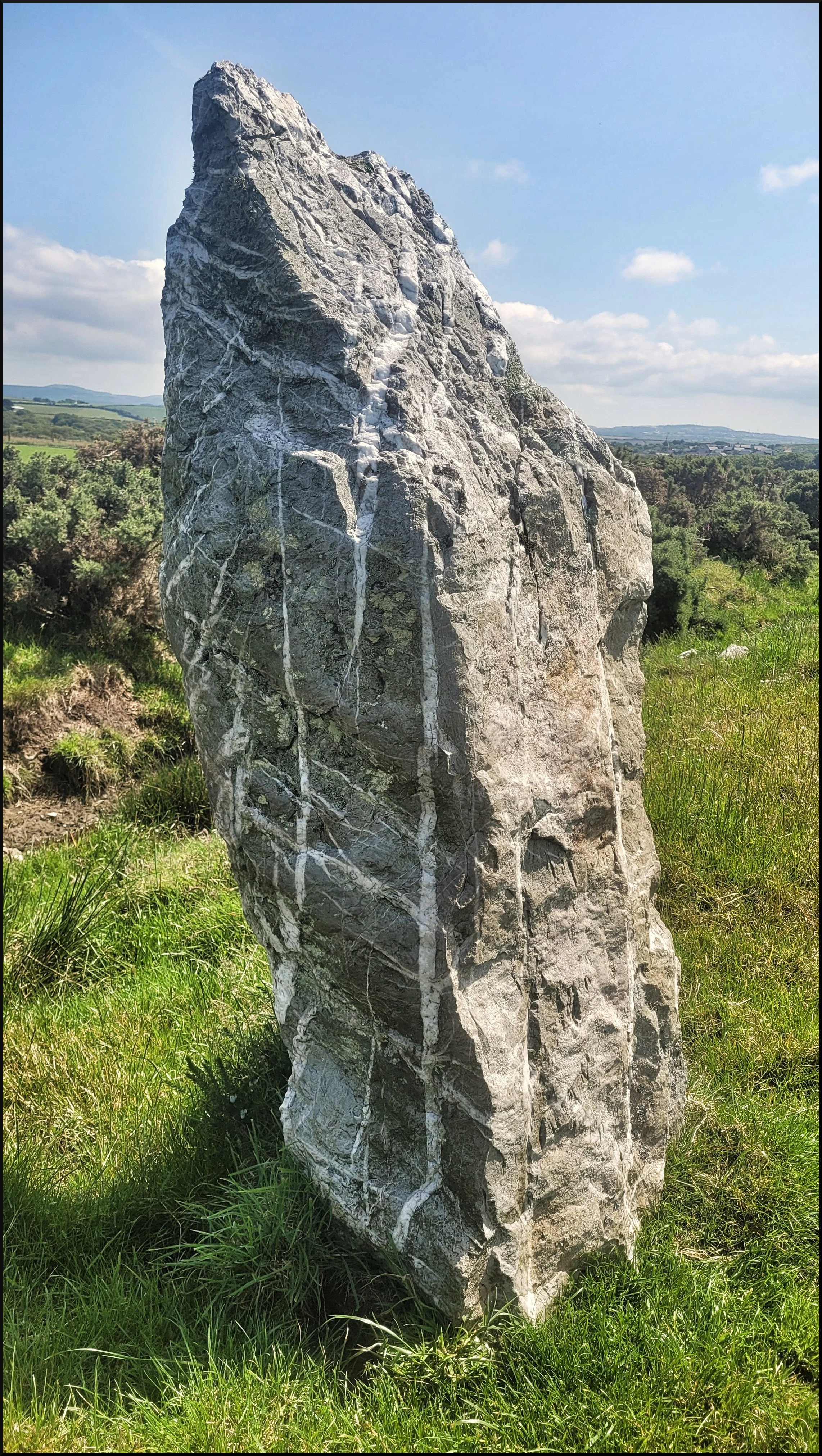
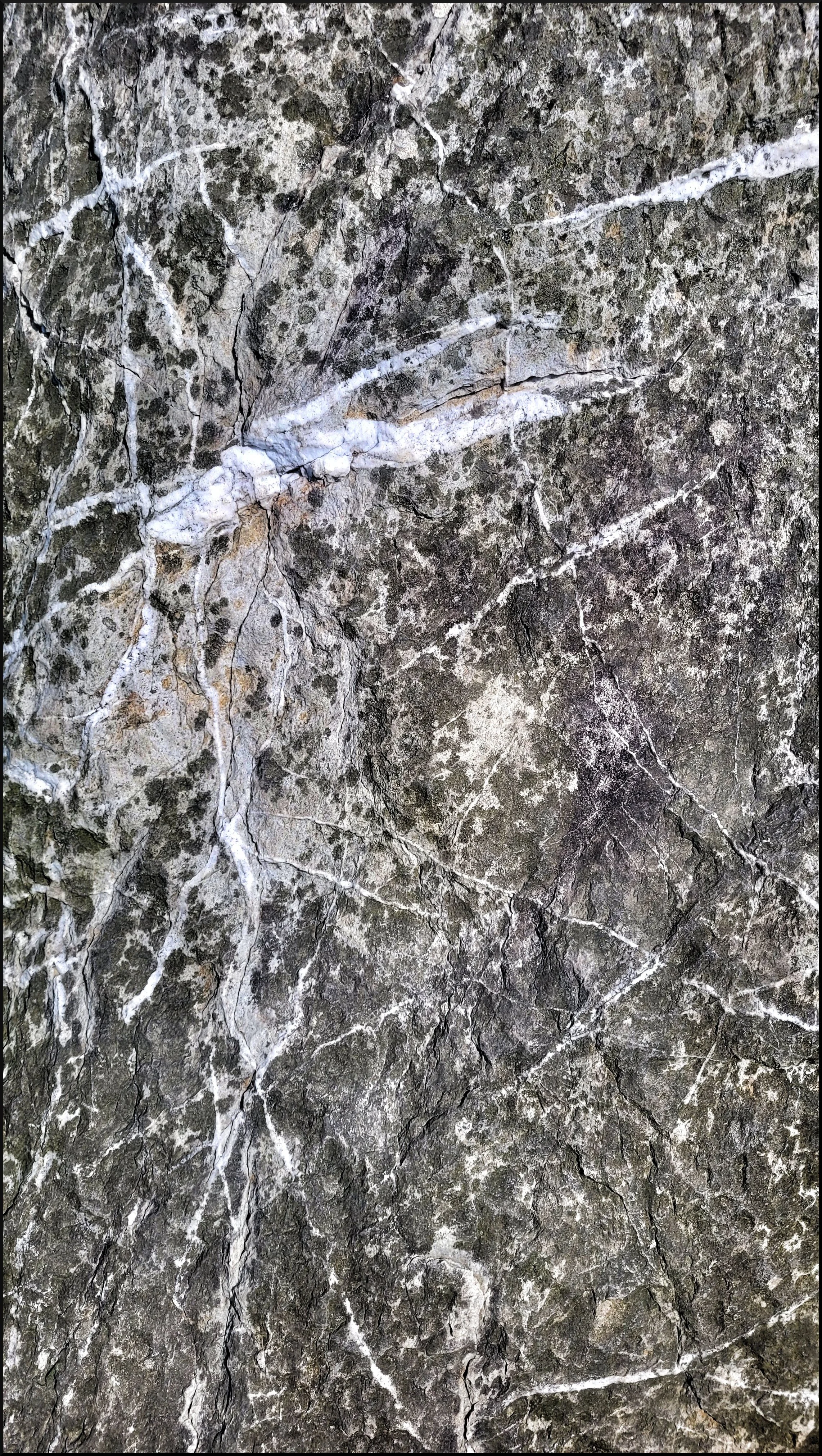
Further on up the A30 I branched off onto the A39 and pulled into a layby beyond St Columb Major. On the far side of a field to my right were a line of standing stones that looked quite big for a stone row. I walked a short distance down the road with no footpath to a gate which lead me into the waterlogged field. When I got close to the stones I realized how special these Nine Maidens were. Rather than granite stones these were slate with the most striking chaotic ‘Pollack’ like veins running through them. One of the row was a short stump and two of the row had fallen. The other six were very much standing proud and making a statement. ‘Look at us’ they seemed to be saying. There was no doubt these were some of the most beautiful stones I’d seen in the west of England.

I drove back up to Jamaica Inn to rest before the long drive north the next day. I sat with a rum in the Smuggler’s Bar and one by one remembered all the stones of the past three weeks.