Further down the Beara
03.08.2026
I was half way down the Beara Peninsula but now in County Cork. I had been looking forward with relish to my first encounter with Ardgroom, a stone circle much written about and one of Ireland’s most dramatic ancient monuments. Aubrey Burl had made reference to the abundance and close proximity of these Axial circles with their function being territorial as well as astrological. Cashelkeelty, the last circle I’d seen in Kerry was only three miles up the Wild Atlantic Way.
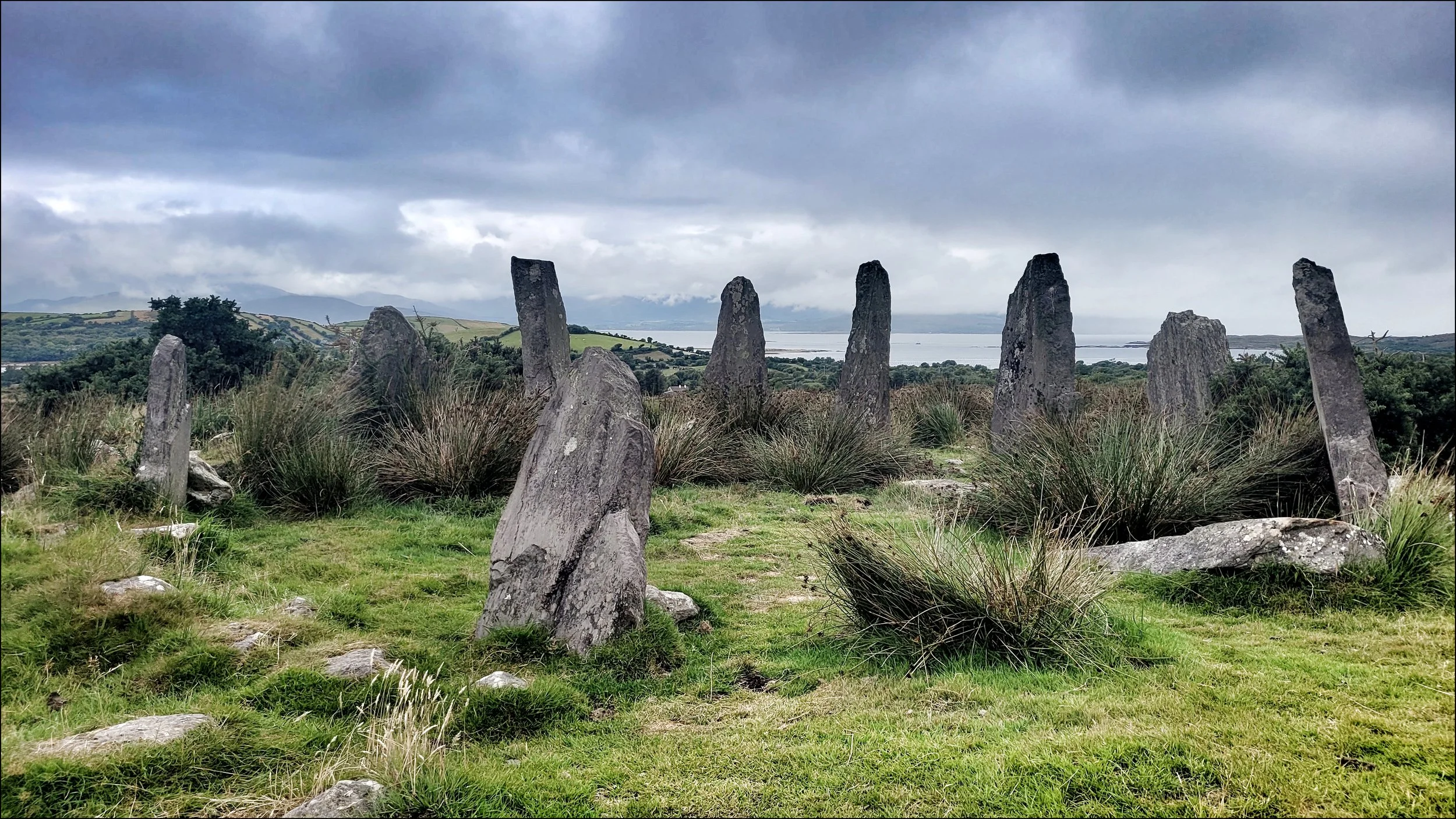
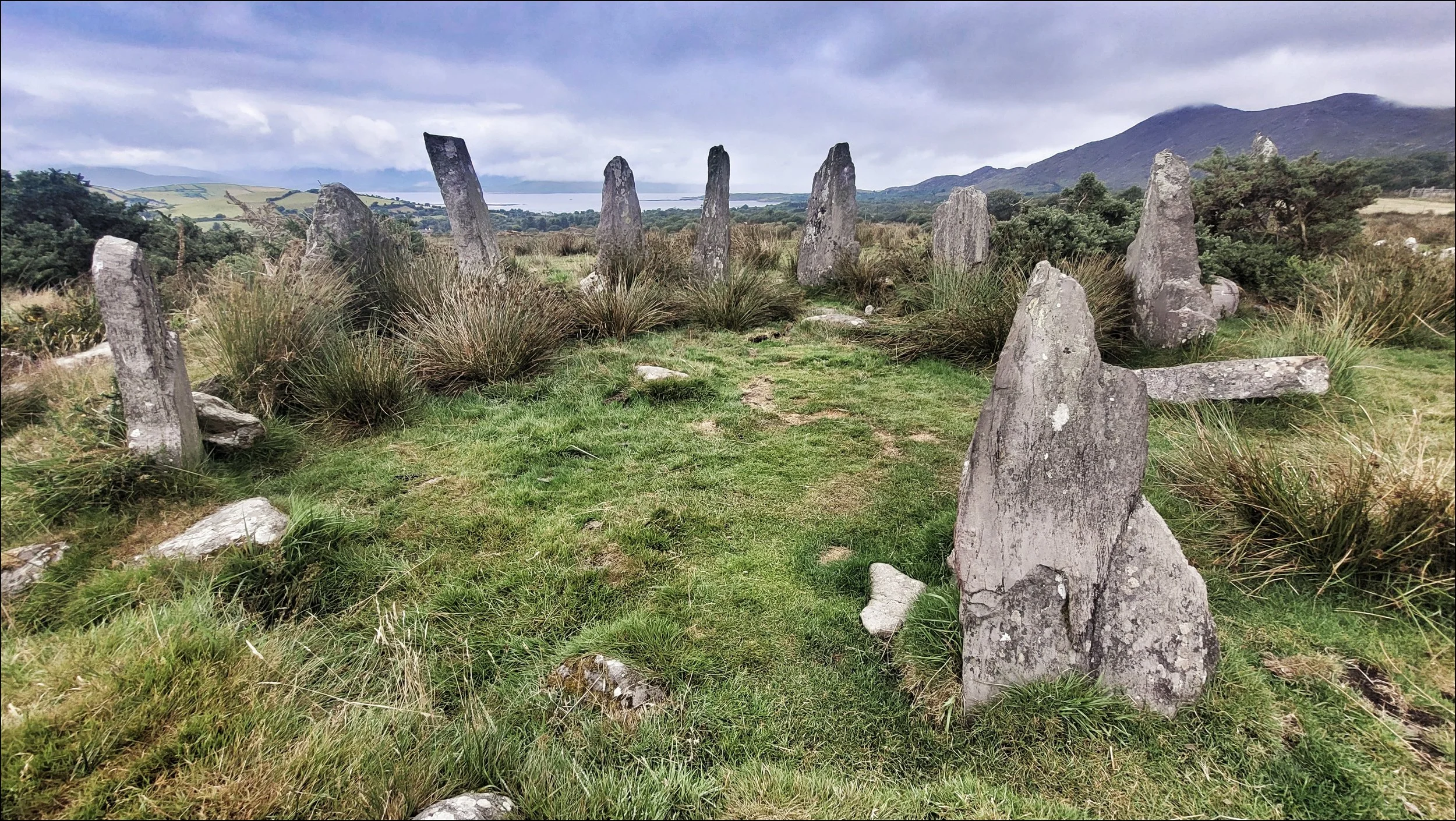
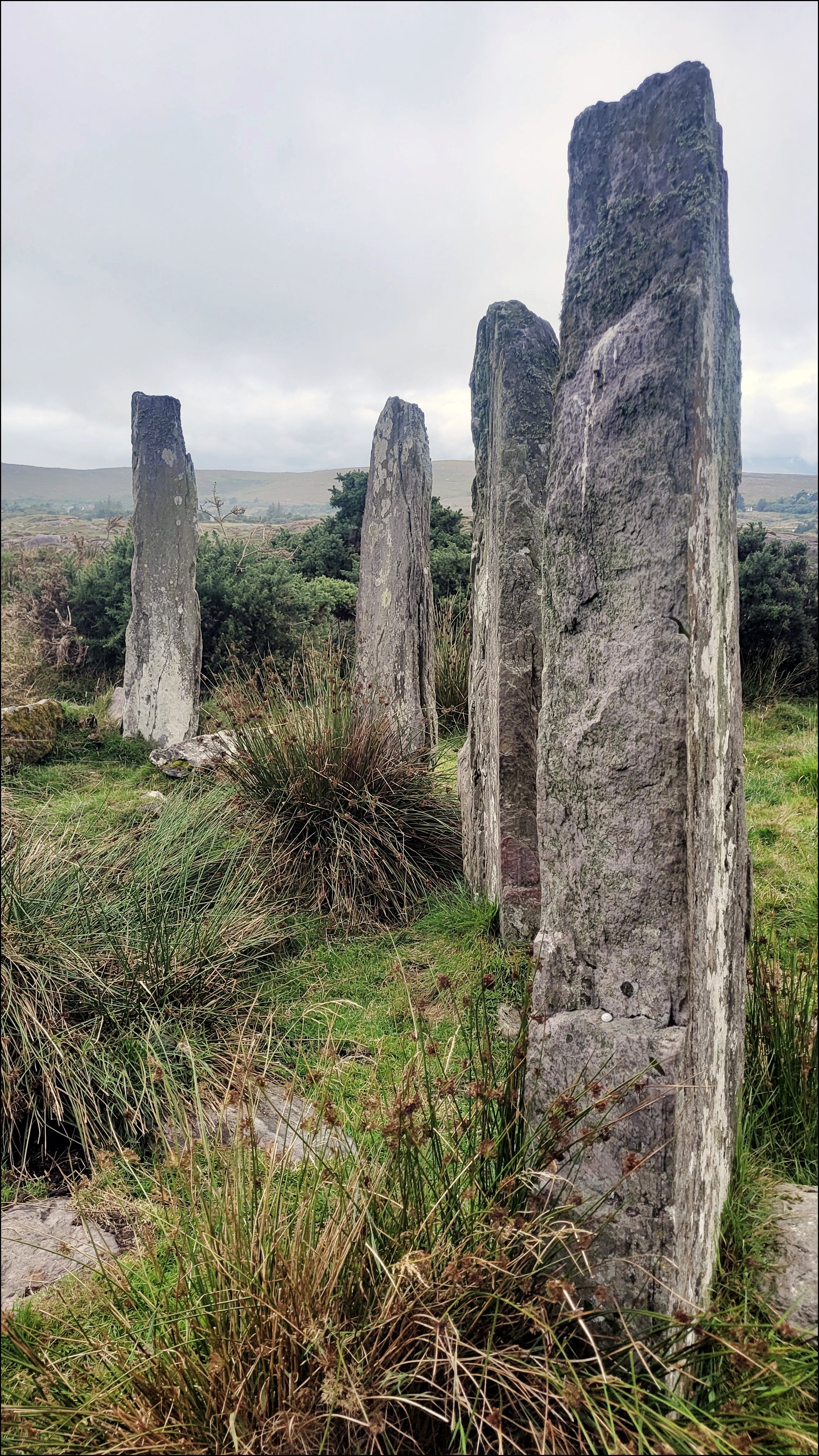
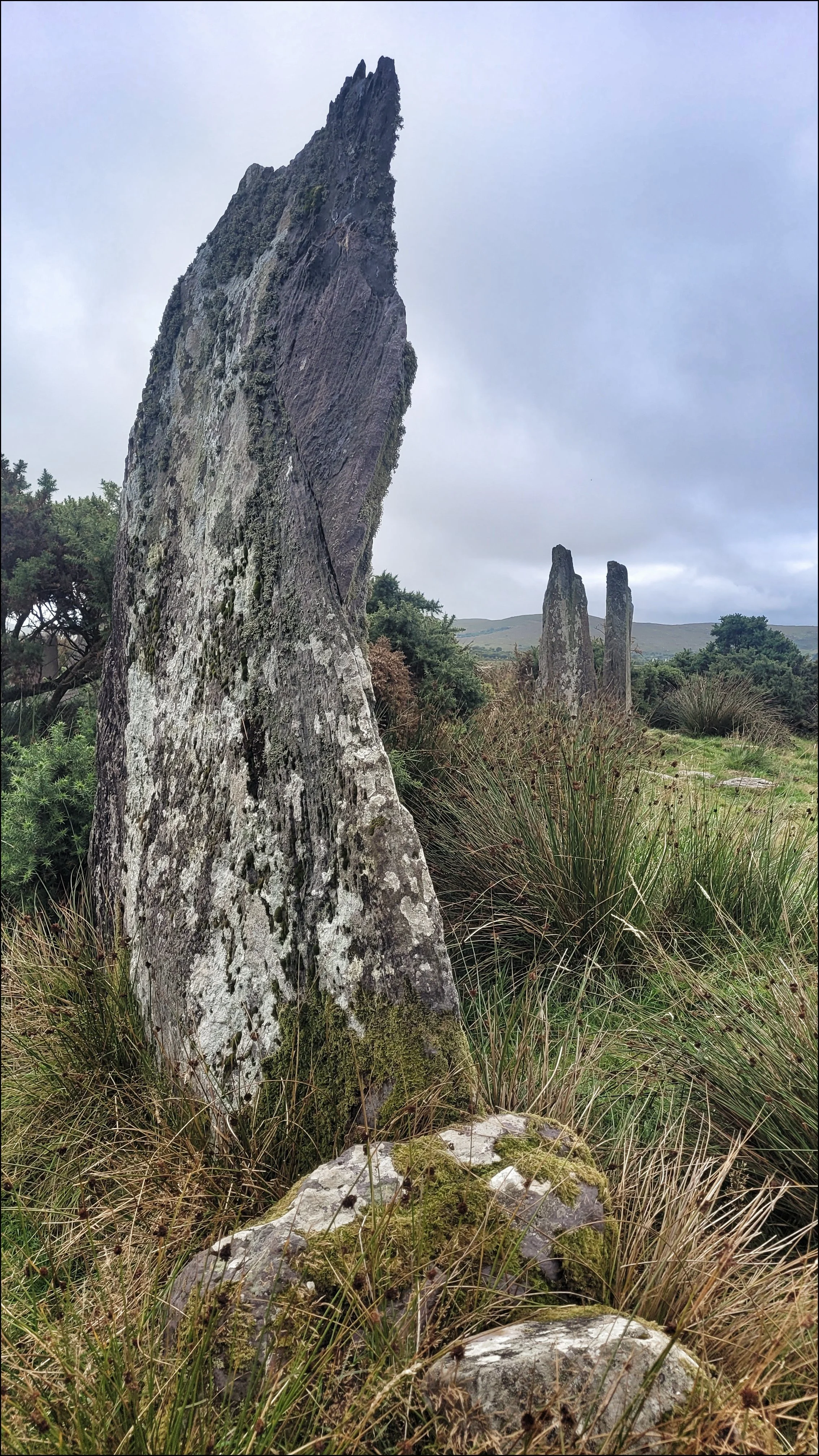
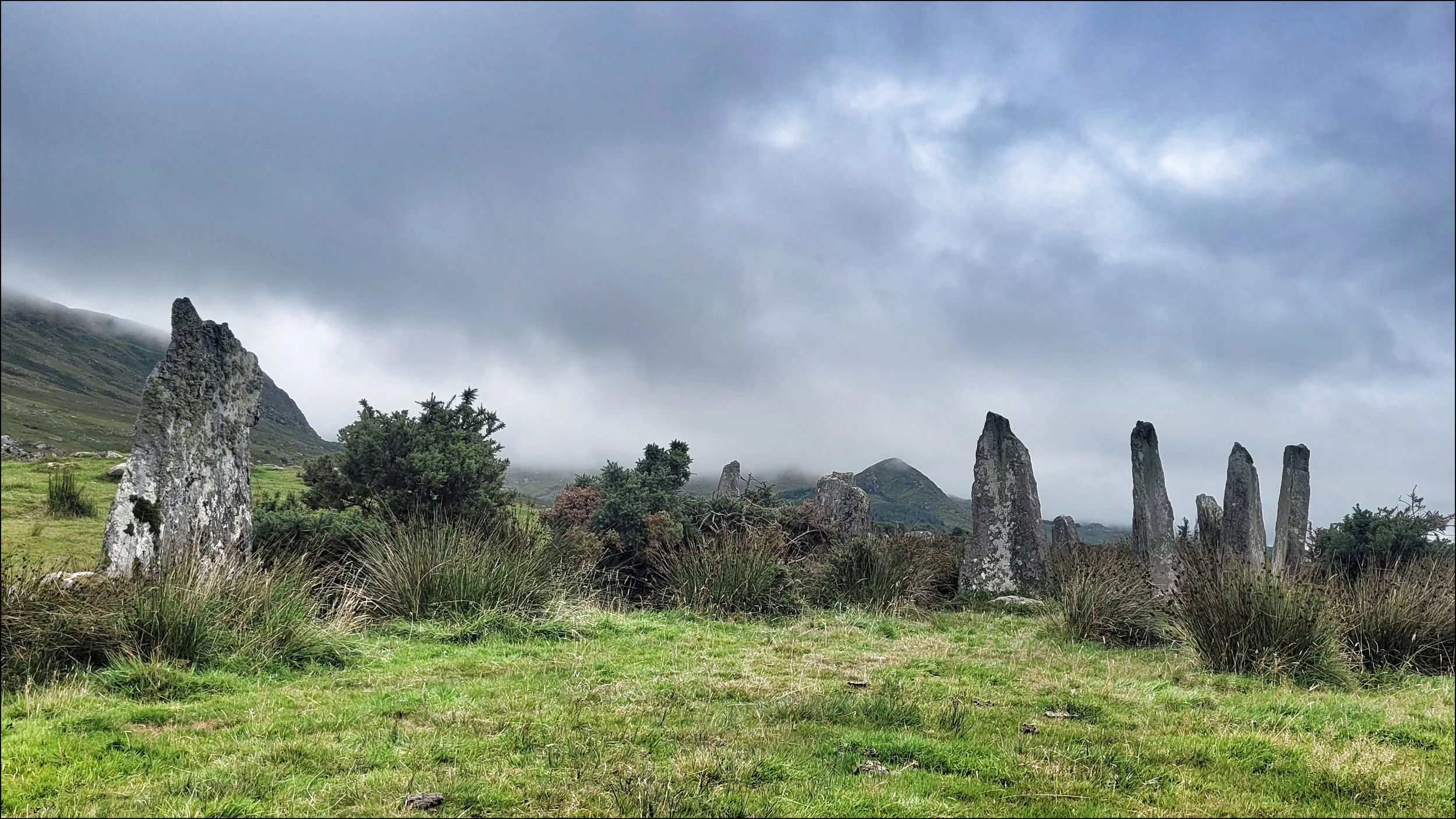
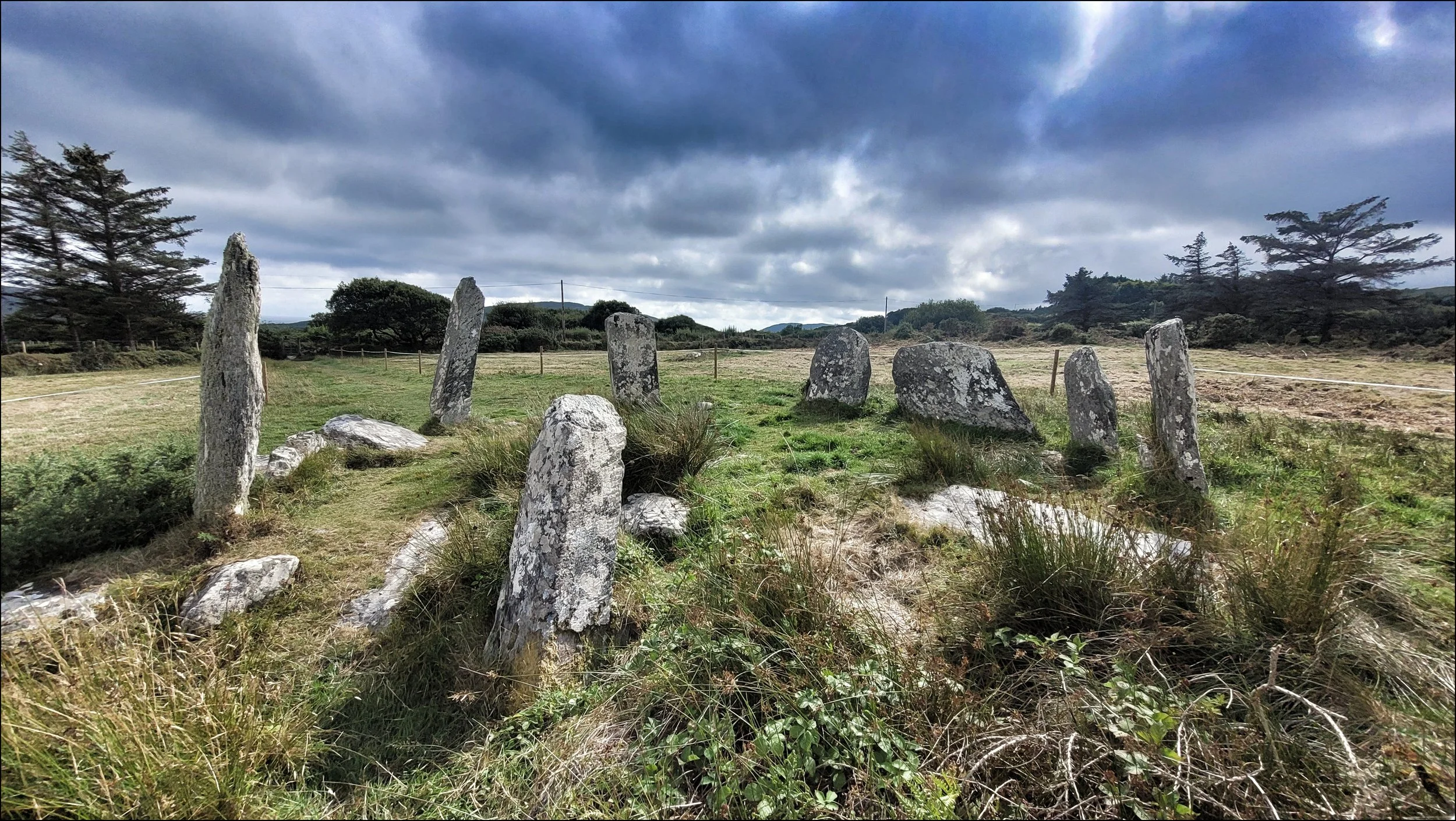
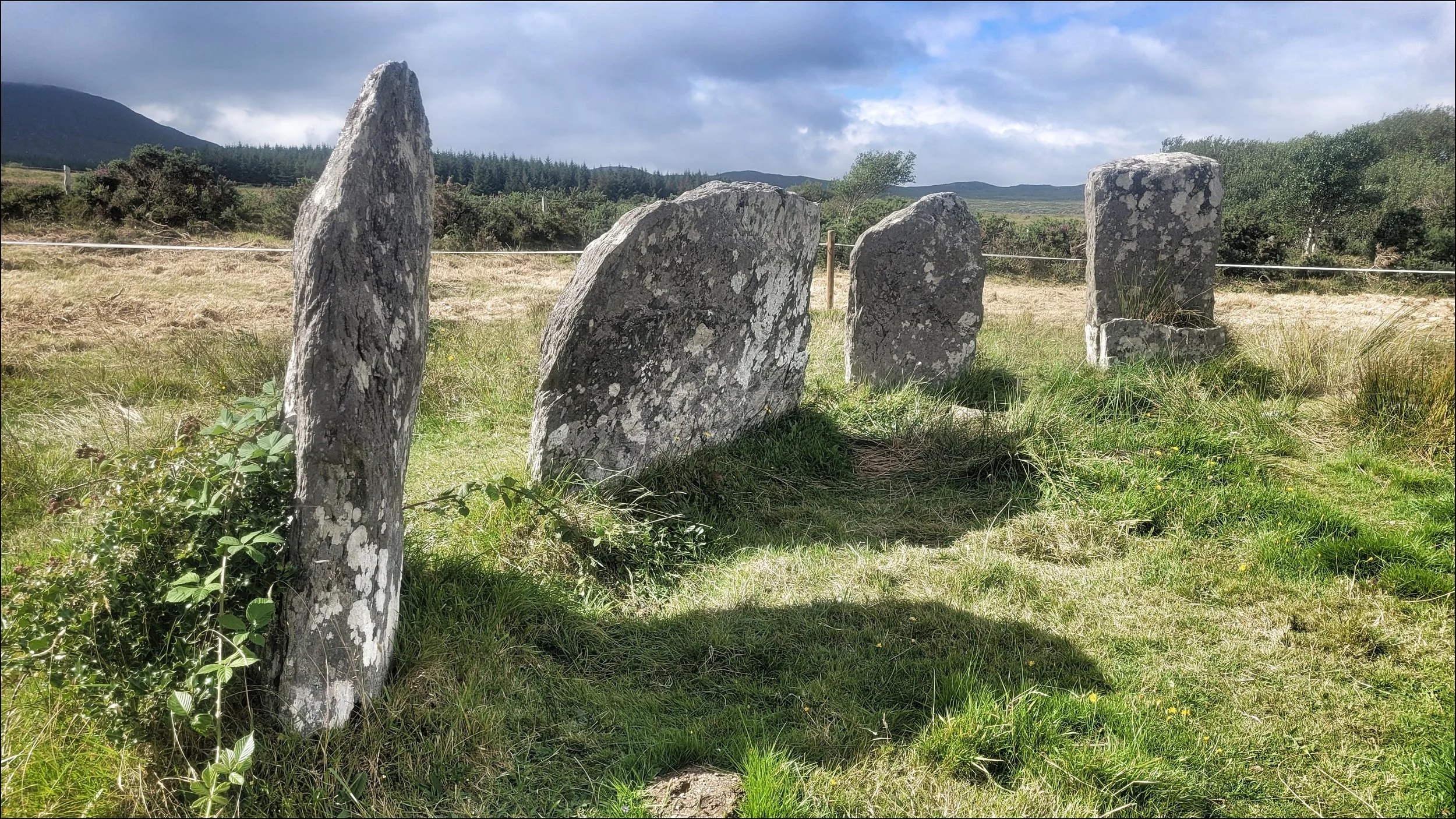
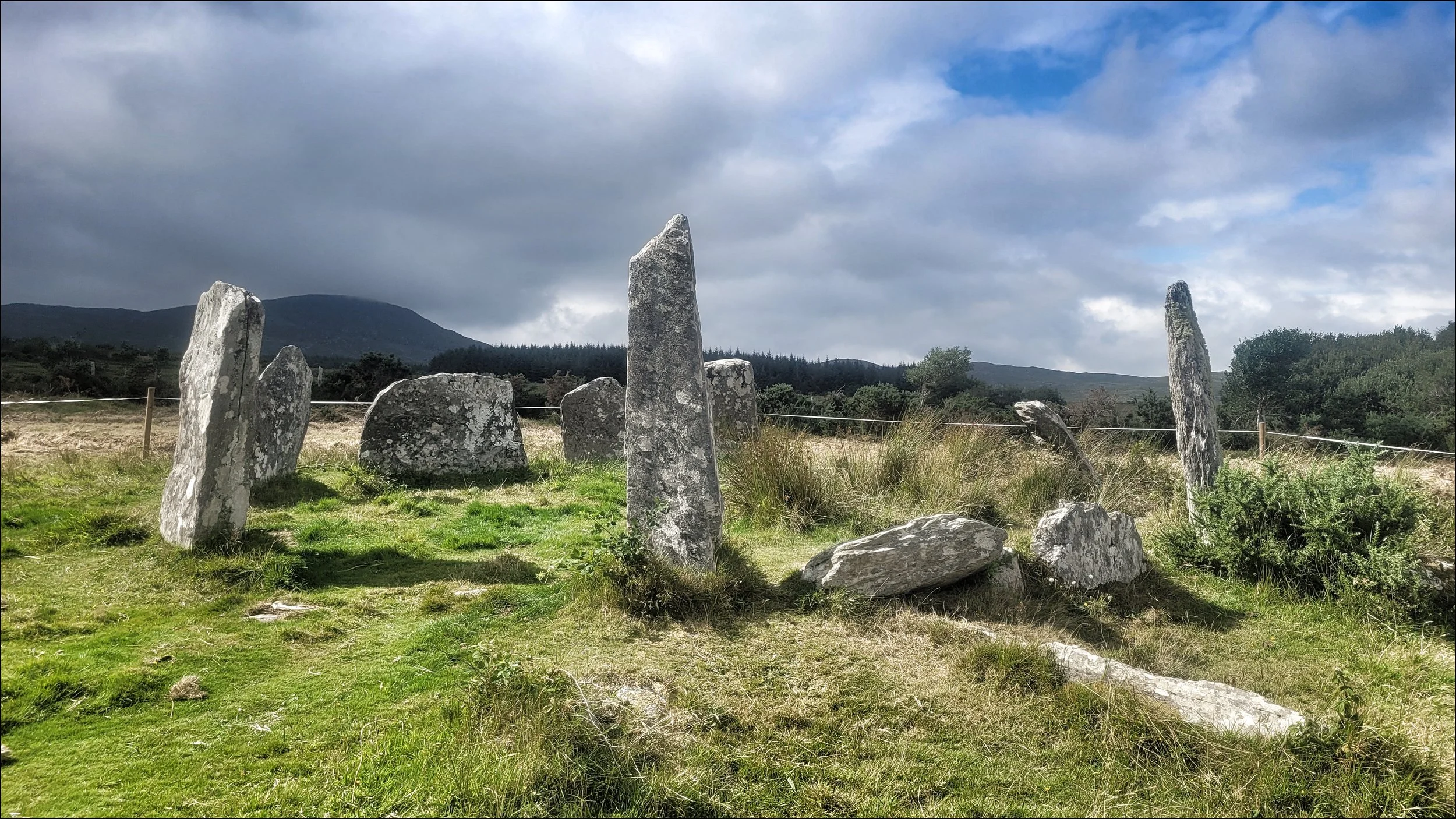
Ardgroom resides on the northern slopes of the Caha Mountains overlooking Kenmare Bay. A short path connects the small car park with the circle, set in rough pasture of long grasses and gorse. As I approached, the tall angular stones came into view, tightly fanned on the northern arc. The tallest four were a slender six feet high and had long tufts of grass at their base giving them the appearance they had just sprouted from the ground. As with the other circles on the peninsula the stones, receded in height around to the south west, but here the Axial stone was not flat but pointed. There was an energy connecting these stones, a kind of animated dynamic. I felt if I’d turned away and looked back they might have changed position. There was another presence waiting in the wings. Separated from the circle by gorse bushes was a block like standing stone in attendance with an ambiguous profile. From the southern side it appeared flat and thick, but from the eastern view it was thinner with a twisted top, reminiscent of a finger pointing up to the heavens. Inside the nine stones there a small flat stone but no sign of a central cist.
The mist began to roll down the slopes behind me and within ten minutes Ardgroom had taken on a brooding character. Looking out over the sea I had a strong feeling I would be back and that the stones approved of my presence there.
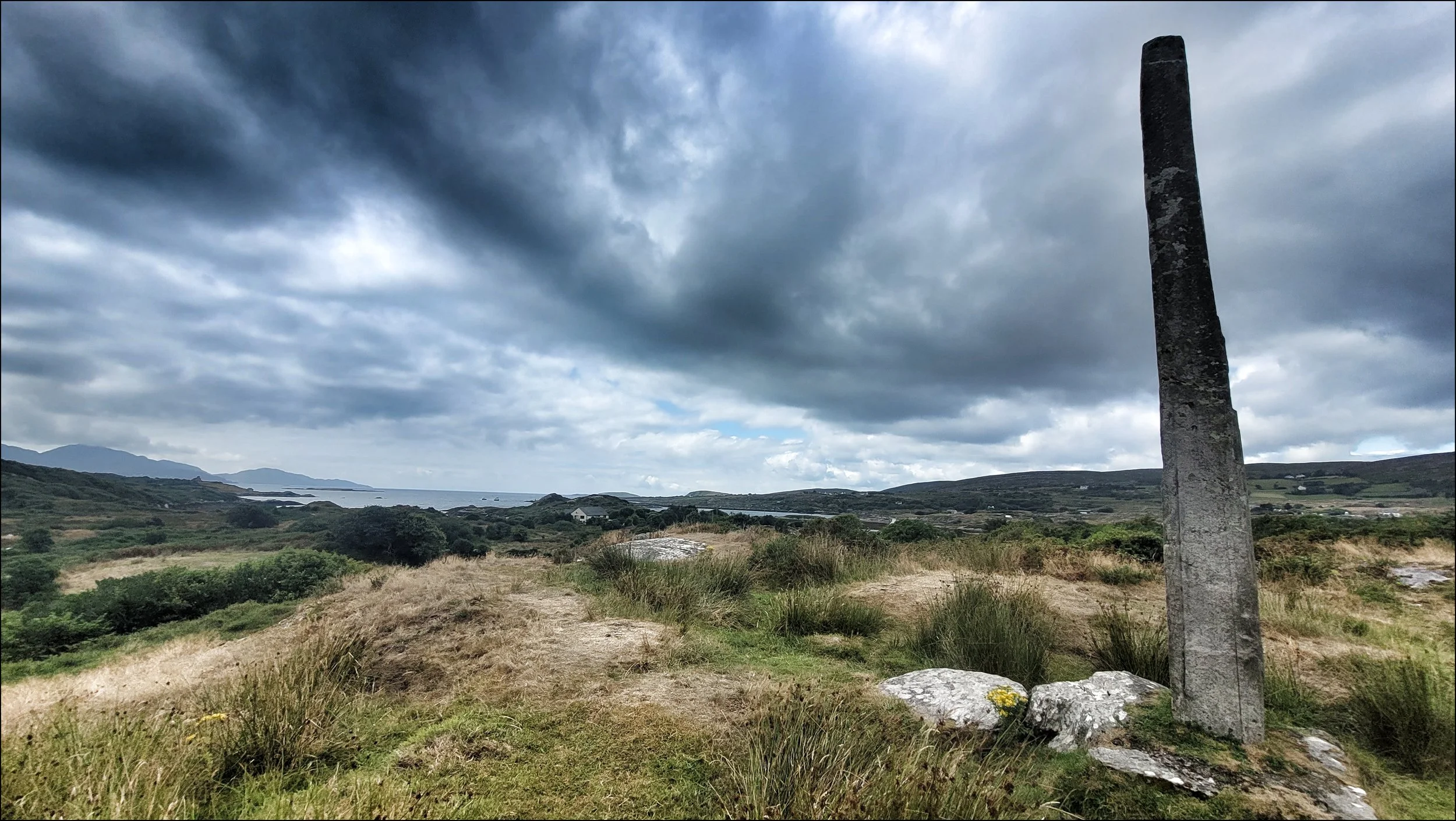
Beyond the village of Ardgroom to the west, a narrow loop road descends down to the coast and the quiet harbour village of Ballycrovane. Up behind a bungalow on a ridge stands the tallest standing stone in Ireland at fifteen and a half feet. A sign to it lead me through the garden of the bungalow where I made a donation of five euros in the box on the gate, before climbing the slope up to the ridge. The tall slender stone rose up from a shallow mound, making a perfectly fashioned platform for a wonderful view out to the sea and coastal mountains.
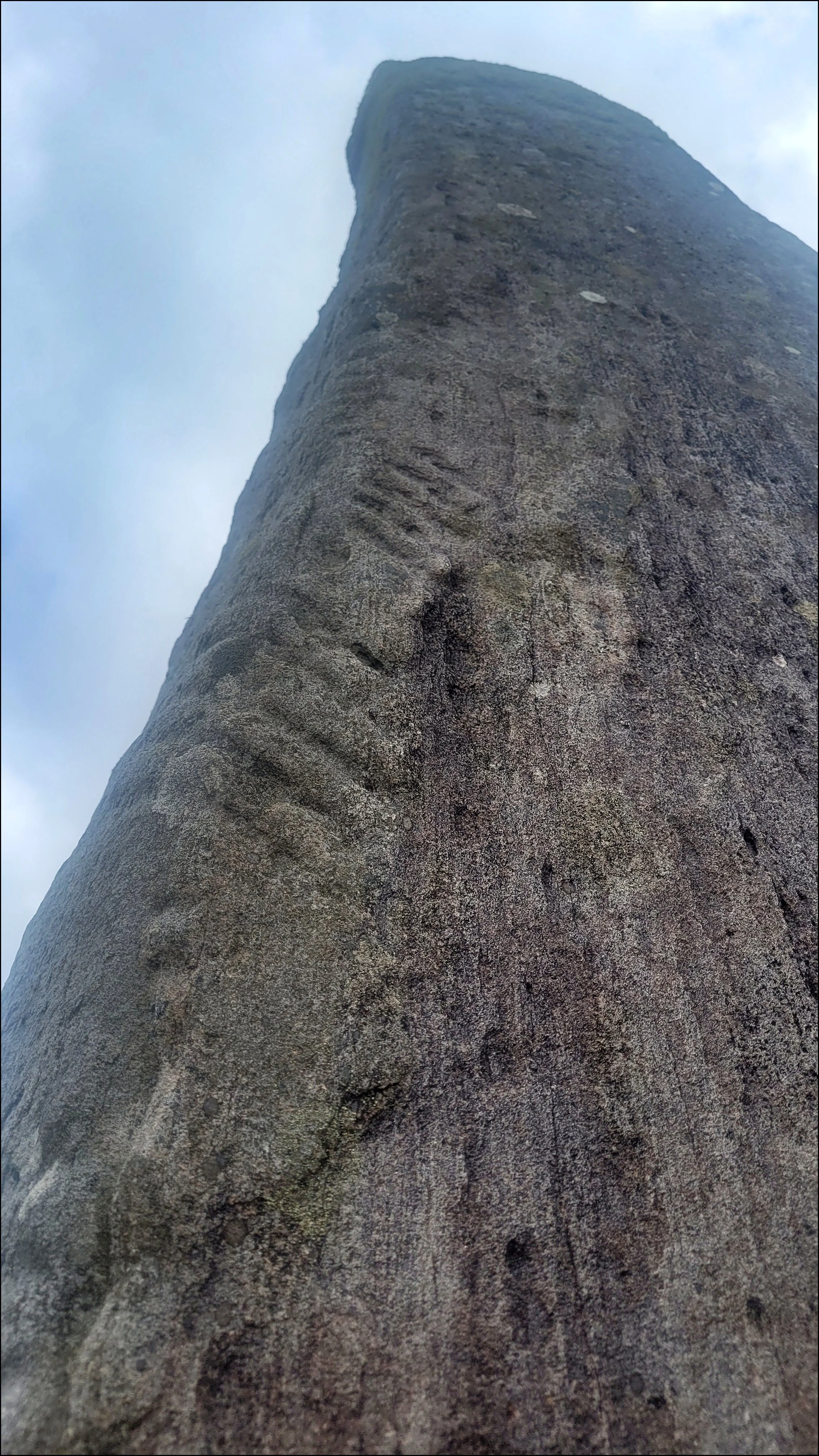
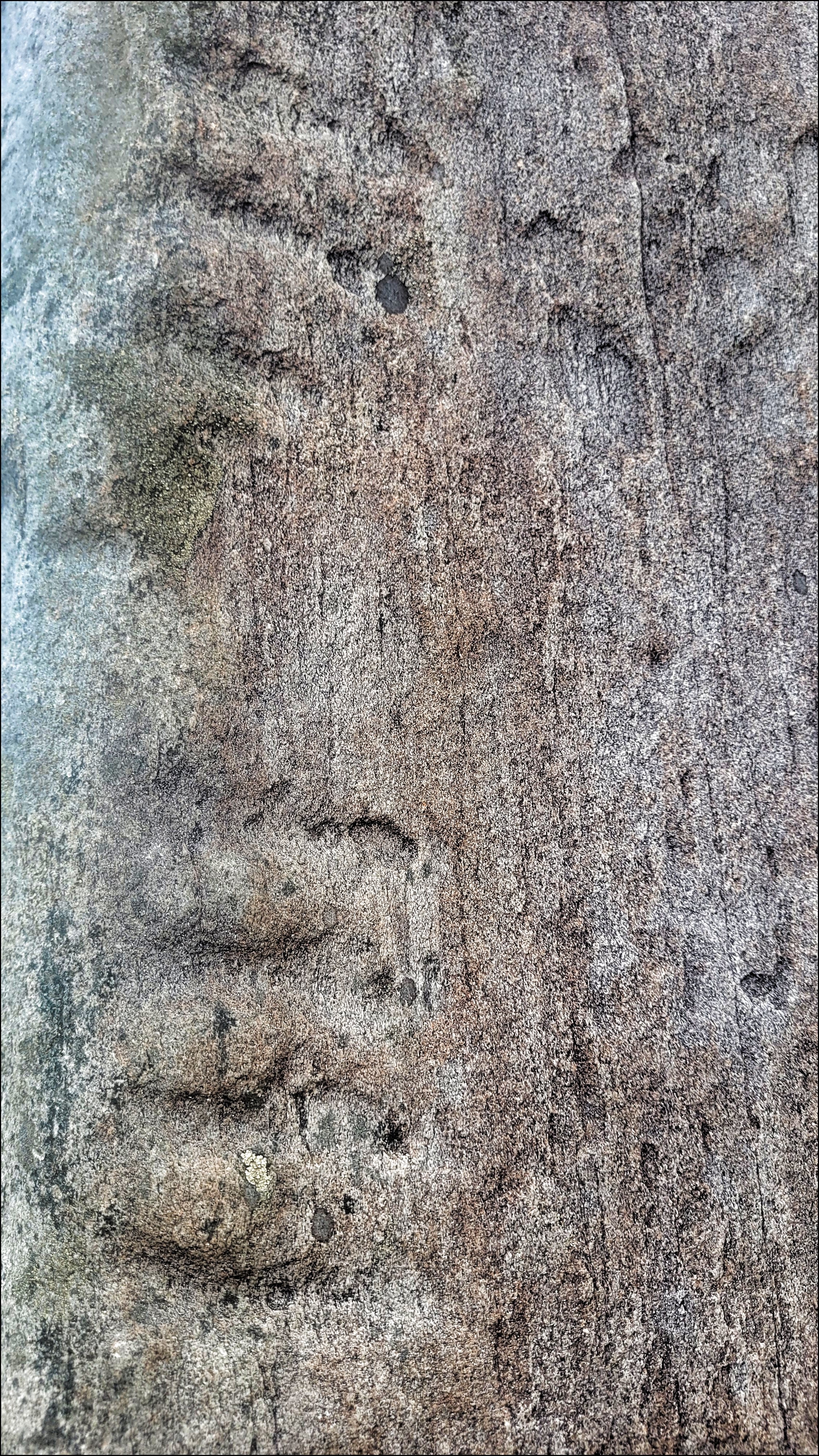
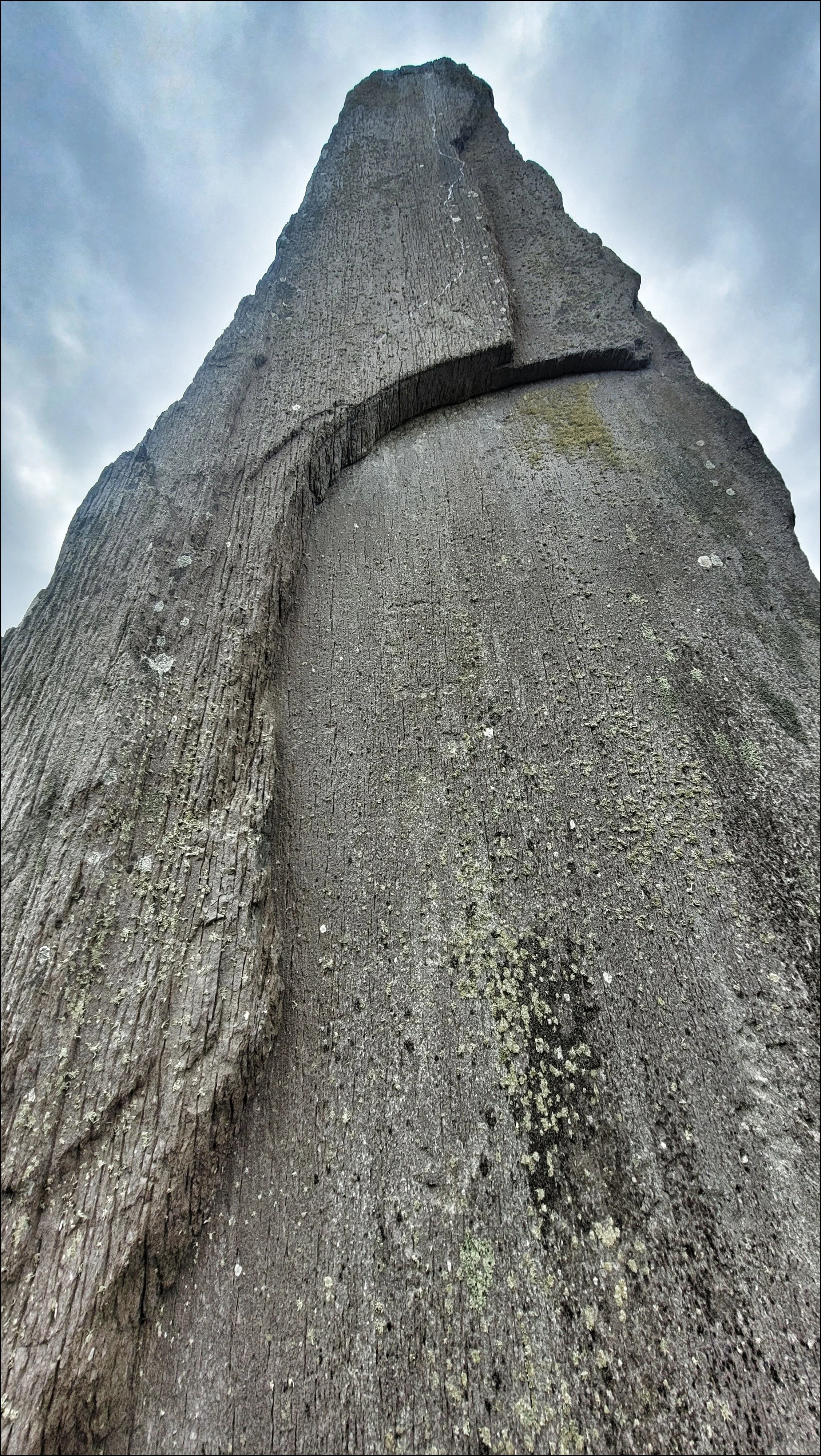
As well as being a Bronze Age installation, this was also an Ogham Stone and the tallest of it’s kind in Europe. The markings of ogham script, dated between 300 to 600AD are visible up the north west edge and have been translated to ‘‘of the son of Deich decendant of Torainn’’ The carved script was in pretty good shape considering a lot of the west facing side had succumbed to weathering. Large chunks of rock had flaked off revealing a smooth under surface, much like the bark of a tree.
There was another standing stone half way across the peninsula at Kilmacowen. I headed south through the multicoloured village of Eyeries and found the stone up on the slopes of Eagle Hill just off the R571. I pulled over to work out my approach to it and a 4 × 4 pulled up. The driver suggested a parking spot further on and said I was welcome to view the stone, confirming him as the owner of the land.
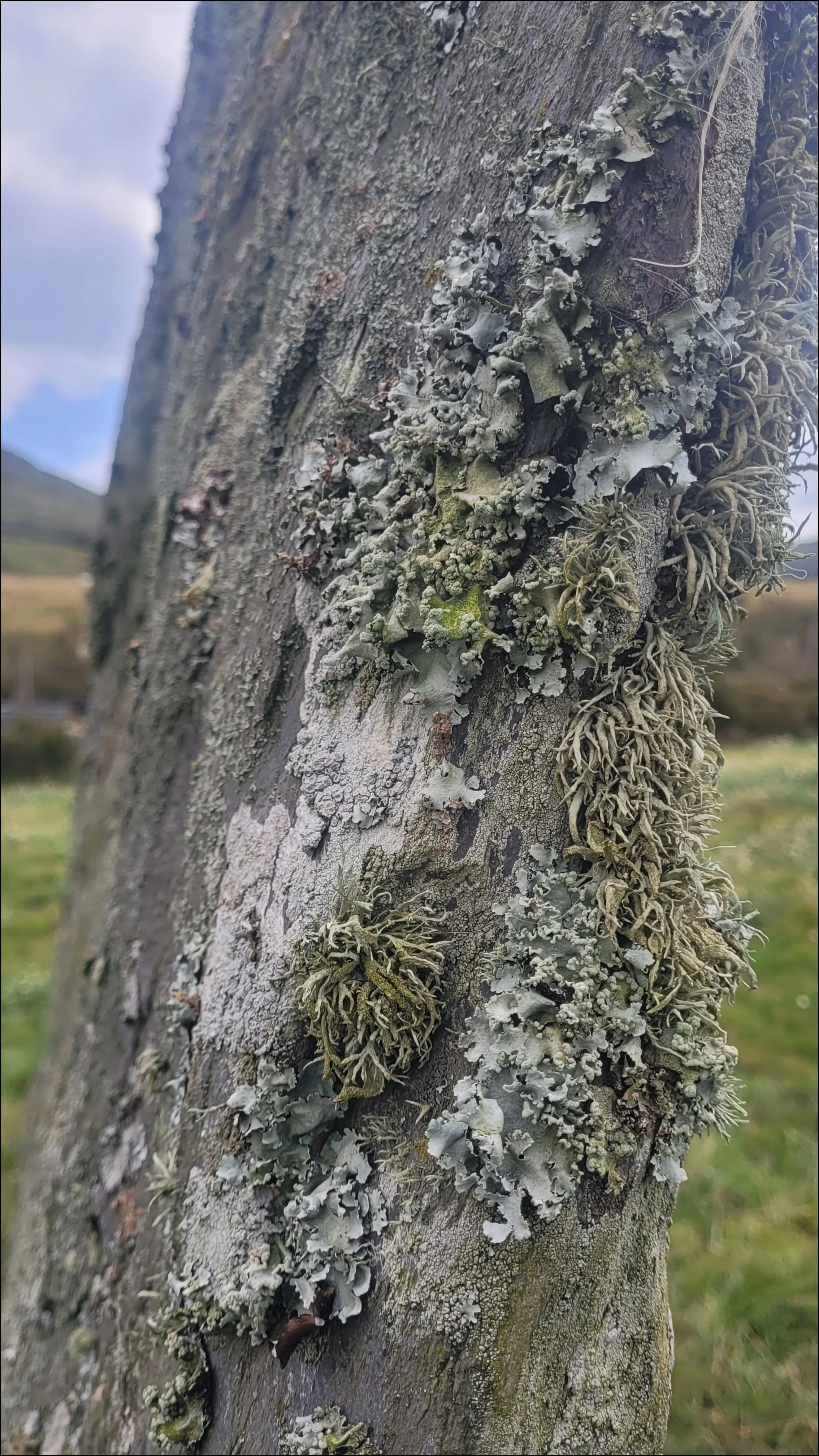
An easy straight track lead up to the stone, a broad rectangular chunk of red sandstone. Like so many of these west coast giants they were not what they seemed and as I got level with it I could see it was less than a foot thick. The edges were weathered and a furry fruiticose lichen had colonised the cracks. Packing stones at the base suggested this ten foot stone was well anchored in despite it tilting to the west.
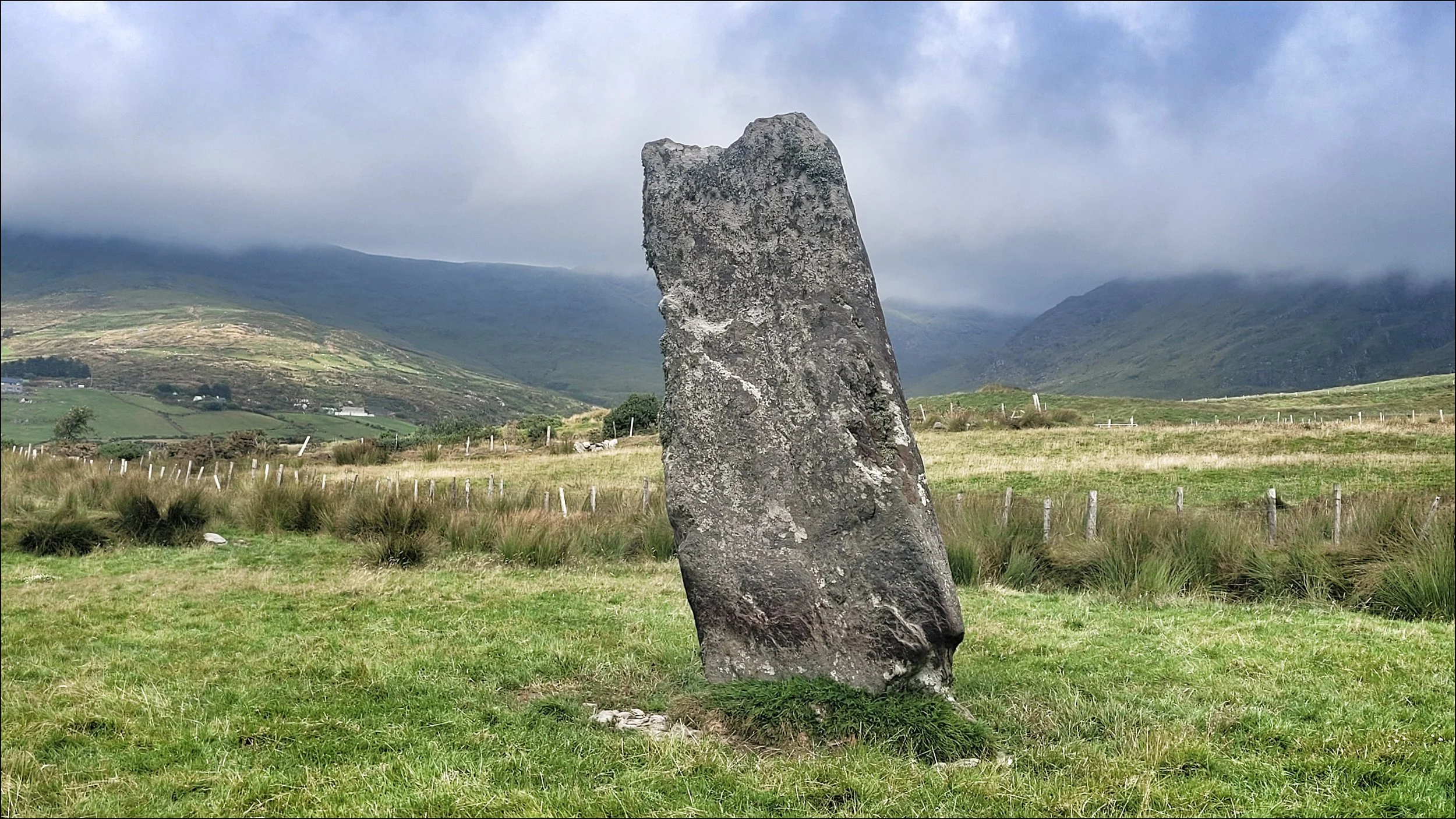
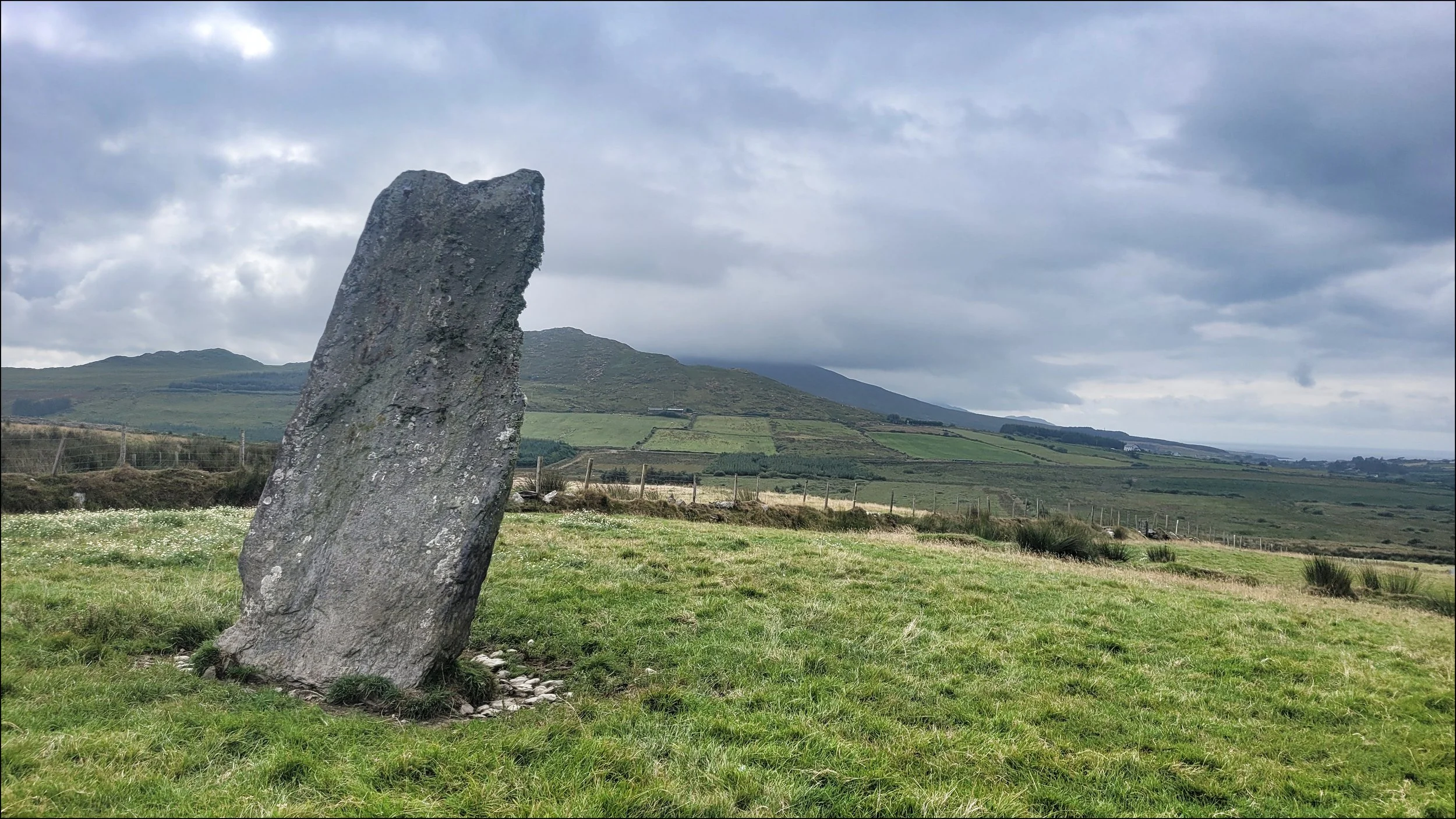
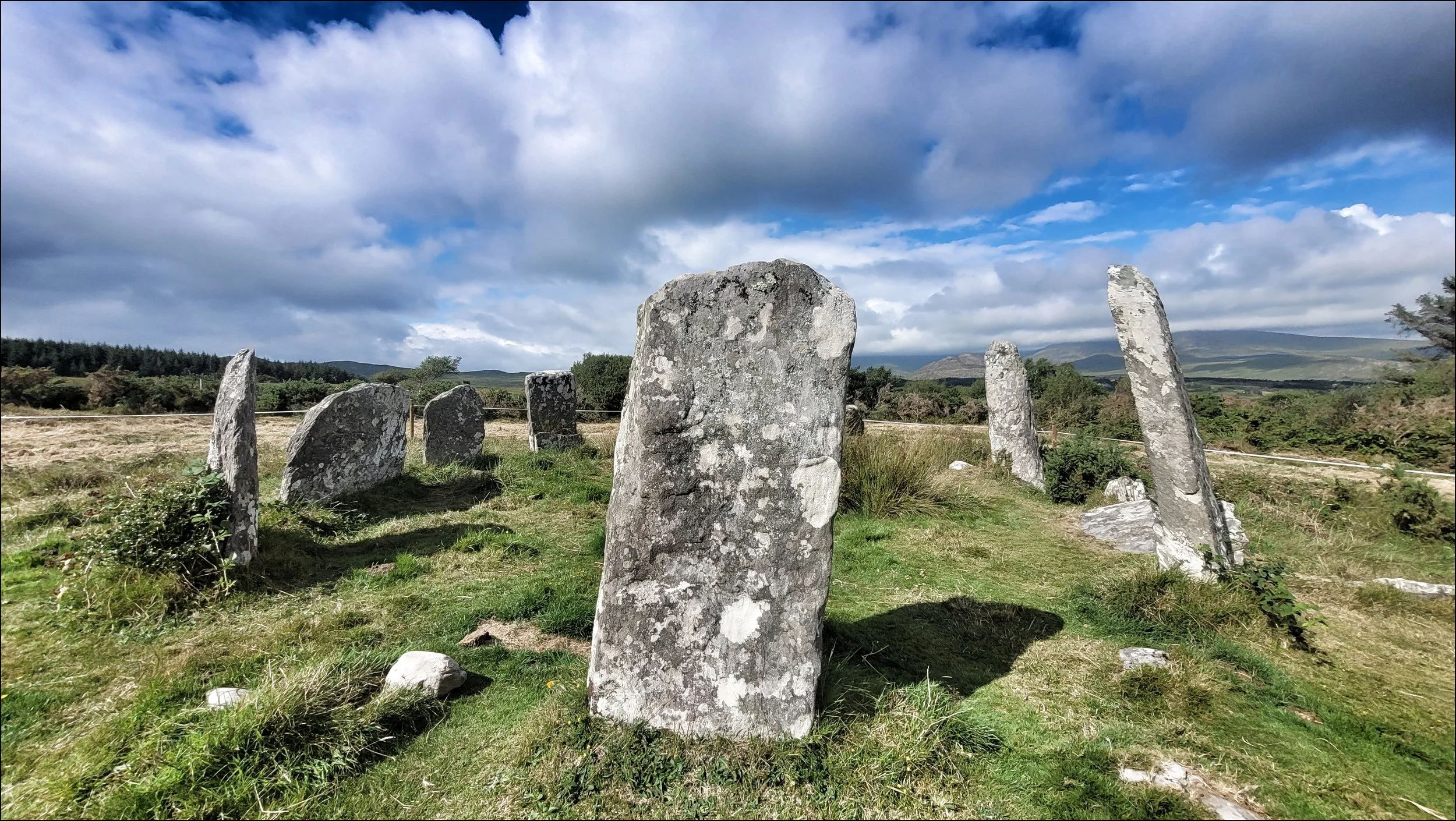
The last Axial Circle on the Beara was north west of the lively town of Castletownbere on Bantry Bay, with more colourful houses and bunting and where tables and chairs of the busy bars spilled out on to the street. Out the other side of town I climbed up a quiet country lane with wonderful views of the bay. A signpost indicated the way to Derreenataggart along a taped off path to the circle of twelve stones of an original fifteen. The circle itself was taped off too to prevent the cattle from wandering in. The tape was a slight eyesore but it didn’t detract too much from the symmetrical beauty of this fantastic circle.
This was another circle where the stones leaned in to the centre. With a diameter of over seven metres, there is now only one Portal Stone standing, the other has broken off and lays at a tangent to the circle. The stones decrease in size around to the south west, but not as dramatically as at other Axial Circles with the axial stone at four feet high and seven feet long. I made my way around the perimeter and was struct by the balance of the circle’s layout. It was pleasing to the eye and consequently quite captivating. I had had this reaction at some of the great Recumbent Circles in Aberdeenshire. Then on queue, the sun broke through and for a moment sharing the spotlight, I felt a strong pulse from the stones of Derreenataggart.
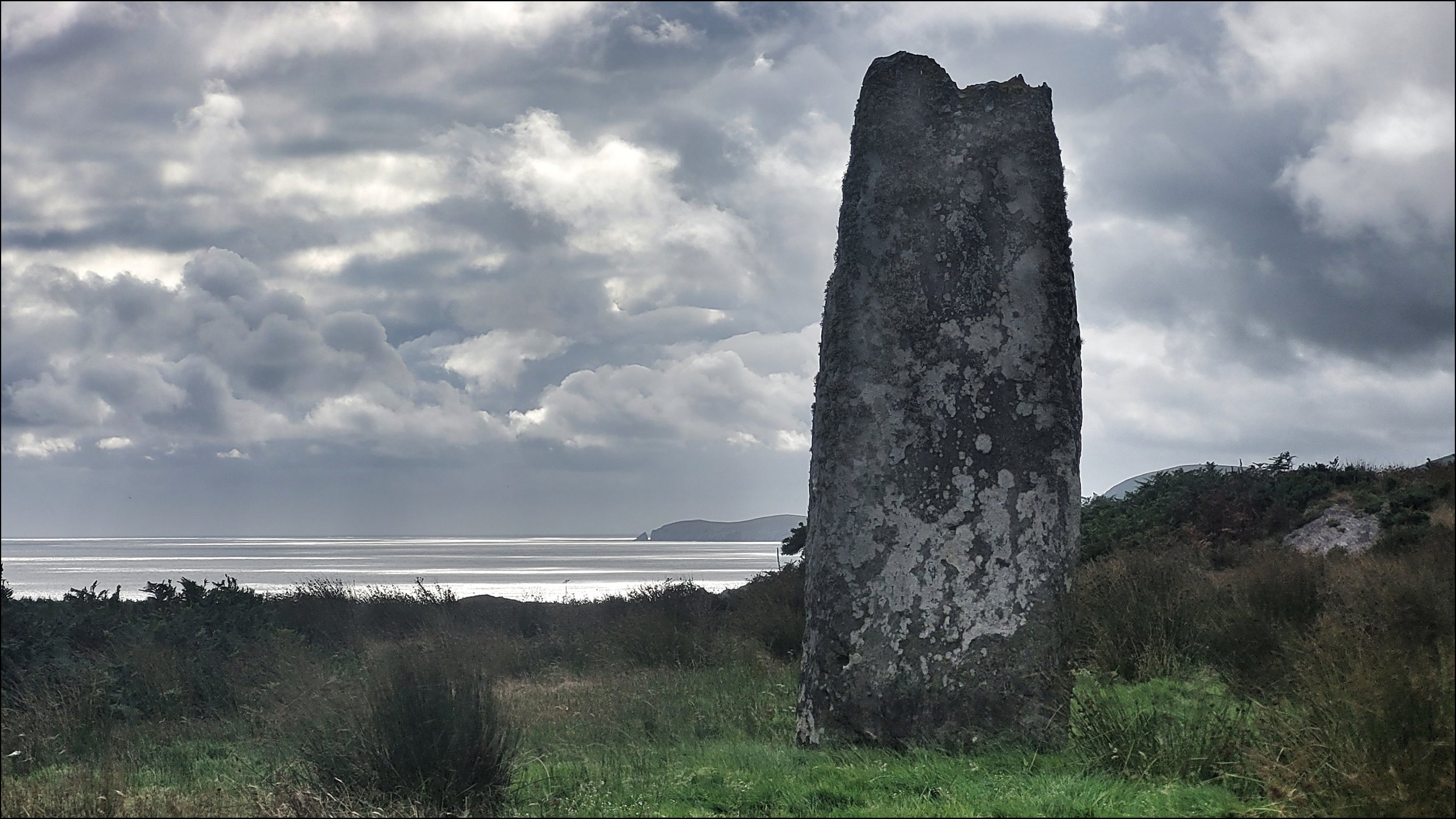
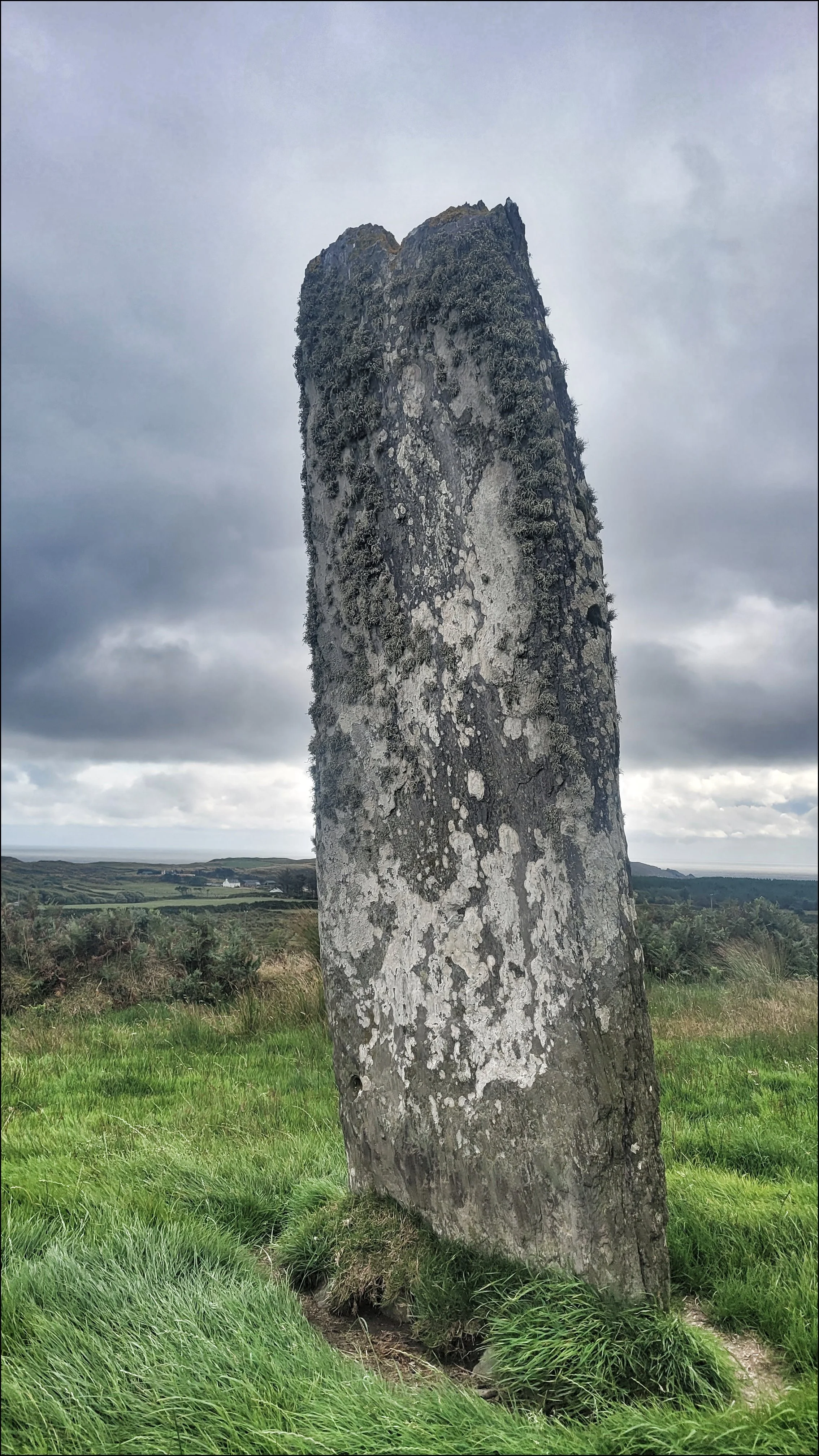
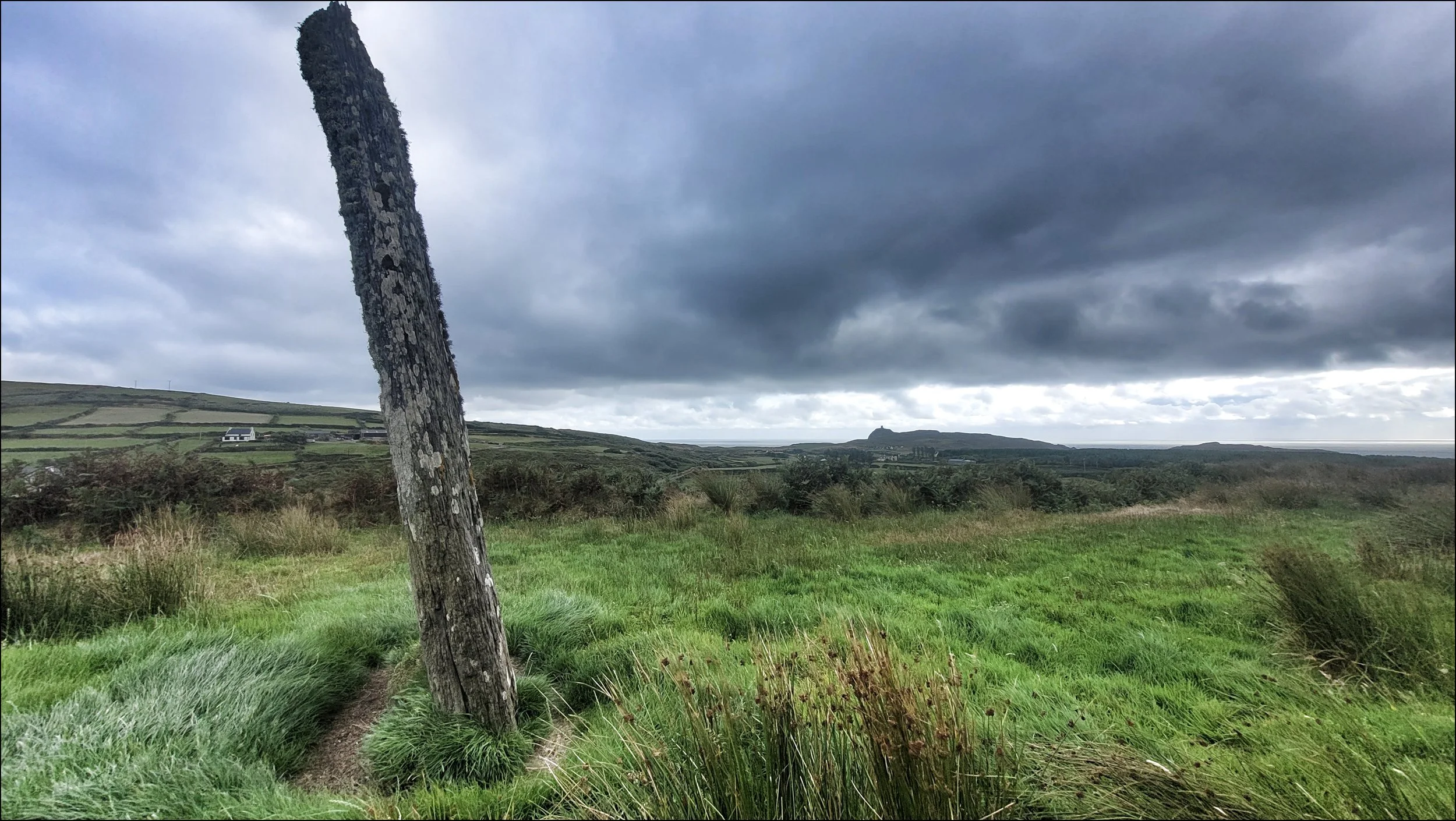
I was planning to get down to end of the Beara that night to take the cable car ride over to Dursey Island the next day, but to end the day I had the Cahermore Standing Stone to visit near Ballydonegan. The glacial pastural landscape had changed to a barren rocky coastline. I kept an eye on the slopes to my right as the road weaved around the shore. The top of the stone came into view up on a ridge not far from the road. I was lucky to find a pull in opposite and a track leading up through the bracken. I emerged onto a flat field with Cahermore over to the left and the evening sun glinting off the Atlantic beyond.
As with Kilmackowan the broad side faces the west but here Cahermore is taller at thirteen feet. Again, as I drew level with it I saw it was astonishingly thin from top to bottom. Like the Axial Circles there was an apparent theme running to these standing stones and I thought of Stenness on Orkney and Ballinaby on Islay where there too, the slender giant’s wider side faces the setting sun. I wondered if the people who had installed Cahermore had ever expected it’s five thousand year old longevity. The entropy of these Neolithic and Bronze age structures seems to be at a slower rate than that of the great structures of the modern age.