Secrets of the Dales
17.04.2026
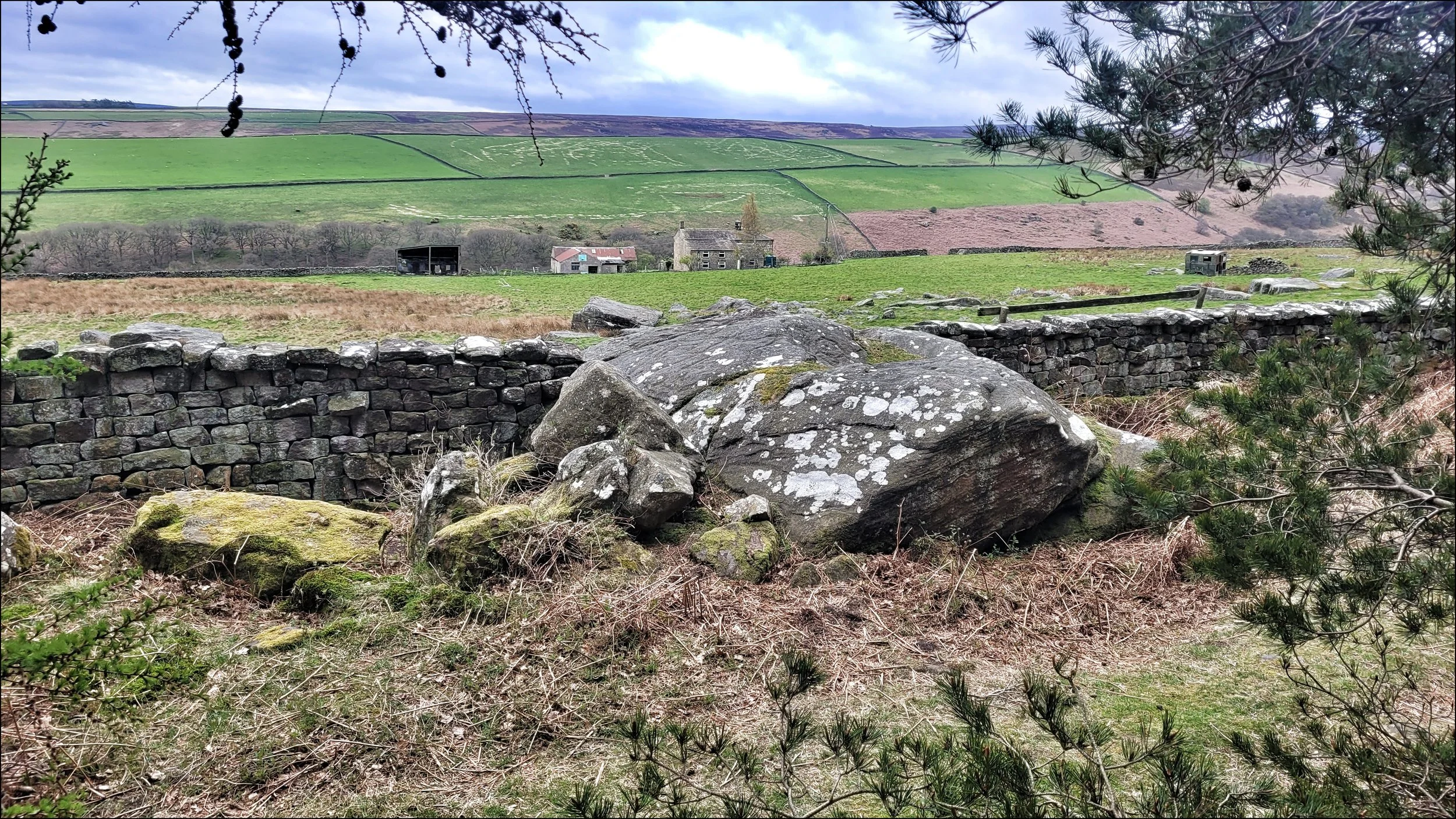
Up on the northern slopes of Colsterdale in the Yorkshire Dales above the River Burn stands an isolated farmhouse surrounded by fields strewn with exposed outcrops of limestone boulders. Many of them have been worn down and reshaped by thousands of years of weathering, but hidden amongst them are some intriguing man made symbols from Britain’s ancient inhabitants.
I reached the fields from a ford at Gollinglith and followed the valley to a crossing point on the river. I had been granted permission from the estate management to access the fields via a farm track up beyond the desolate farm buildings. The rocks came into view and I knew that, even with the help of a map from Megalithic Portal it would be a challenge to find the precise locations of each of the known rock symbols. I had been frustrated and disappointed at previous Rock Art sites with modest finds from the considerable effort put in. What made the prospect difficult of finding anything was my sporadic internet signal. I had screen saved the map but it was not detailed enough to pin point exact rocks.
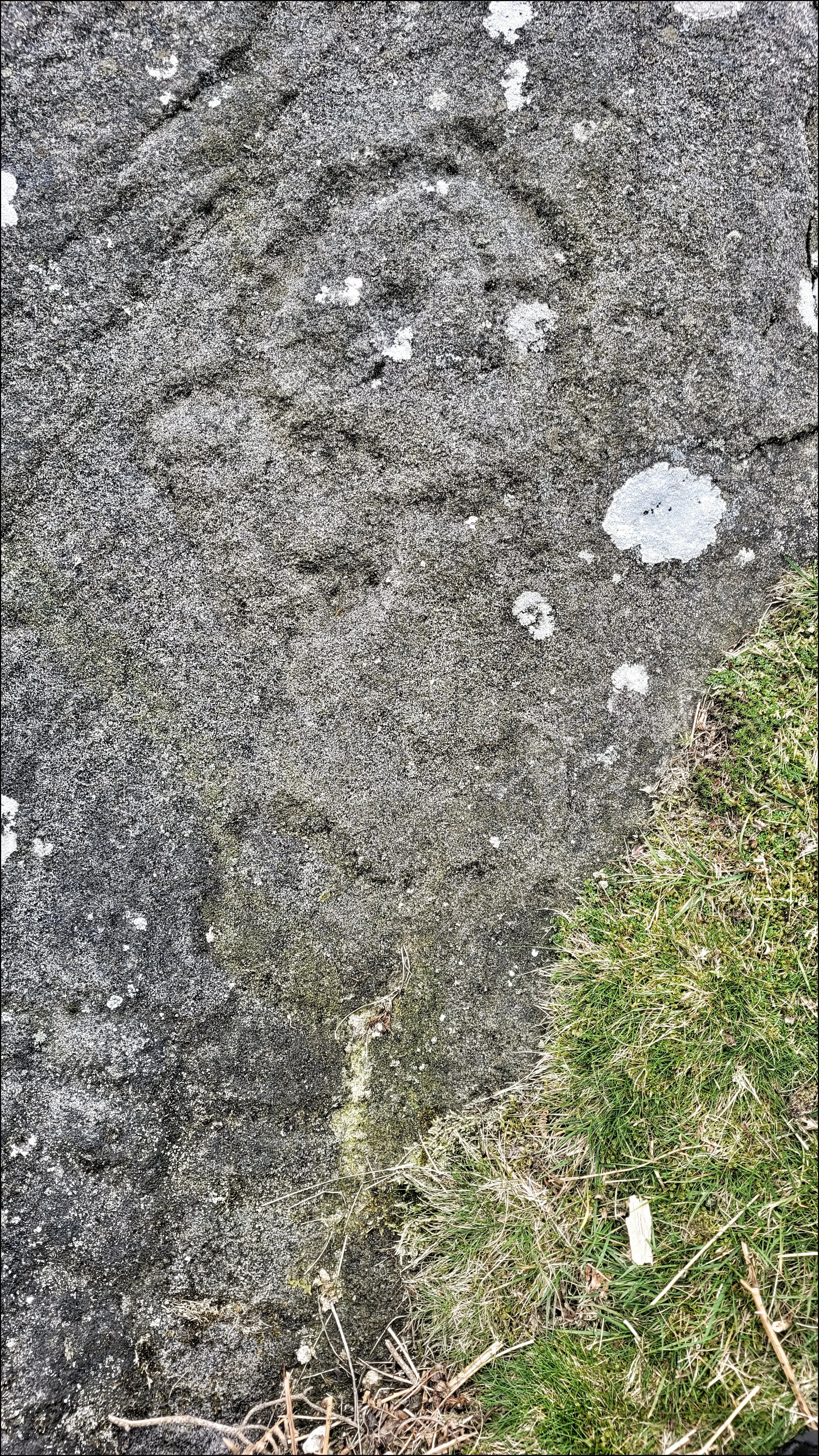
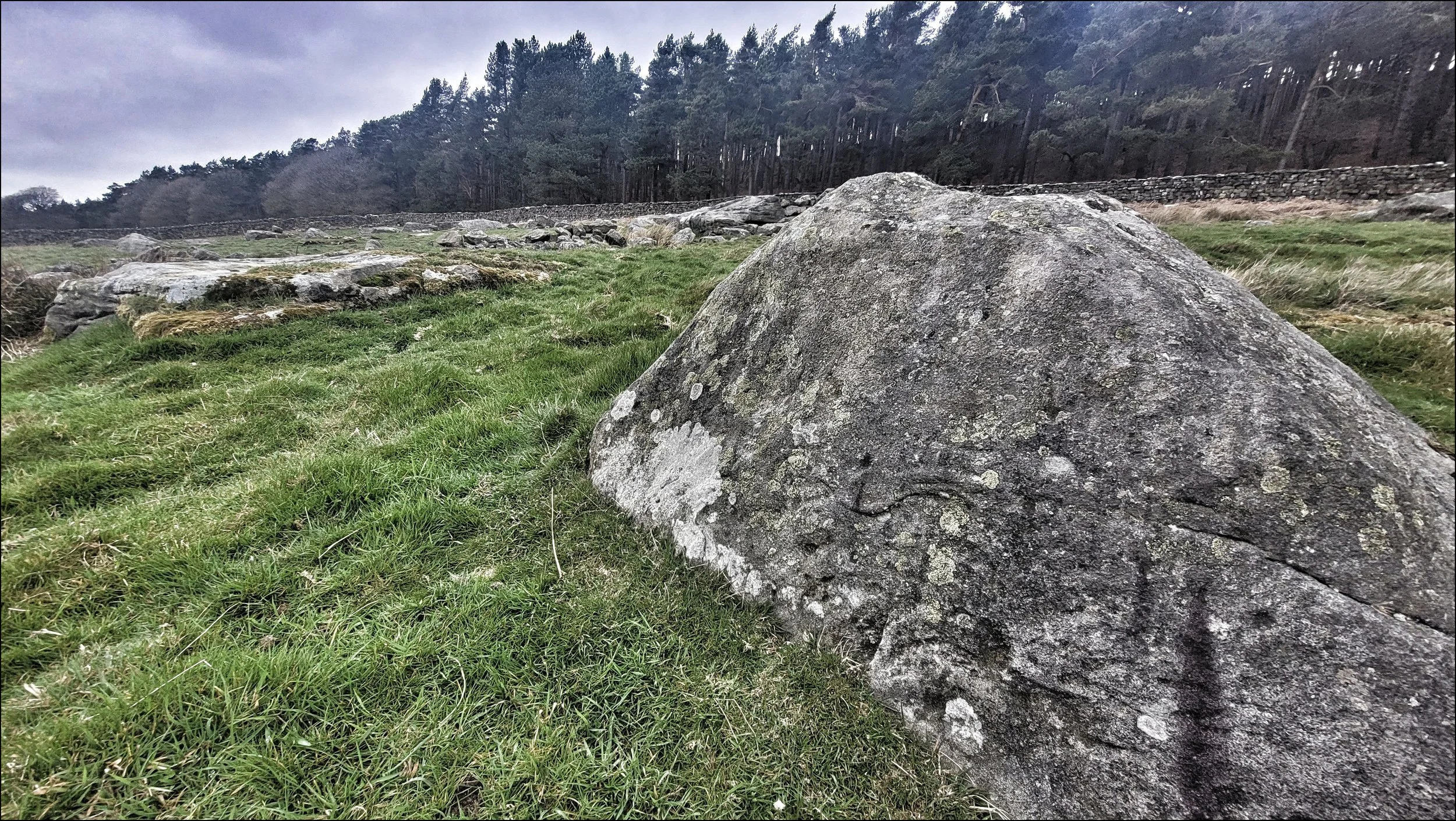
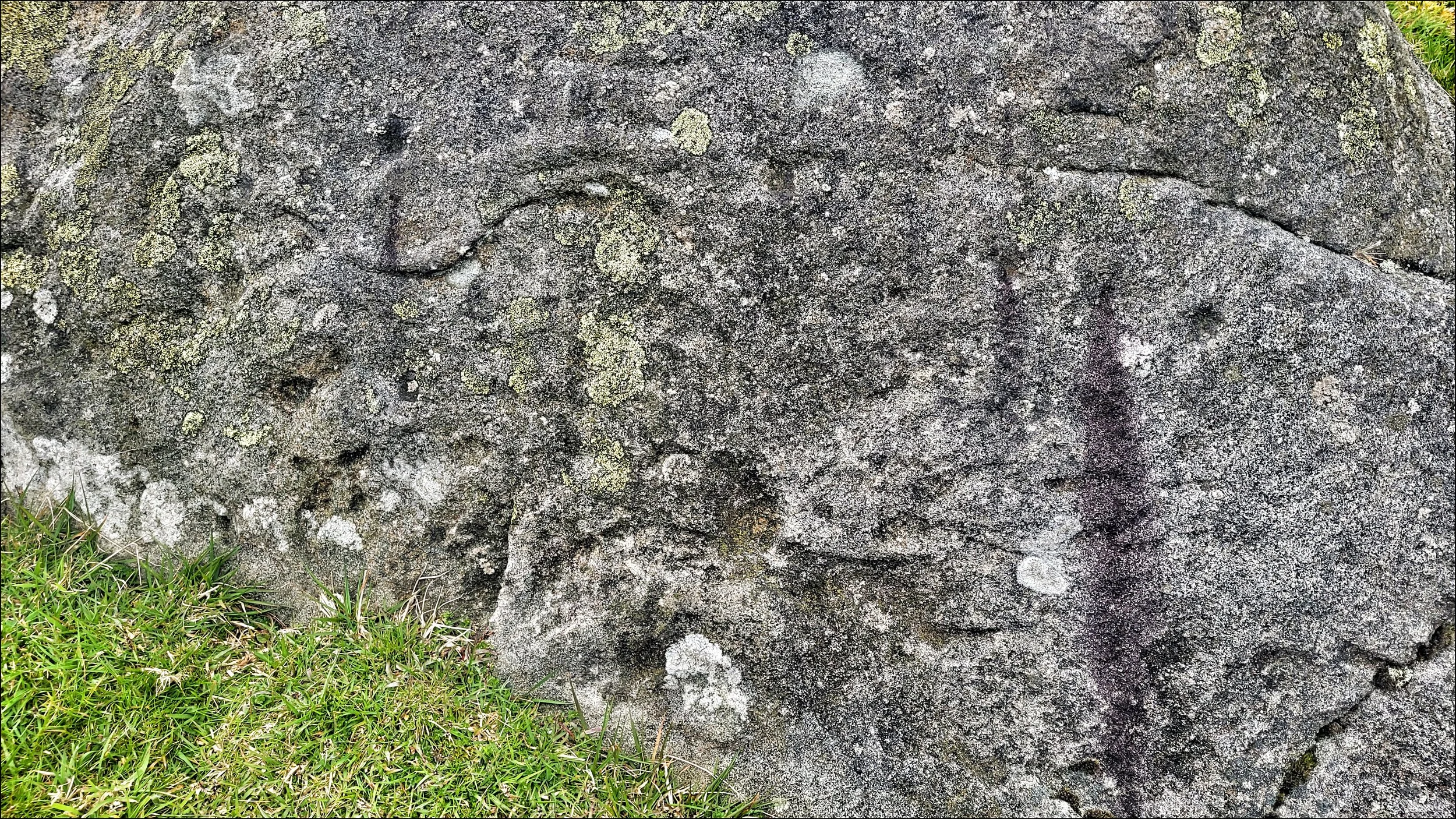
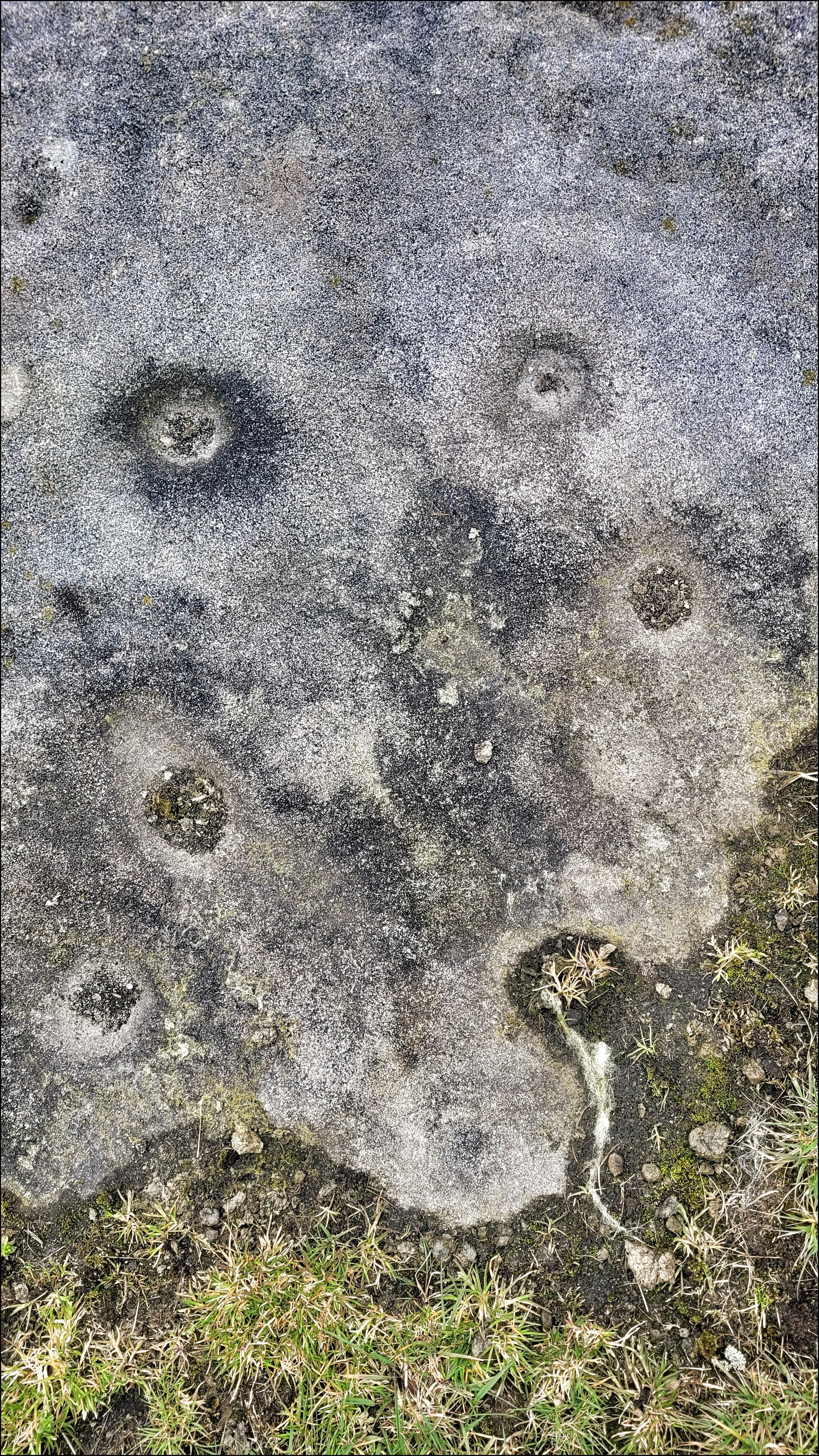
I scoured the first field sometimes standing on the largest rocks and holding my phone high to get online. There were some stones with features that resembled cup marks but there was every chance that they were just tiny natural rock pools. Then on one large upright surface I saw a series of curved lines that stood out as possibly man made, convincing in that they were contrary to the natural structure of the rock.
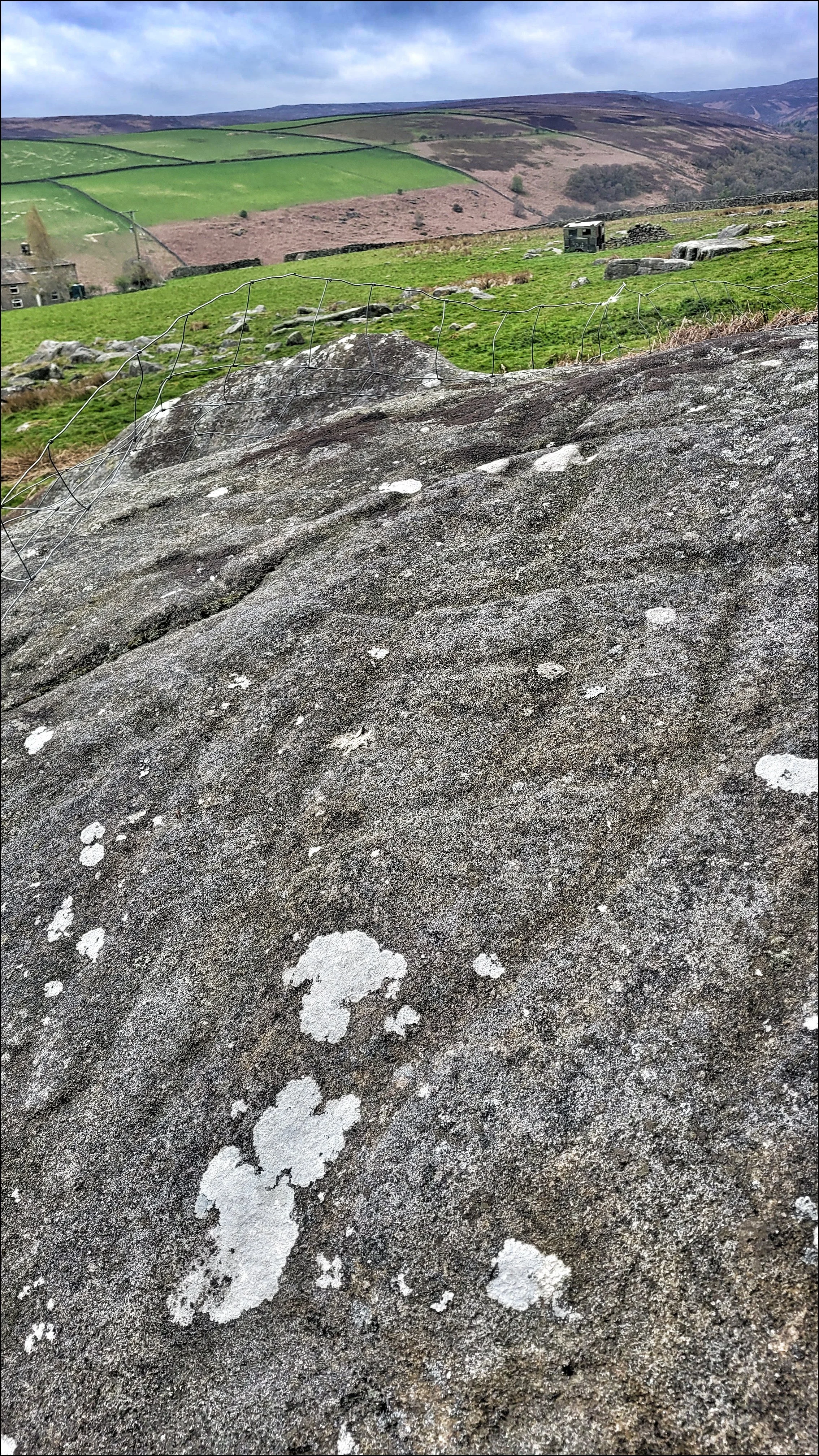
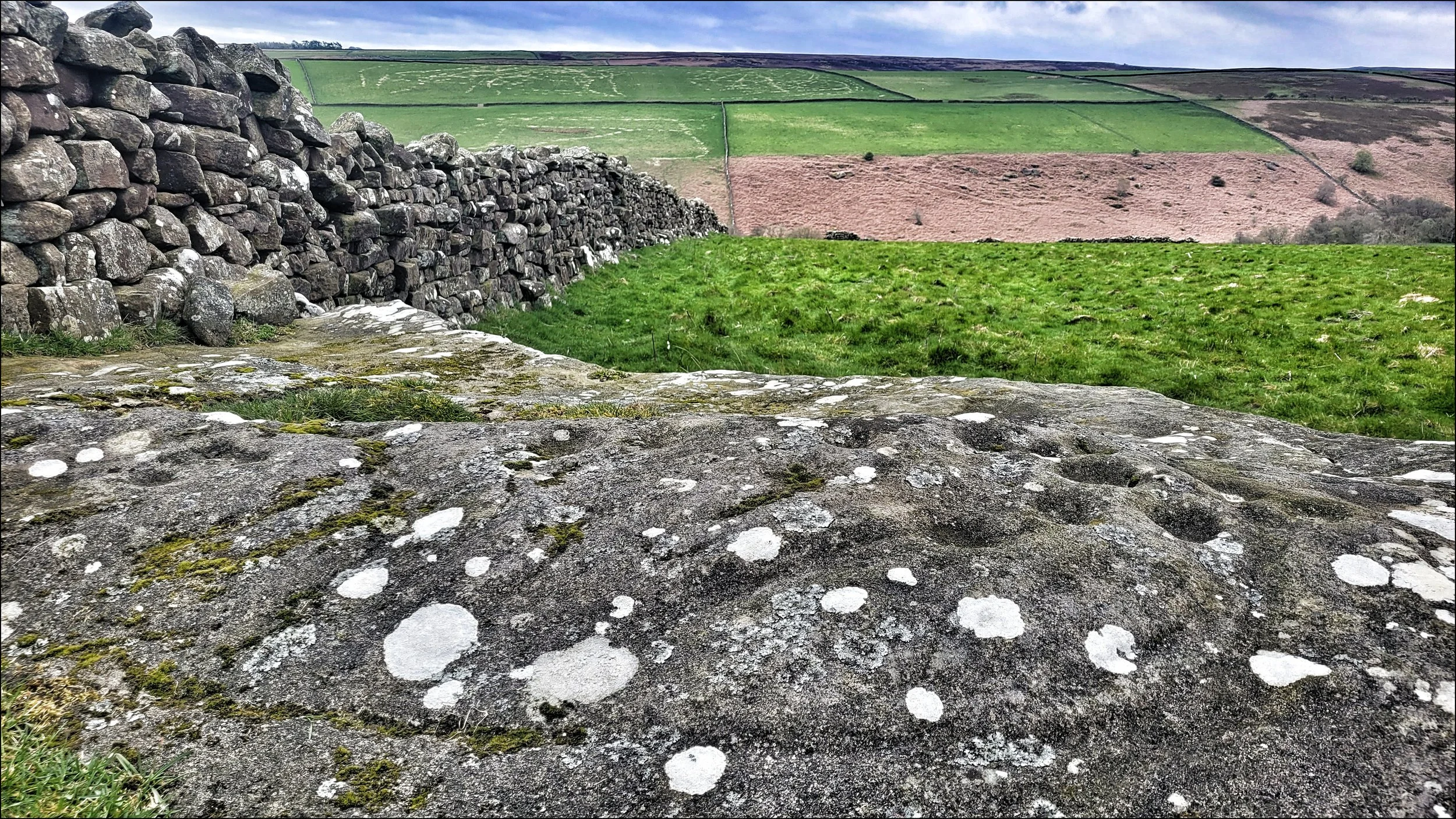
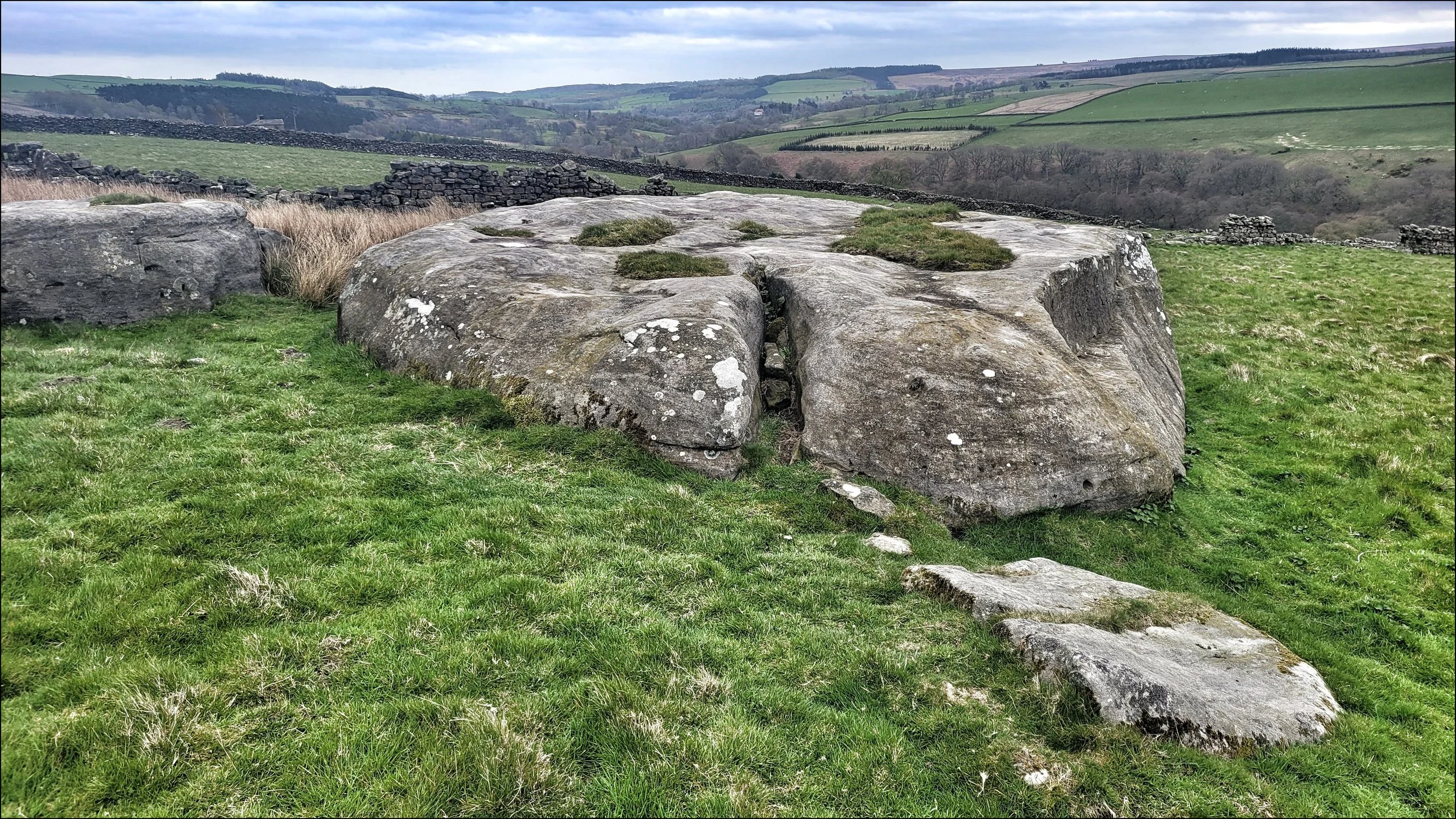
I made my way west to the second field to find a break in the wall surrounded by deep boggy water. Here the wall had been built over a large boulder and my map showed me to be over rock symbols comprising of a series of cup marks. I dodged the boggy ground using the boulder to climb over the wall and soon found the marks on the top of the boulder on the other side. They were in a close grouping and encircled by a curved line around a metre and a half in diameter. Towards the middle of the second field was an even bigger boulder. Once a flock of sheep had scattered from it’s flat top, I was able to see other groupings of distinct cup marks across the surface.
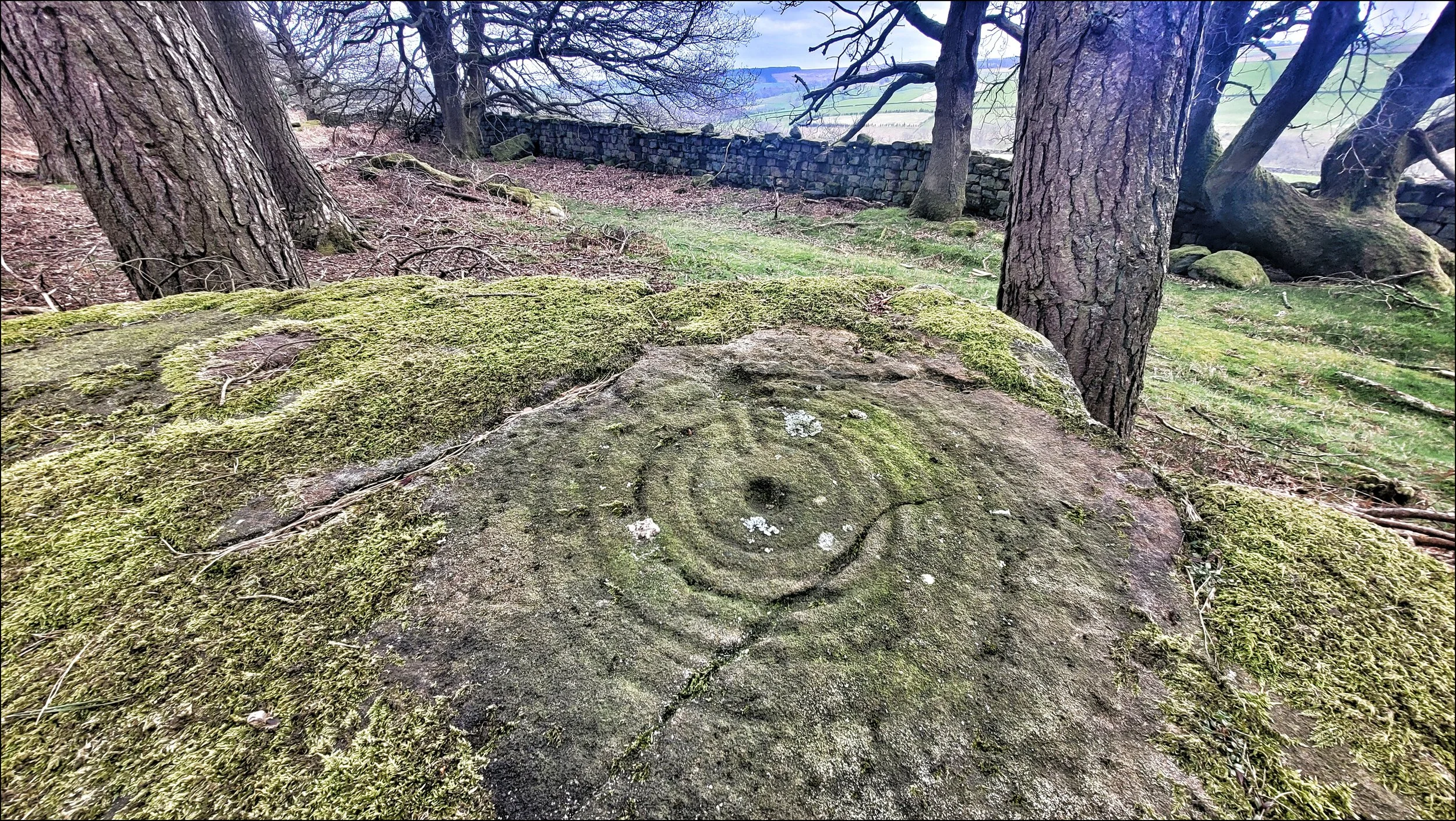
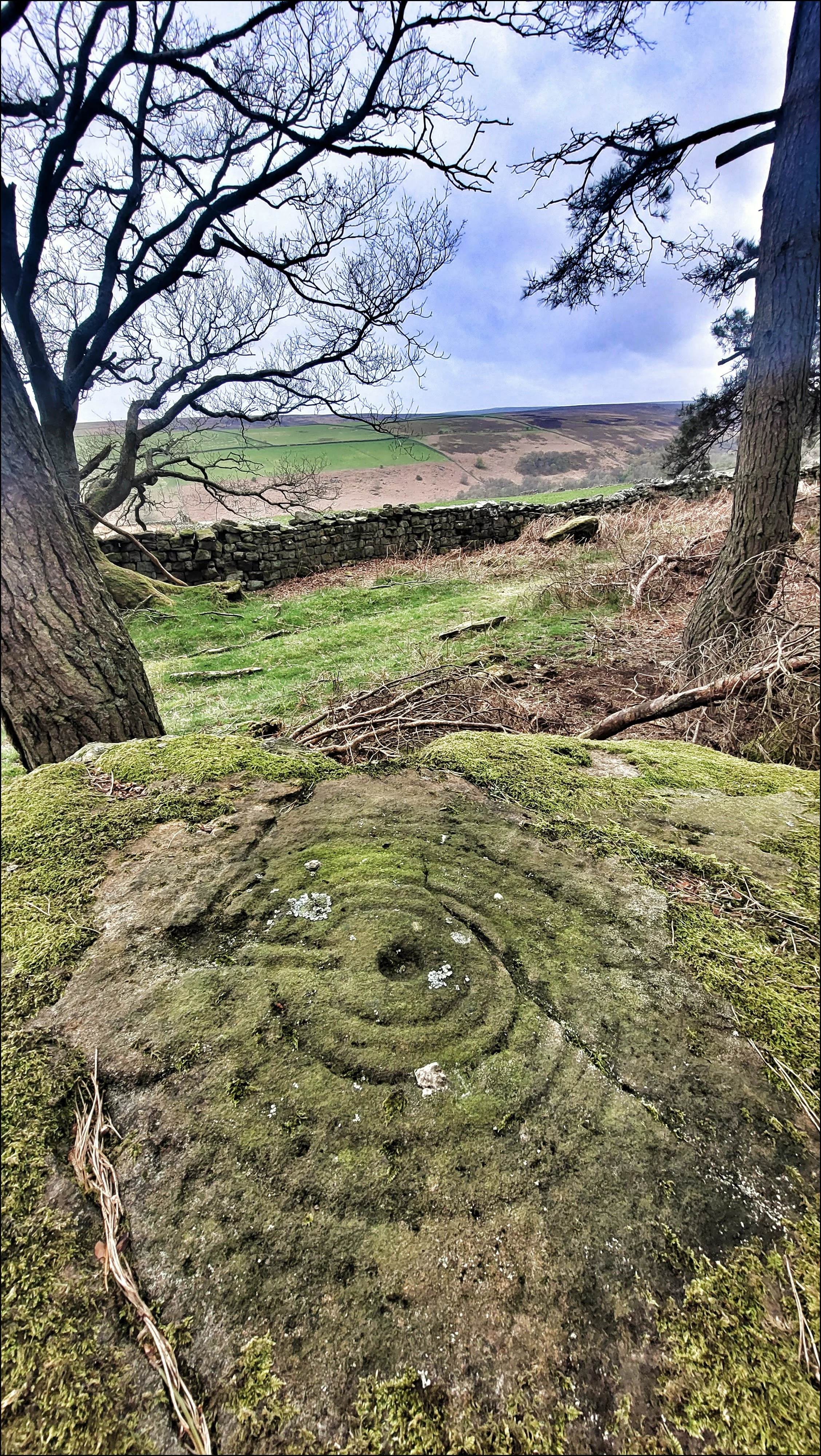
I had read about a very striking symbol of concentric rings here at West Agra. Rather than in the open fields, it lay just within the the tree line of a plantation a few hundred metres to the north. I found my way into it through a rickety gate and followed the wall line east passing more crags and boulders covered in moss and orange lichen, inspecting the surfaces along the way. I felt a growing pessimism creeping in at the task ahead but resolved to find it however long it took. There was no internet signal now so I was to rely on careful inspection and good fortune. I moved away from the wall to look at the crags amongst the pine trees. Luckily their branches were high up and the bracken had died back, giving me decent visibility. I knew from images of the symbol that it lay on a flat section of stone. I picked out some likely candidates, but all of them had a dense covering of moss. Up ahead I could see a kink in the wall and knew it to be very close.
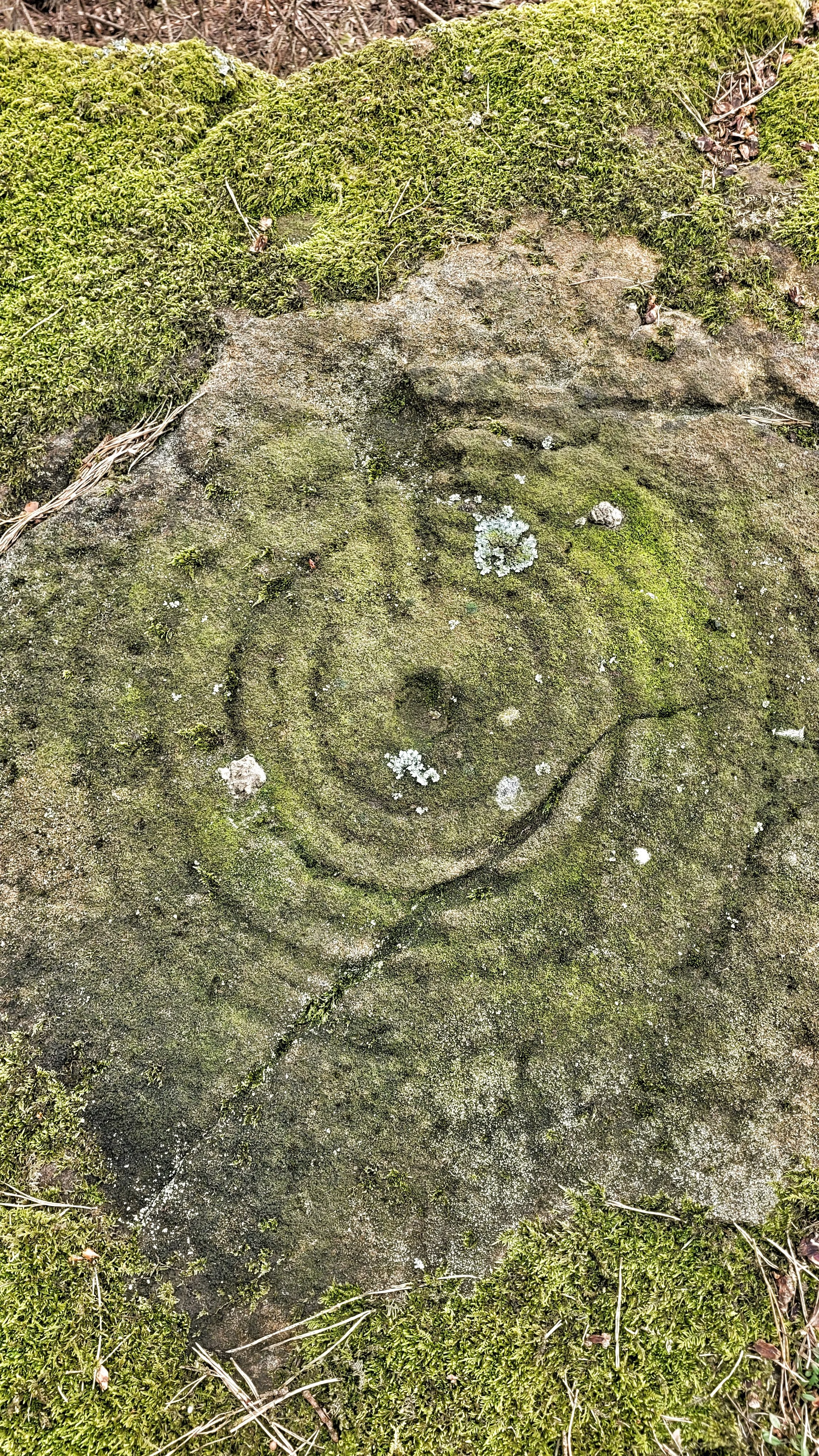
Then by pure chance I glimpsed a bare patch of moss on a flat topped crag and bingo! I saw the circular grooves in it’s surface. Moss had been removed around it to show it for what it was, one of the best examples of Neolithic rock art in the country. There were seven rings surrounding a cup-mark with a double tail coming from the centre breaking the rings. Two of the rings had worn down on one side but this didn’t detract from the beauty and the aesthetic symmetry of this symbol. I sat beside it on the mossy crag and thought of all the hours spent over the past three years, madly roaming from rock to rock looking in vein for these Neolithic treasures.
At the kink in the wall was another large boulder that protruded either side of it. It not only provided me with a way over into the first field but displayed the final and most curious marks at West Agra. On the plantation side, on the western sloping edge was what appeared to be a standing figure with raised arms, and next to it a series of squared boxlike marks. To my knowledge this style of imagery appears nowhere else in these Isles, which raises questions about their provenance as ancient rock art. It seems possible that drawing inspiration from the authentic symbols around, a more contemporary individual may have tried his hand, oblivious of the confusion that would result in the antiquarian world.
I picked my way through the rocks in the first field, passing the ram shackled farmhouse on my way down to the river and feeling satisfied at leaving behind me puzzles from an ancient past.