In the Shadow of Stanage Edge
23.05.2026
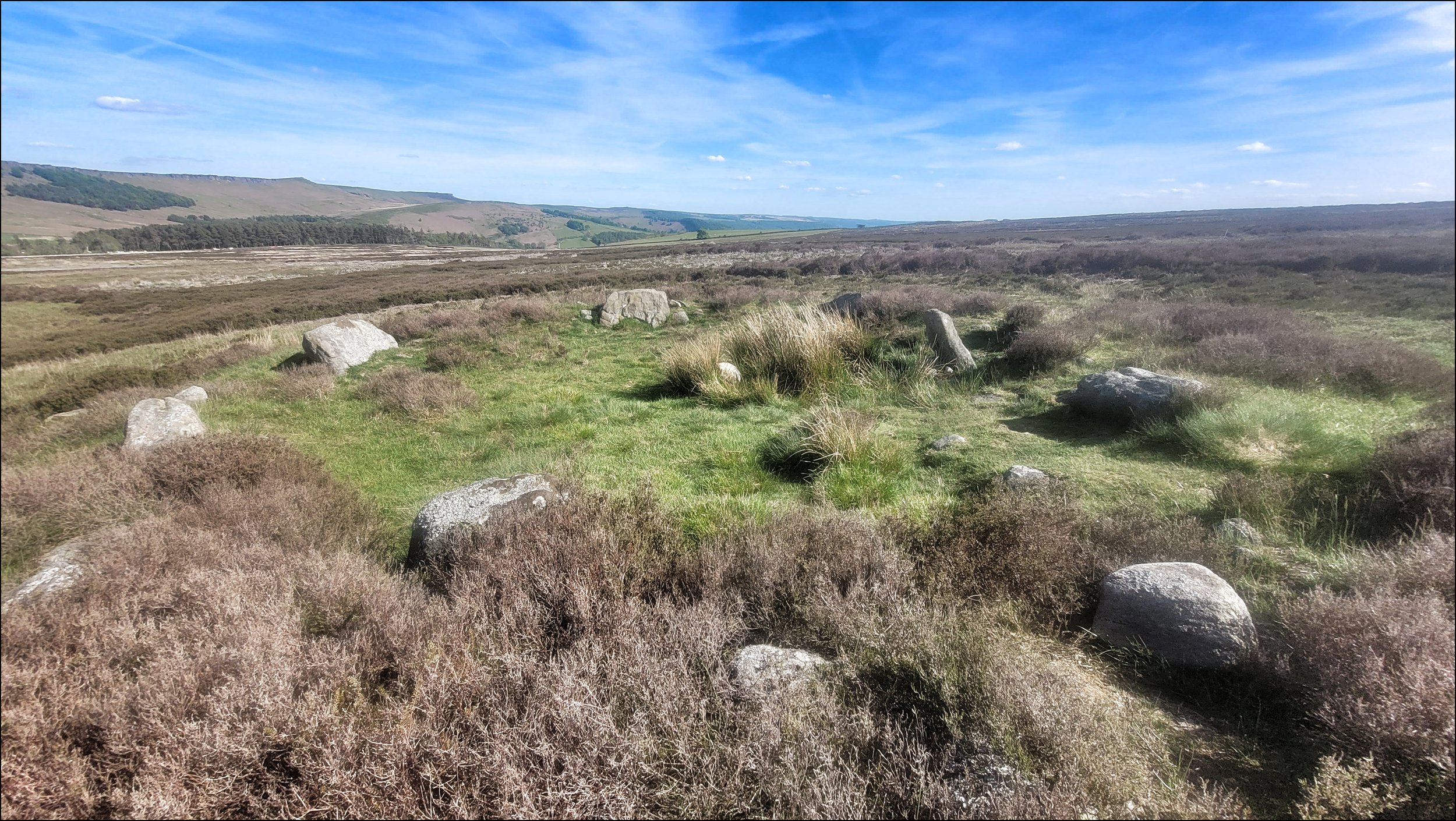
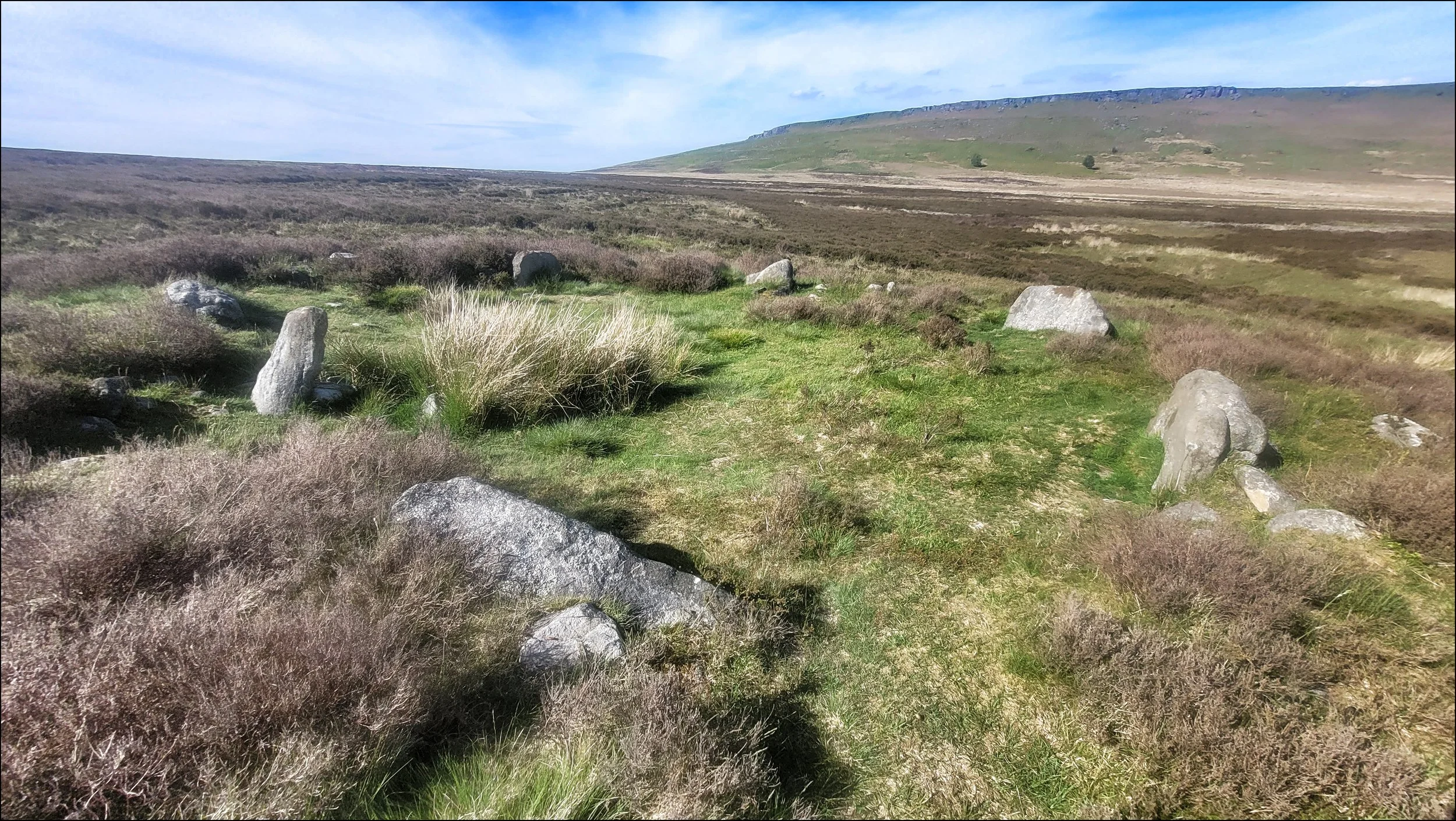
In the shadow of Stanage Edge in the Derbyshire Peaks, a barren plateau of moorland stretches north to south high above Ladybower Reservoir. After a twenty minute woodland walk up from a congested reservoir car park, the path ascends beside a stream to the curve of Hordron Edge. My friend and I were looking for a stone circle of the same name and one I’d missed on a previous visit here in 2023.
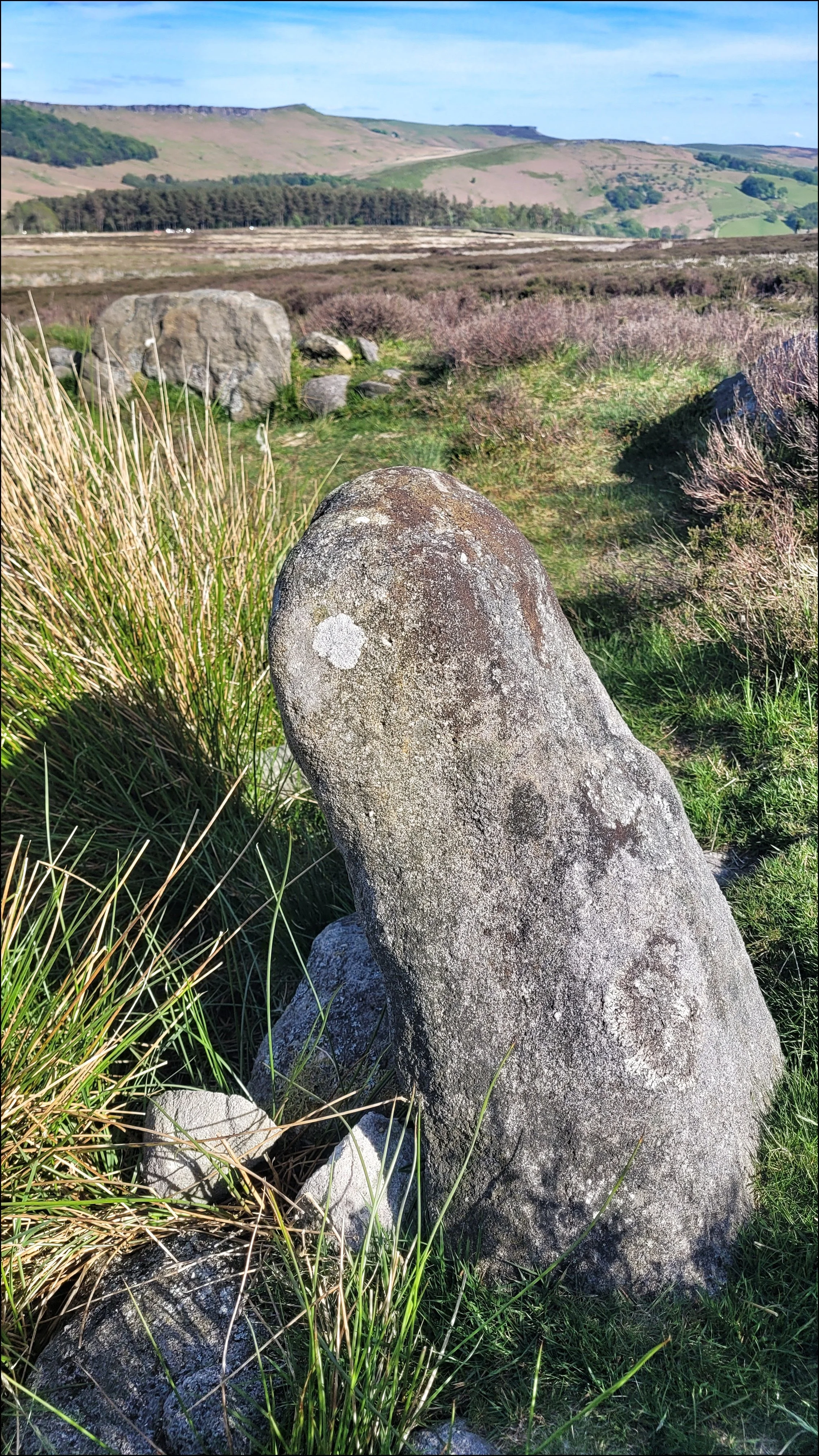
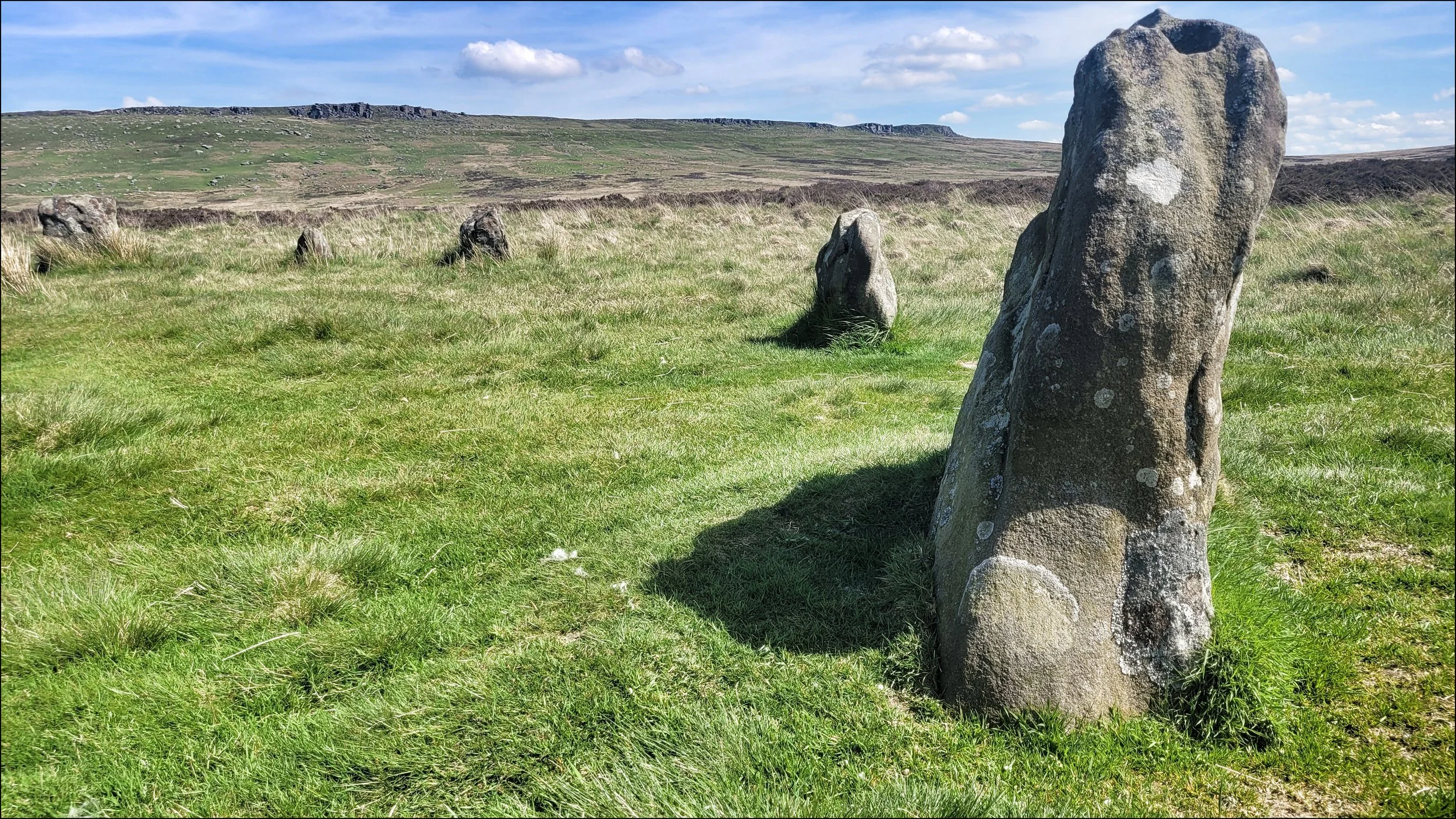
We scrambled up through the rocks to a ridge of gritstone crags that defines the edge of Moscar Moor. From here a flat primordial vista opened up in front of us. We had entered a treasured landscape for a few hours, where fellow walkers were spread thinly and only distant silhouettes. This was the domain of Kestrels, Red Grouse and the Ring Ouzel. The ground cover is dense with grass tussocks and heather, where sheep tracks can lead you astray and Ordinance Survey is all important. We nearly passed by the stone circle of Hordron Edge completely as the stones blend in with the tones of their surroundings. We cut across to it. Many of them were only visible from close quatres while nine remain upright no more than a metre high. I counted nineteen of them in total, but other sources have numbered them as more. Standing at it’s centre we heard a cuckoo call and then a heavy but peaceful silence took over. Looking out south west towards the horizon were the distant peaks of Win Hill and Lose Hill with Mam Tor beyond, and in line with them on the circle’s edge was the conspicuously larger stone now known as the Fairy Stone, after strange lights had once been seen above it. I had read that this stone could have acted as a marker for the setting sun. All the upright stones were weathered by the rain and wind and had long green stained fissures on their top halves. White streaks were present on some indicating they had been used as staging posts by passing birds.
We had time to rest a while and laid down outside the circle for a recharge. I closed my eyes and sank into the earth transfixed by an immersive natural soundtrack. A skylark was somewhere overhead but I was not tempted to look for it.
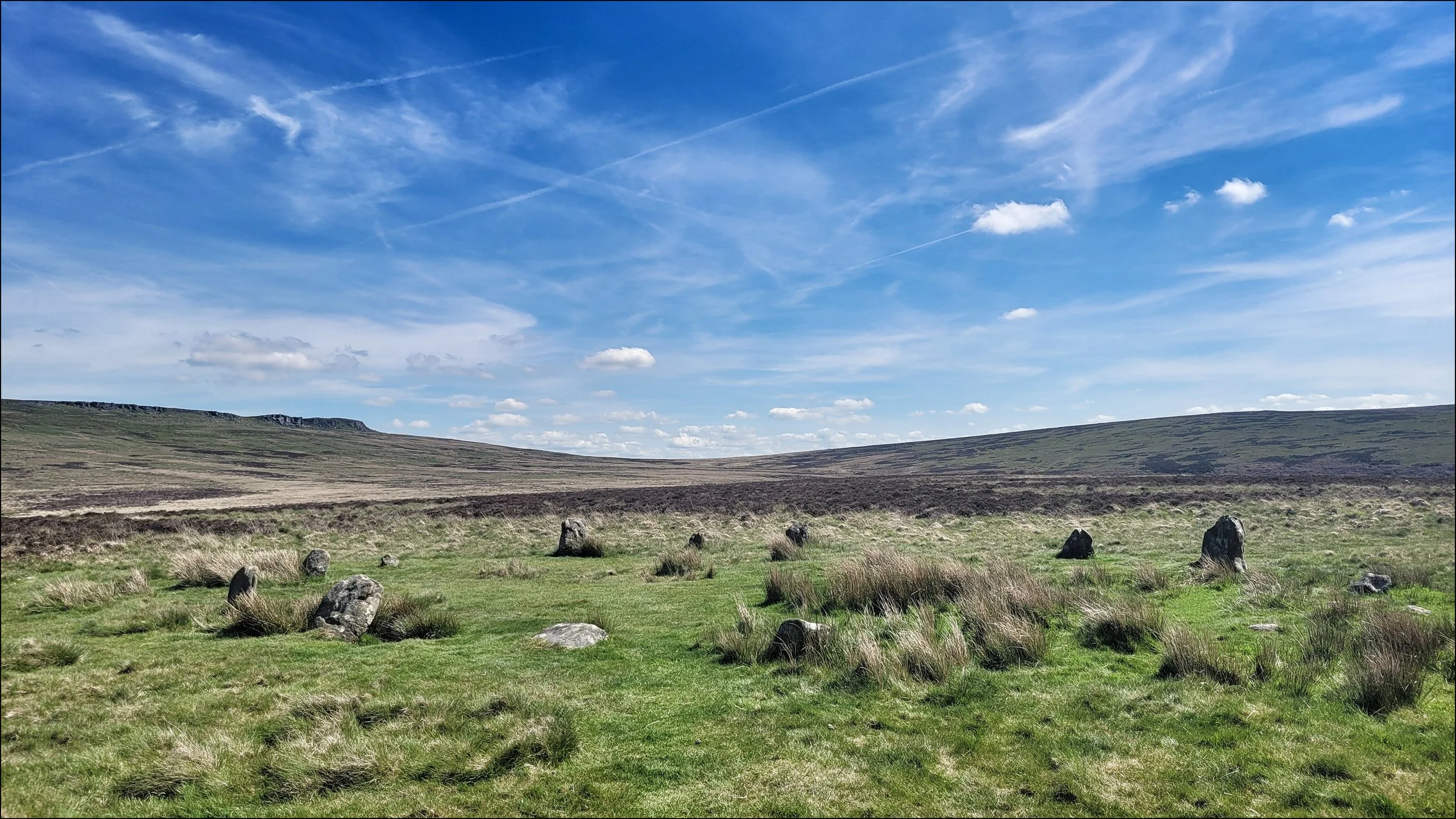
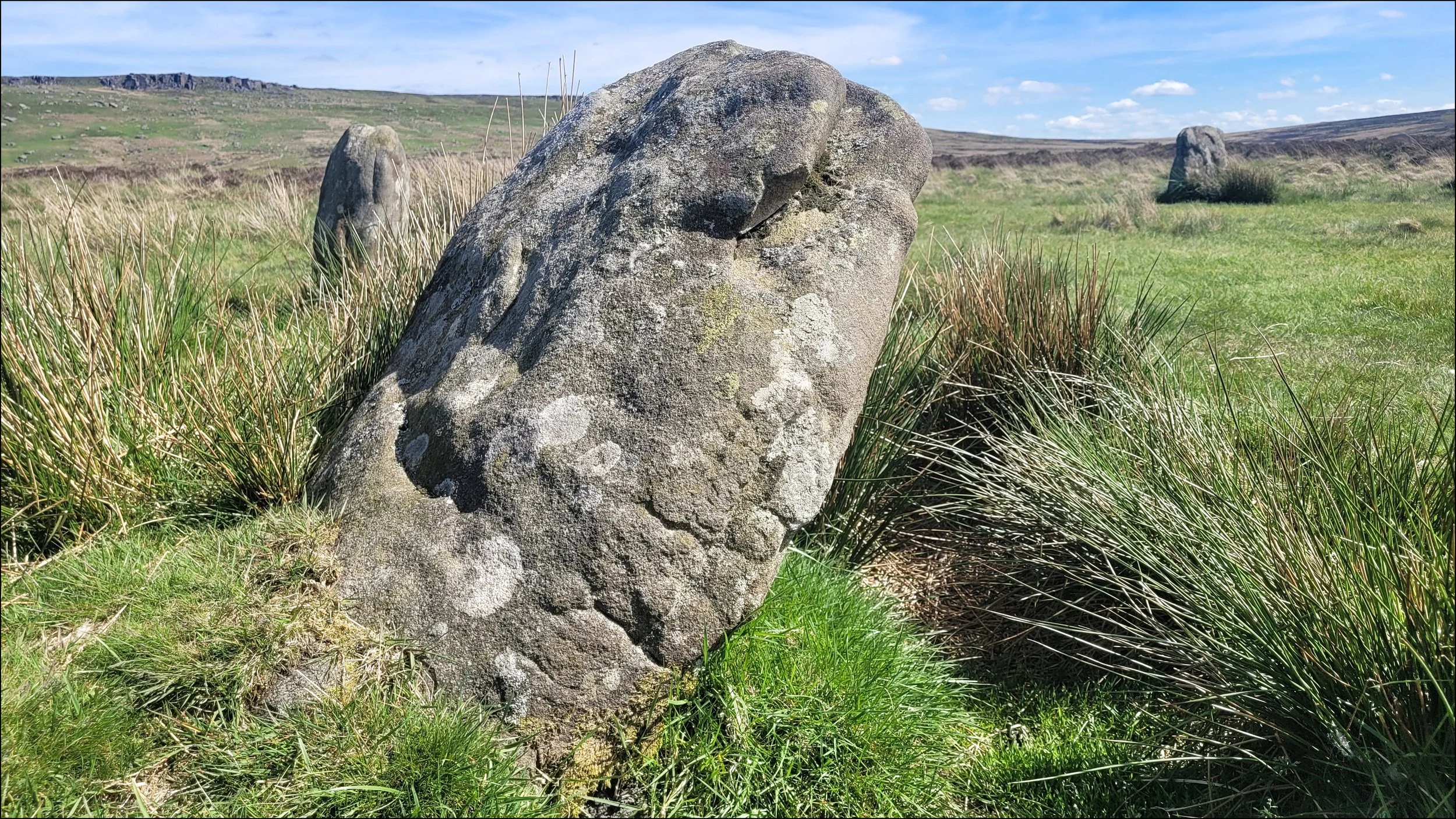
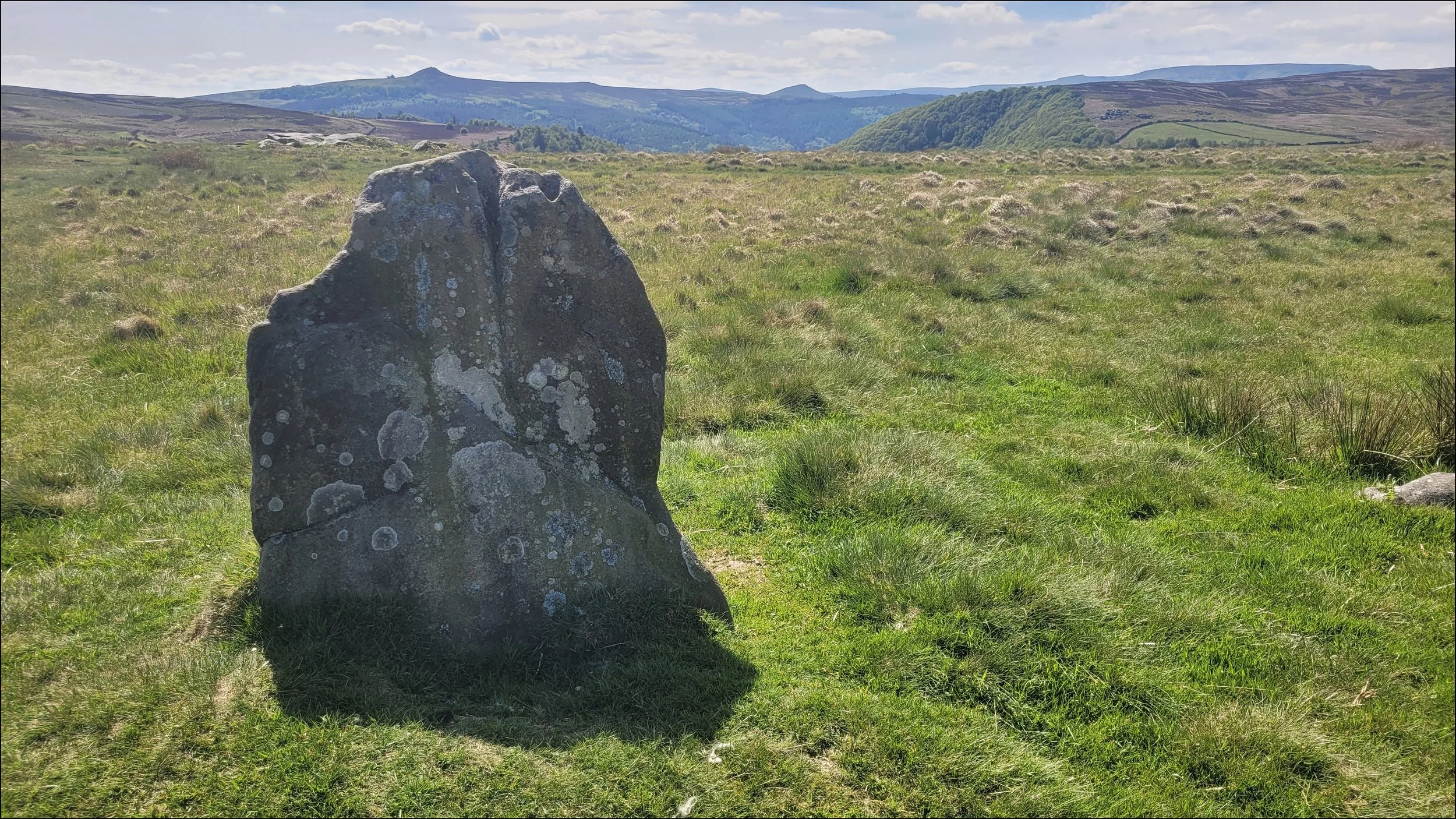
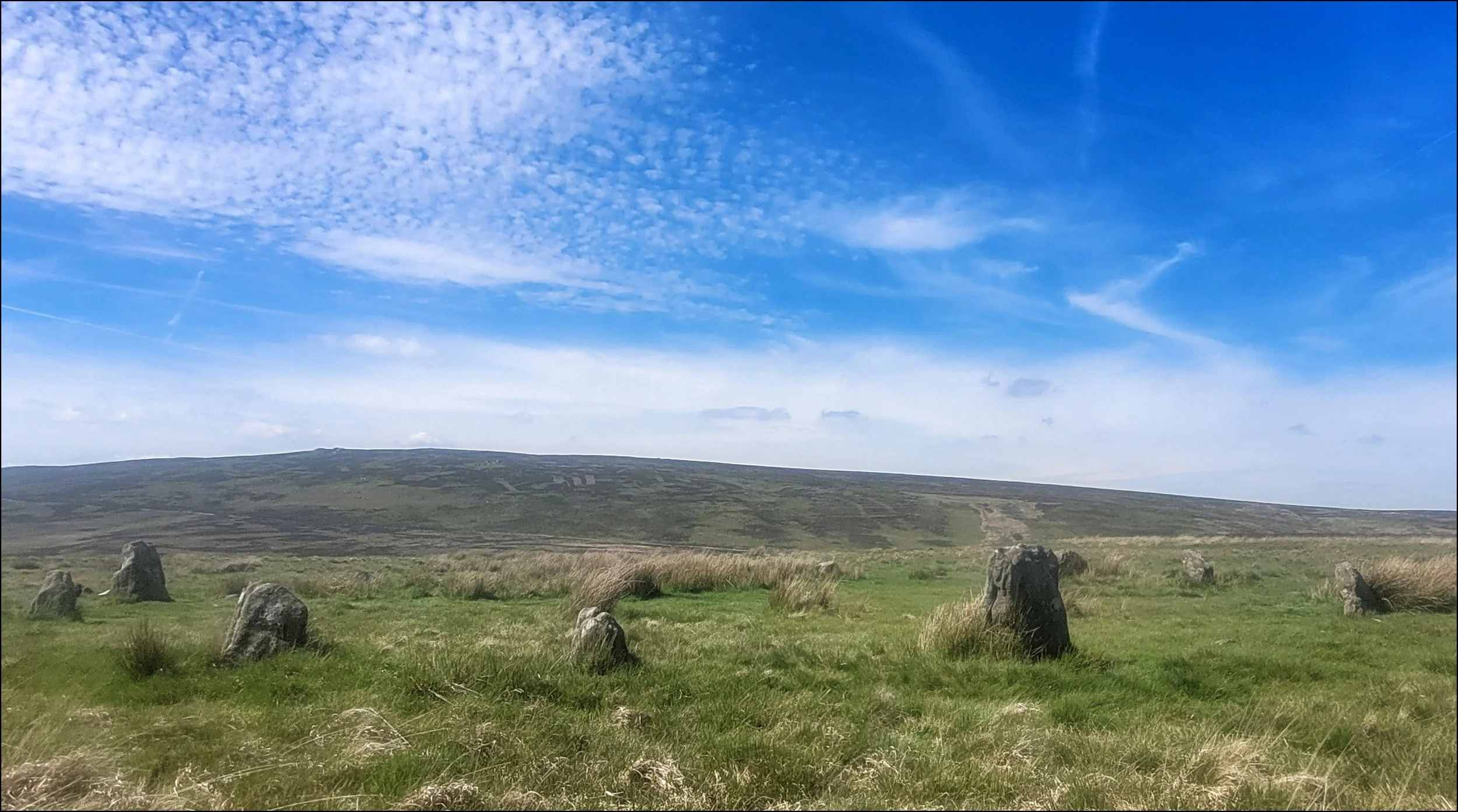
Recharged, we moved on south towards Jarvis Clough, a shallow ravine that separates Moscar Moor from Bamford Moor. The only evidence of human activity were grouse butts and a collapsed stone wall. There were traces of Bronze Age settlements and farming up here and with this being the case, could Moscar Moor and Hordron Edge Stone Circle have been used only for ceremony and ritual, leaving Bamford Moor for a more prosaic purpose. However, tidy theories are rare in the study of the Bronze Age and here was no exception. In the heart of Bamford Moor South was another circle, again with the same name. This one I had visited in 2023 and after a lengthy mind bending search had stumbled upon it hidden in the heather.
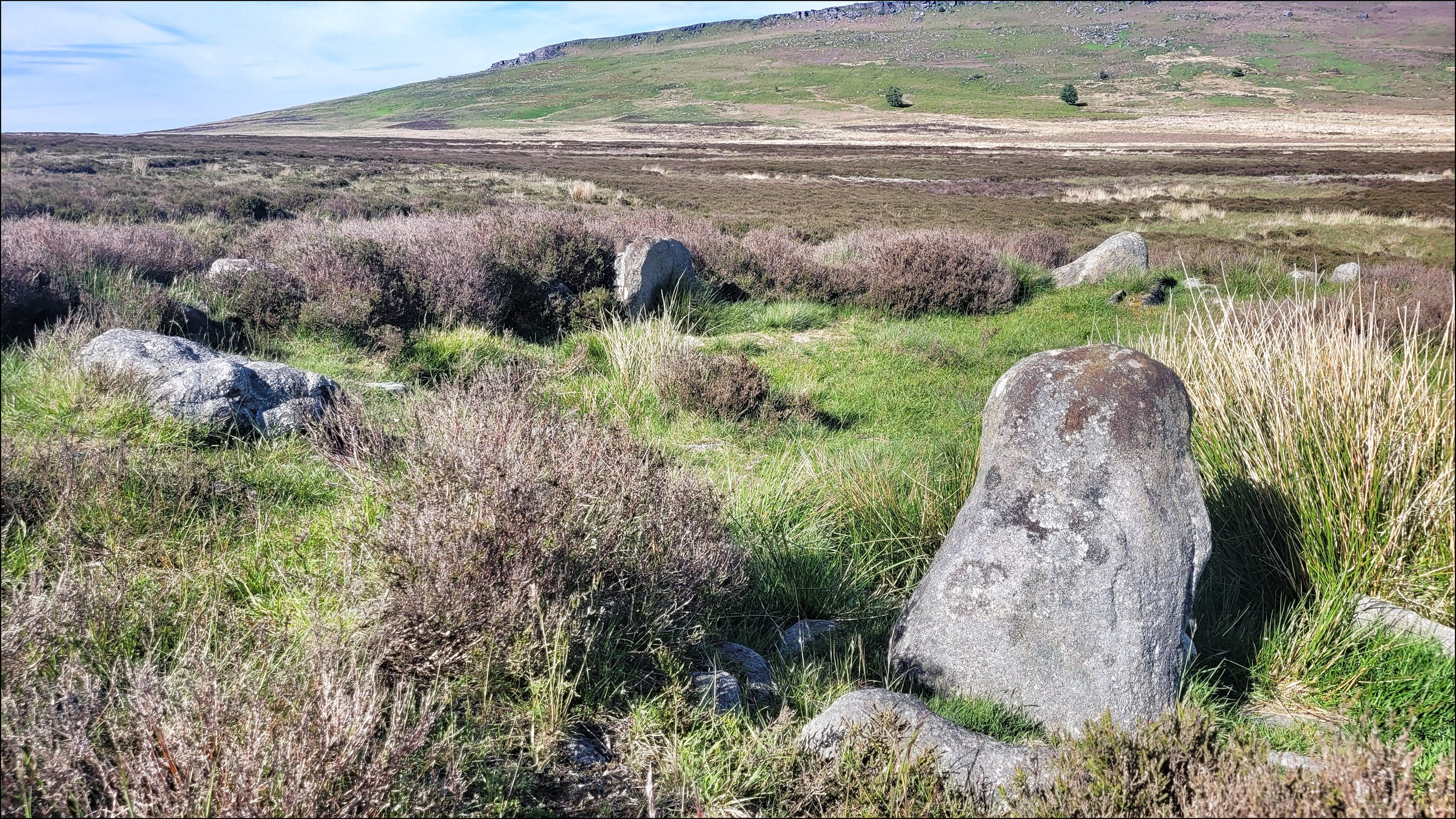
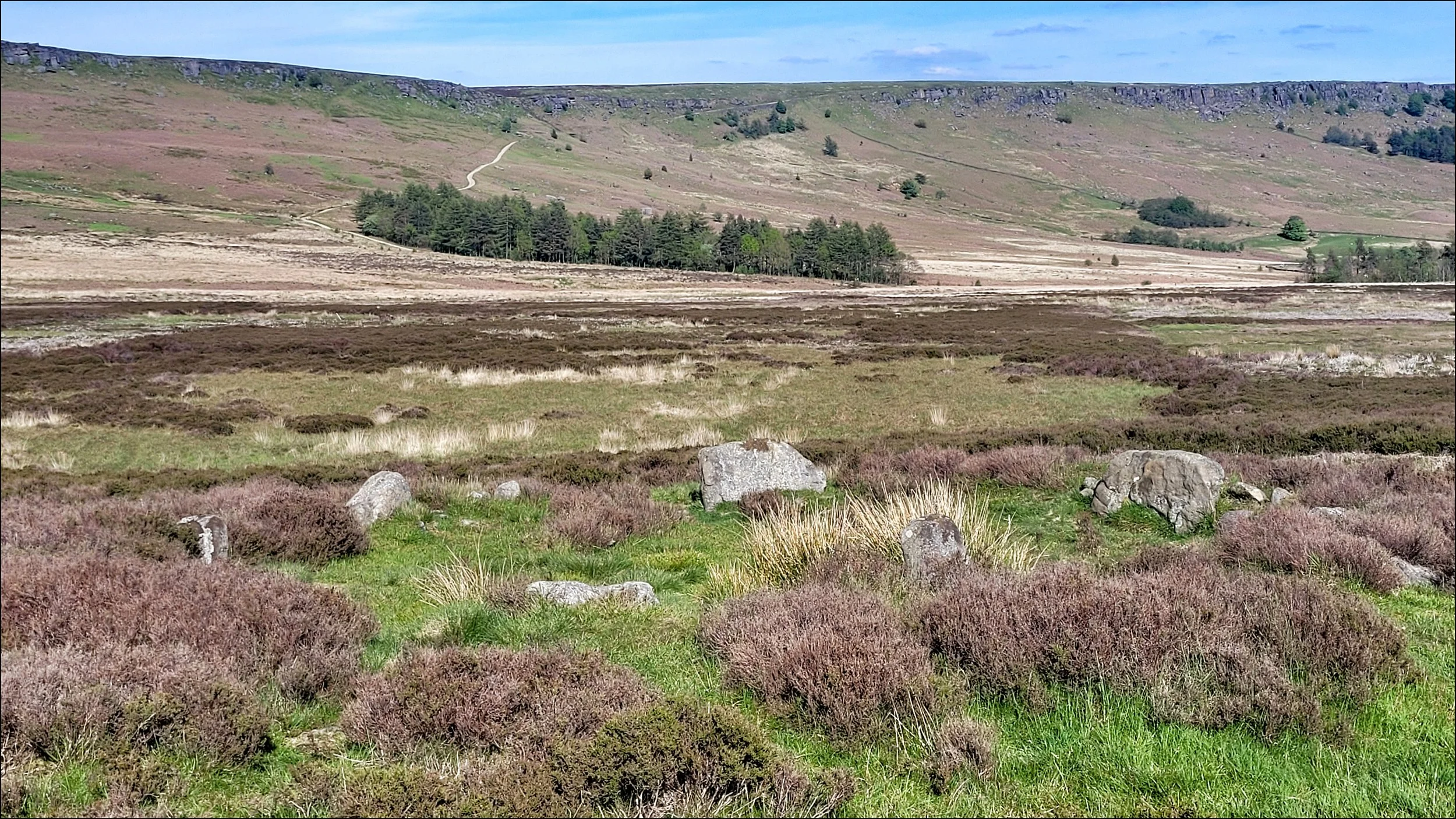
Again we were dependent on OS coordinates and a keen eye to distinguish tussocks from stone. I liked the fact the circle had remained elusive from me and a second hunt for it felt like the first time. After a zig zag approach and a few false leads the circle gave up it’s whereabouts with the larger of the darkened stones standing out in the heather. The circle was smaller than I remembered and resembled a cairn circle with six small stones set in an embanked ring. There were other fallen stones outside the circle which like at Hordron, confused the count. It was a five star setting with the grey crags of Stanage Edge rising up to the east. We rested here too and watched a pair of curlews circling around us. Their numbers were supposed to be under threat but they had often been present in landscapes I had chosen to walk in recently. We savored the moment at this potent ancient place. As a kestrel hovered nearby eyeing it’s prey, as it’s forebears had done for thousands of years, far off on the distant crags were the hang gliders and climbers of our modern age.