The Maharees Mystery Stone
30.07.2026
On the north coast of the Dingle Peninsula a tombolo protrudes out into the Atlantic with dunes of marram grasses and white sandy beaches.
I began a four hour walk from Castlegregory and followed the shore via the five kilometre beach out to a forked headland with two small hamlets and a smattering of houses in between. The bays either side are now the domain of kayakers and windsurfers but in past times the seas provided a livelihood in kelp production for the locals. I was reminded of this as I walked up the beach and saw a man dragging bags of seaweed onto the shore to fill a small wheelbarrow.
Out beyond the headland are a series of islands where beehive huts and oratories of a medieval monastery known as Illauntannig still remain. I could just see it from Candeehy Beach between the two headlands as I followed the dunes with pale blue Sea Holly growing beside the path. At the hamlet of Kilshannig I found the derelict church of St Seanach overlooking the bay with it's graveyard of celtic crosses and strong box tombs, then took a quiet lane inland to begin my walk back to Castlegregory.
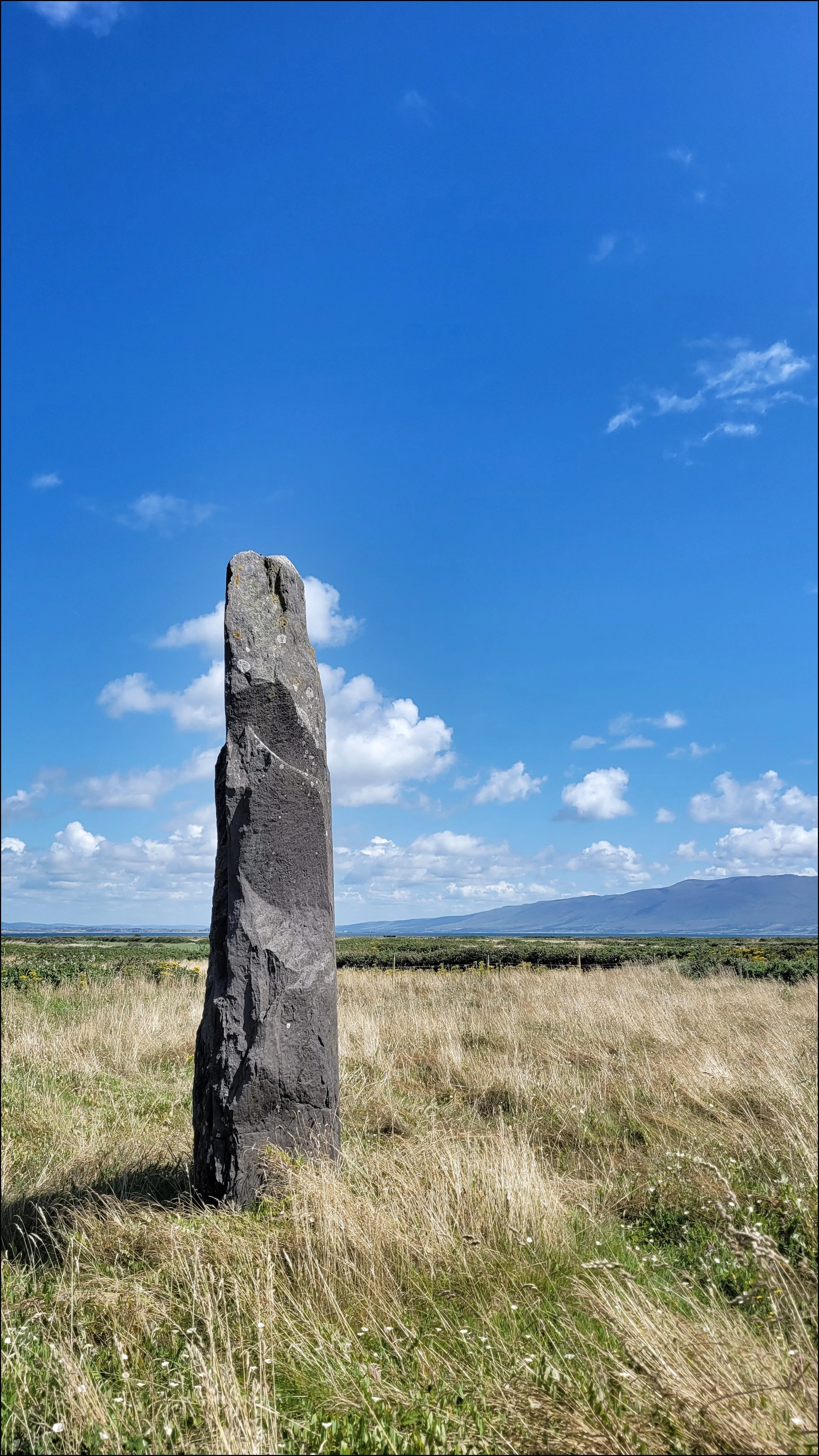
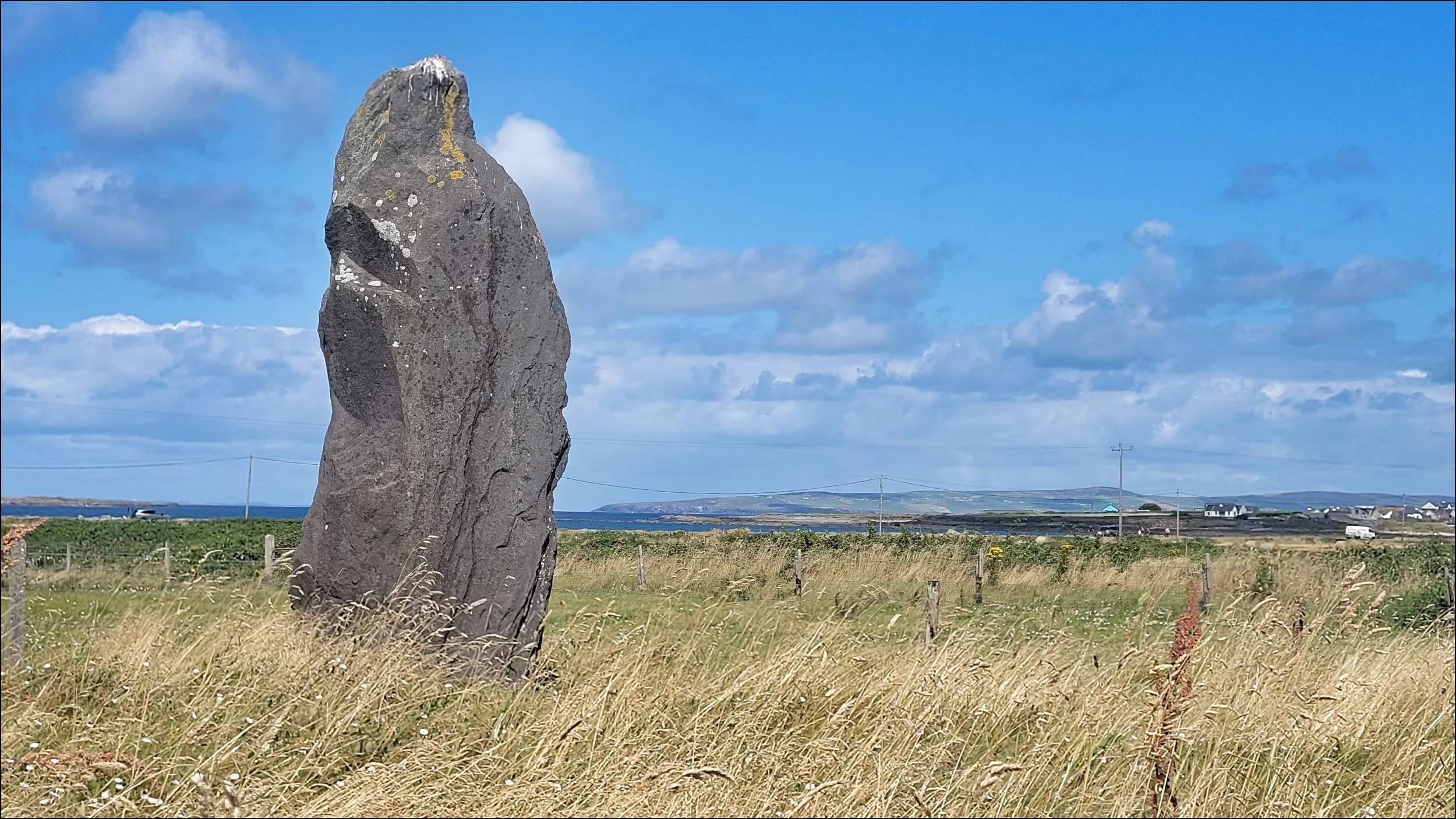
The gently sloping lane gave me views of both shorelines. Then quite by chance off to the left, I spotted a tall pillar of stone between two bungalows standing on it's own in a field. A grass track enabled me to get down to it for a closer look, but when I got close I realised it was standing at the bottom of a garden. I was immediately transfixed by it's ambiguous shape and surface textures and felt the need to get closer. I walked back up the track to the bungalow and saw the owner hanging out his washing, listening to music through earplugs. I shouted over to him but couldn't get his attention however hard I tried. I even resorted to jumping up and down and waving my arms in semaphore fashion. He disappeared inside so I hopped the fence and rang the doorbell which proved just as fruitless. He then appeared again from around the back and a little startled, removed his earplugs so I could introduce myself.
He said I was welcome to have a look and began to tell me what he knew about it. I mentioned it was absent from the database I was using and wondered if it was a modern installation, but he said he had seen a victorian photograph of children gathered around it. He had also heard it was at one time used as a way marker for pilgrims on their way to the monastery and was known locally as An Gallan.
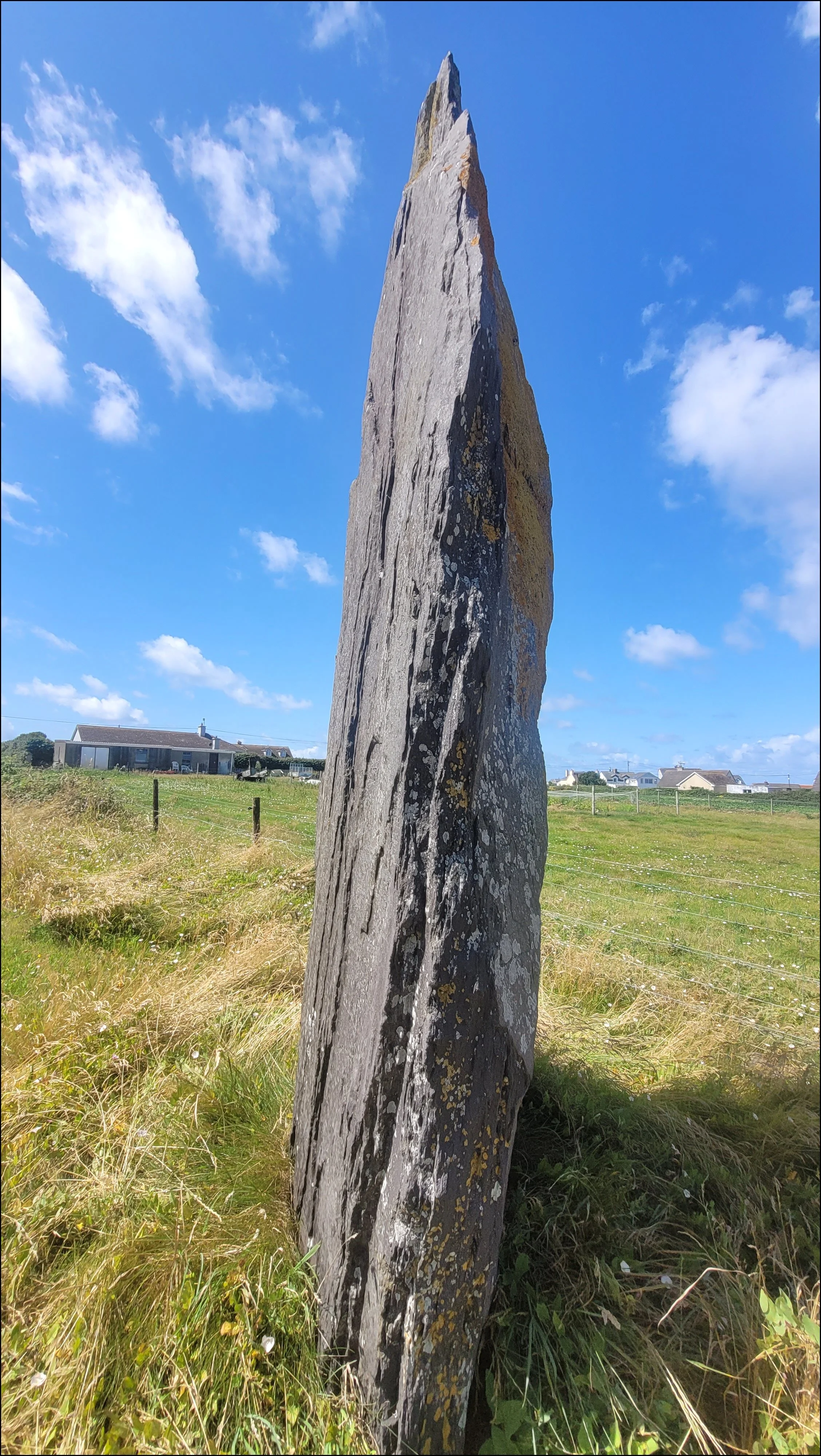
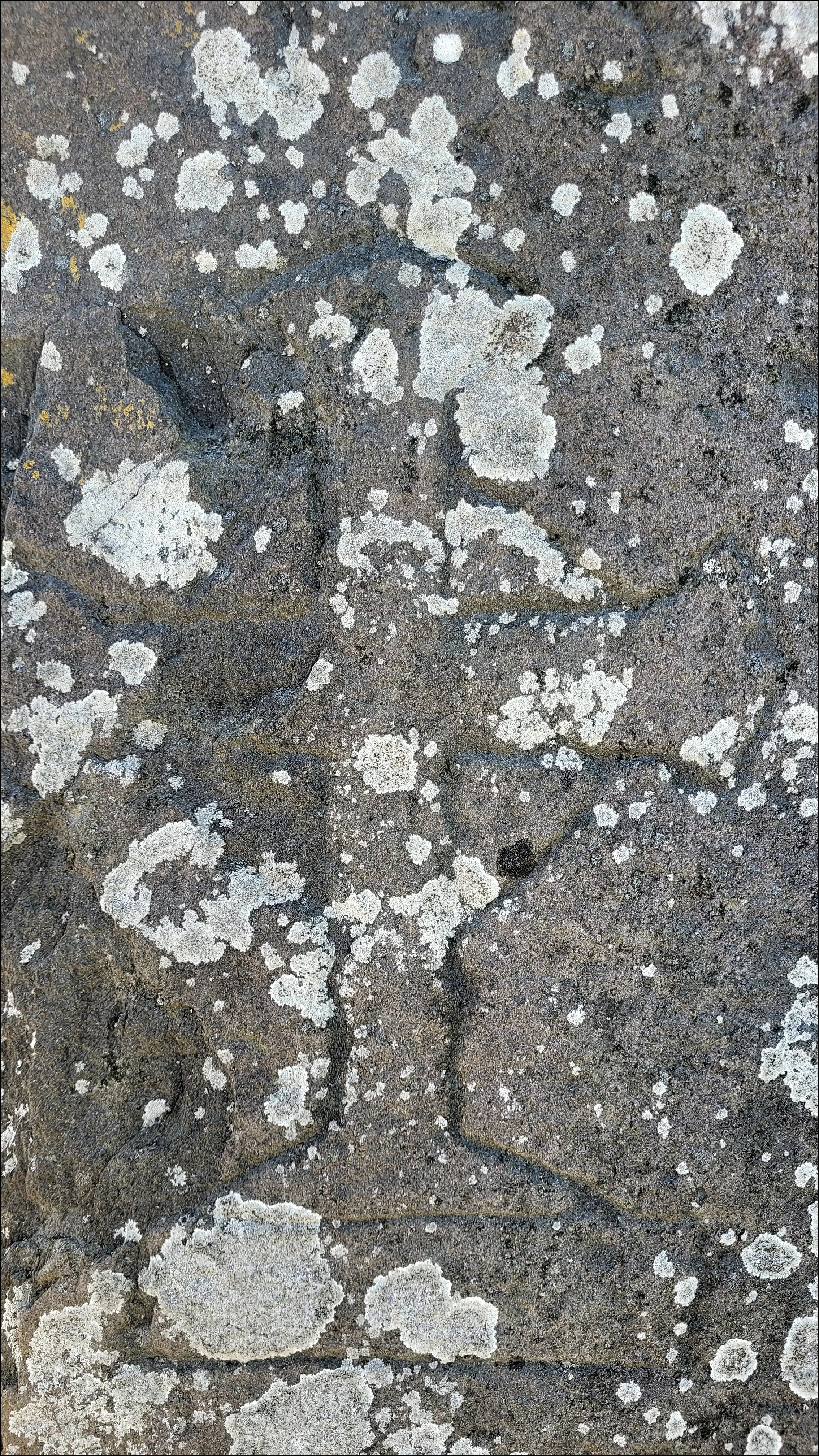
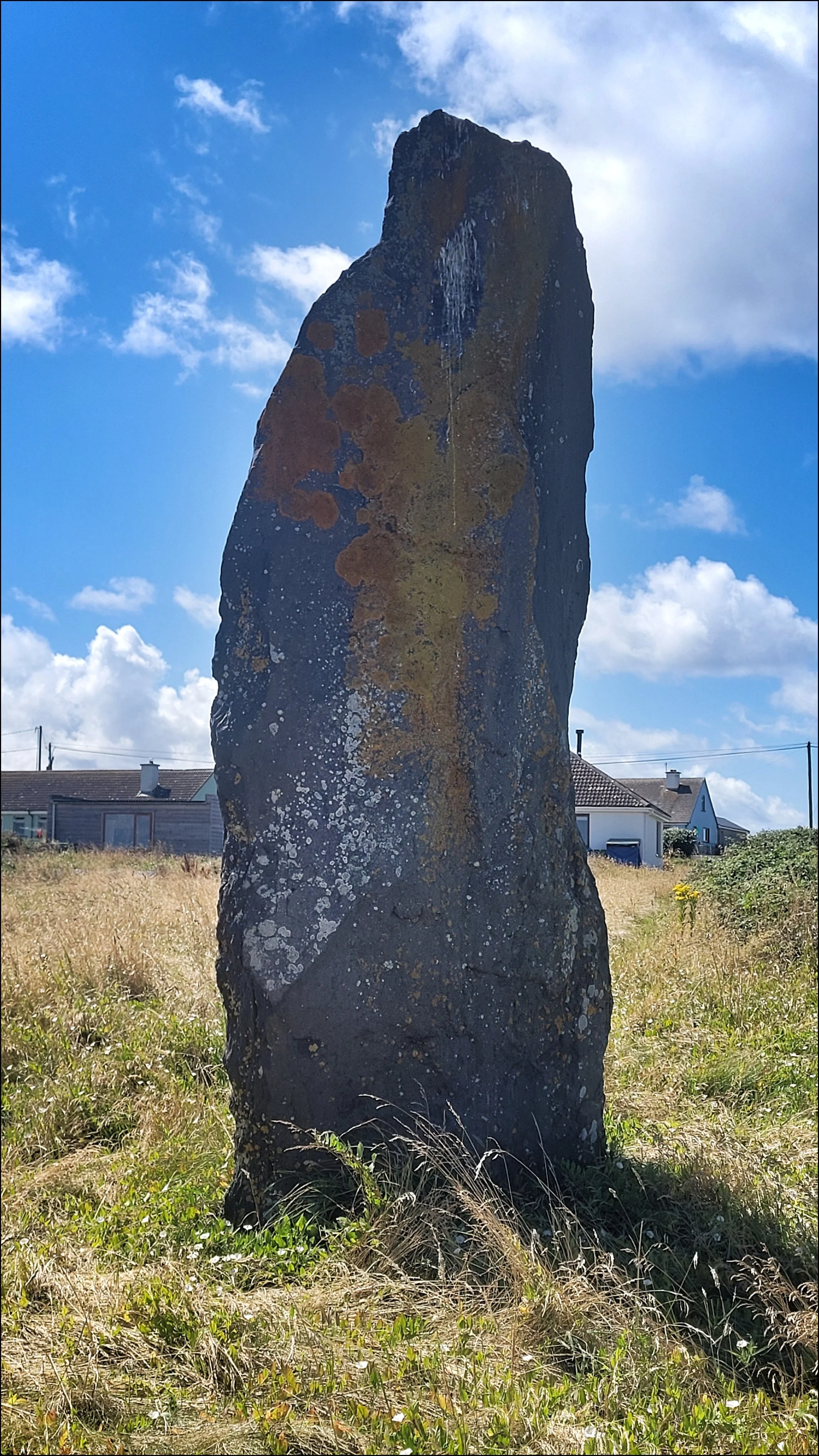
I thanked him and walked down through his garden for a closer look. It already looked like a different stone from the angle I approached from, thin and weathered with long sharp edged cracks running down it's narrow side. I walked around the four metre giant to view it's smoother broad face which appeared to bend and curve towards me at the top. It had the trace of a human form and a hooded figure came to mind triggering the image of a monk on his way to the monastery. A fanciful thought, but this was how folklore becomes anchored to ancient structures. This imagining was reinforced in my head when I spotted an ornate cross inscribed deep into the stone. I could find no reference to any excavations at this location. With nothing to radio carbon date the age of this stone remains a mystery, as does the reason it stands so conspicuously at the heart of this narrow spit of land.