The Treasures of Lough Gur
25.07.2026
I had come inland to escape the rain and wind from the Atlantic. Leaving County Clare behind me I headed twenty kilometers south of Limerick to find the serenely beautiful Lough Gur with it’s shores of wetland grasses and forests collaring the rolling hills of knockadoon and and Knockfennell.
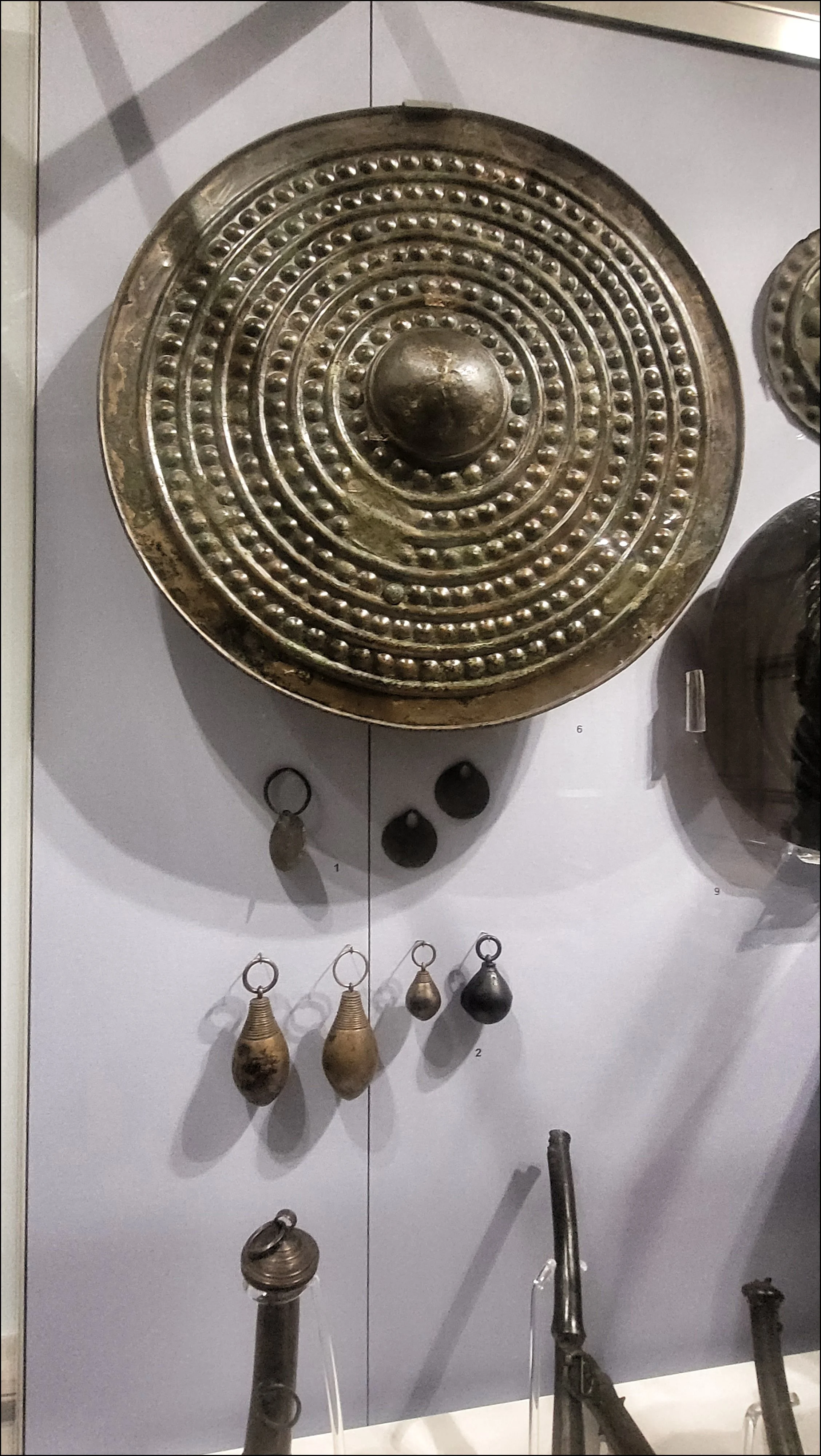
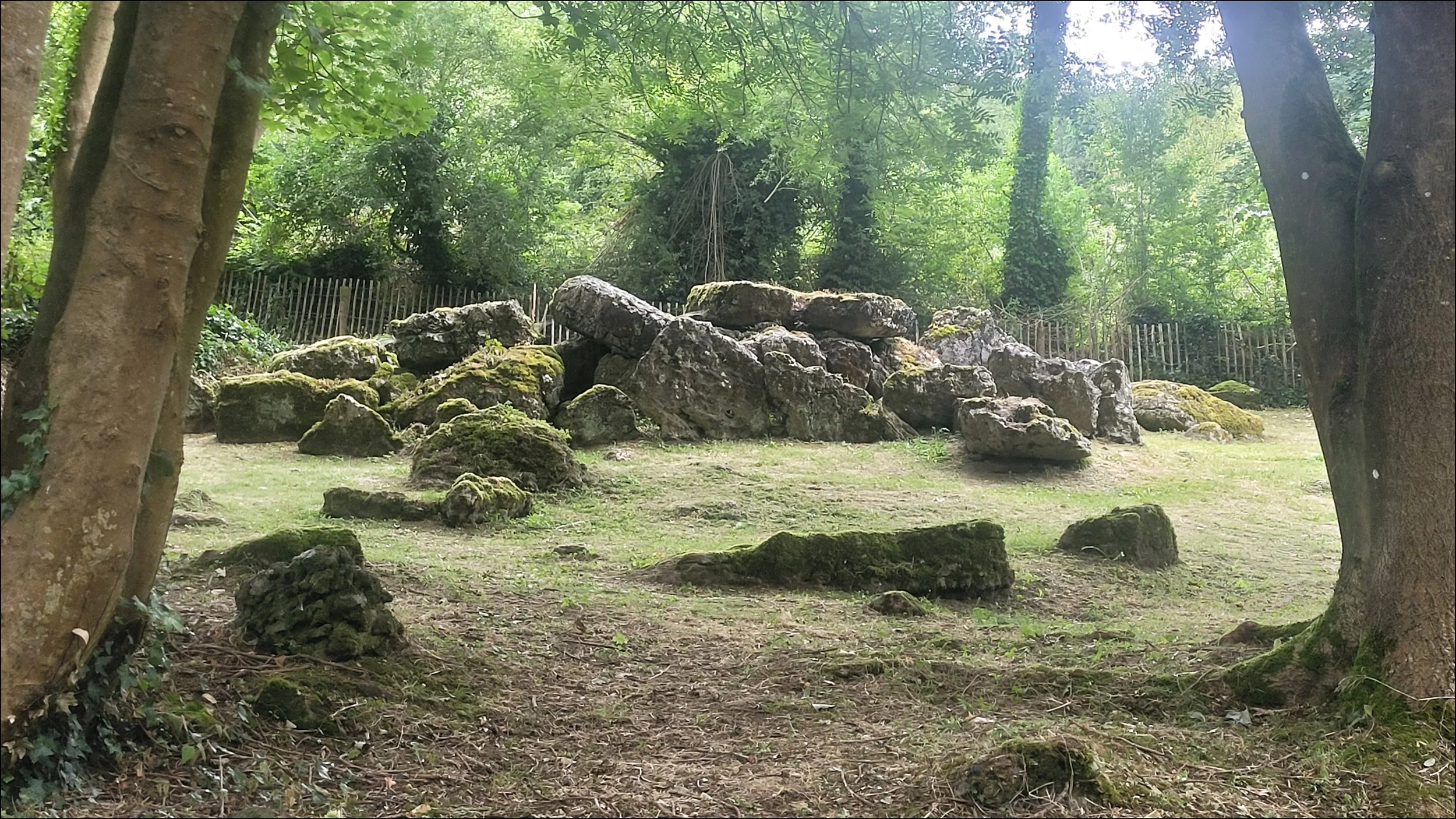
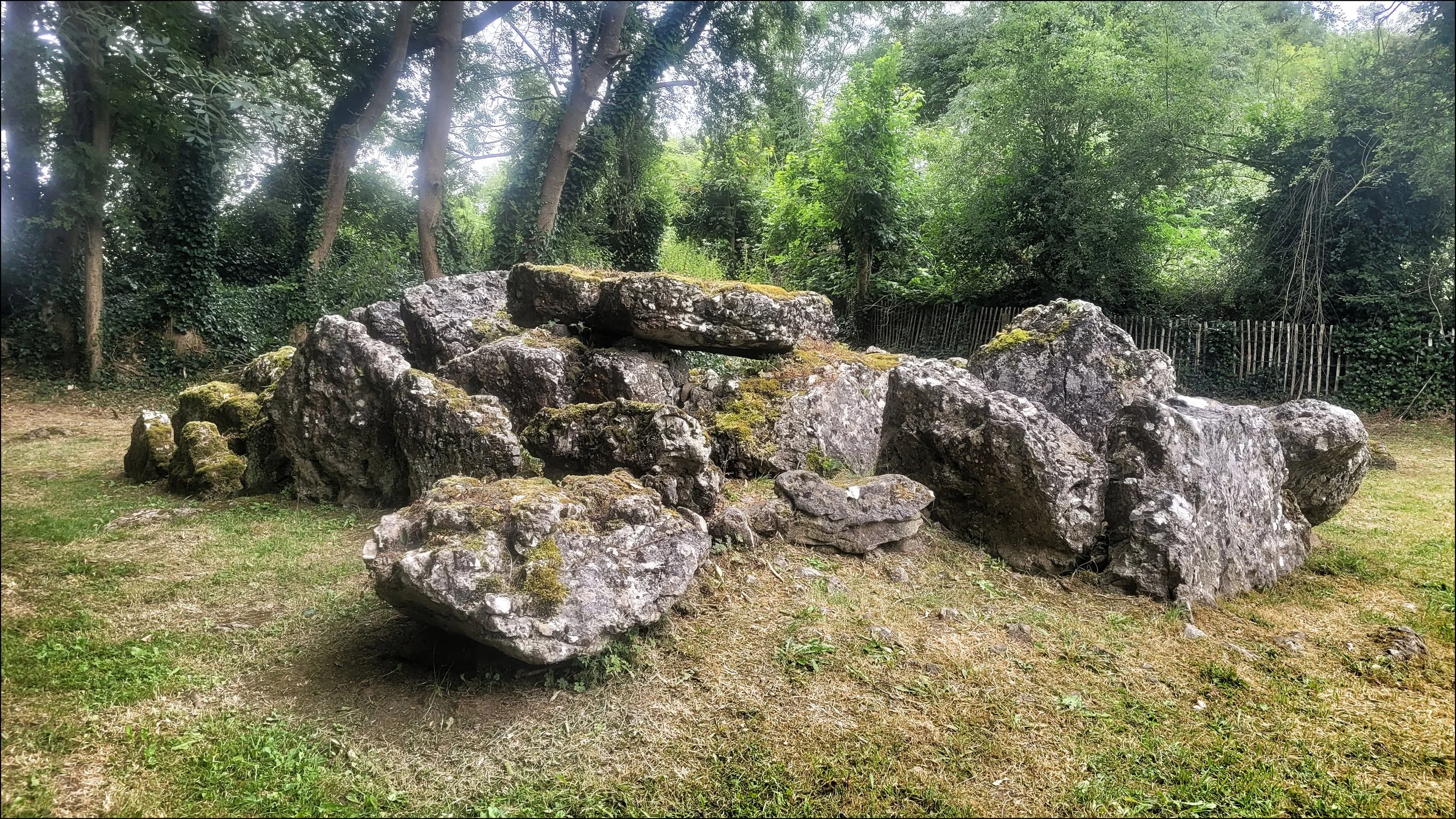
In 1847 the Lough was drained down over two meters to improve the area for agriculture, exposing more of the shoreline and a hoard of Bronze Age treasures that lay within it. Amongst the objects found were Beaker pottery, bronze spearheads and a large circular bronze shield now on display in the National Museum in Dublin. Objects were also found at three important early Bonze Age sites around the southern shore, the earliest being the Lough Gur Wedge Tomb, sited in a sloping field near to the road and partially hidden under a canopy of Sycamore and Rowan branches.
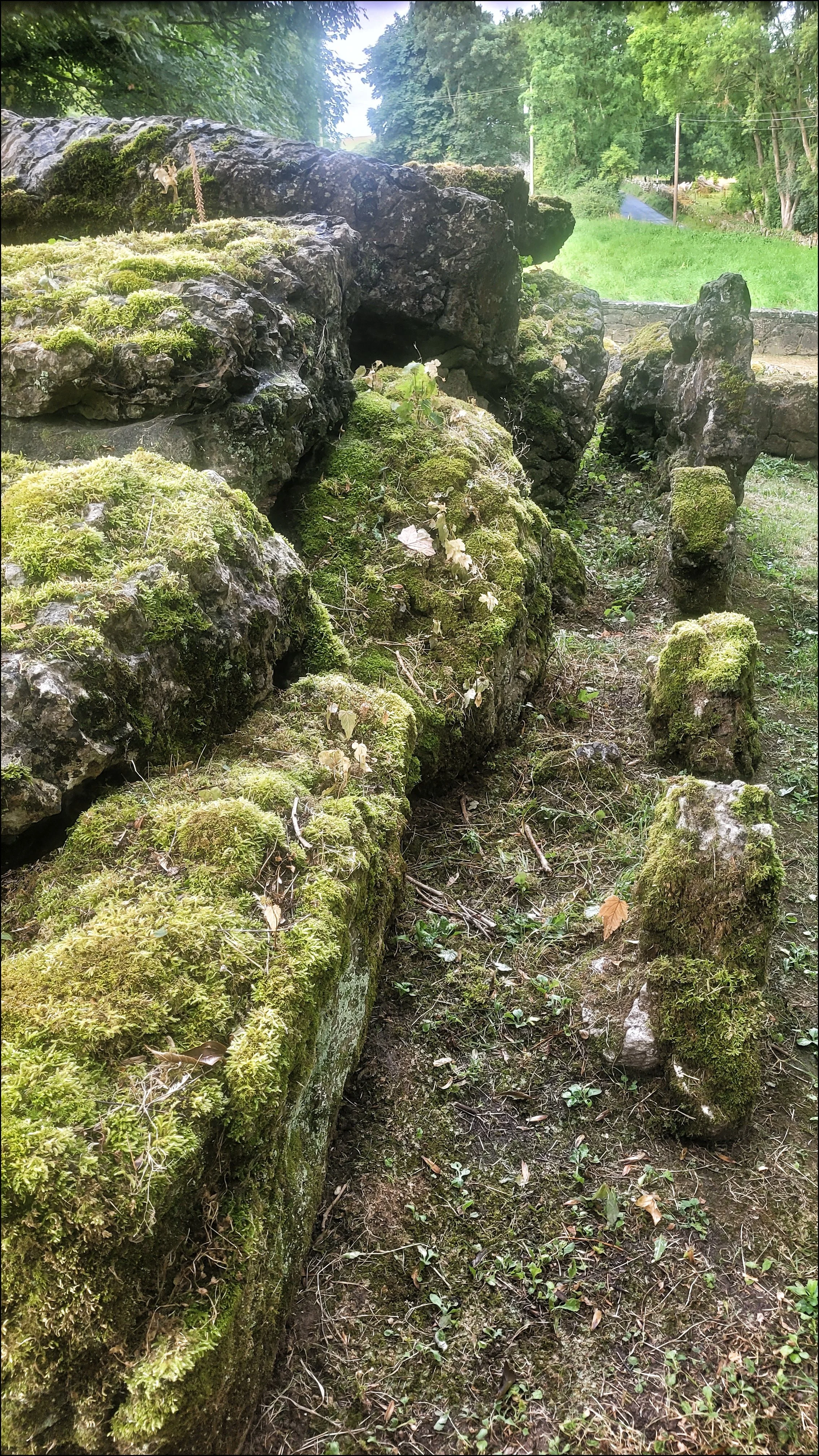
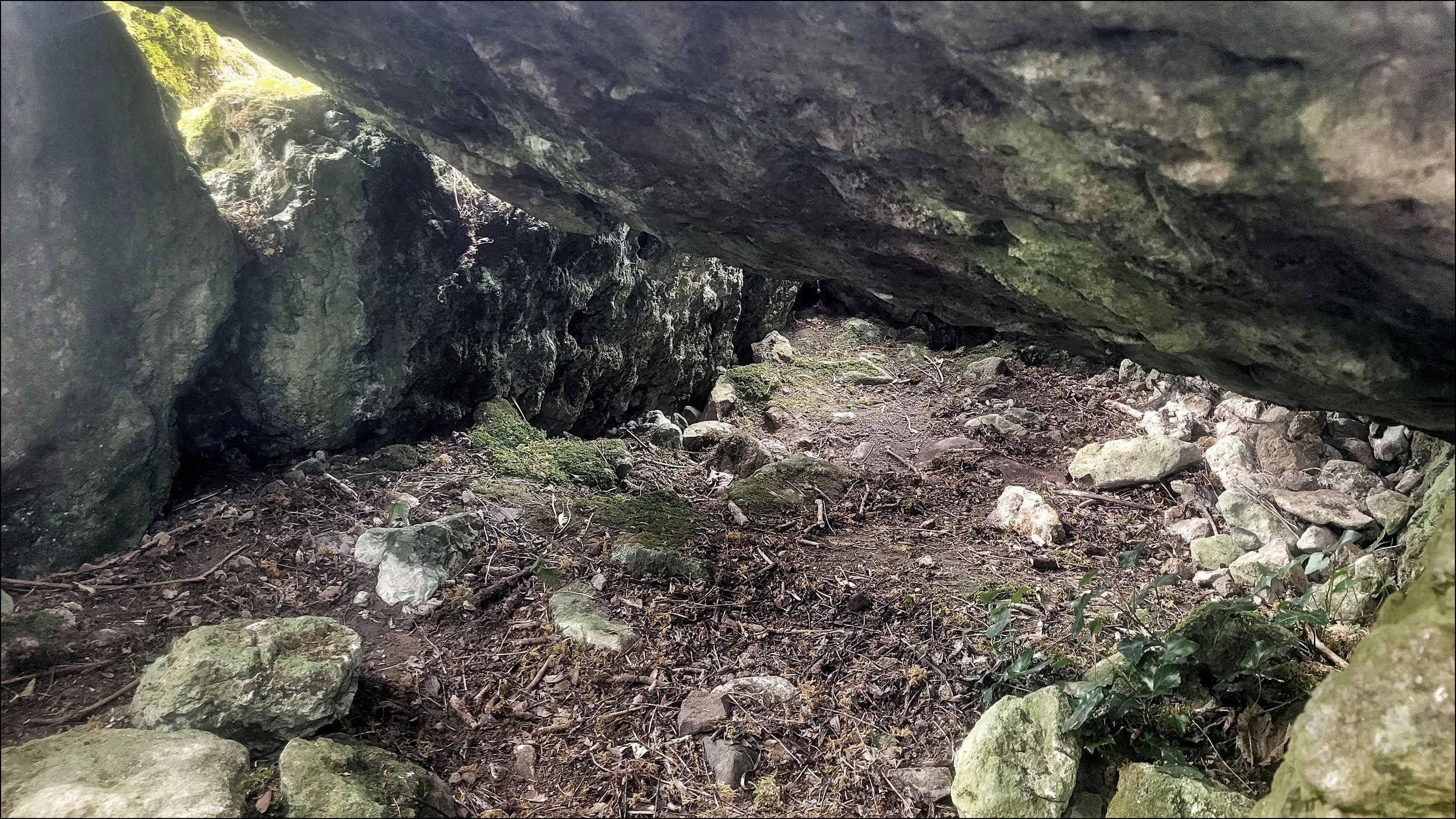
A confusing layout of moss covered stones circled the tomb, six metres in length and on a NE/SW axis. The chamber has a double row of low uprights, with the inner row supporting a series of four dislodged capstones. A septal stone devides the chamber from a Cist at the western end. Cremated remains were found here but most of the remains in the main chamber and between the double walls were uncremated. There had been rumours of an elderly woman living in the tomb in the 19th century and that ‘money diggers’ had disturbed the tomb after her death. It now had a very undisturbed look to it as the whole structure had been invaded by thick moss.
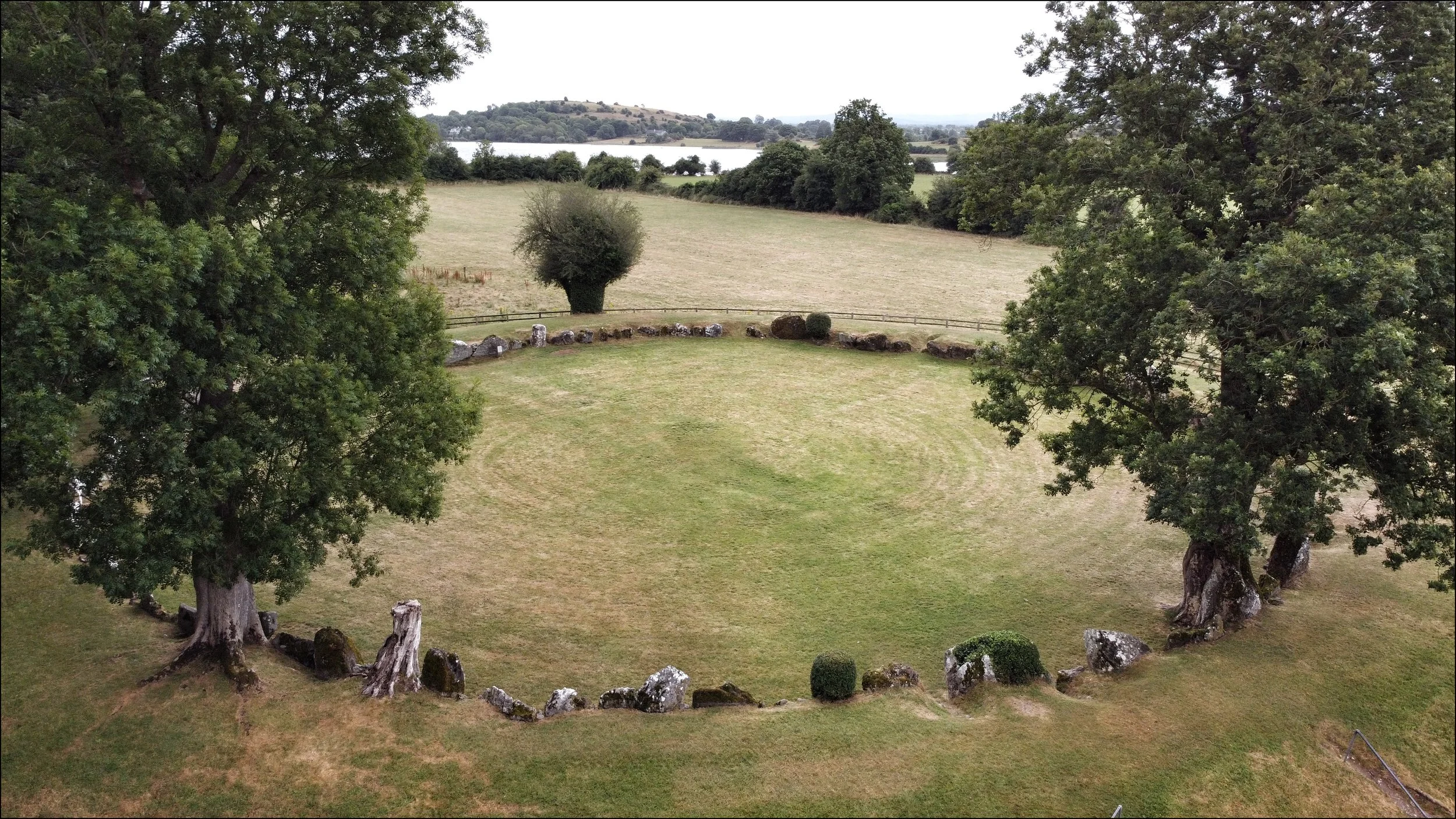
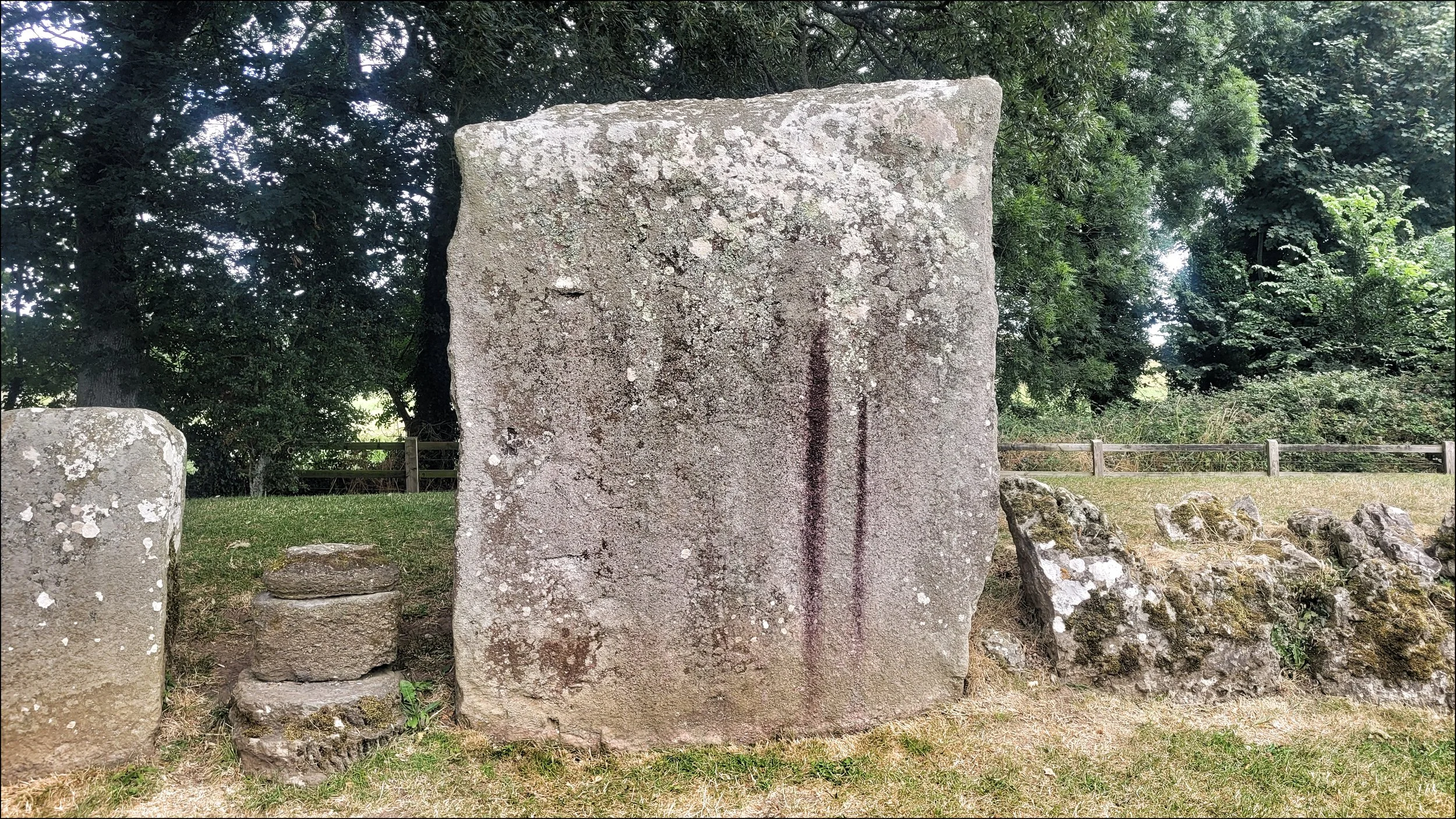
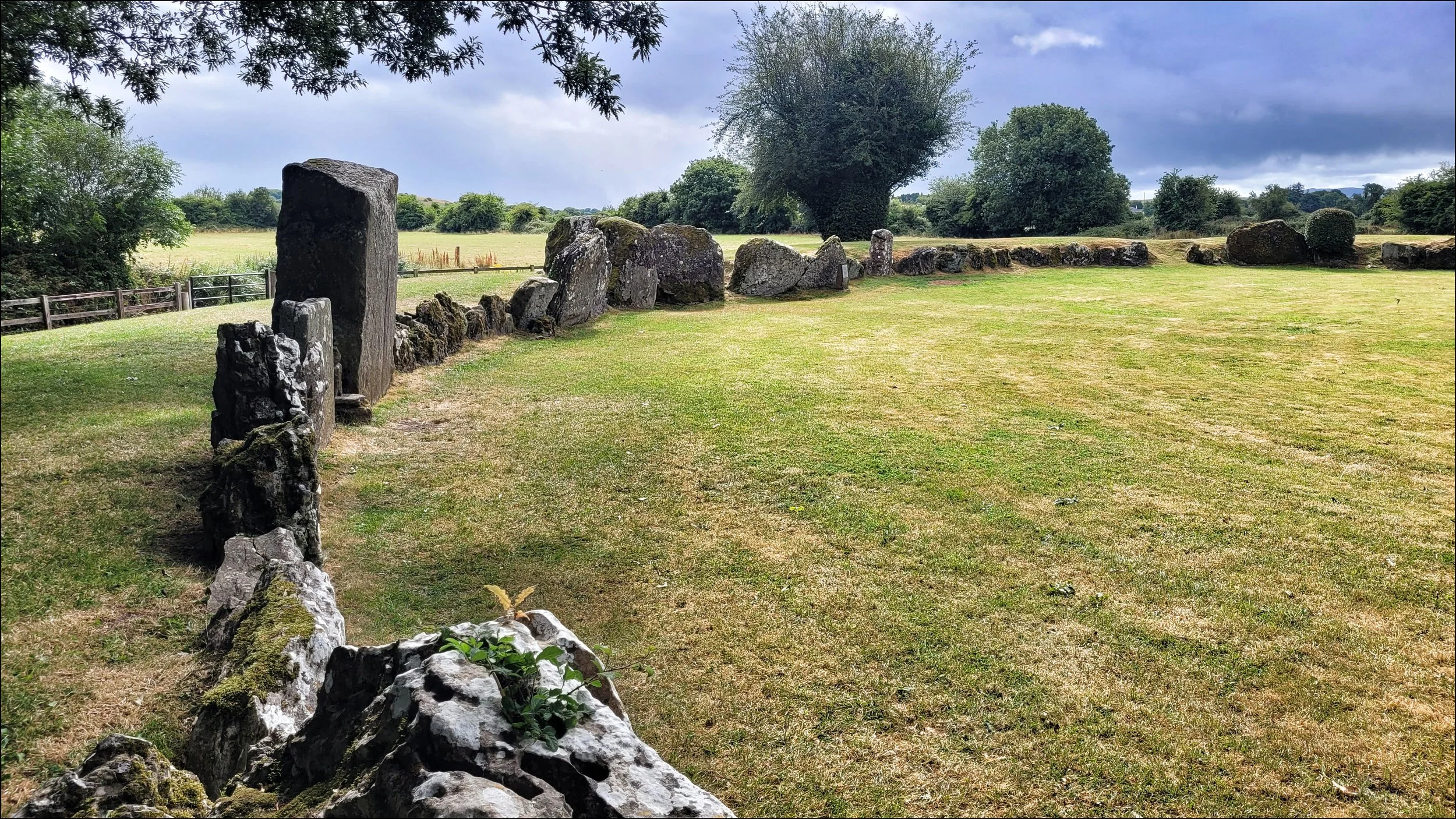
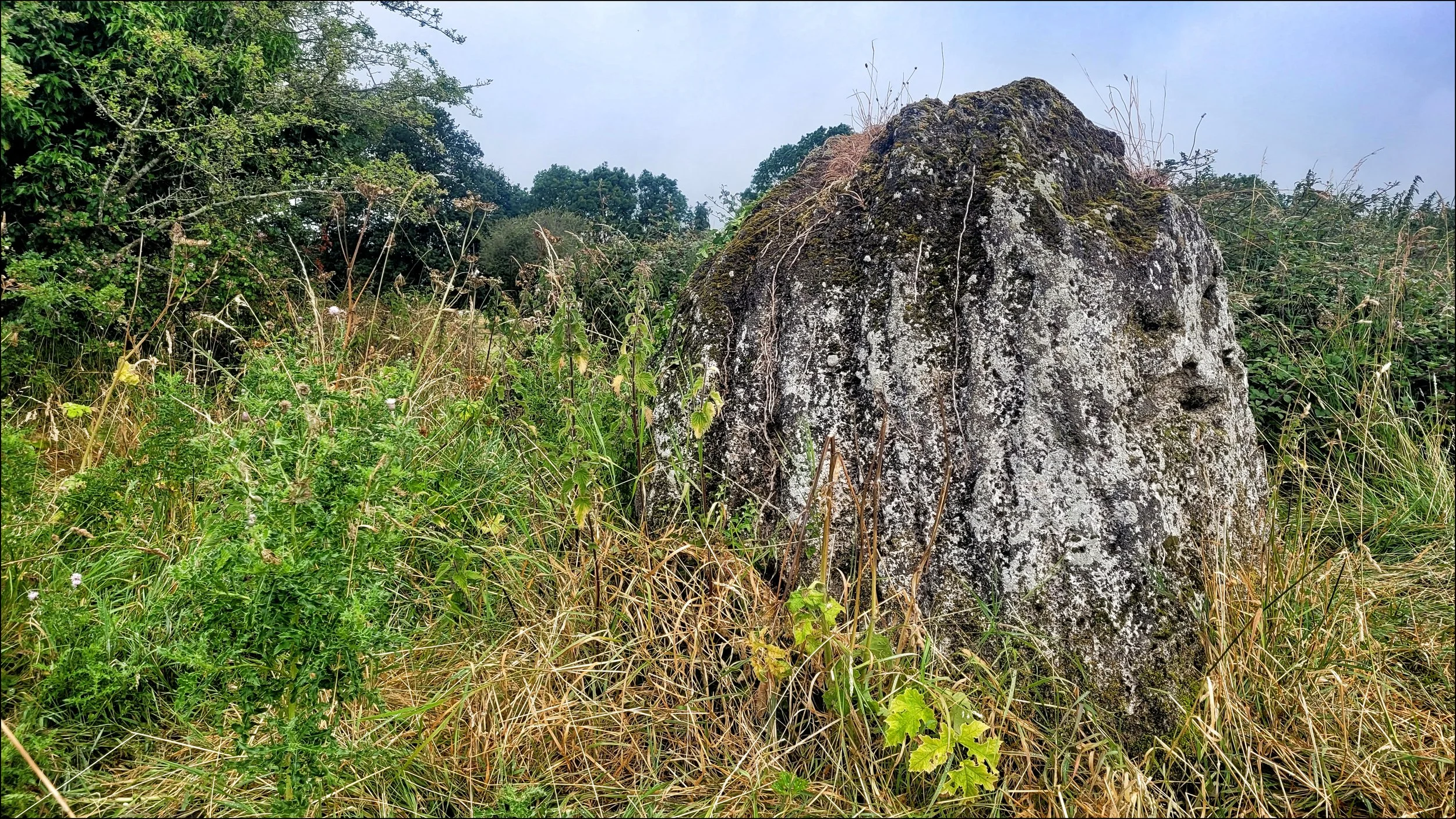
Further around the shore to the western side is the stone circle of Grange, the largest in Ireland at forty five meters in diameter. Either side of it in neighbouring fields is a smaller circle and a standing stone known as the Stone of the Tree, a squarish boulder like stone near to a hedgerow and tree line. Surrounded by high nettles, it had been invaded by sprouting tufts of grass with Ivy working it's way up one side.
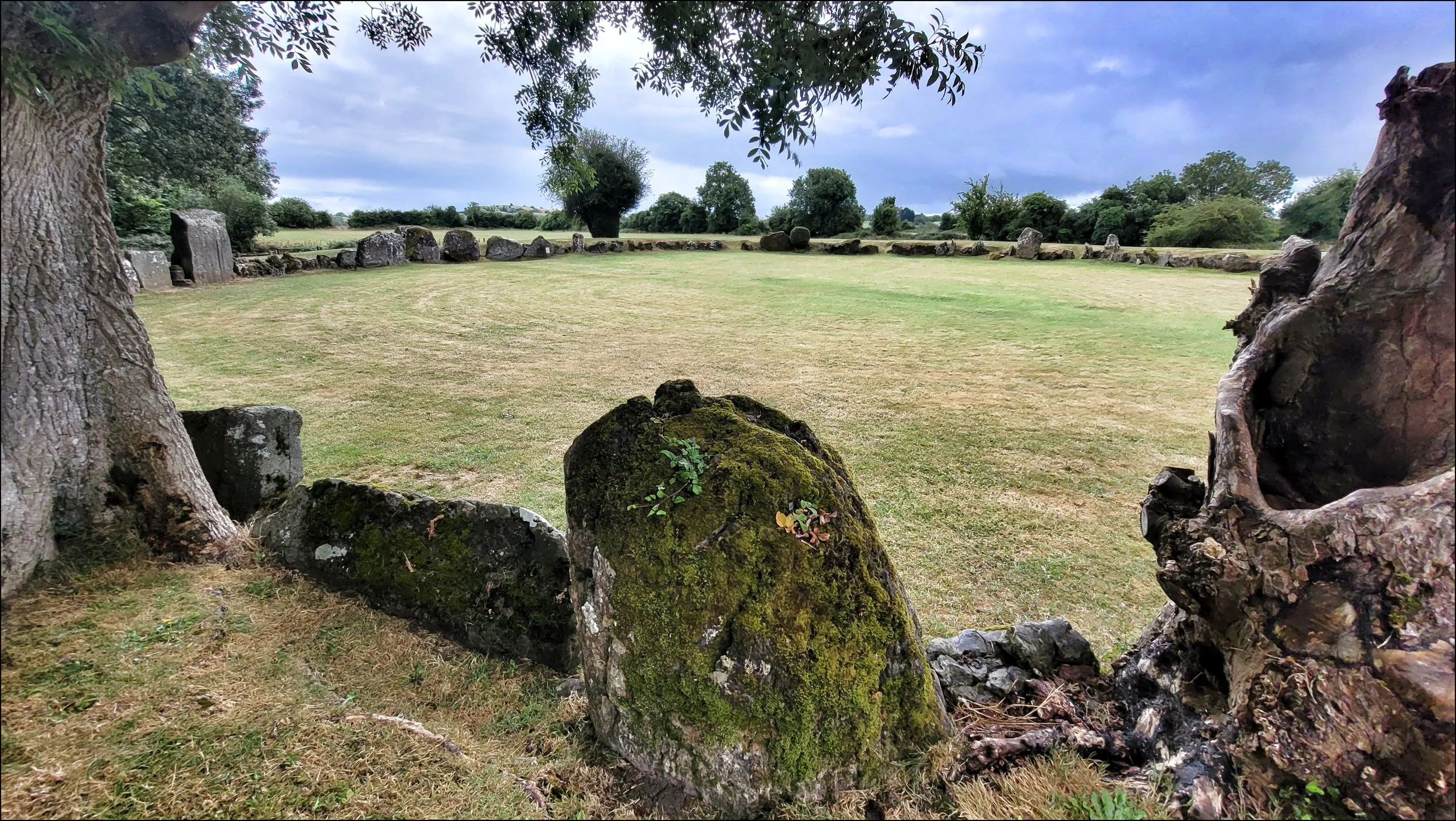
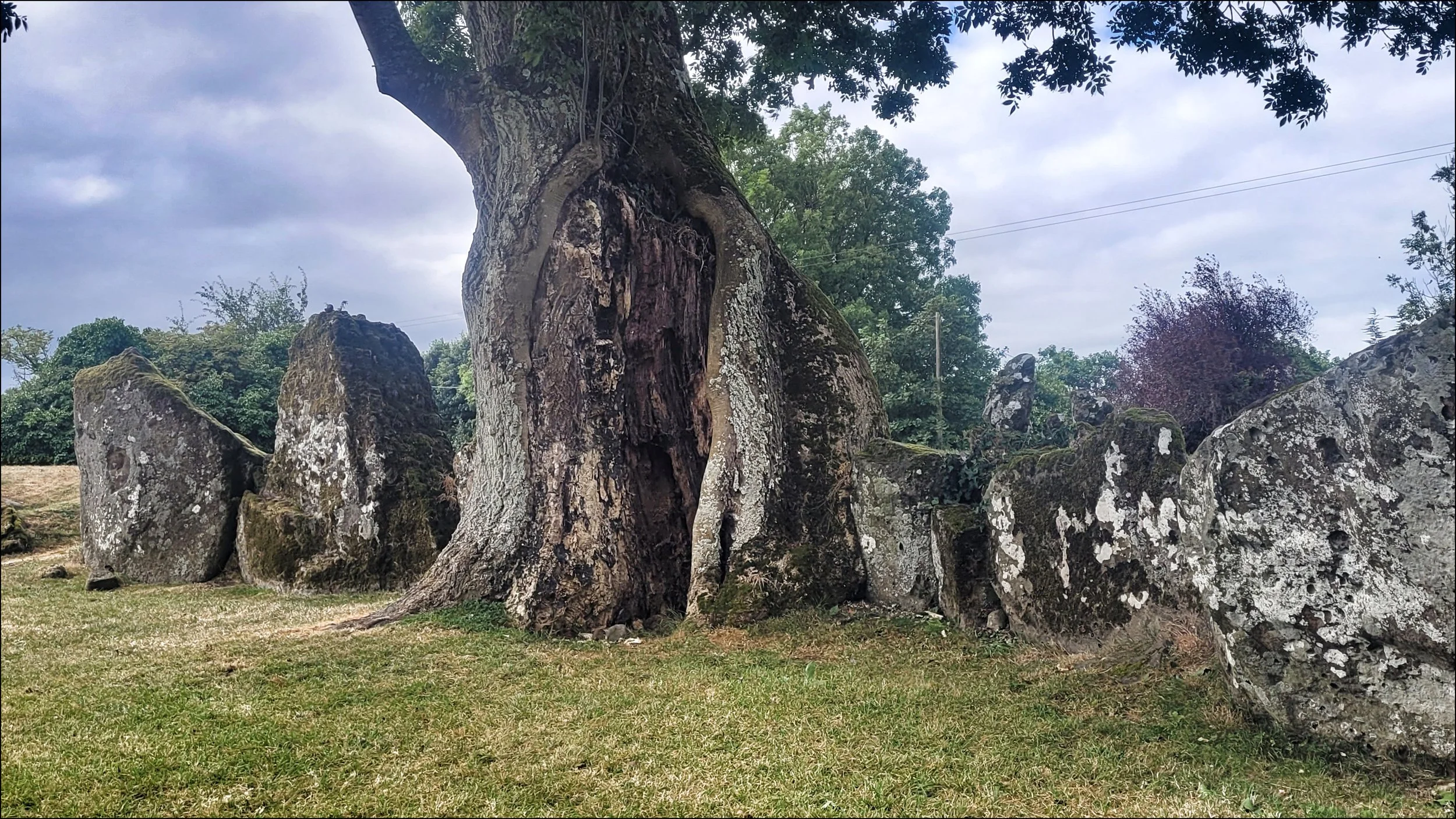
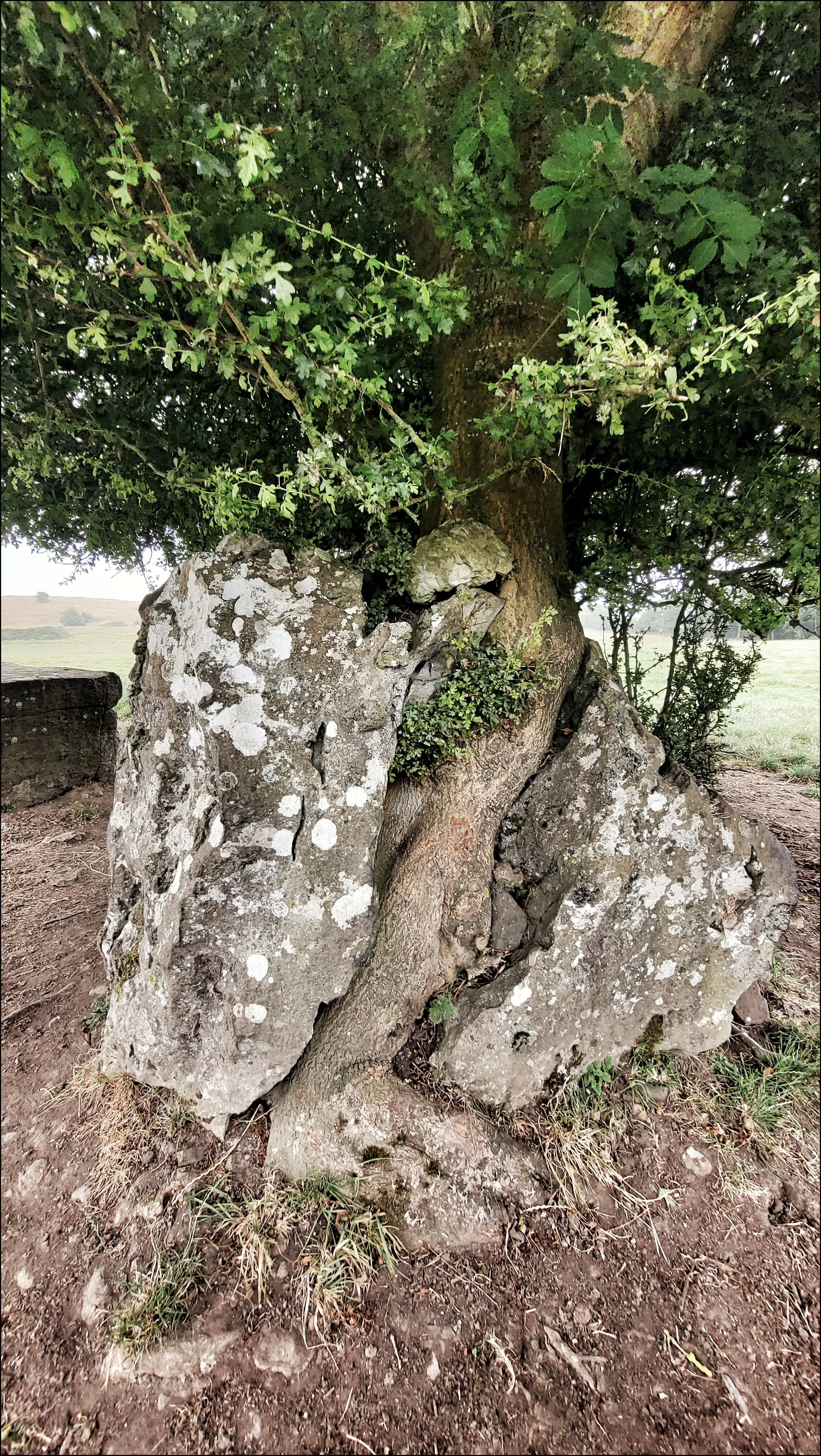
In the other field, north of Grange is the circle known as Lough Gur C with a diameter of around twenty metres. It has the peculiar feature of a tree growing through one of the stones and unusually most of the fifteen stones here are wide and short with flat tops and appear to be a mixture of rock types. On the inside of the circle is a very shallow mound with nothing visible at it's centre. I wondered how much attention this circle got with it's more famous neighbour next door.
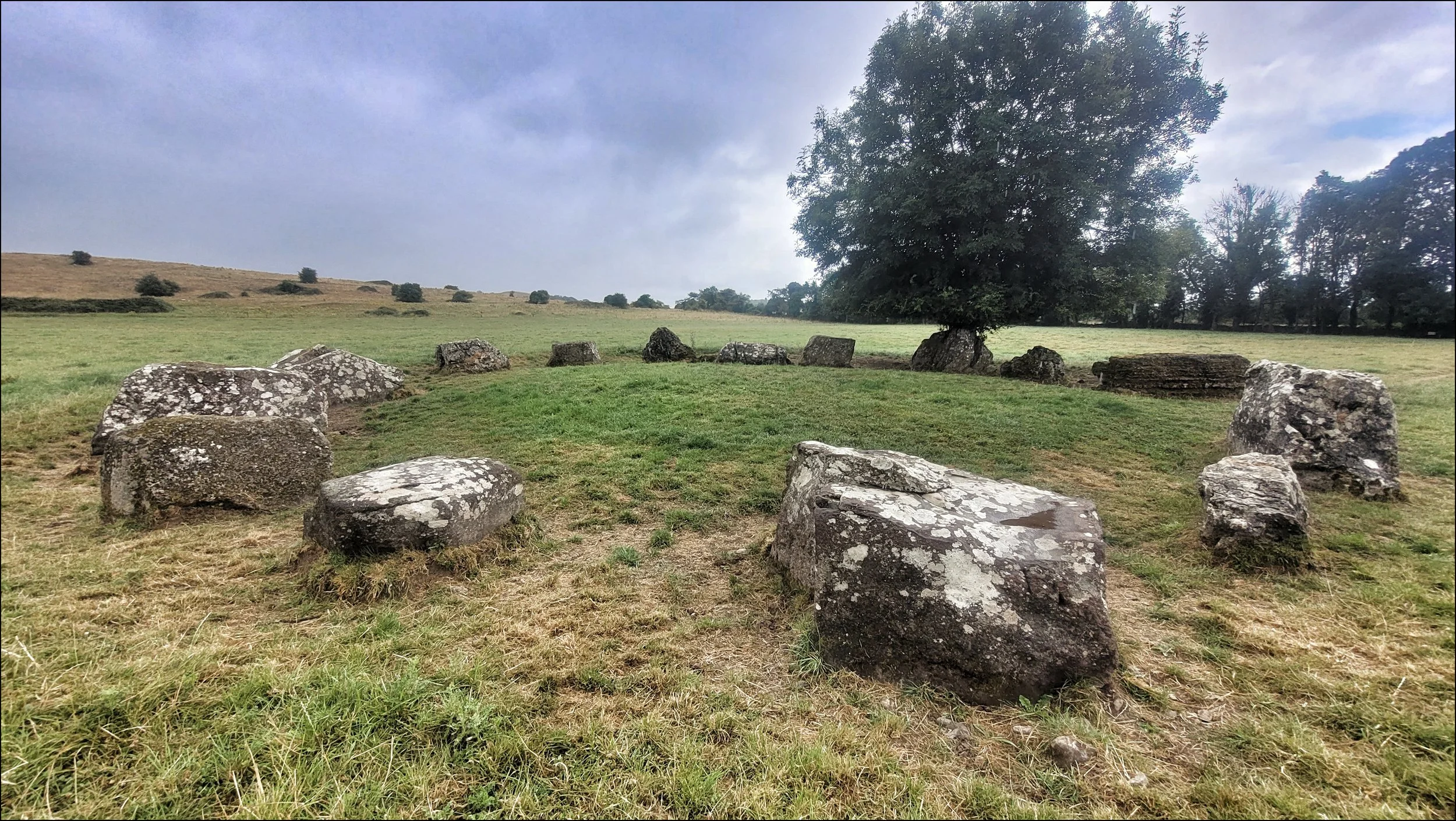
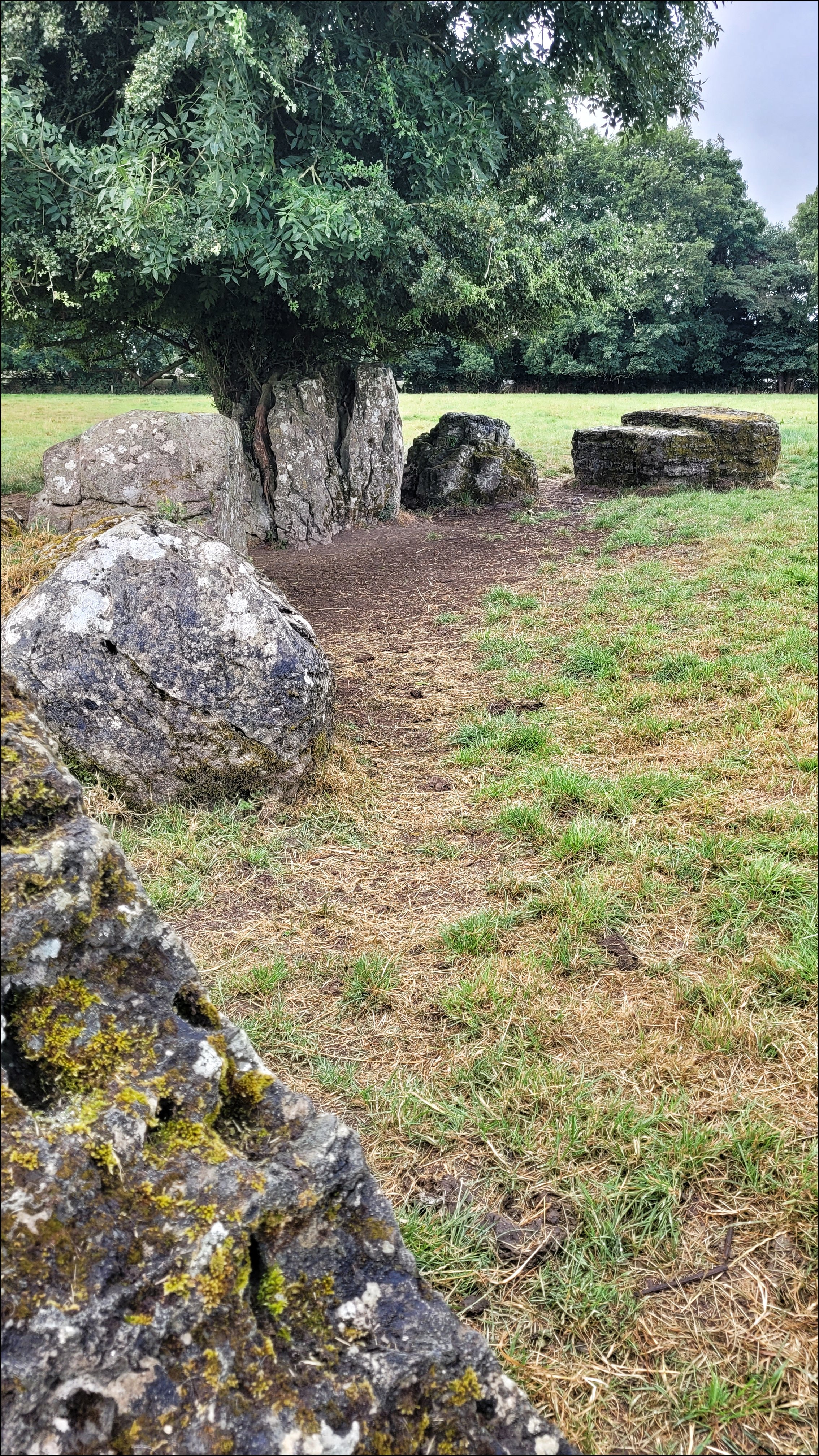
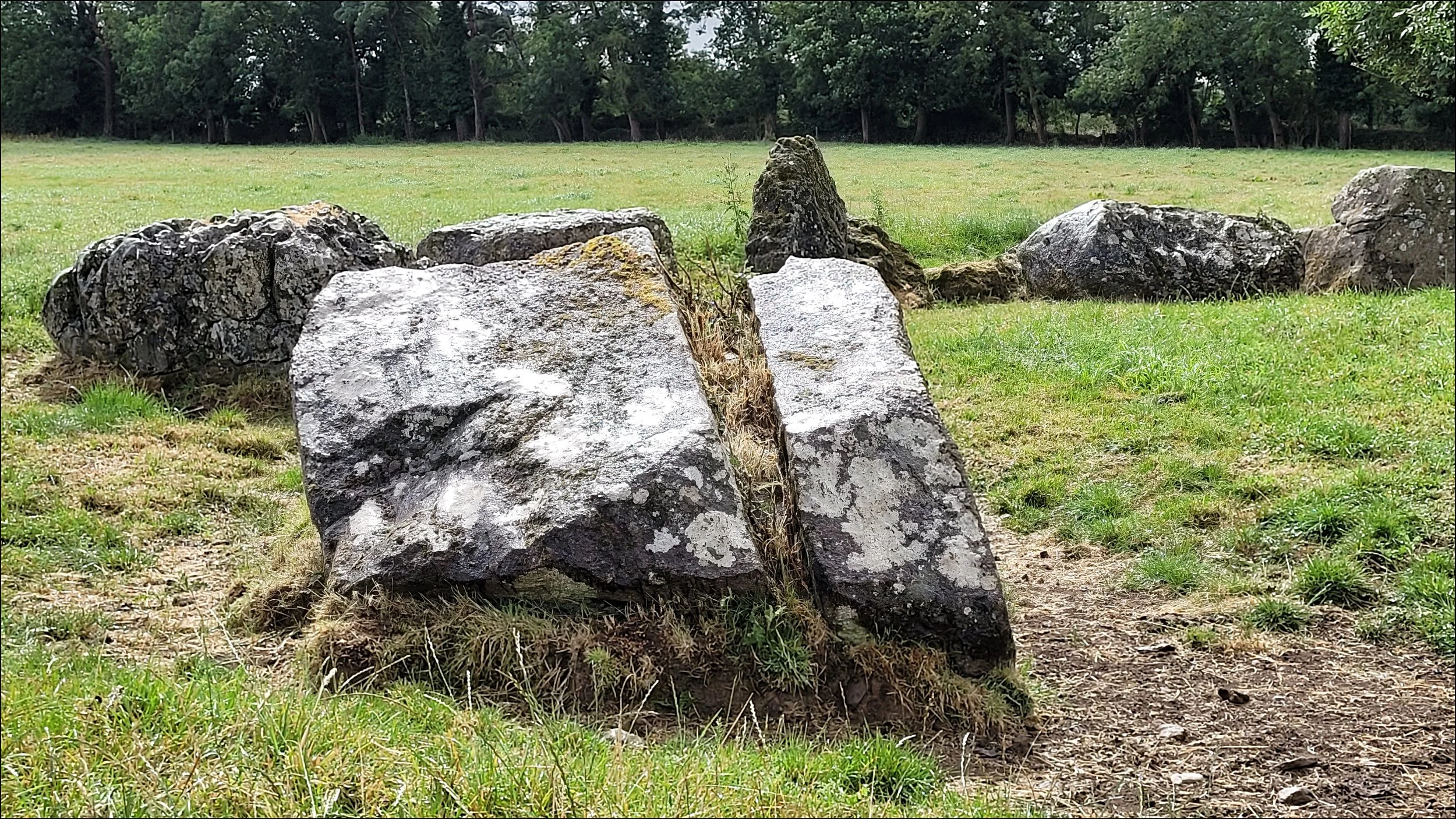
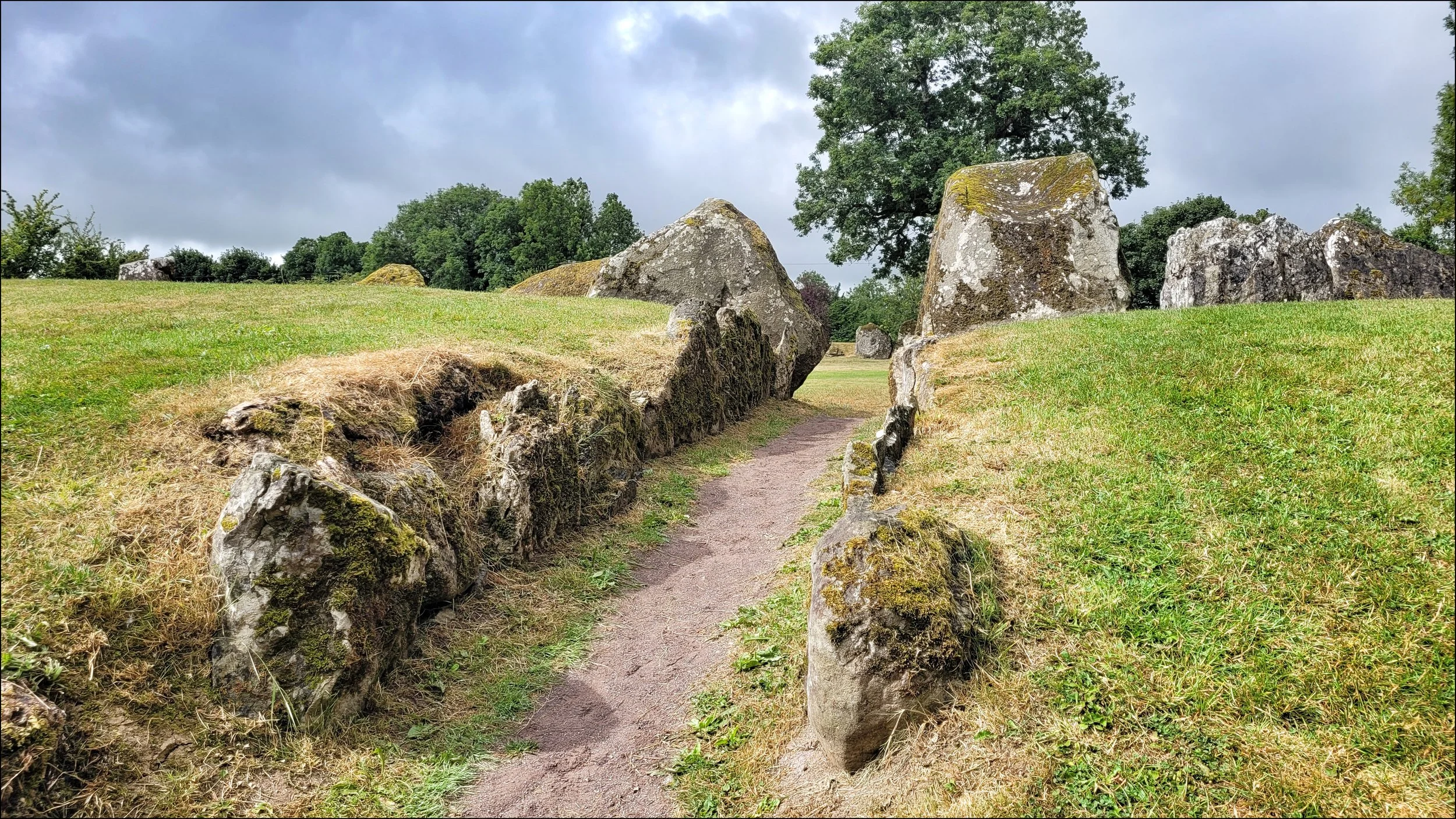
Returning to Grange, I entered the embanked circle though a passage entrance and again found the stones to be of different types; Limestone, Basalt, Breccia and Sandstone with quartz seems in some of them. The 113 stones were tightly packed together embedded in the bank with the largest on the northern arc being a sighting stone for the Lughnasa sunrise. This stone was also in line with Lough Gur C in the next field. It was a magical place and as I stood in the centre I felt the stones resonating a charged energy. I knew that some of them had been a modern addition but this didn't dilute the overall atmosphere. The knarled conglomerate stones had an especially strong presence like those at the Rollrights in Oxfordshire. Aswell as broken pottery, animal bones had been unearthed from the bank prompting a theory the circle had been used for ritual practice. I increasingly felt the circle had a hold over me and felt it hard to drag myself away.