A Saintly Circle
05.09.2025
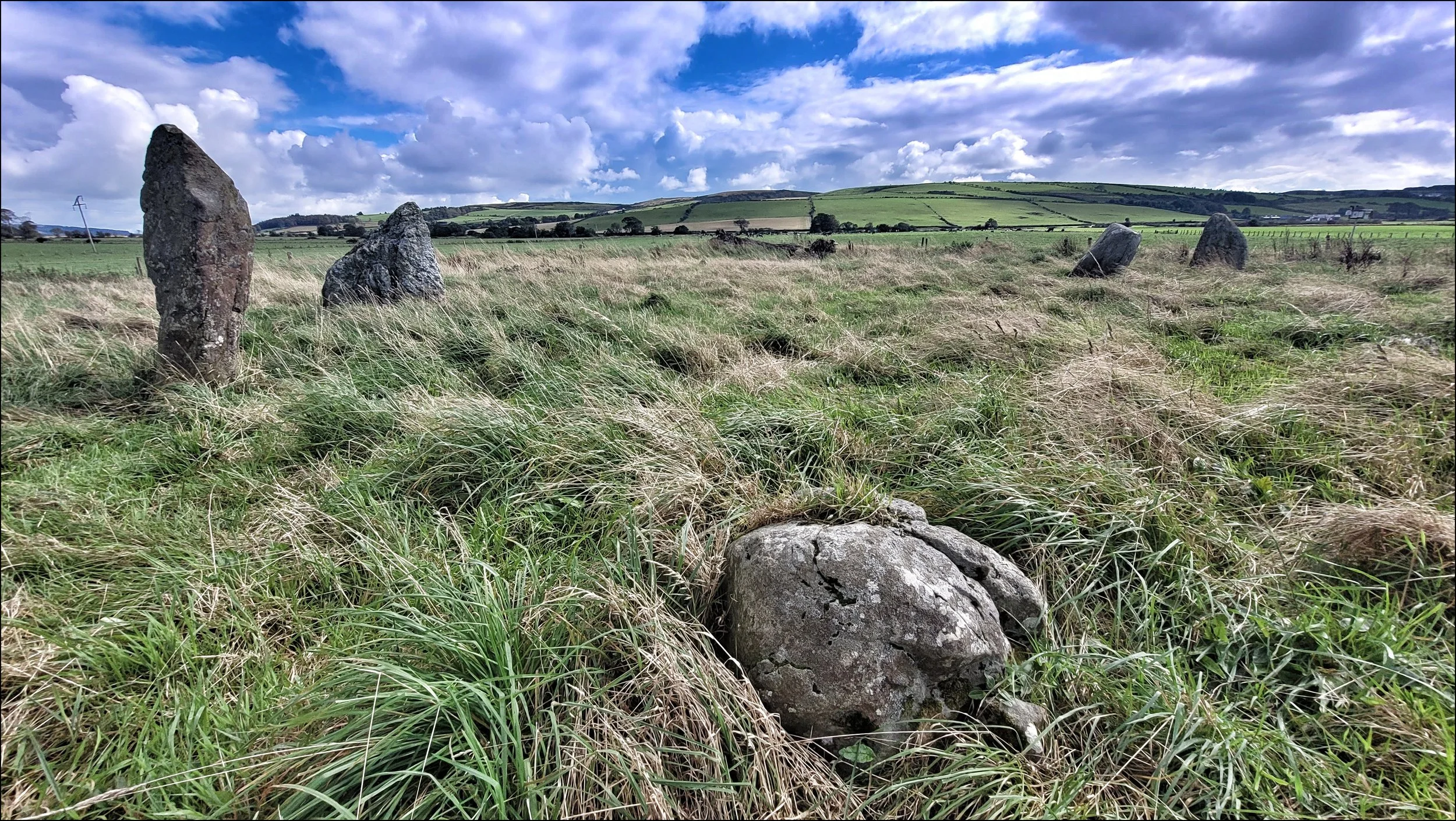
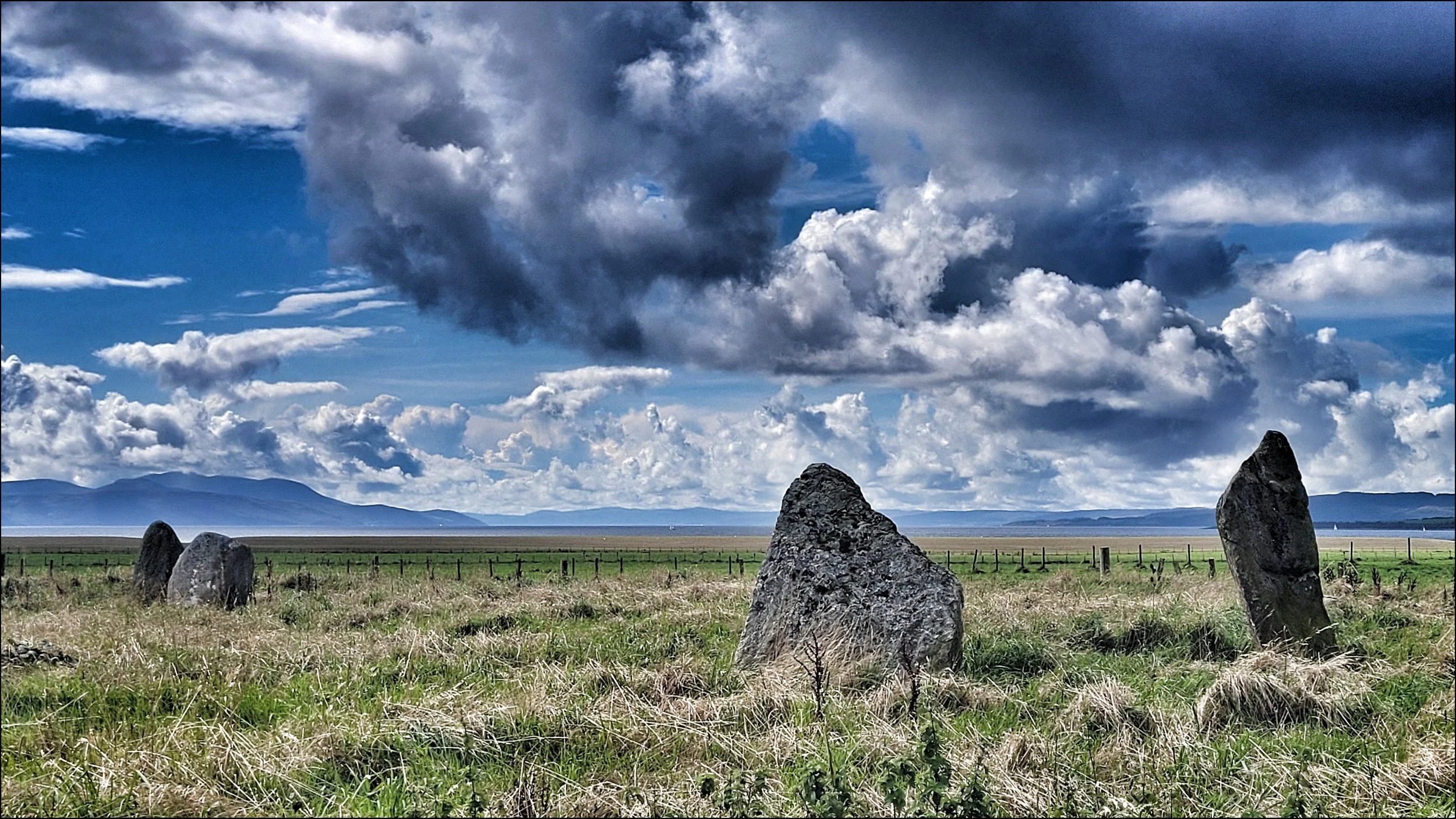
In the sixth century the missionary St Colmac settled on the west coast of Bute at Ettrick Bay and established a church there. The church was rebuilt and now lies derelict with a cemetery around it. Not much else exists there other than a row of cottages and a mysterious stone circle named after them. A footpath alongside the A844 from Ettrick Bay brings you to the waterlogged field it lies in. From the gate it’s a short walk to a slightly raised mound containing the seven stones that remain of St Colmac Cottages Stone Circle.
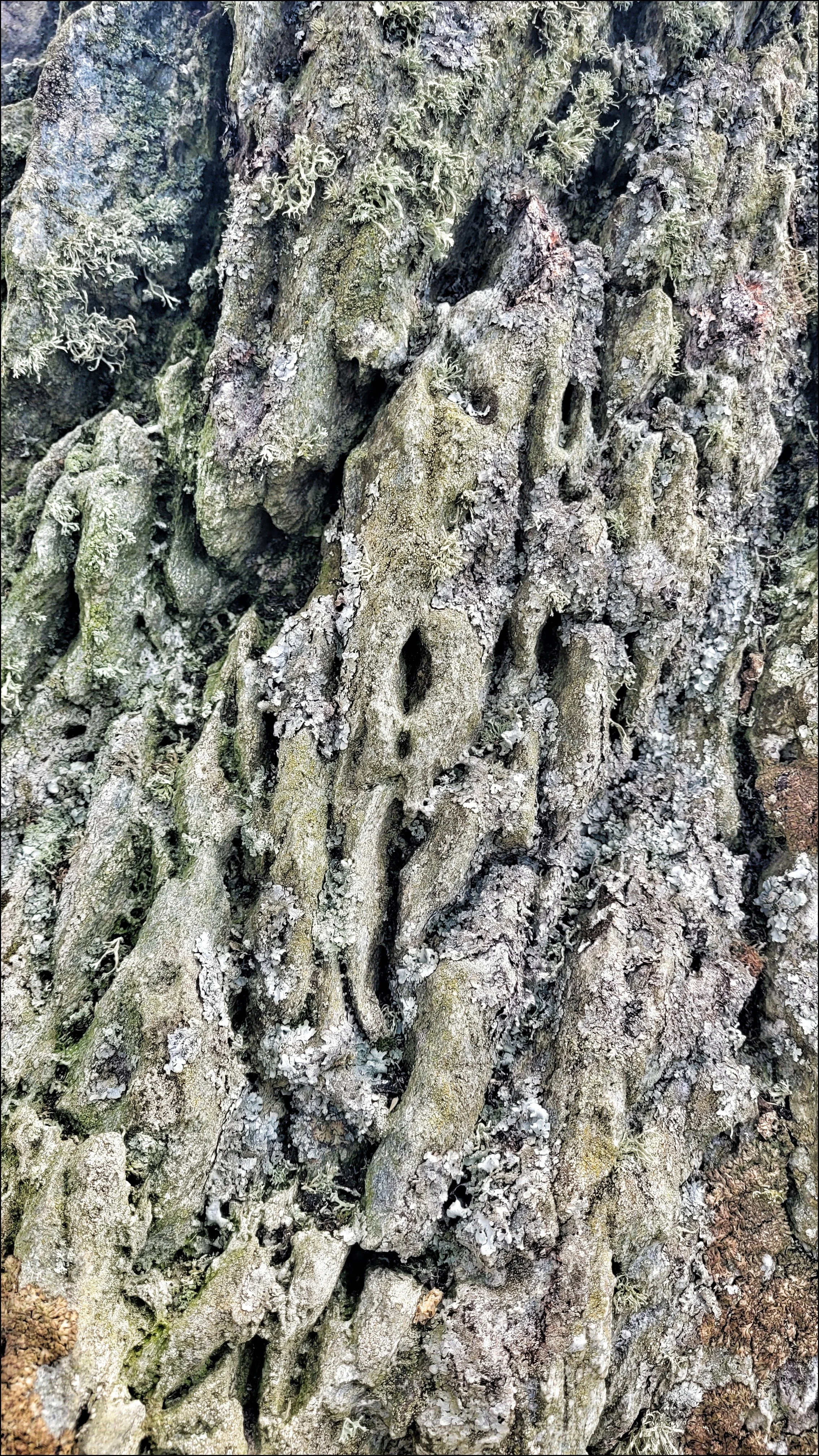
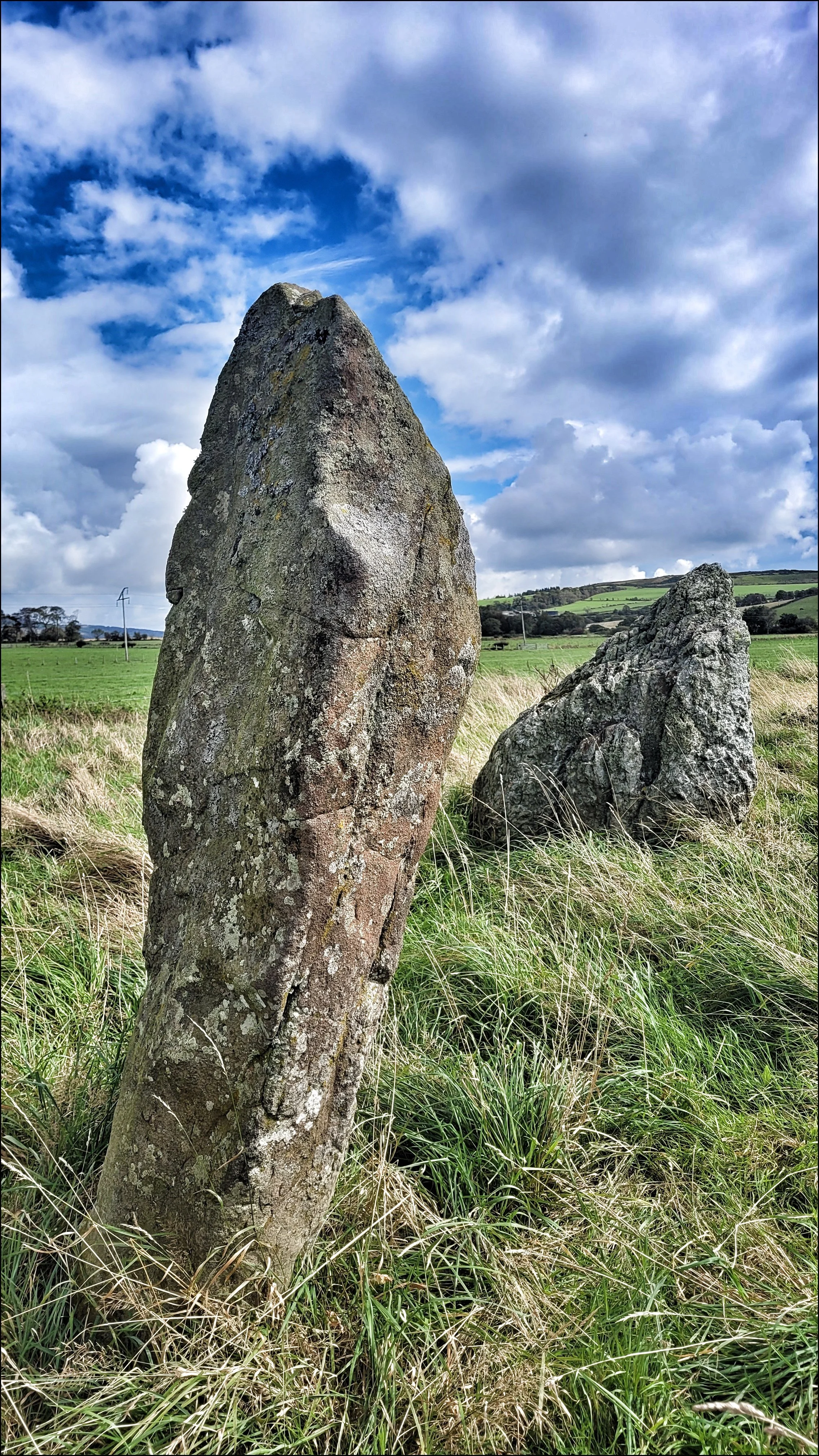
For a circle with a diameter of thirteen meters with quite large stones, little is known of it. It was mapped in the mid nineteenth century and once lay within a glade of trees, the last of which blew down in a storm in 2022 with it’s stump remaining amongst the taller stones. No excavations have taken place and so there are no clues as to the circles function or purpose. The tallest stone stands at two point four meters and appears to be of Old Red Sandstone. As the circle lies on a fault line the other stones looked to be volcanic with basalt and some quartz present.
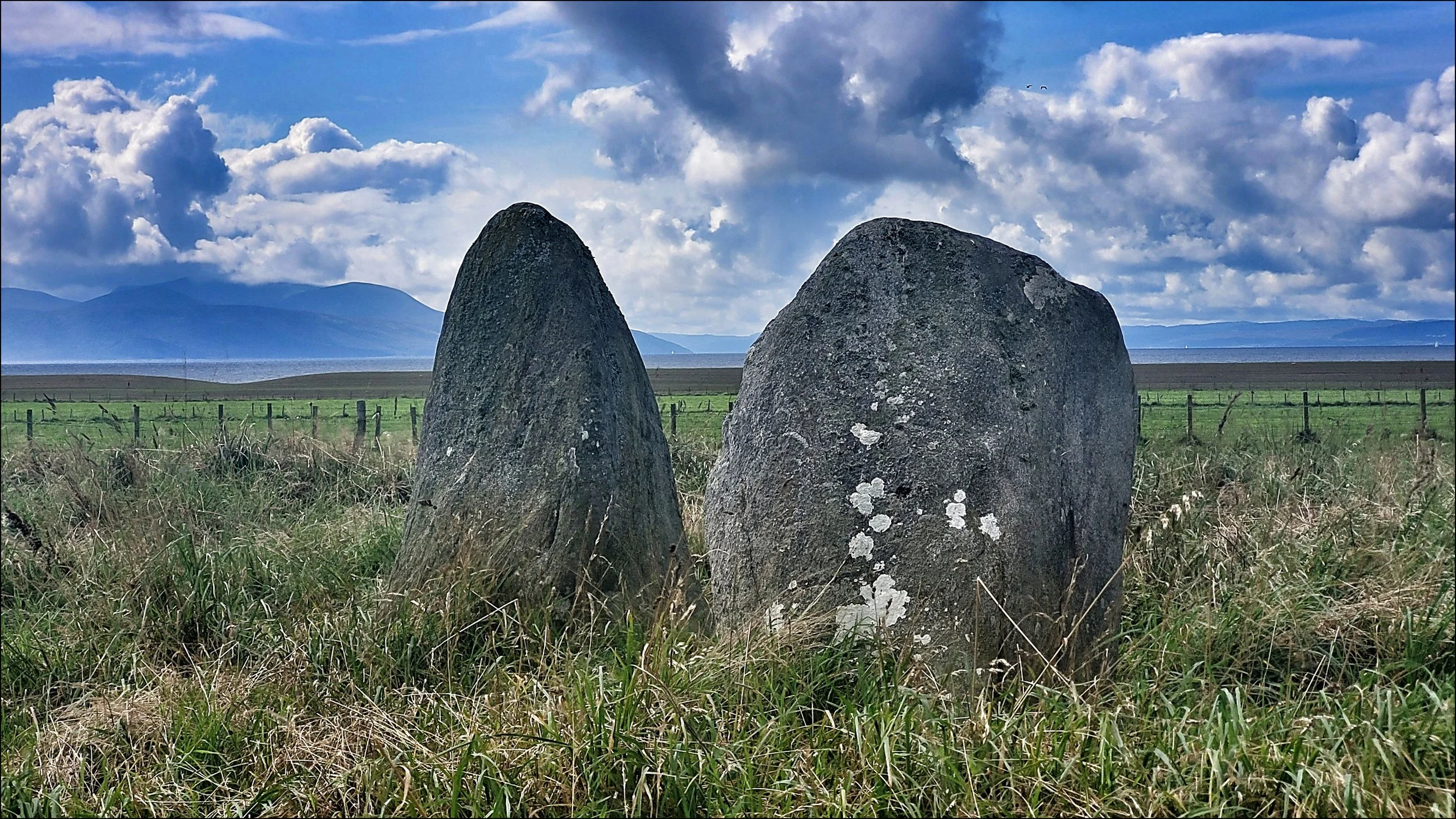
The entire circle was not only enclosed by a fence to keep the cattle out but also a shallow wall built into the mound. If this wall is Neolithic then this is a unique feature in the construction of stone circles. Many circles are actually burial chambers where the perimeter uprights are curb stones to the burial mound, but the St Colmac perimeter wall is nothing like this. Another mystery is the curved tops of the two stones that stand to the west and the way they echo the shape of the distant mountains of Arran. It seems possible therefore that the peaks of Arran had some relevance to this circle as a marker during the celestial calendar.