
The Great Ancient Calendar
21.10.2025
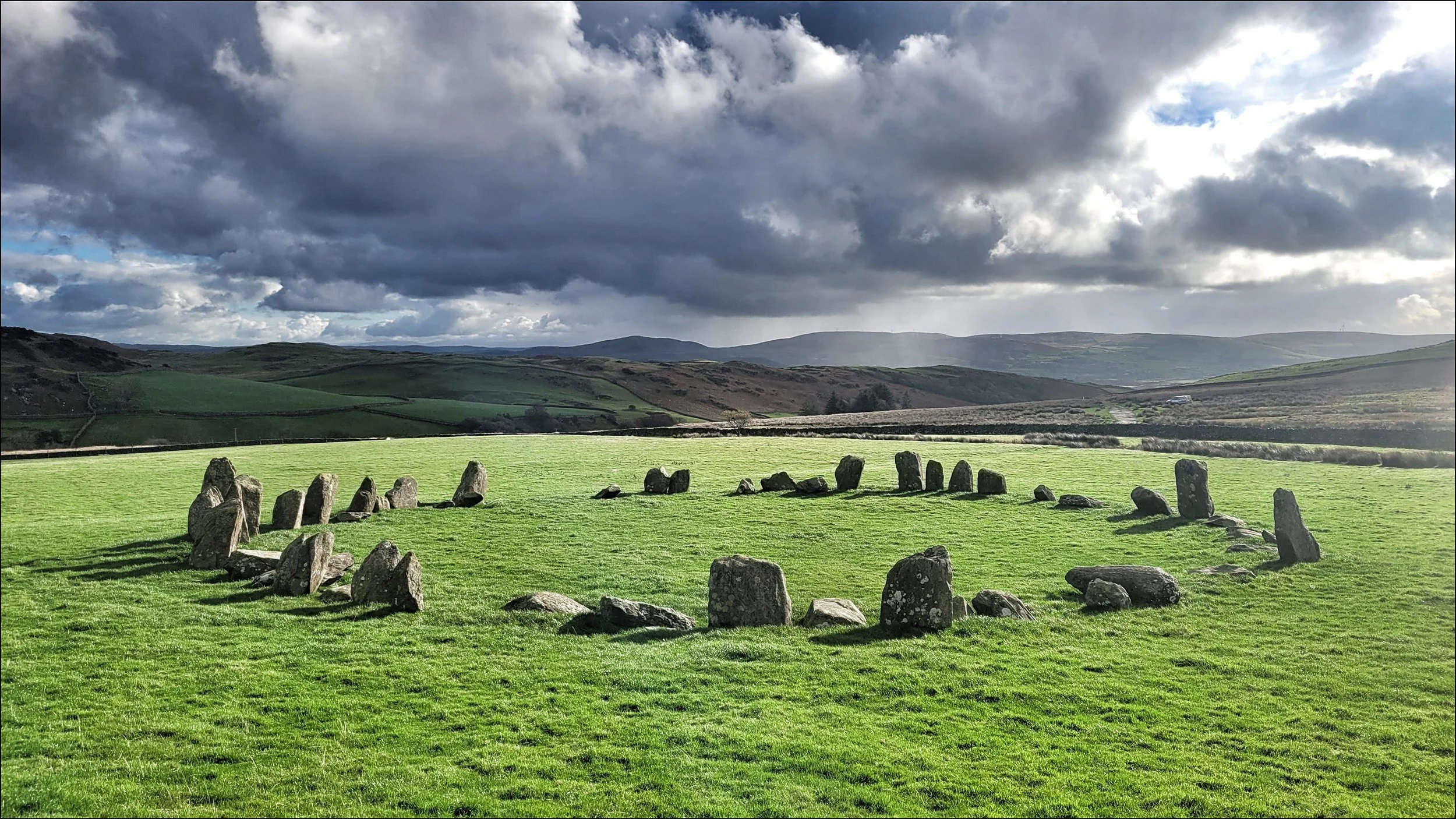
I had hoped this day would be special. I was pitched up at a charming and rustic campsite that was as near as I could get to the stone circle of Swinside or Sunkenkirk as it is sometimes referred to. It had always conjured mythical and romantic thoughts in my mind, knowing it was hidden away in a remote valley and unlike Castlerigg, required some effort to get to.
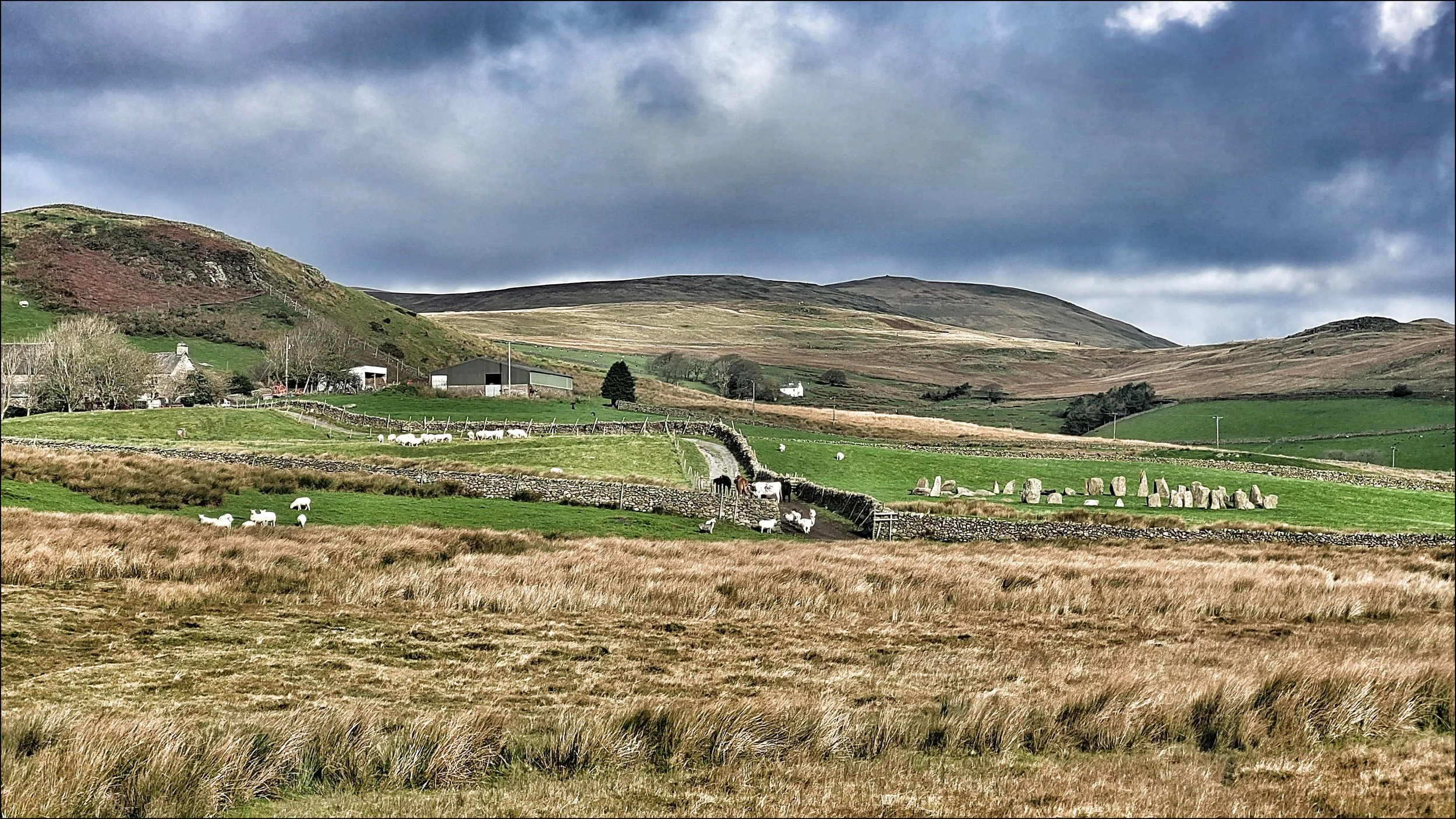
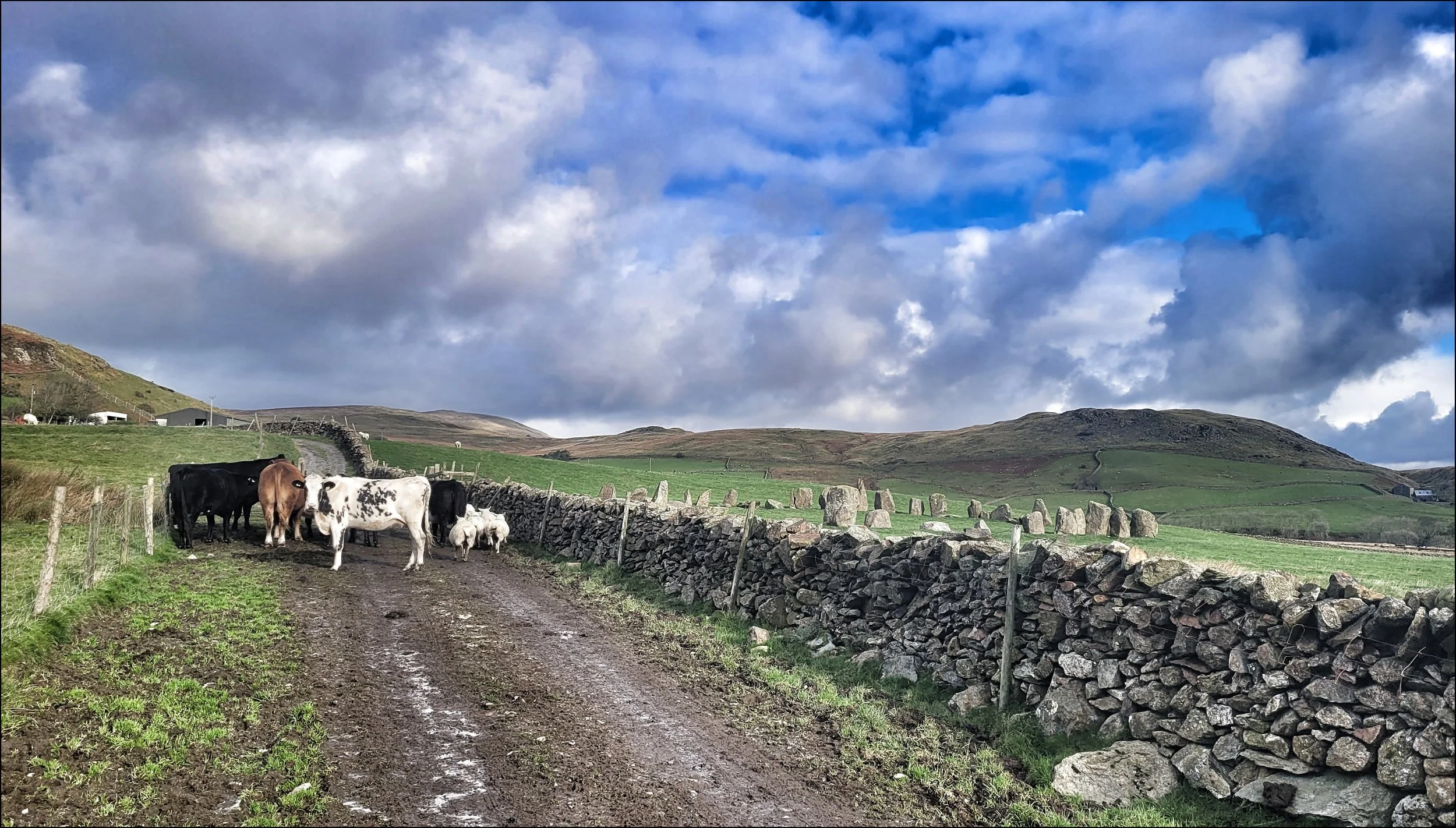
I set off early under a blue sky passing two heavy horses beside the path that led up the valley to the east of Whicham Beck. It was a gentle climb up through a wood where the path became rocky and I was forced to rock hop through water run off. At the edge of the wood past an ivy covered derelict farm shed I emerged out into a boggy field that bridged the woodland with moorland. Beyond the field ahead of me were enclosures of fern and gorse that rose up to Knott Hill. There were a few walls to negotiate on the way up. As I reached the ridge of the Hill I knew I would soon have a view down to the distant circle. I peered over the wall and there nestled in the glacial valley were the tiny specks of the stones of Swinside. There was a farmhouse near to it but nothing else aside from sheep and cattle that were being herded by the farmer on his quad bike. I started out down the hill but found a direct route impossible as the field was waterlogged. It took a while to pick my way through and then I found when I reached the farm track the herd of cows had blocked the gate to the circle. This was a test of my metal but luckily with a slow friendly approach the herd parted.
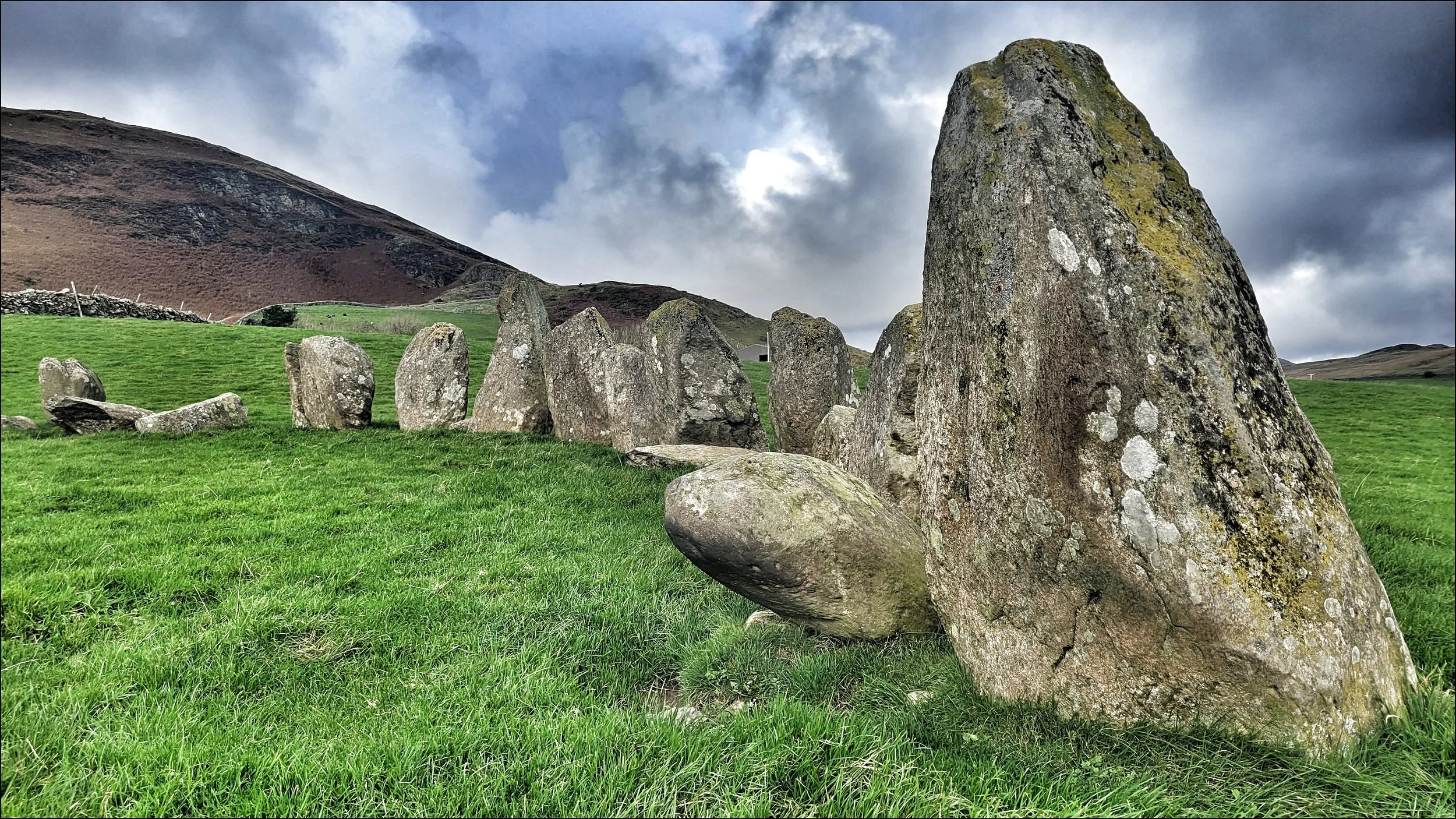
I passed through the gate and stood in awe, immediately registering the intrinsic beauty of this six thousand year old piece of architecture. I found it hard to take my eyes off it as I read the information board that defined Swinside as a celestial calendar with sighting lines for the solstices between relevant stones. Of the fifty five tightly packed stones thirty two still stand leaning in to the centre slightly as if in conversation with each other. Of igneous slate, they looked old and weathered from close quarters. At the southern arc were two large stones that seemed to be entwined. They actually touched and gave the impression they had been fashioned into an expression of companionship.
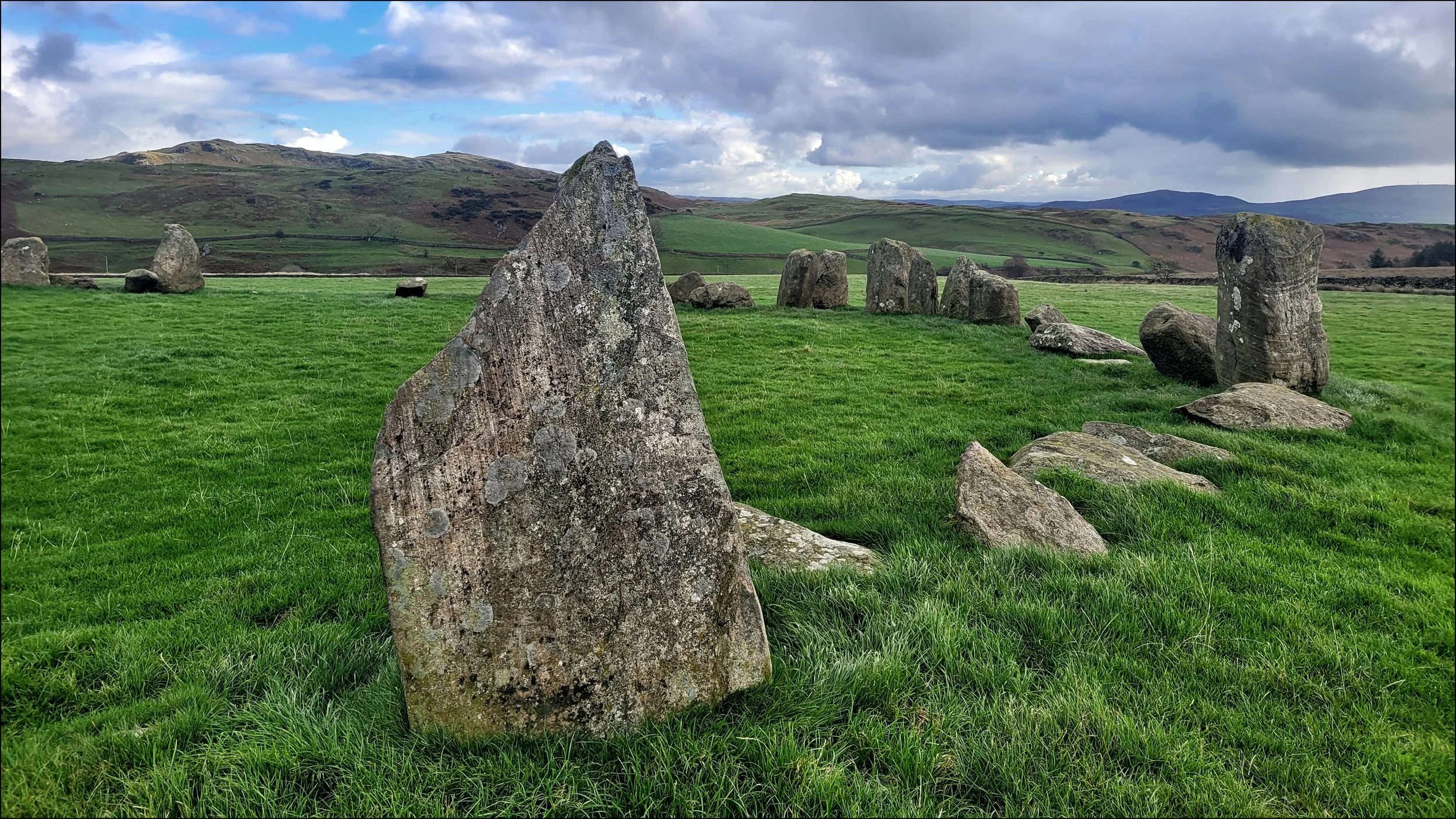
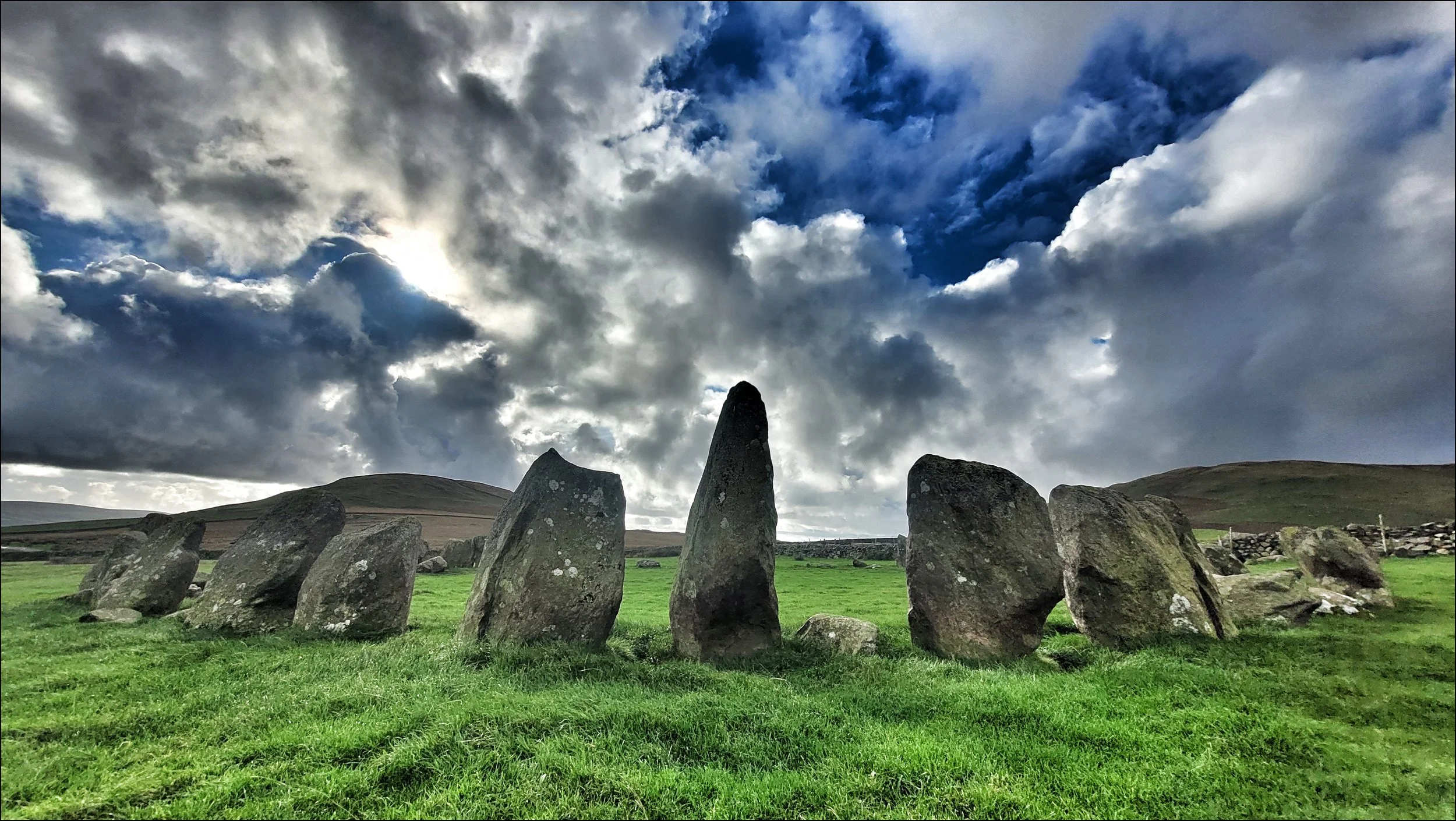
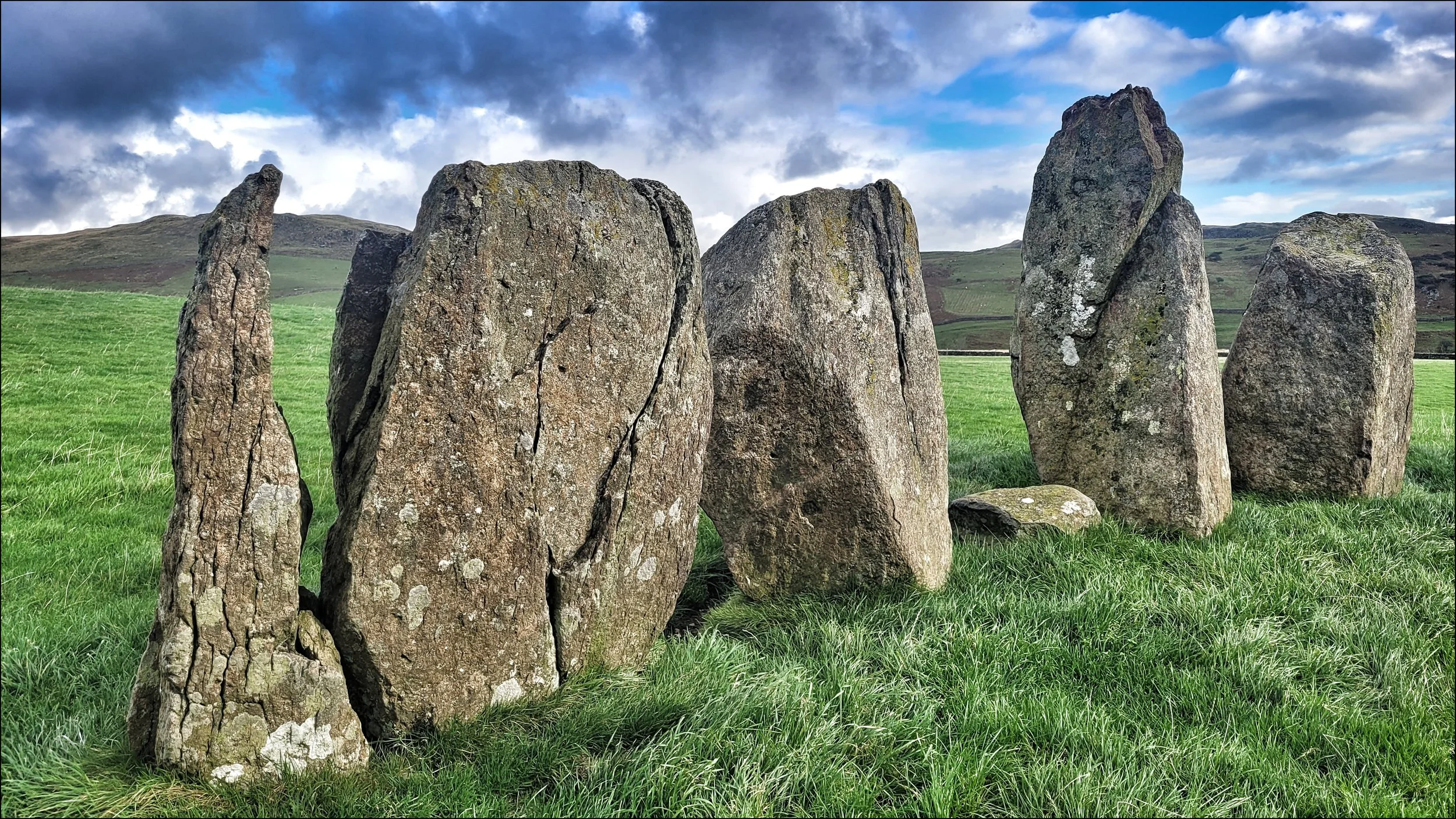
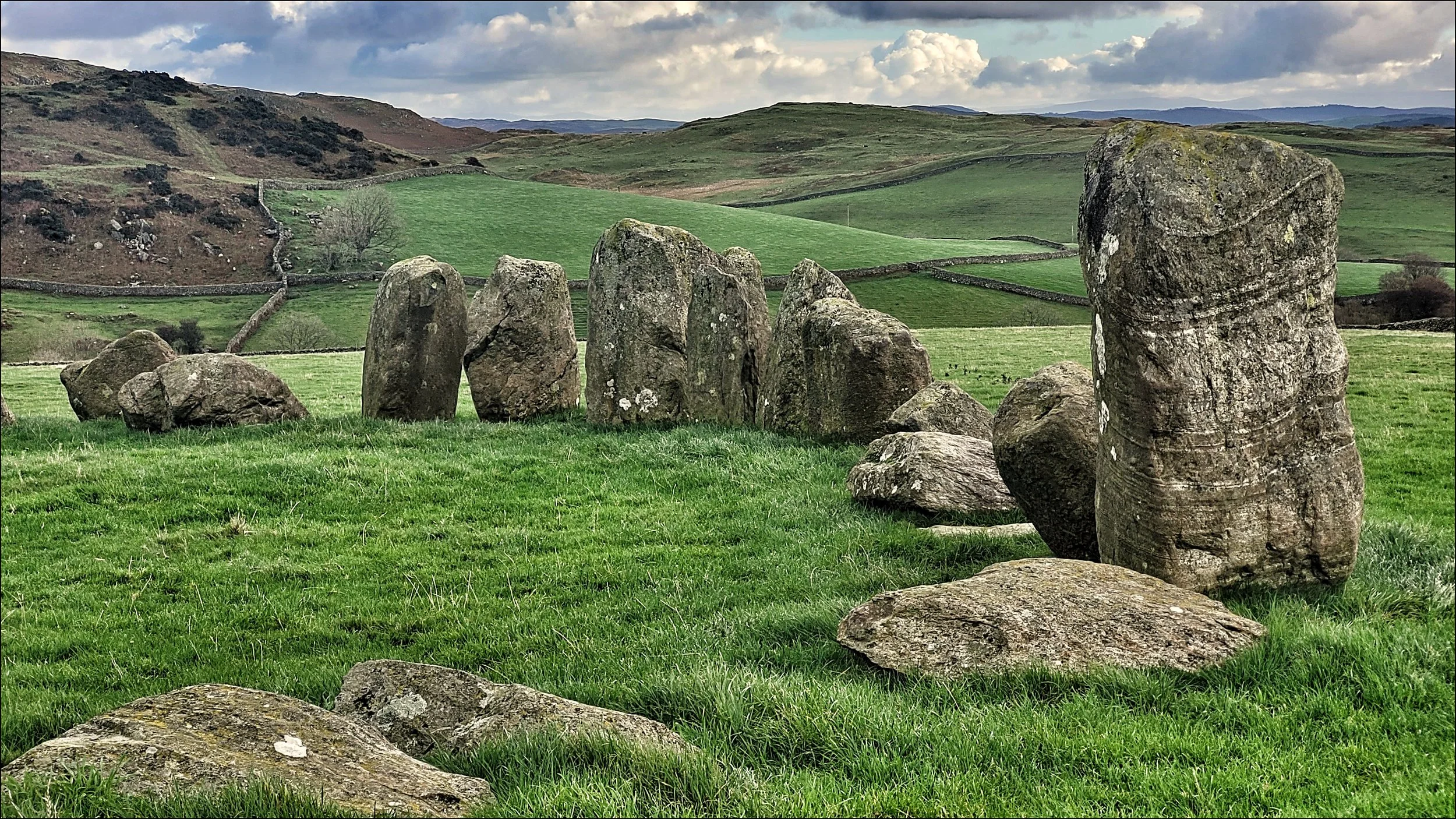
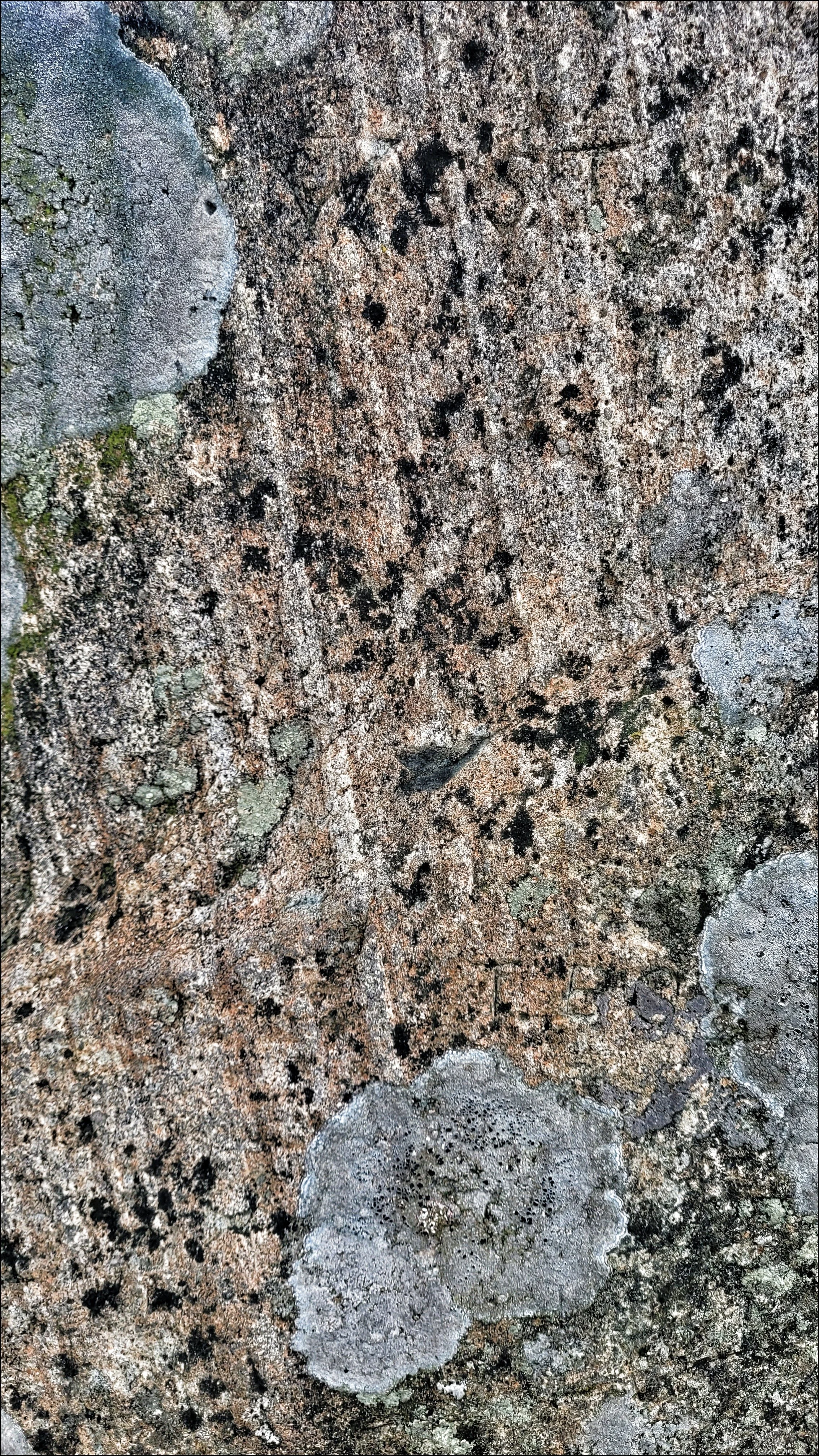
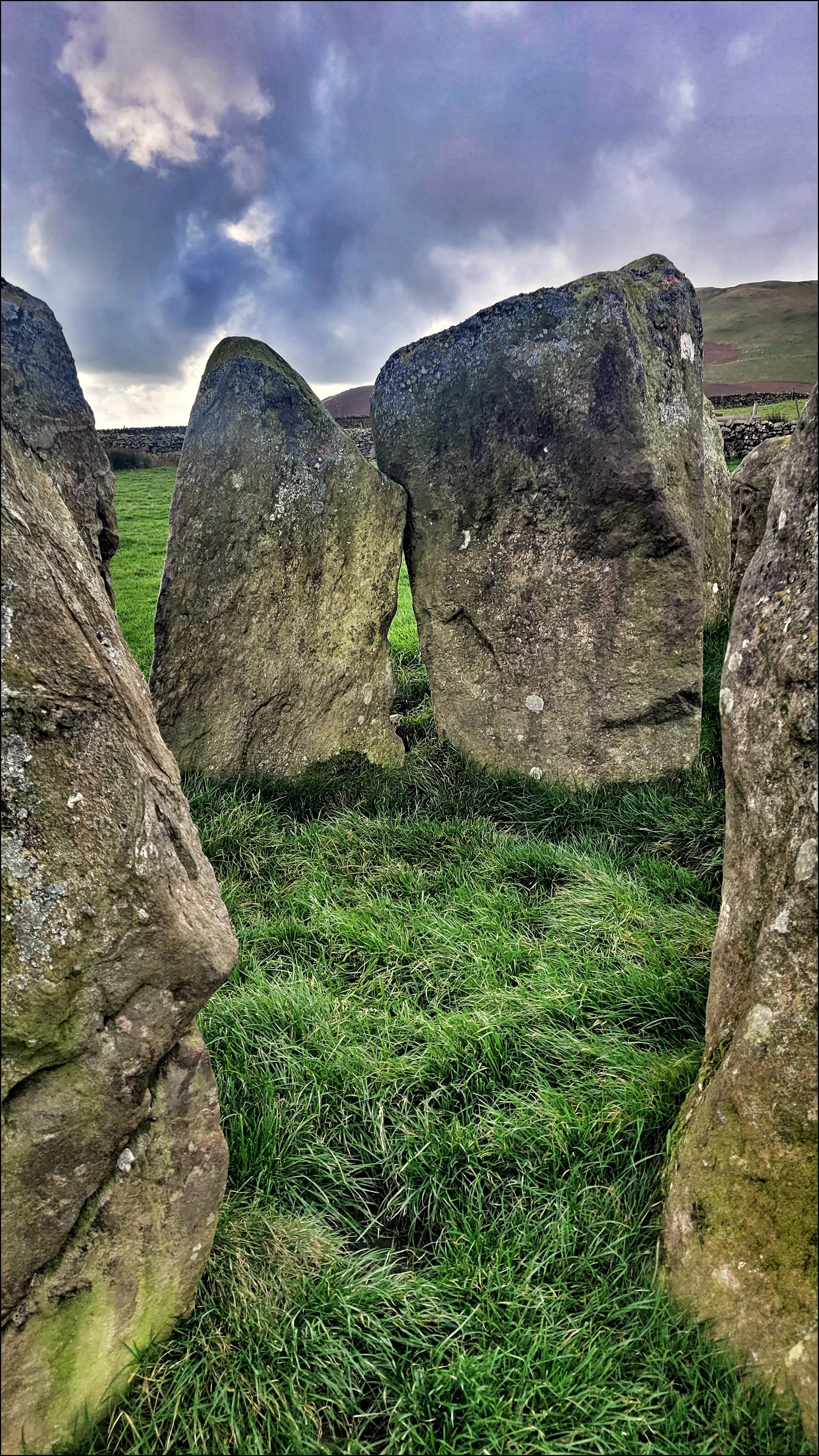
A great deal of research had been done on the functionality of Swinside by Jack R. Morris Eyton, an astroarcheological theory kicked off by Aubrey Burl. The setting of a circle in this particular landscape amongst a variety of peaks provided numerous reference points all around for observing solar, lunar and celestial movements.
I waited patiently for the sun to emerge and watched a man with his Collie walk by. I was spiritually overloaded and was glad of the distraction. Then I was alone with the circle once more and I felt compelled to reflect on what this meant to me. The Journey, along with the anticipation of discovery, the excitement of the reveal, and a charged encounter had all been near perfect and represented the essence of my long term journey. I left in a state of grace and almost glided back over Knott Hill and along the banks of the Whichen. I had been distracted and mentally immersed in Swinside, but felt uplifted and re energized.
I suddenly found myself back alongside the heavy horses at the gate to the campsite. A guy who worked on the farm said hello and we started chatting. His name was ‘Happy’ and he too had an interest in Swinside. He said he wanted to show me a book he had and disappeared off to get it. When he returned he handed me the book and I saw the name of the writer was none other than Jack R. Morris Eyton. He told me he had met him some years back and as he had read it he insisted I keep it. I thanked him, we shook hands and for the rest of the day I was happy too.