Into the Golden Valley
01.06.2026
I was in Herefordshire and just out the other side of an inspiring weekend at the Hay Festival. I thought it was time to visit two nearby sites I had missed on my last two annual visits here, one being a Cotswold Severn type burial chamber and the other an obscure standing stone hidden away at the end of the Golden Valley.
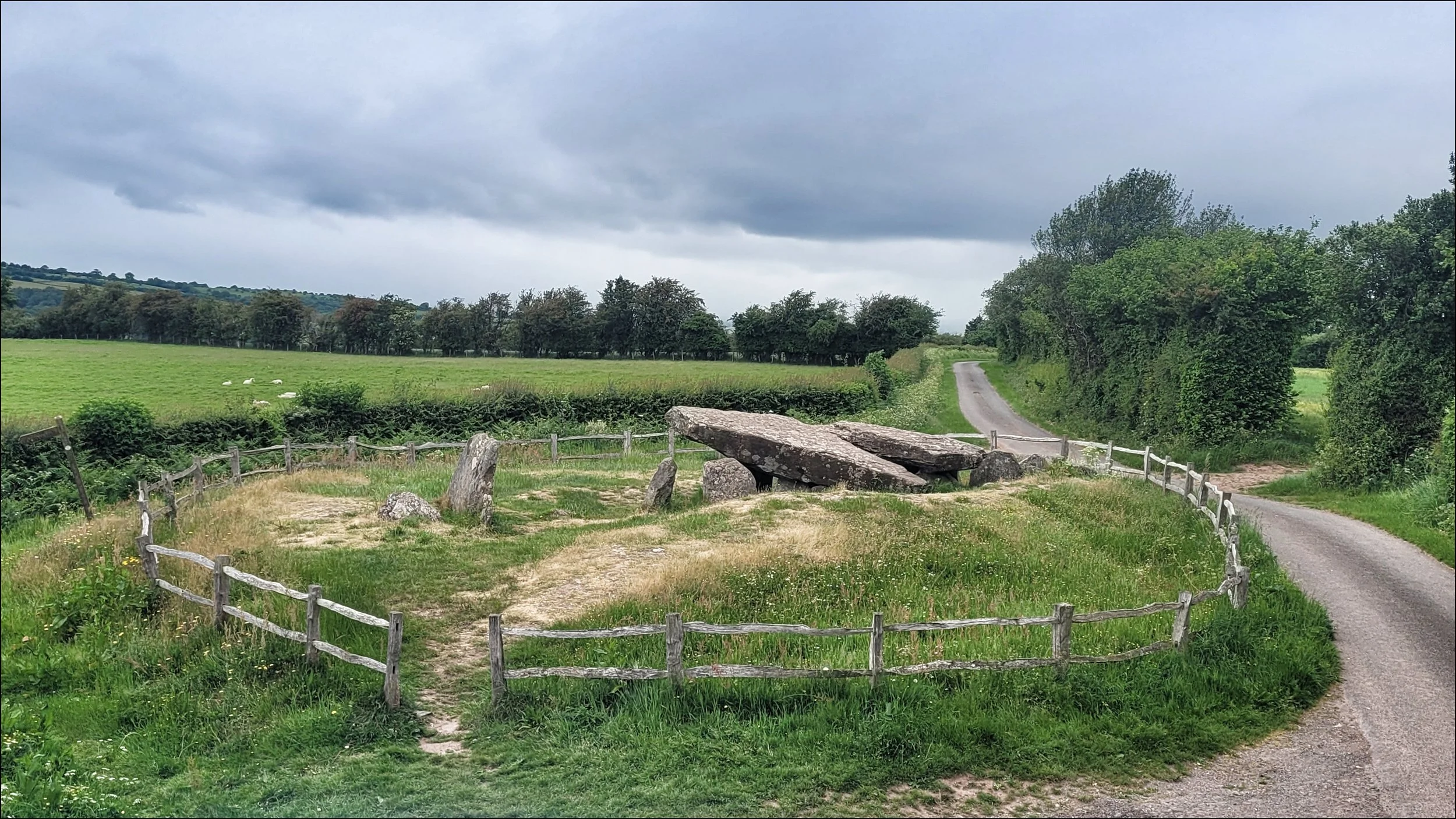
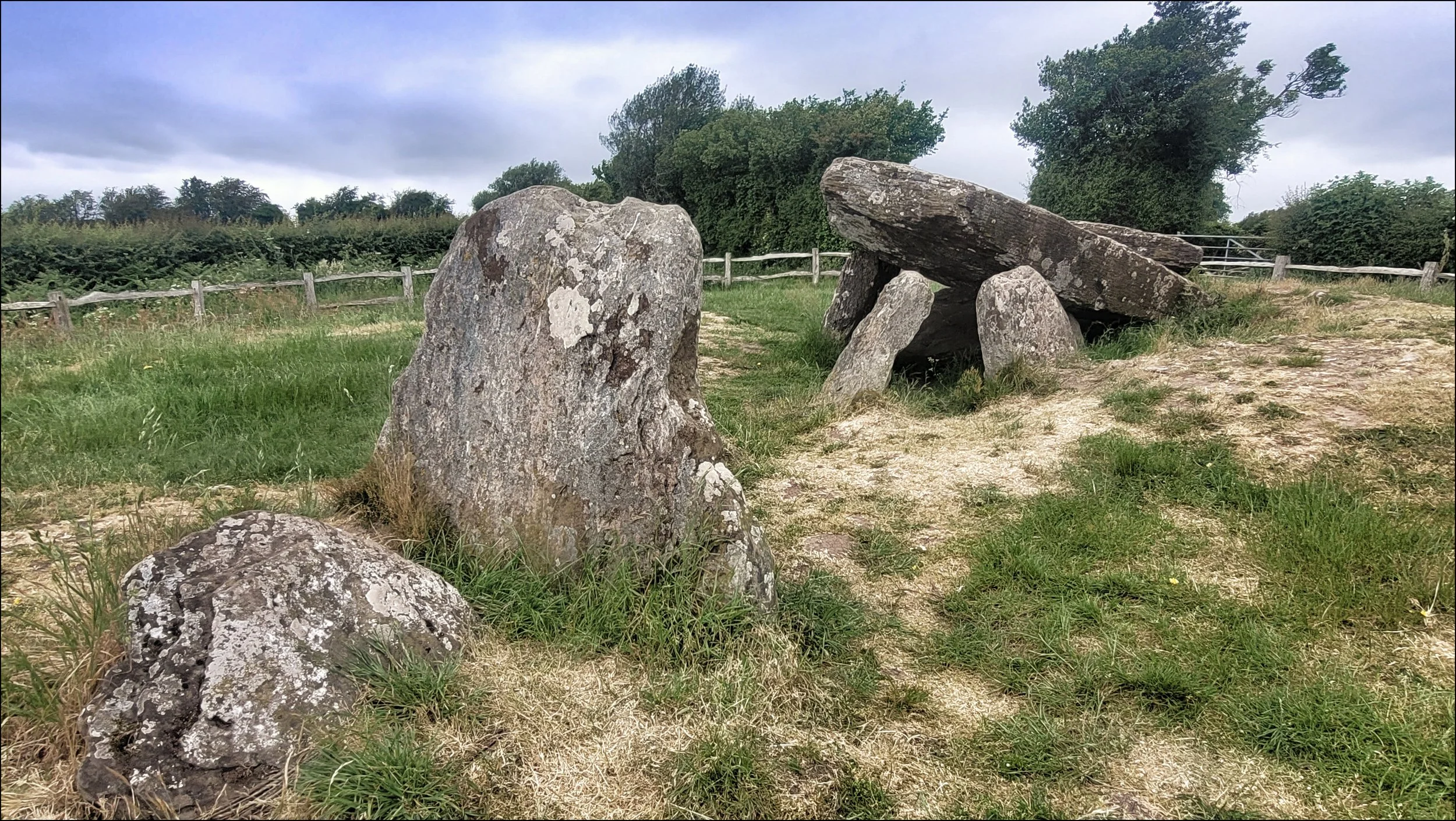
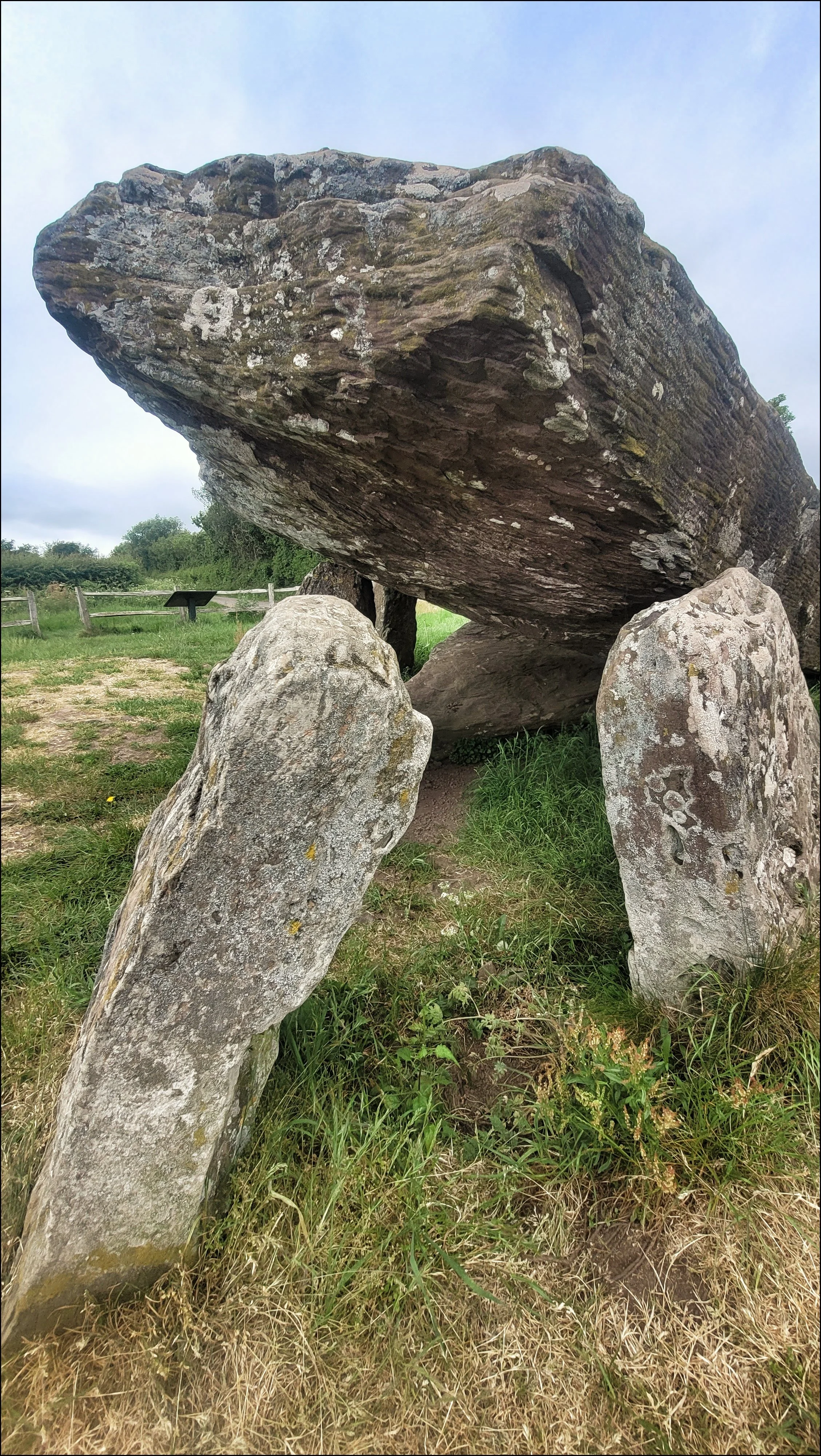
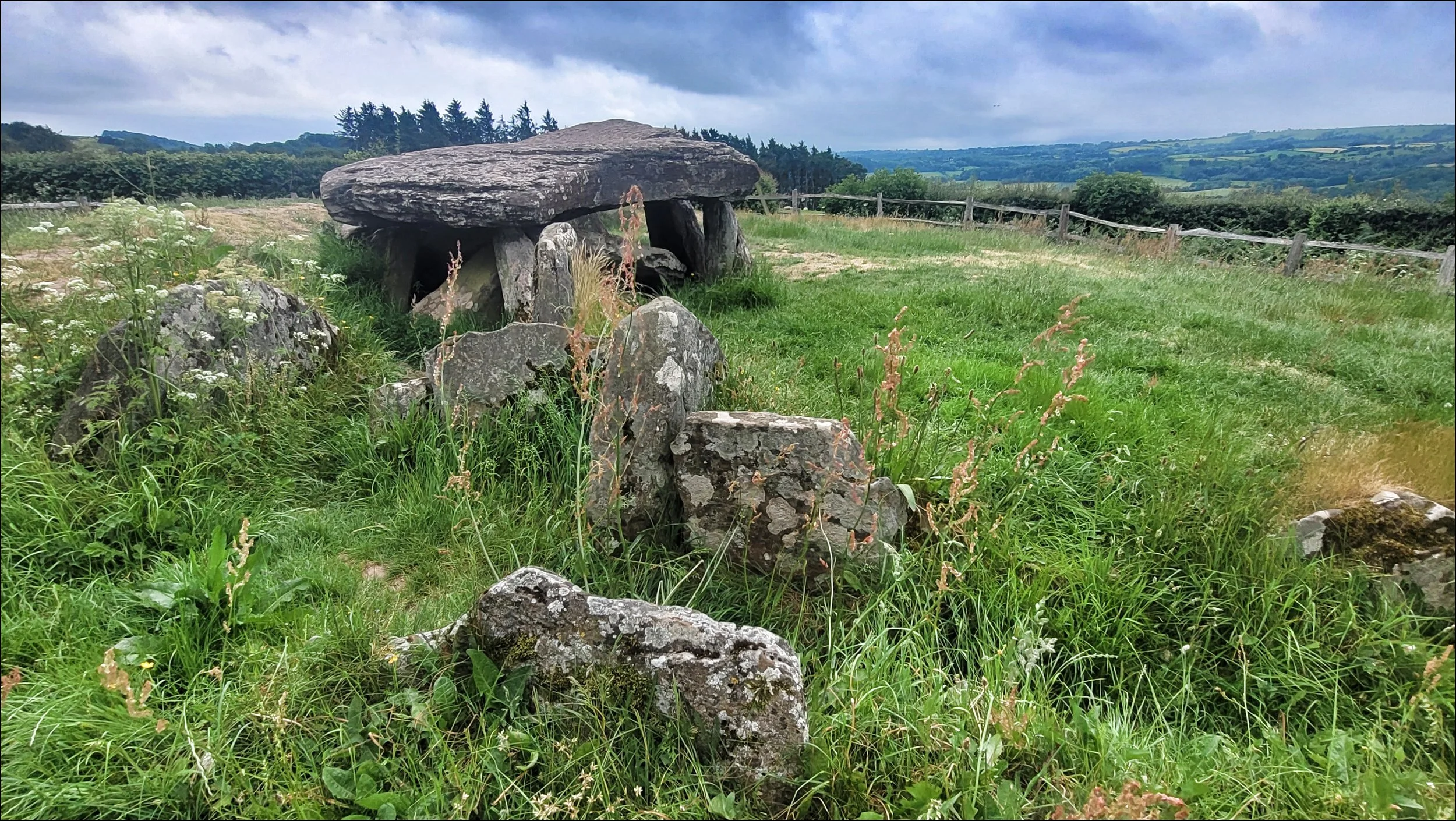
I followed the River Wye east from Hay and crossed it at Bredwardine. The roads from here then narrowed along Pentre Lane and then left up Arthur’s Stone Lane. At the top of Merbach Hill was a pull in next to a wooden ring fence containing a mound and the remains of the Arthur’s Stone. The tail of the burial chamber had been obliterated by the lane but the main passage structure and giant capstone was still present.
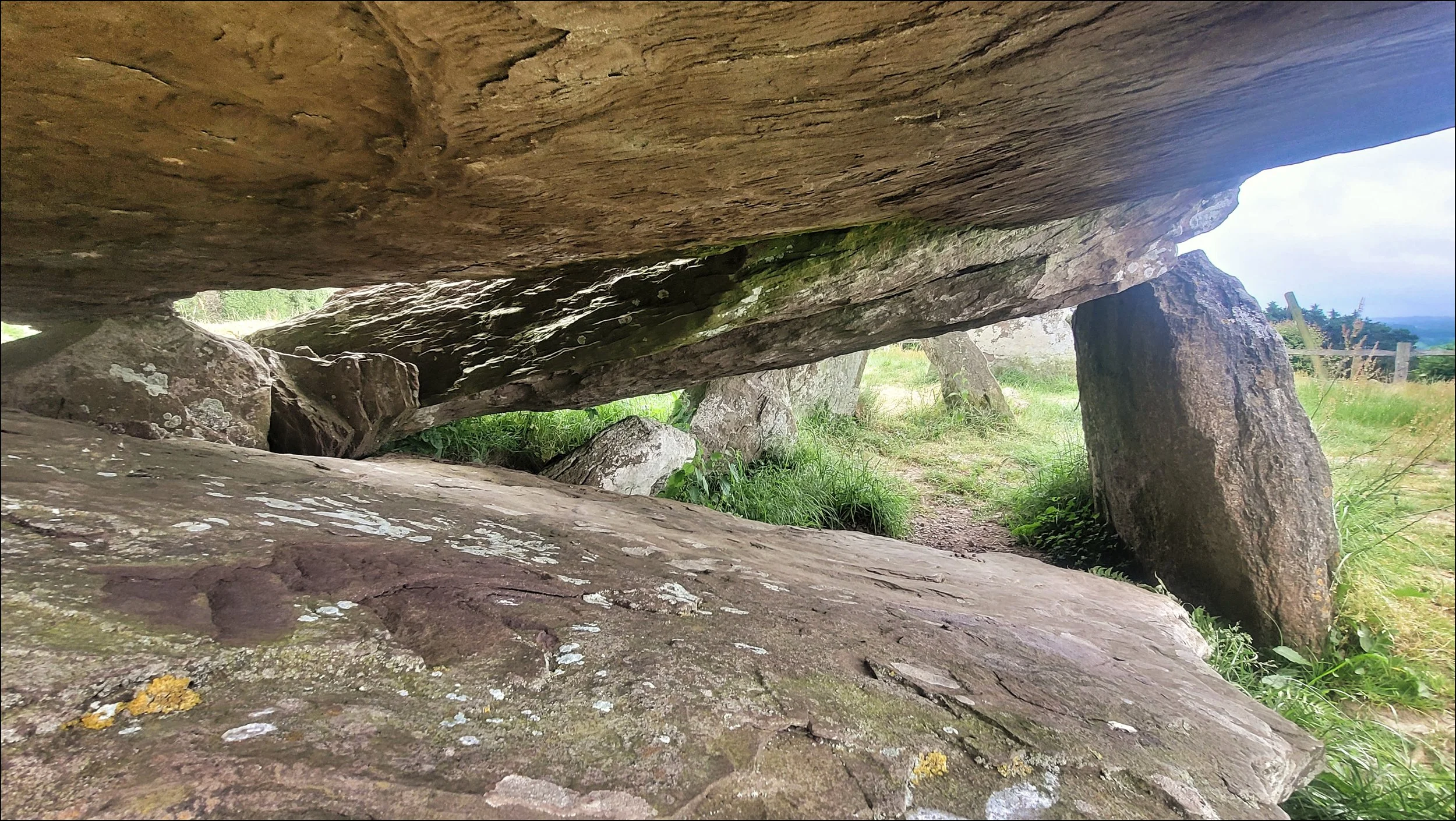
I entered through a gap in the split rail fence and climbed up onto the mound. It was immediately clear the tomb faced south west with the grandeur of the Black Mountains and Wales in the distance. The false entrance stone, a feature of the Cotswold Severn barrows was still upright, as were the walls of the passageway, but above the chamber was chaos. The underside of the giant 25 tonne capstone had split away and collapsed onto the chamber floor. It had also split laterally half way back as a result of the onslaught of the harsh weather it had had to endure over the millennia.
The layout of the chamber was still clear to see with access via a side passage from the north side of the mound. Here, a series of wall slabs shows the passageway dog legged into the main chamber. There has been very little archeology here but the surrounding farmland around nearby Dorstone Hill has revealed extensive settlements from the Neolithic era. Like many monuments over this side of the country and in Wales, associations with Arthur have flourished, with this one wrapped up in the myth of a battlefield or even a resting place for the king.
From here I drove south down into the Golden Valley to Peterchurch and then headed west where a narrow lane seemed to transport me into an England of old. John Betjamin had championed this part of the country, remembering ‘perfect Herefordshire is a spring day in the foothills of the Black Mountains’. It was by no means perfect on this day with rain brought over by leaden clouds from Wales. High hedgerows began to brush the side of my van along a straight dead end lane that would hopefully bring me to the tallest standing stone in the county. I stopped when I could go no further and tucked into the grass verge as best I could. A sign at the entrance of a farm announced it to be ‘Wern Derys’, the same name as the standing stone I was seeking out. A newly laid tree lined driveway disappeared off out of sight and at first I thought I would have to follow it to seek permission.
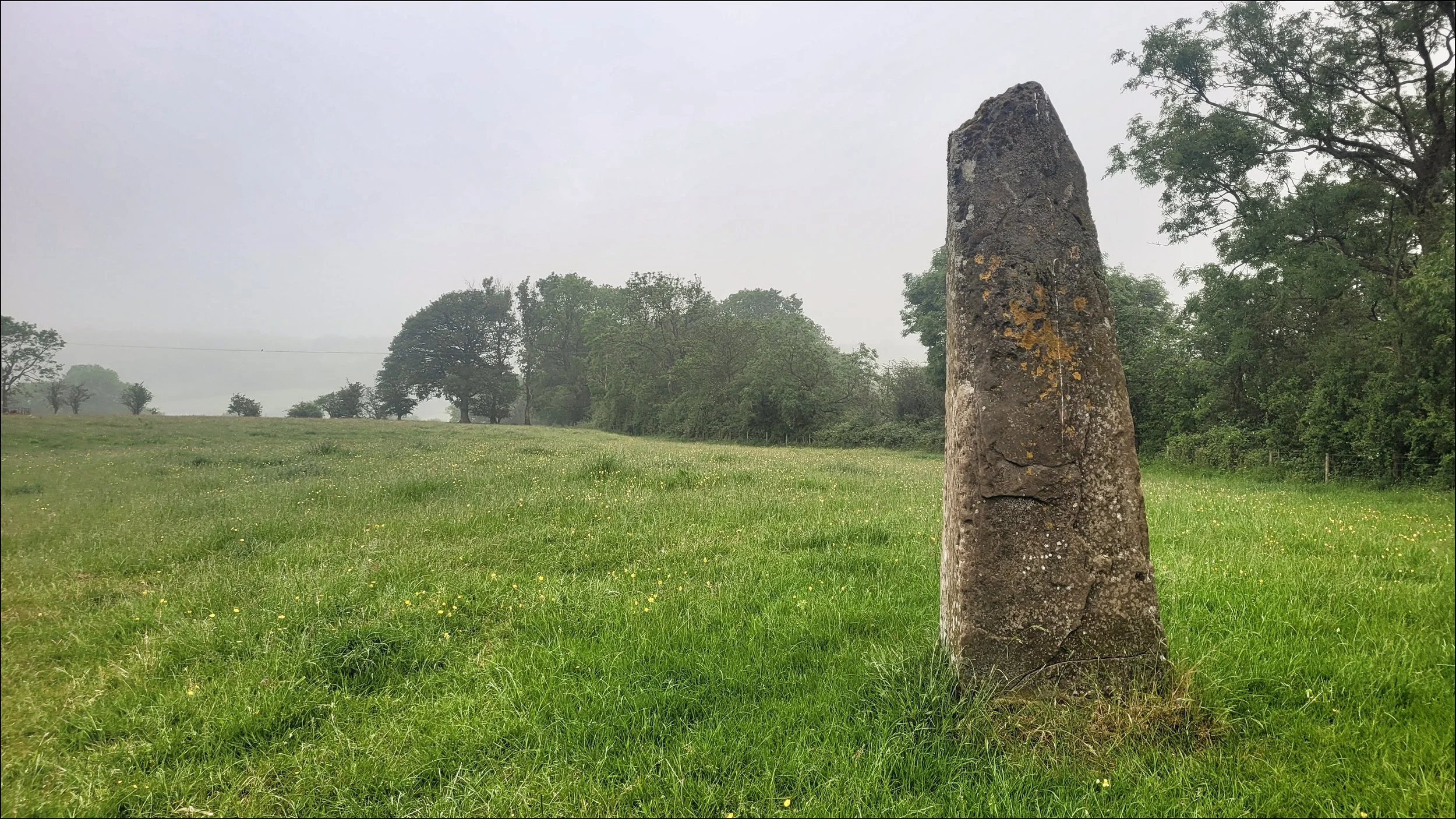
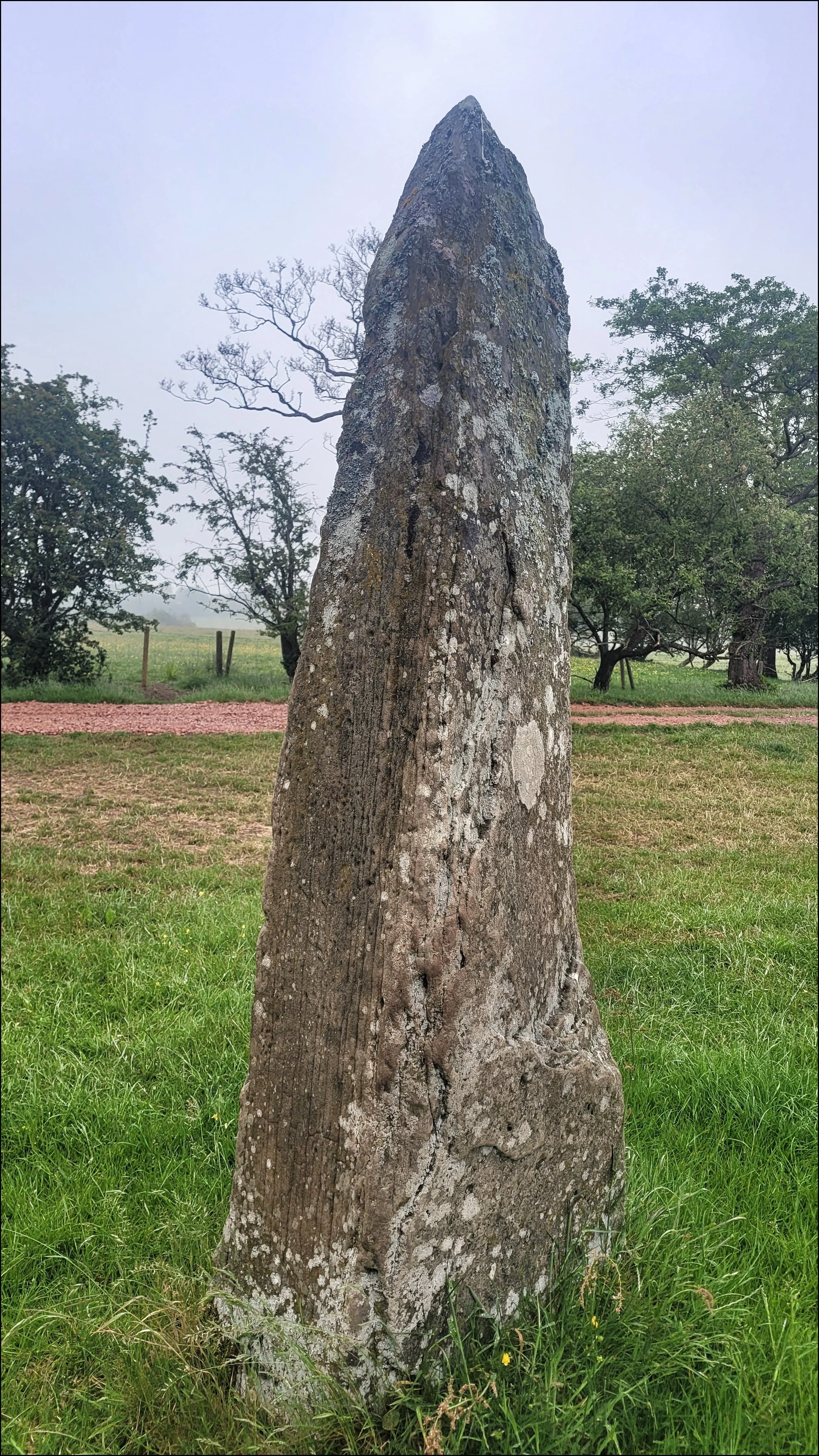
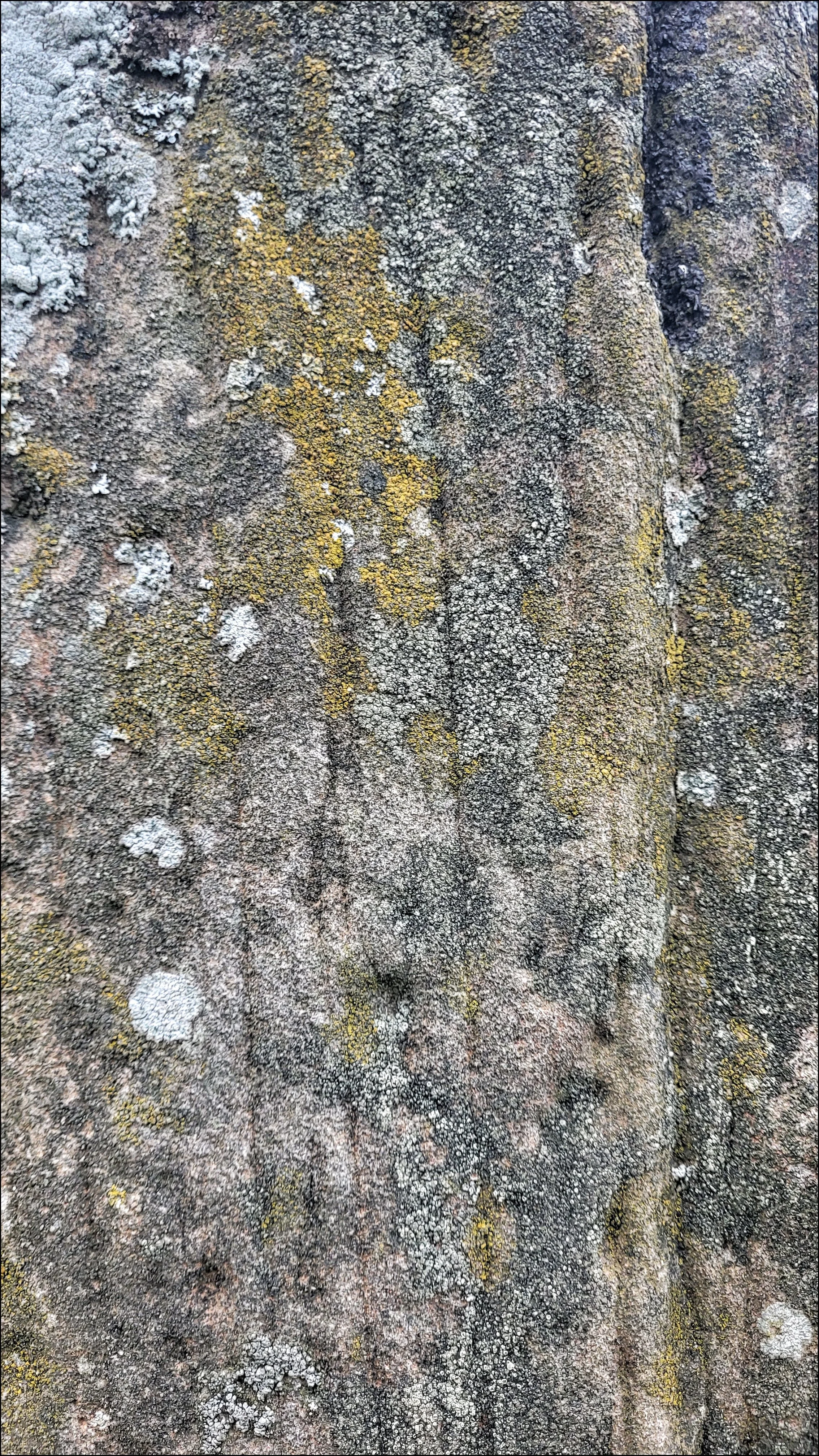
I donned my raincoat and set off, but then straight away as I passed a large oak tree on my right, the silhouette of a solitary megalith caught my eye. It cut an elegant posture with it’s slender point rising to just over two metres. This was another standing stone that took on a different character depending on where you stood around it. It had fallen over in the 1980’s and had aquired a mythical reputation as a shape changer and a stone hard to shift even with the help of twelve horses. As I moved around it the thinly fissured and seemingly fragile side morphed into a thick sturdy slab with a pinkish hue, dotted with circular white patches of crustose lichen. The rain hammered down bouncing off it’s surface. I stopped at a point where the stone looked at it’s most resiliant and there the stone spoke to me of defiance, survival and permenance.
I crossed the county border and ventured briefly into Monmouthshire and then Gloucestershire. There was another standing stone I wanted to see on my way out of the region in the Forest of Dean just north of Coleford on the A4136. The stone was positioned at the side of the road but not easy to spot surrounded by trees and undergrowth. I caught a glimpse of it’s top half as I passed and pulled into a layby two hundred metres on.
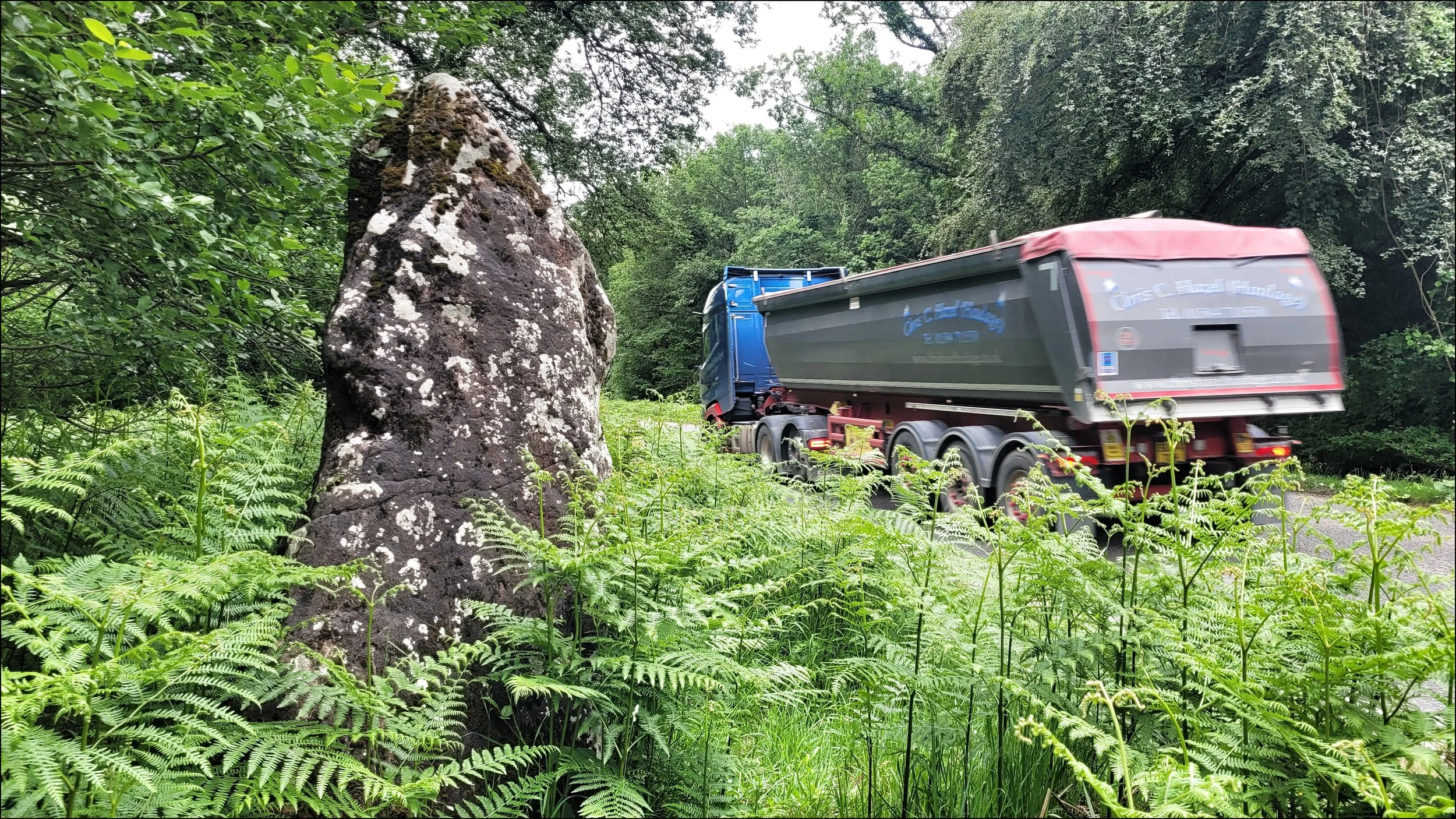
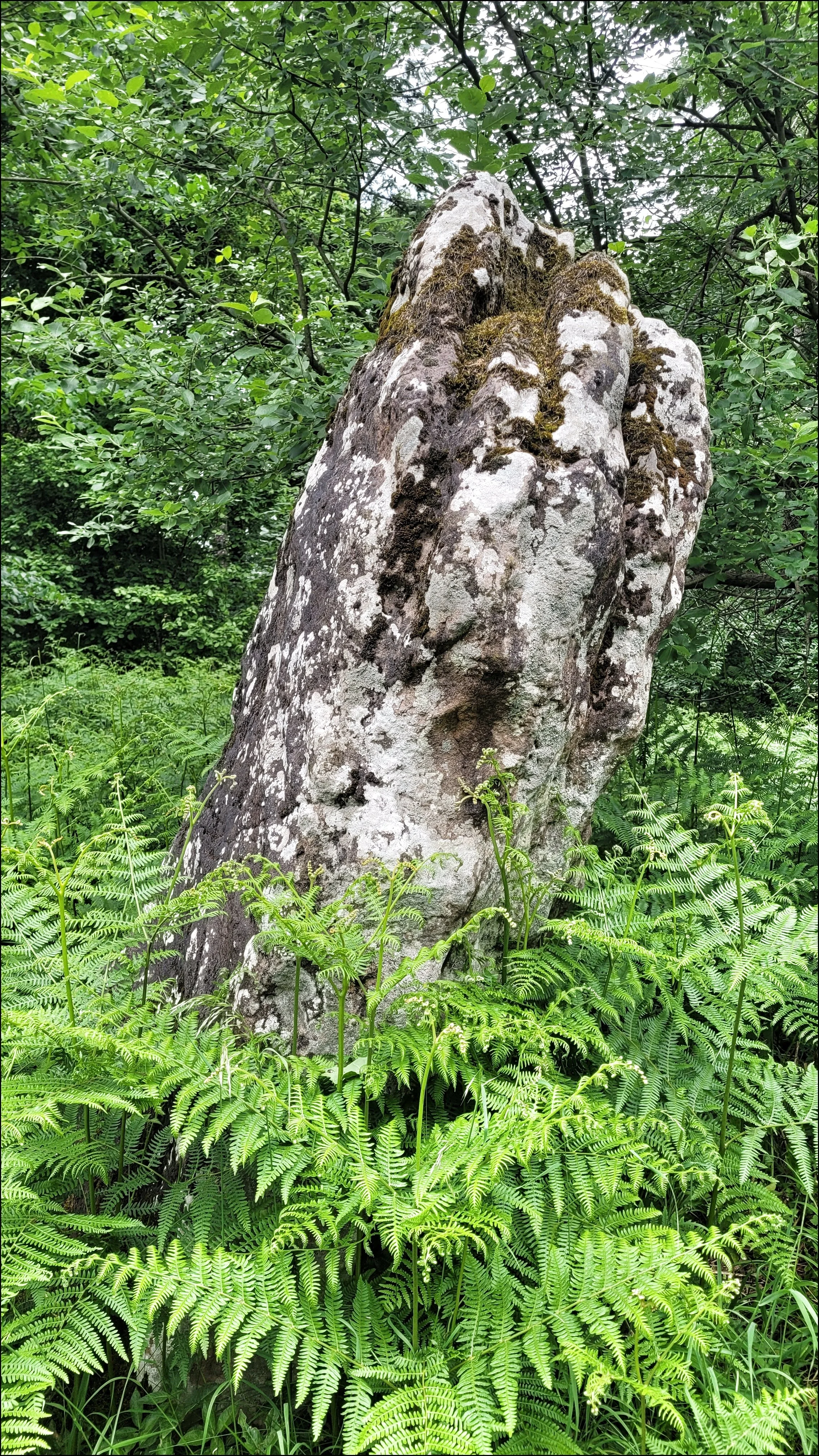
There was no obvious path back to it so I made my way through the thick cover to avoid walking on the busy road. In a few minutes I was at the Staunton Long Stone. In winter time the bracken is at ground level and the stone is fully exposed, but now it looks as though it has sprouted from a nest of lush green ferns, keeping watch over passing traffic. I had been to other stones that graced a busy roadside, Gwernvale Cairn not far away beside the A40 and Stronach Standing Stone on the Isle of Arran. Their location had compromised them of their stature and presence.
The Long Stone is a well worn slab of red conglomerate, leaning back as if flinching from the HGVs and buses that pass close by. The focus of it's meaning has changed from the time of it's erection, at first a focus of ritual and reverence, then for centuries a way station and resting place for travelers on foot. Now sadly, it serves mainly as a fleeting curiosity for those in passing cars.