Along the Whisky road
08.09.2025
The Isle of Islay doesn’t have the ancient majesty and natural beauty of Skye or Arran, but despite few stone circles here there are a number of standing stones and burial chambers. Whisky distilleries are the main draw for visitors to this Hebridean outpost, and on the southern coast there are many.
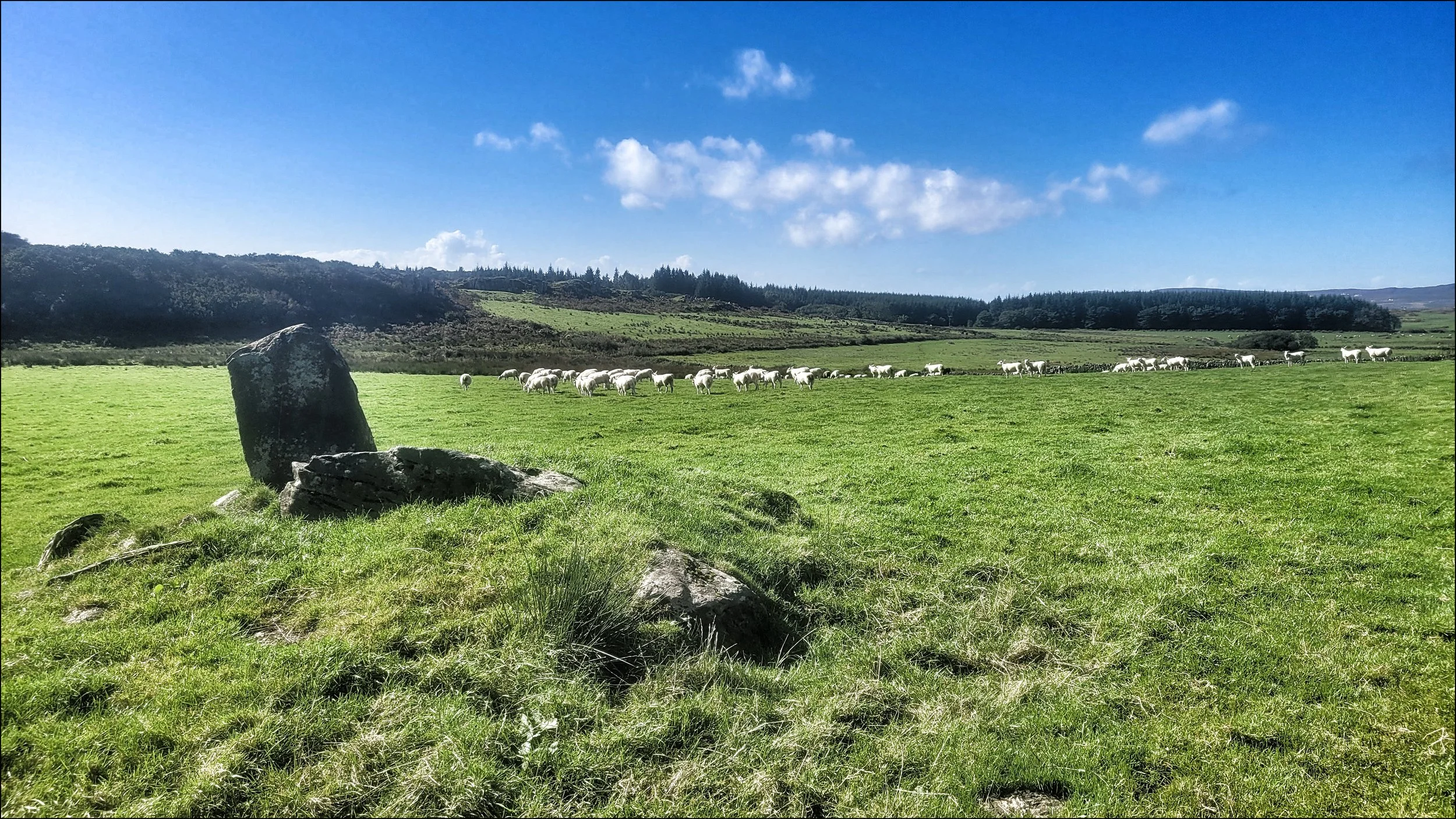
I had parked up at the Lagavulin distillery and had ventured in to sample a driver’s dram before setting out to follow the peaty burn that provided the distillery’s water source. A track took me up through tranquil farmland where, in the distance at the centre of an open field sheep had gathered around a structure of low stones. My map indicated that this was the cairn of Druim Mor. A farmer was in the act of rounding up the sheep and so I waited for an opportune moment to move in for a closer look. On a small raised grassy mound a four foot upright stood amongst low curbstones. At the foot of the upright was what appeared to be a protruding cist, but the overall dimensions of the cairn were smaller than at any cairn I’d been to before. I left somewhat puzzled and carried on through farm buildings and up another track heading north to discover a large standing stone that was now mounted within the line of a wall. This giant was named Lagavulin North and had afforded some protection from a tangle of bushes around it, preventing closer inspection.
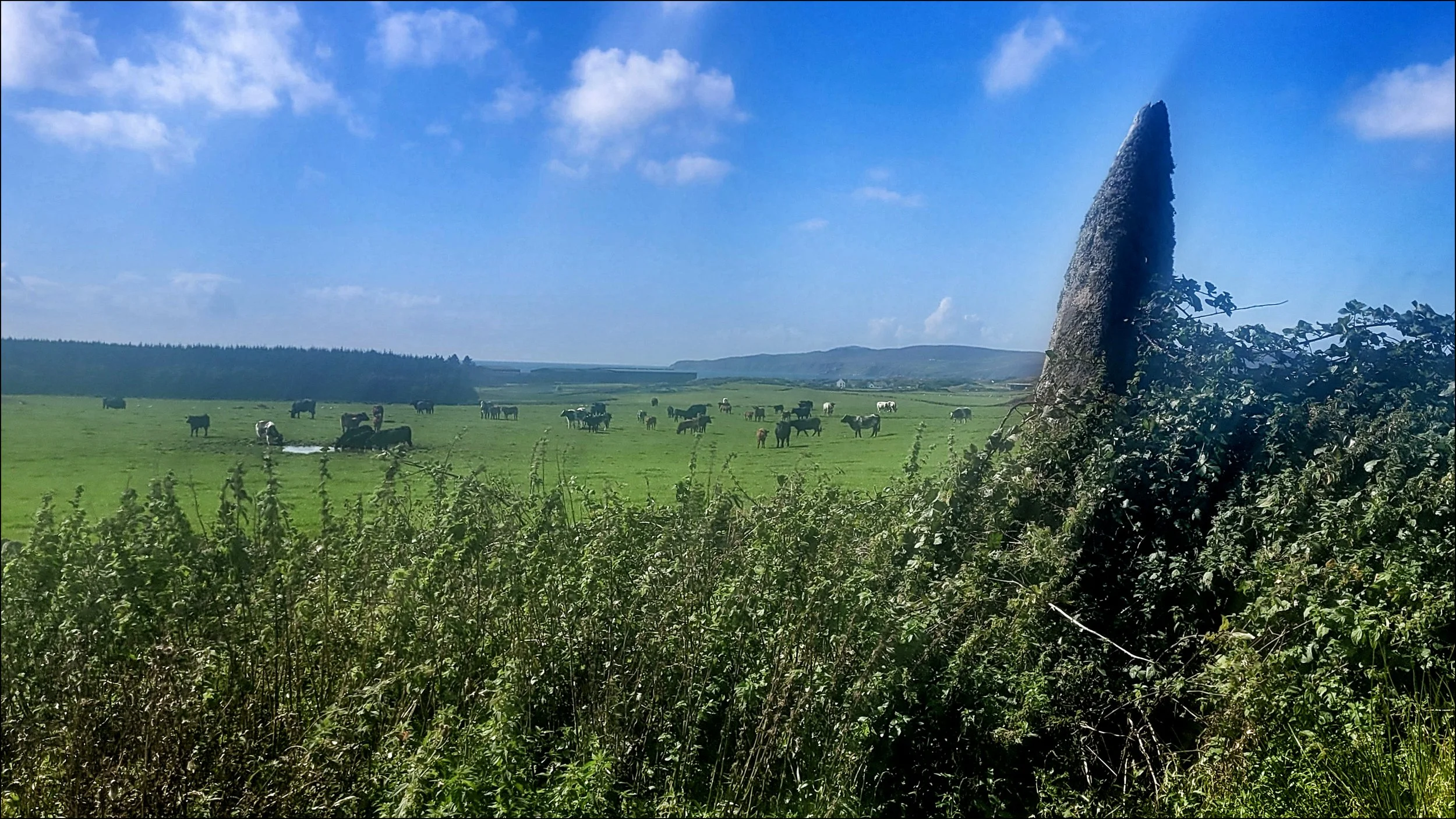
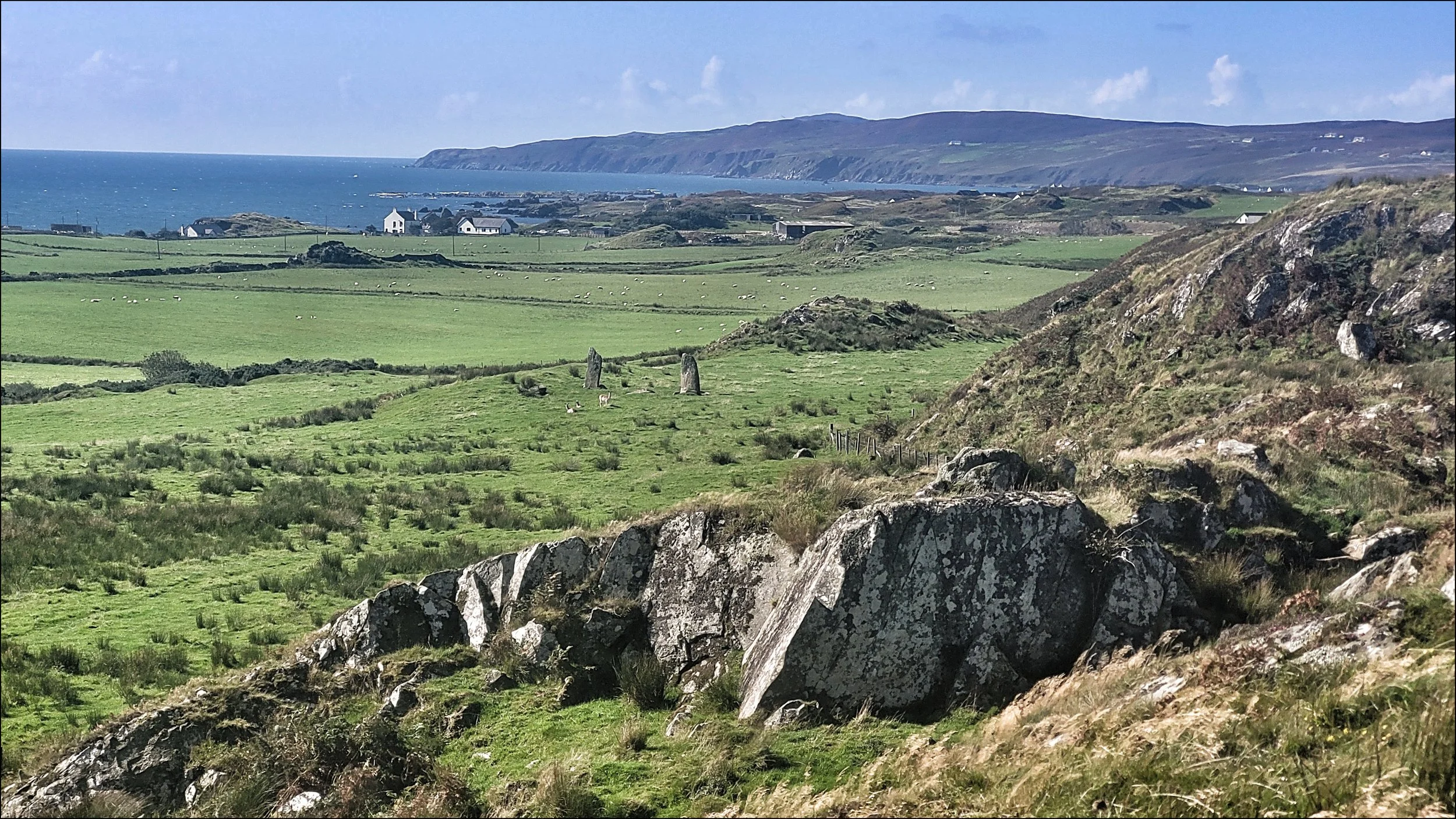
With cattle on the other side and no obvious access into the field, I again walked on to arrive at higher ground of craggy outcrops giving me a fine view of the southern coastline. There below me on the southern slope a trio of deer were sat amongst the stone row of Achnancarran. One of them spotted me and stood up and by the time I had moved to the next crag and peered down they had all vanished.
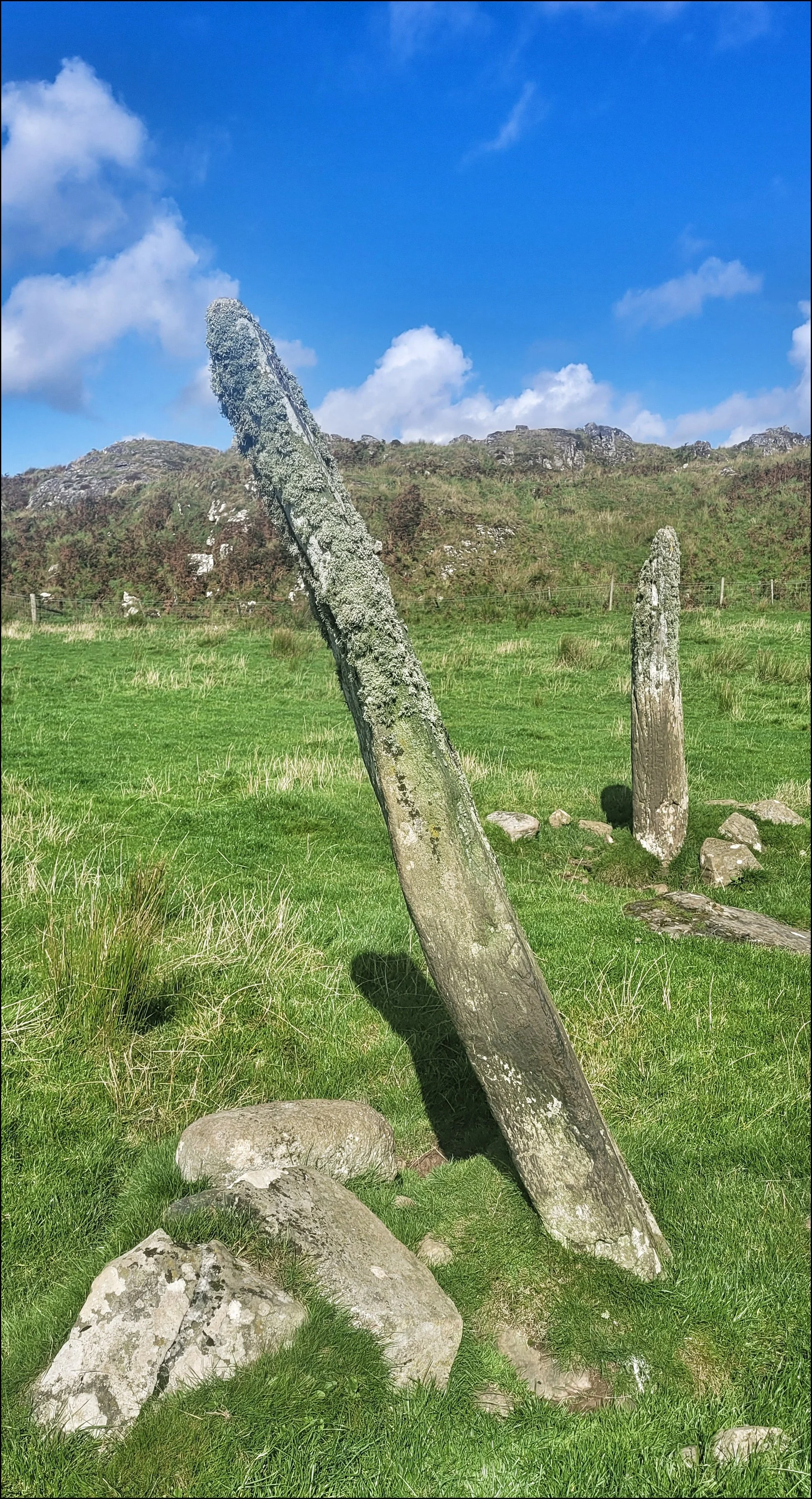
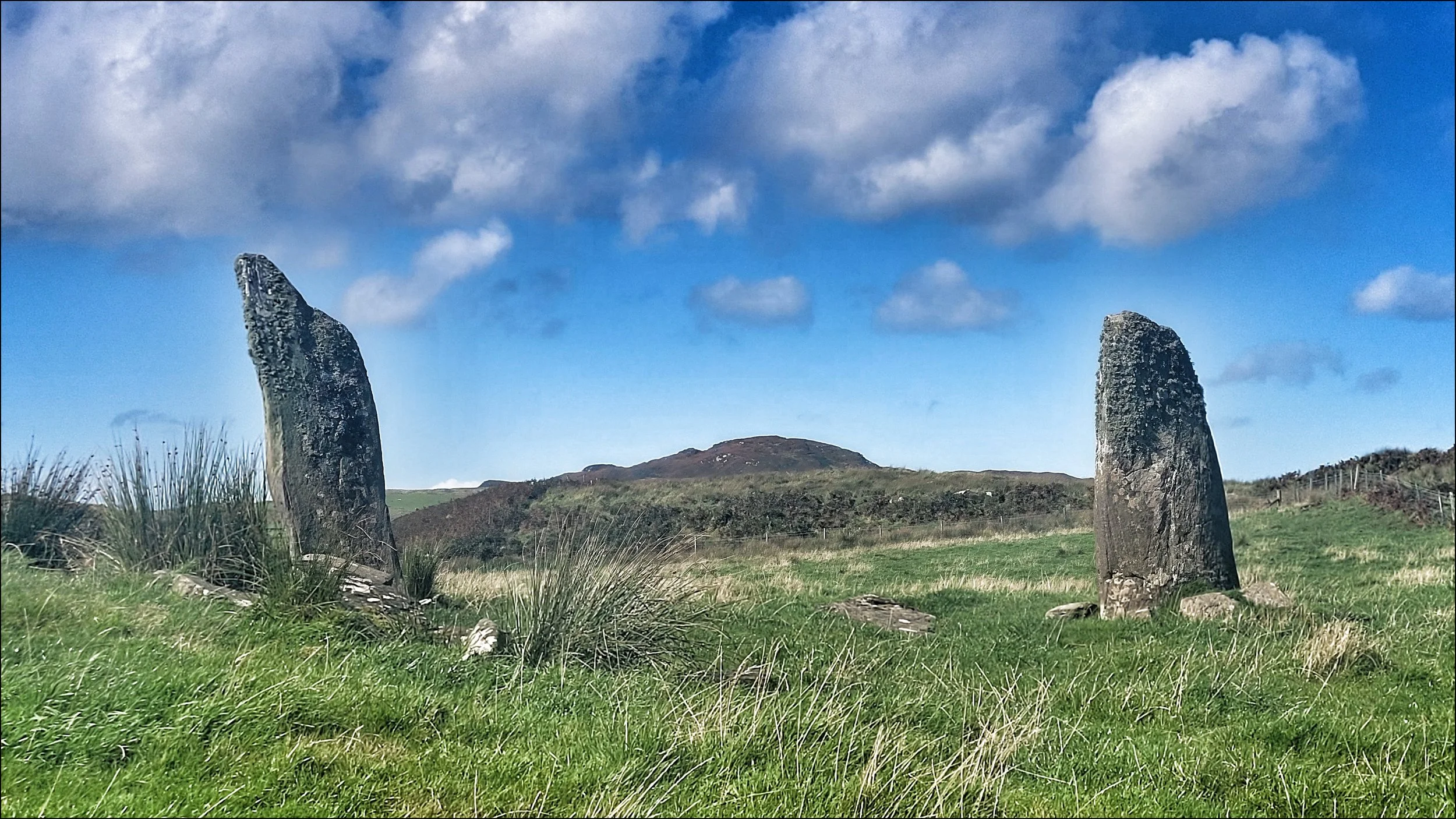
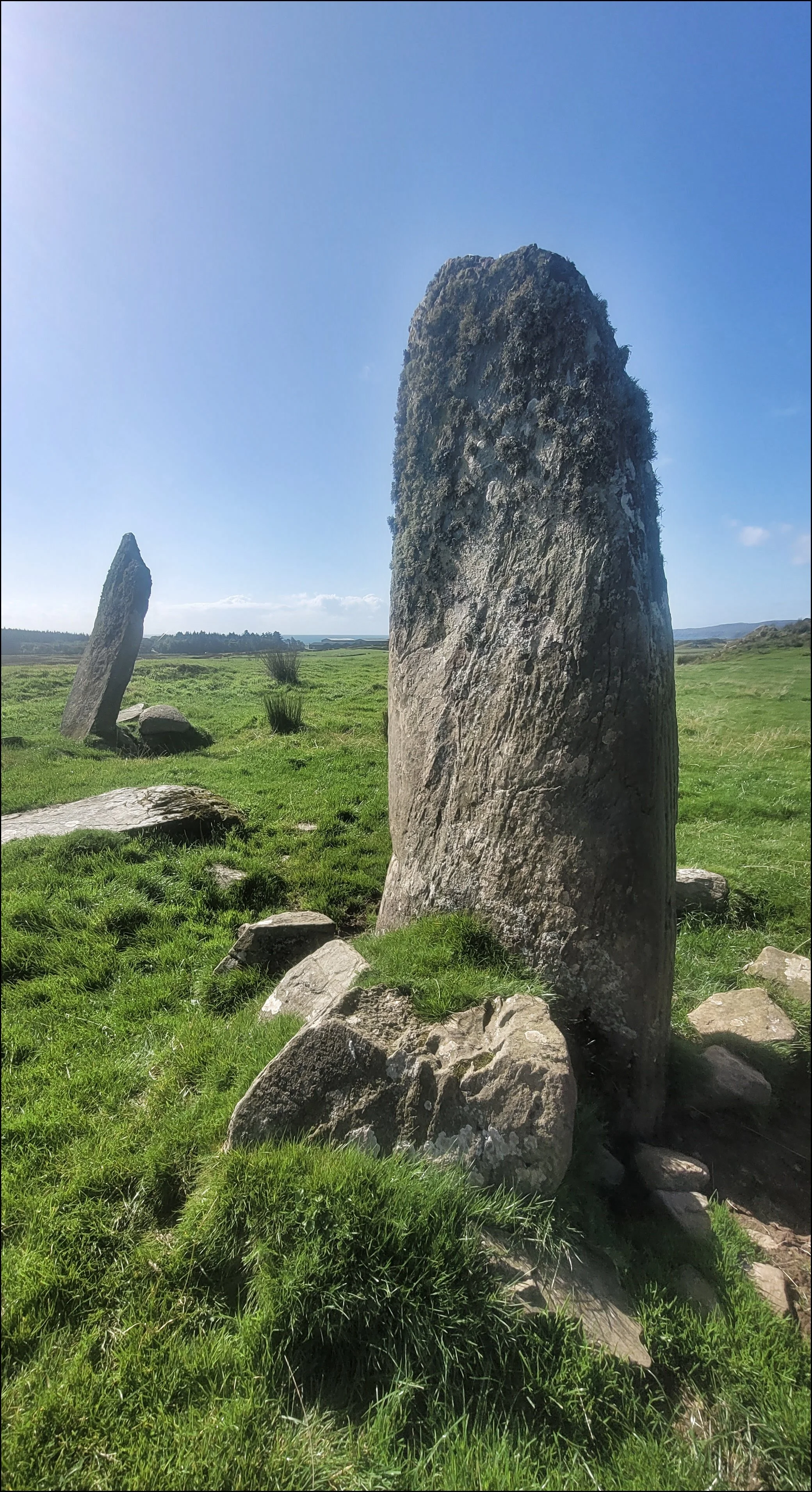
I made my way down the slope to the three large stones, two slender and leaning and a third fallen stone between them. Aligned north to south the two uprights were over two metres in height and solidly mounted with packing stones. Even with this support their slender profile and leaning defied logic and I was unable to shake the premonition of some future collapse. The third central stone was of similar dimensions but was half buried in the grass. The sea air had played it’s part with the upper half of the uprights covered in a thriving of fruticose lichen. I moved away and started back over the crags occasionally looking over my shoulder to see if the deer had returned.
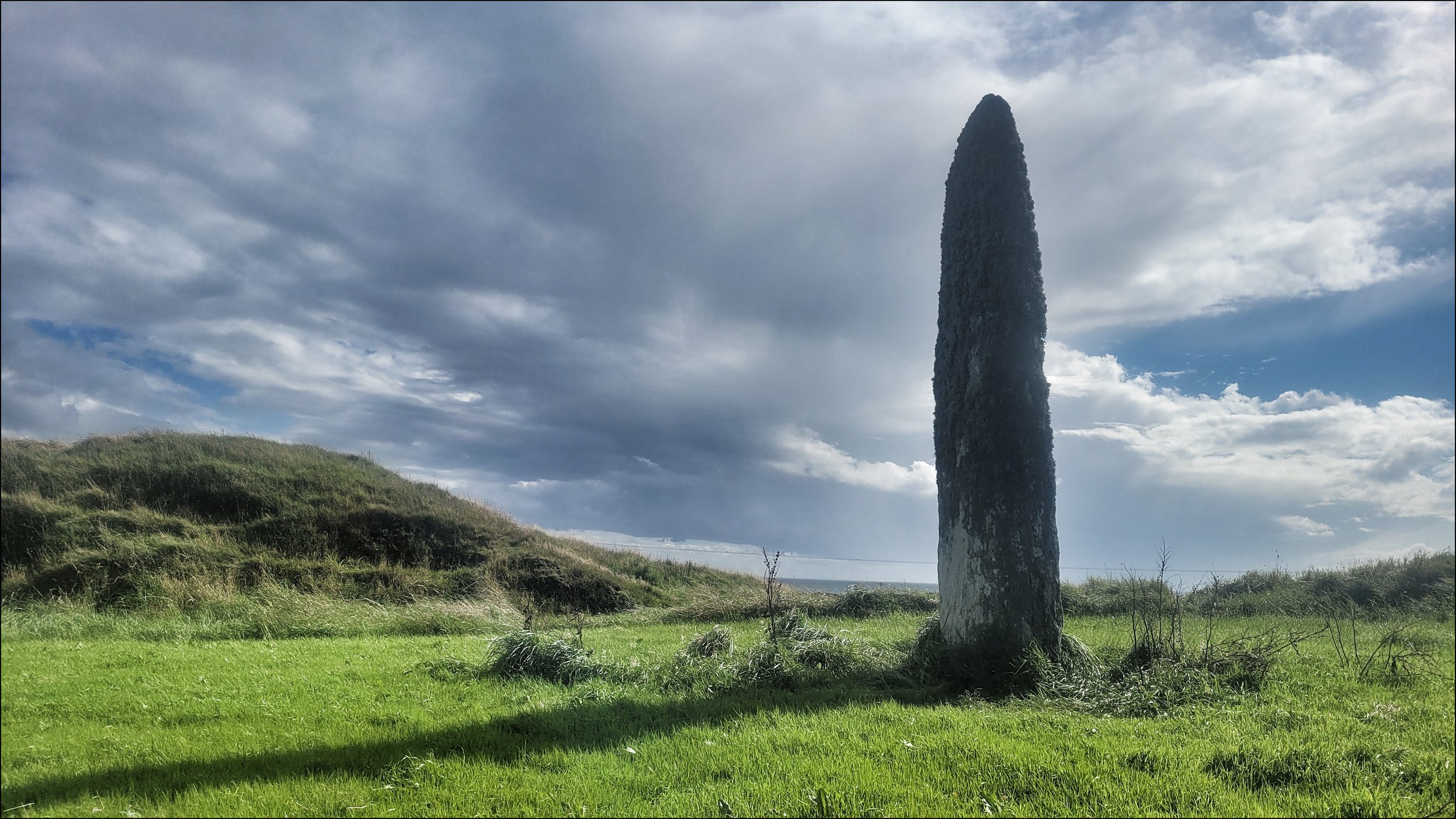
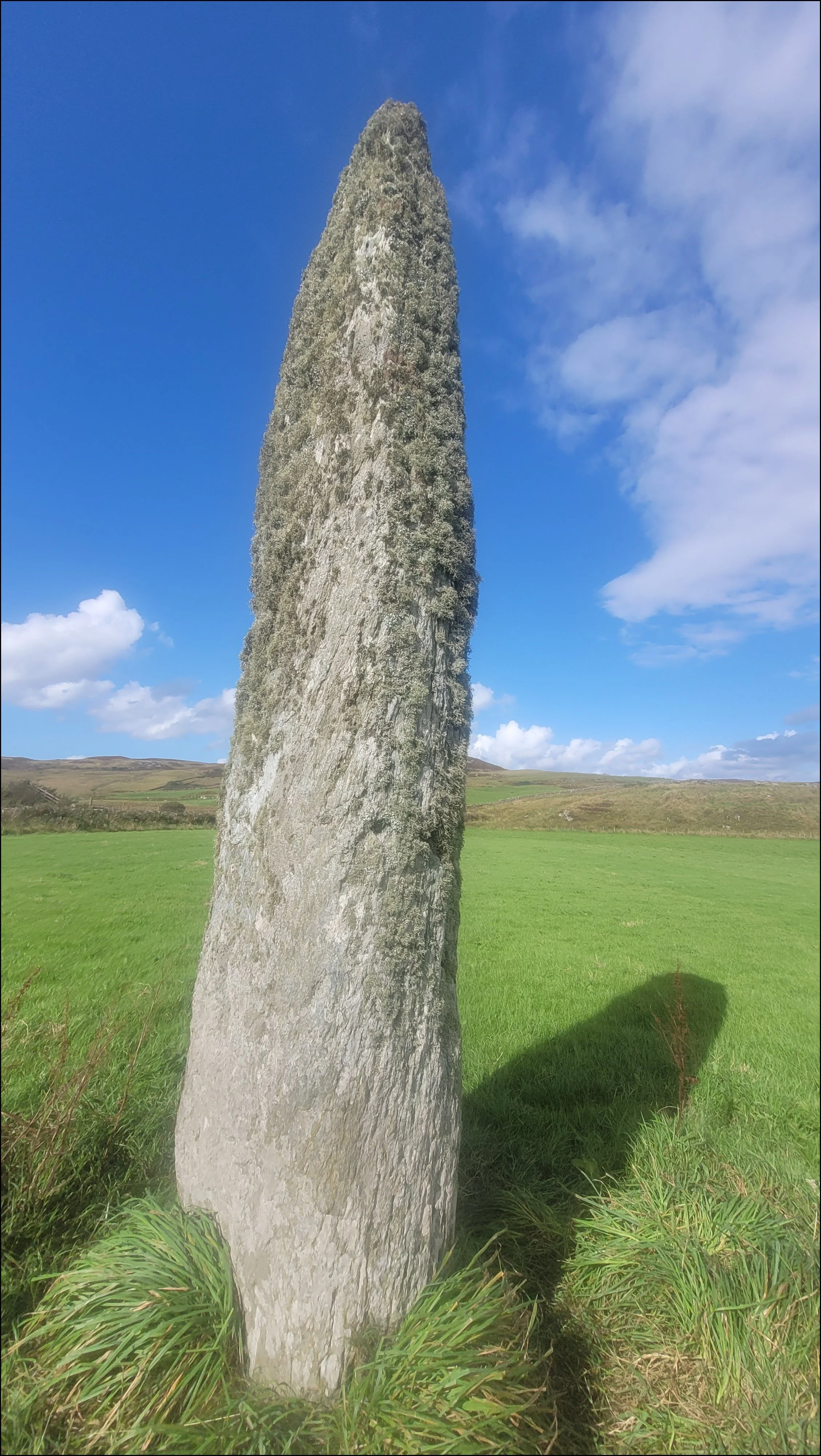
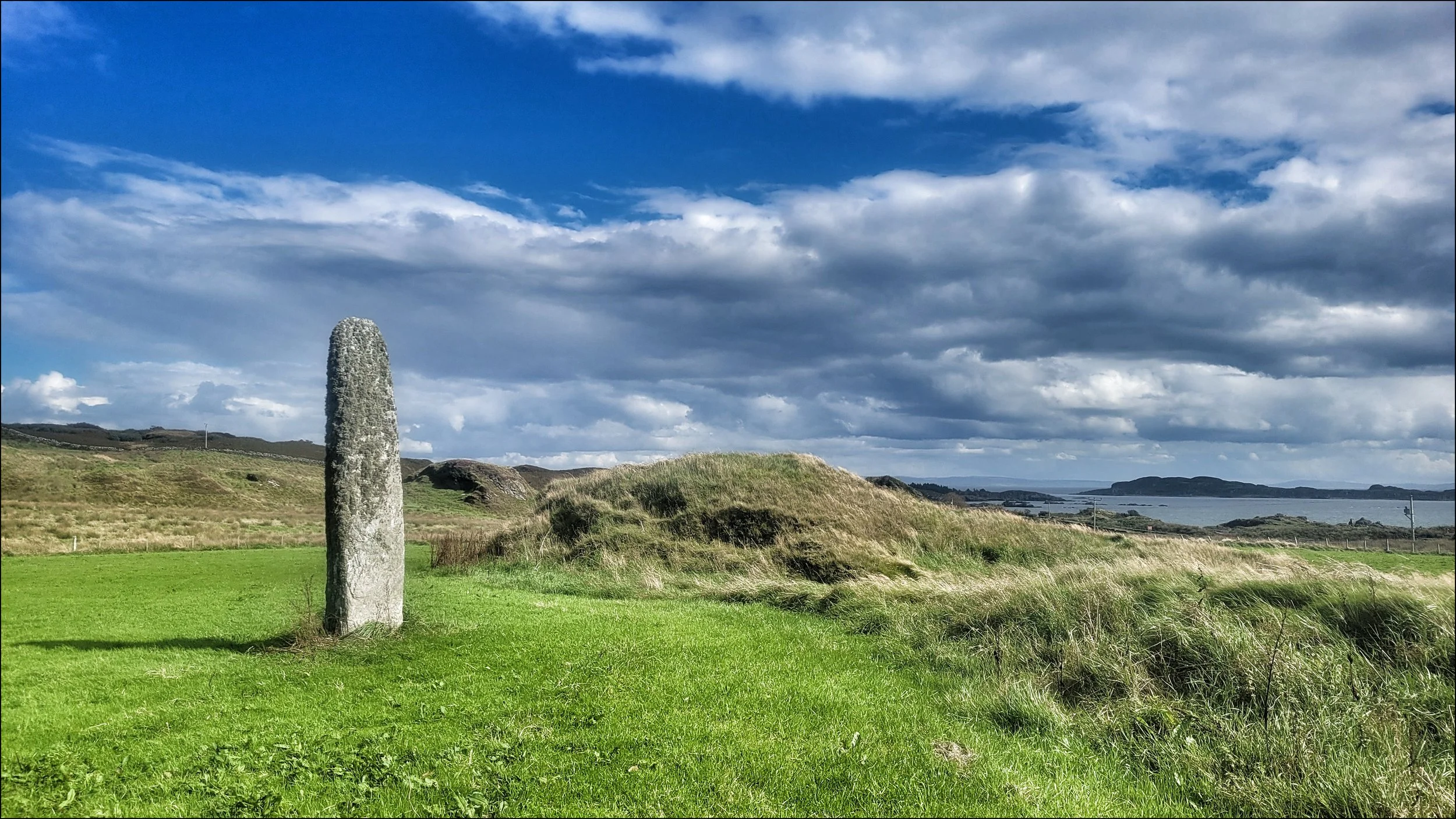
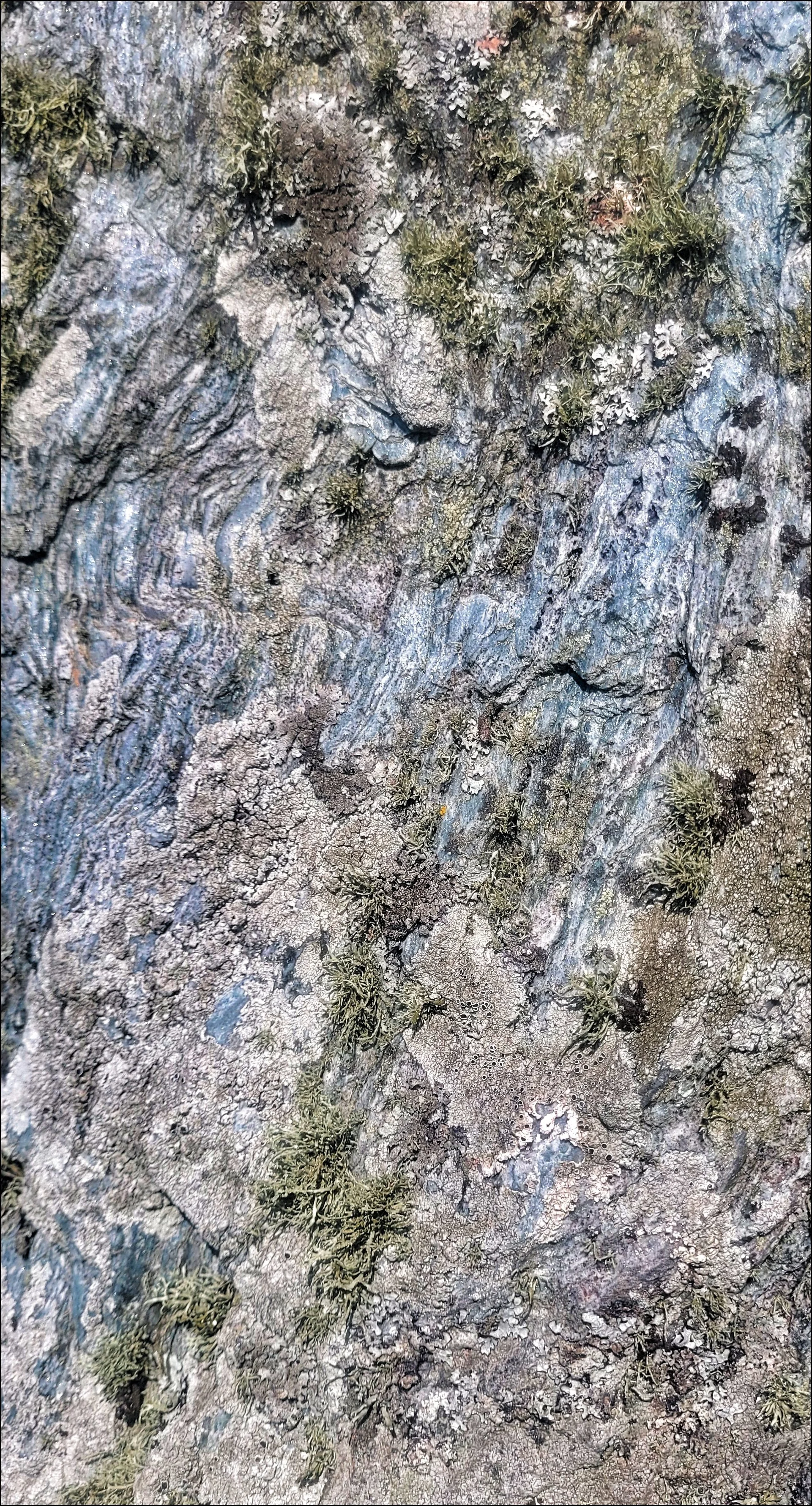
I drove on west along the coast road past the Laphroaig distillery to the outskirts of Port Ellen. Before the town a lane on the right lead up to a parking area opposite a field occupied by the ancient stone of Port Ellen. Like many of the inconspicuous standing stones of Islay there was no associated signage. I entered the field through an unlocked gate and approached the four metre plus megalith. I sensed the dignified presence of this impressive giant long before I reached it. It cut an elegant profile and from a northern angle, despite it’s chiseled top, the upper half appeared to taper to a point. It looked to be made of schist and at close range I could make out fine striations of blue veins running down it’s length that sparkled in the sunlight. Where the stones of Achnancarran looked in a state of long term flux, this colossus was going nowhere.