The Tombs of Man
26.06.2026
On the eastern side of the Isle of Man are three intriguing burial chambers, one on open farmland and the other two nestled between modern day housing. Unlike the circular layout of Cists at Meayll Hill these three are of the Clyde style type with a trapezoidal shape and linear passage graves.
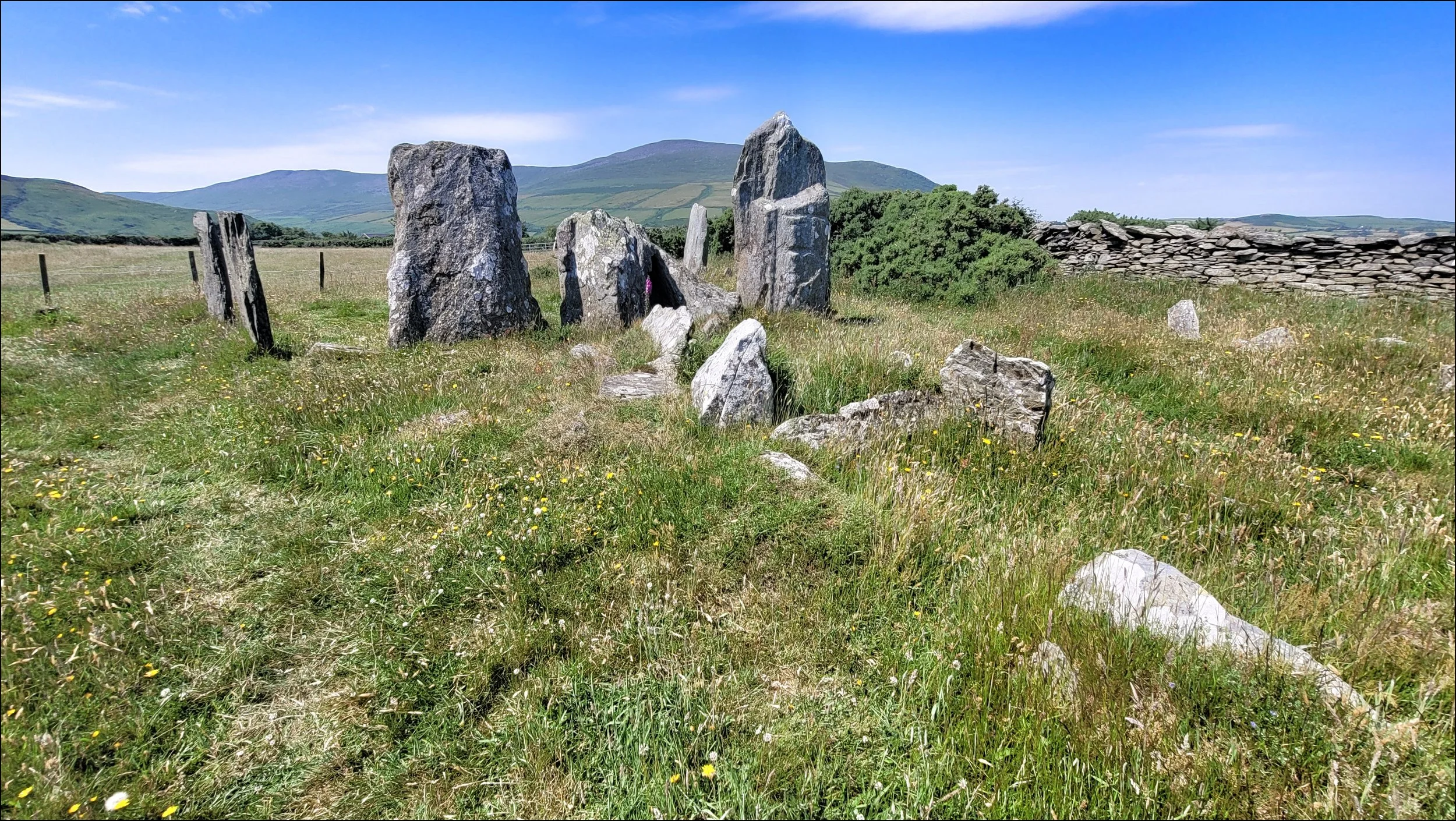
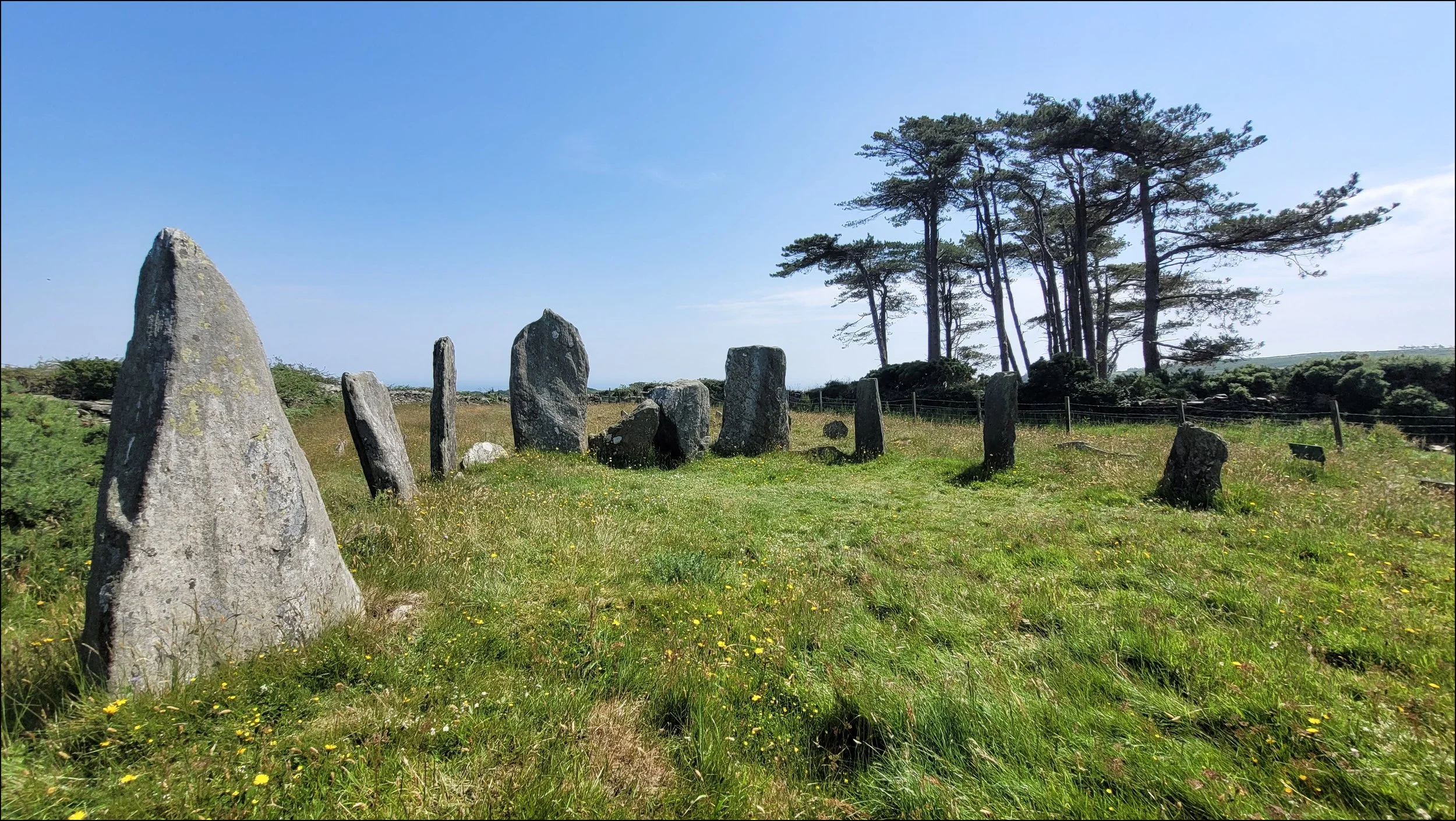
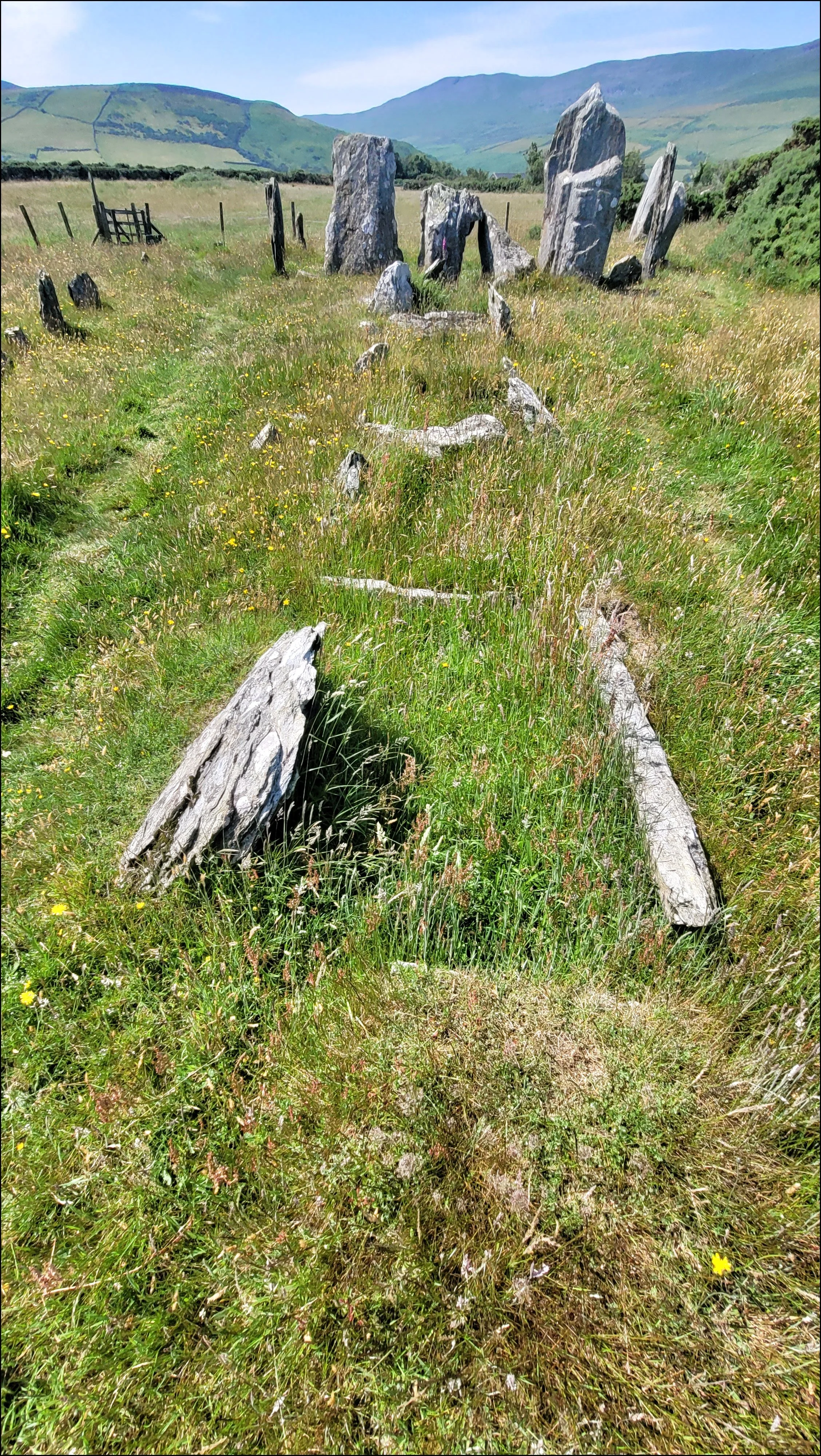
The first of the three Cashtal-Yn-Ard, translates as ‘Castle of the Heights’ and sits high up above Ballaglass Glen. I decided the easiest route up was from the glen, so from the car park I followed the river down through the village of Cornaa and then up a steep fern hedged lane to a fingerpost and footpath leading to the cairn. The path flattened off and brought me out into open fields. Rising up to the west were the majestic peaks of Slieau Lhean and Ouyr, with Man’s highest mountain Snaefell beyond. Then along the edge of a long wall ahead the tall portal stones of the cairn’s forecourt came into view. The forty metre long site sits within a compound of two walls and a fence.
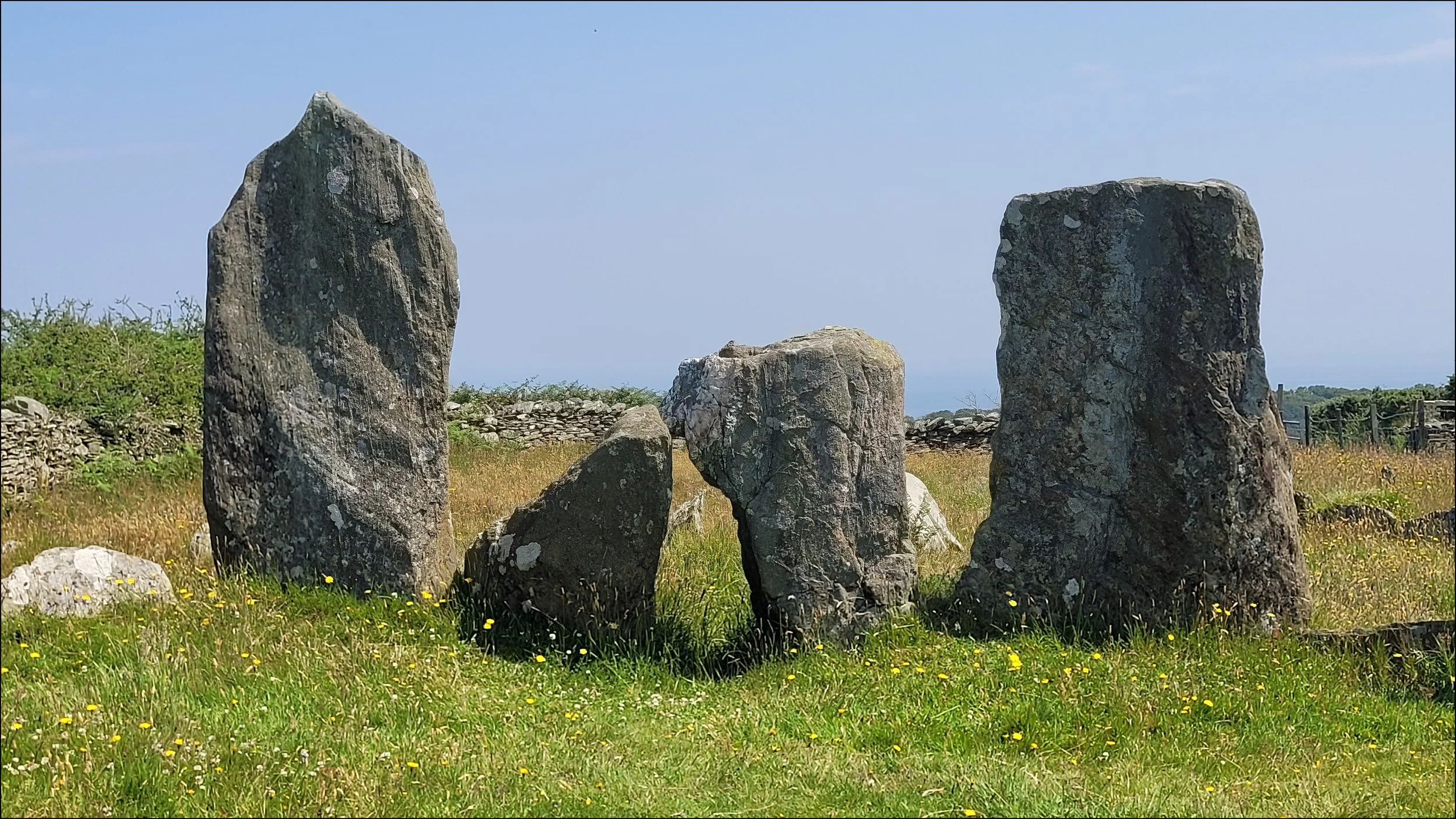
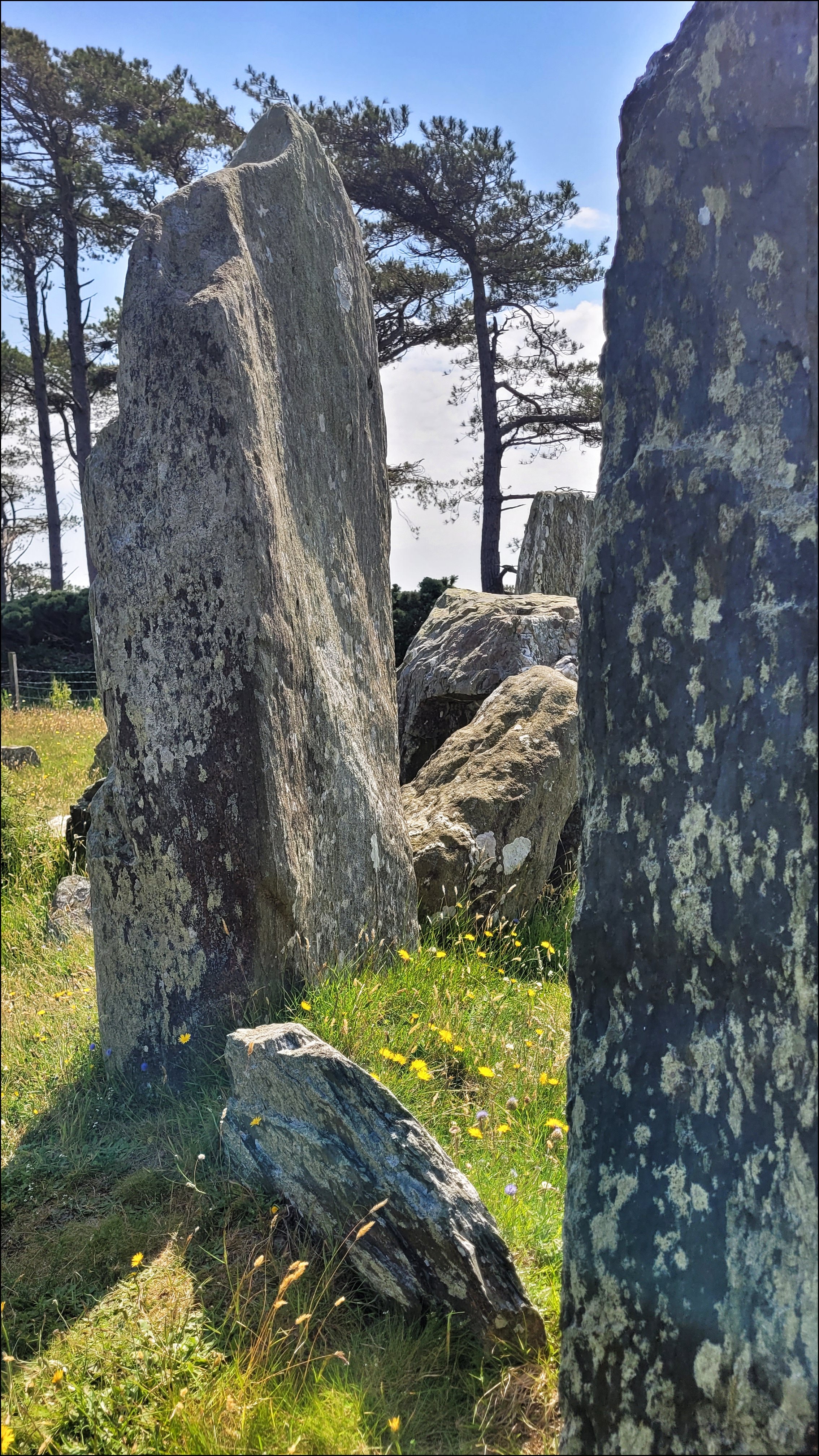
It was easy to see once inside the compound, the shape of the chamber was not defined by a mound but by the stones themselves, with the forecourt stones larger at the centre and then decreasing in size in a U-shape. The flat chamber area behind the forecourt consists of five directly connected linear Cists with their short upright slabs protruding up no more than half a metre or so. At the tail end, deposits of burnt charcoal had been found under a shallow mound. Back at the forecourt, one of the portal stones had a large deposit of quartz at an overhang above the entrance. As at Meayll Hill, I wondered if this was an intended feature to give protection to the dead, or could it yield some other significance ? The similarities to Cairn Holy in Dumfries and Galloway were obvious, which strongly indicates a shared culture by two lands separated by sixteen miles of sea.
The A2 took me down to Laxey with a short stop at Ballaragh to see the Spiral Stone hidden in a hedgerow beside the road. A green metal plaque above it was masked by brambles and hard to read, as was the stone which reputedly had a series of ancient symbols somewhere on it’s outward facing side. I was unable to get close enough to examine the stone and left it knowing it would be best viewed in the winter months.
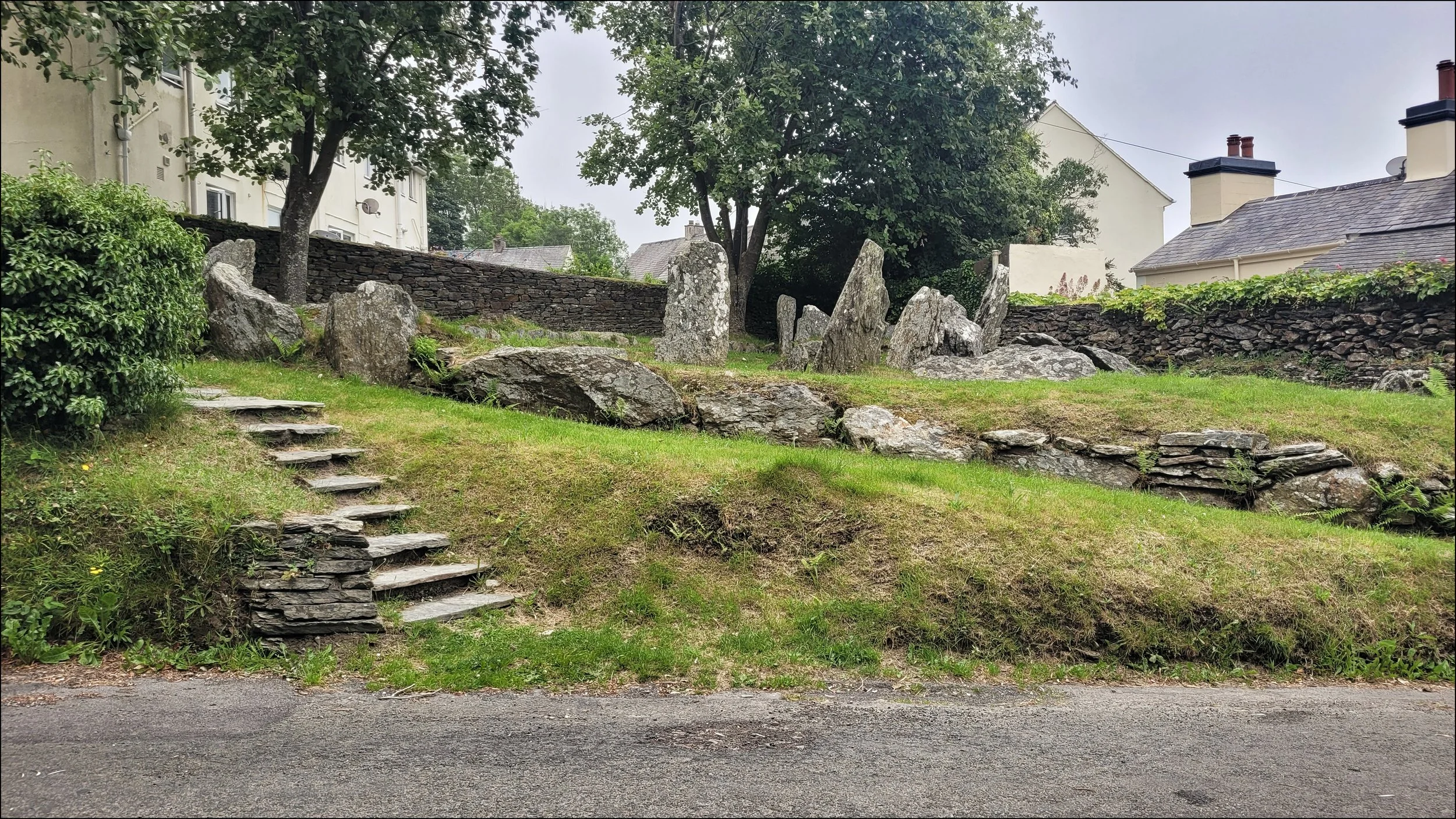
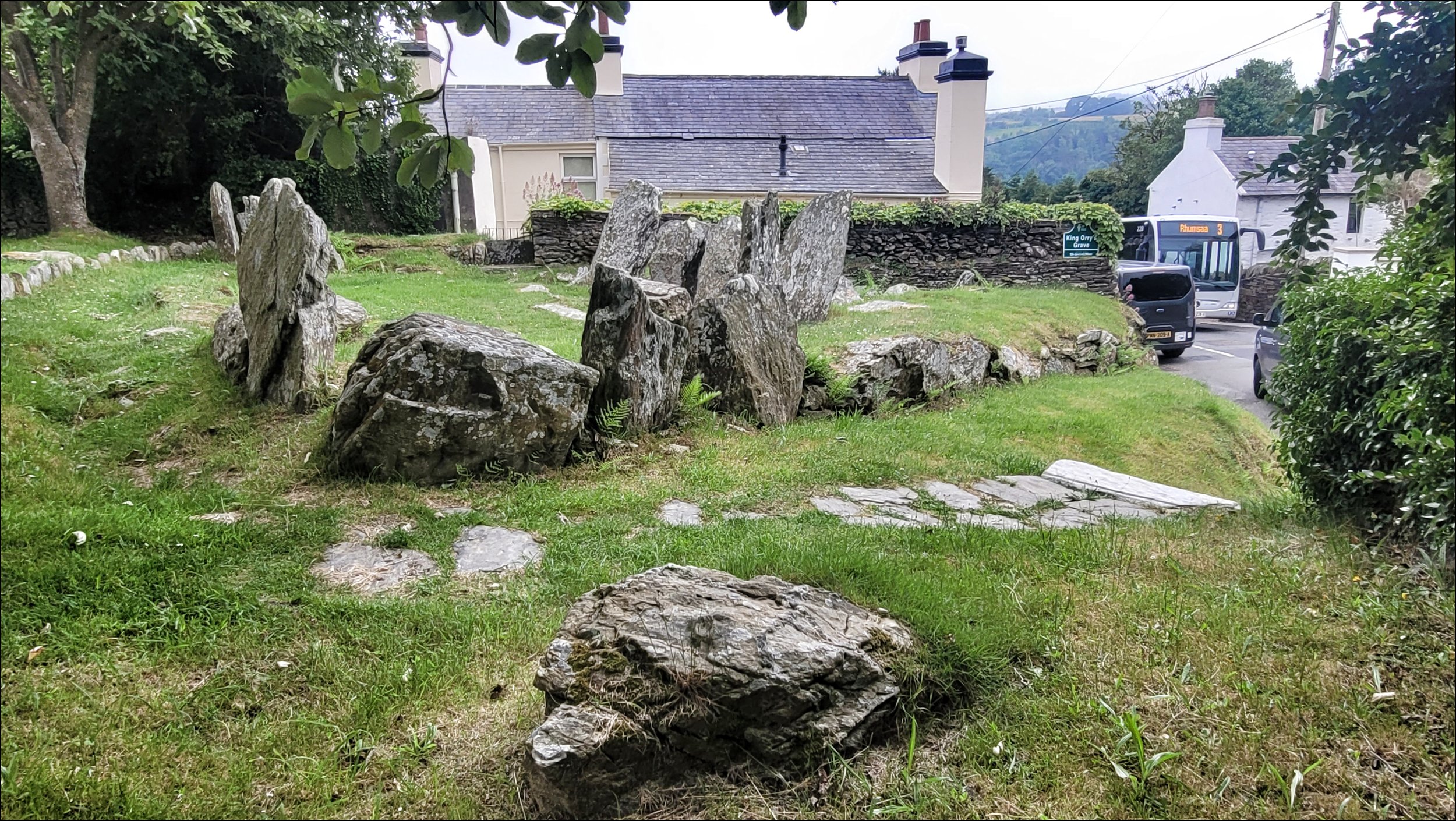
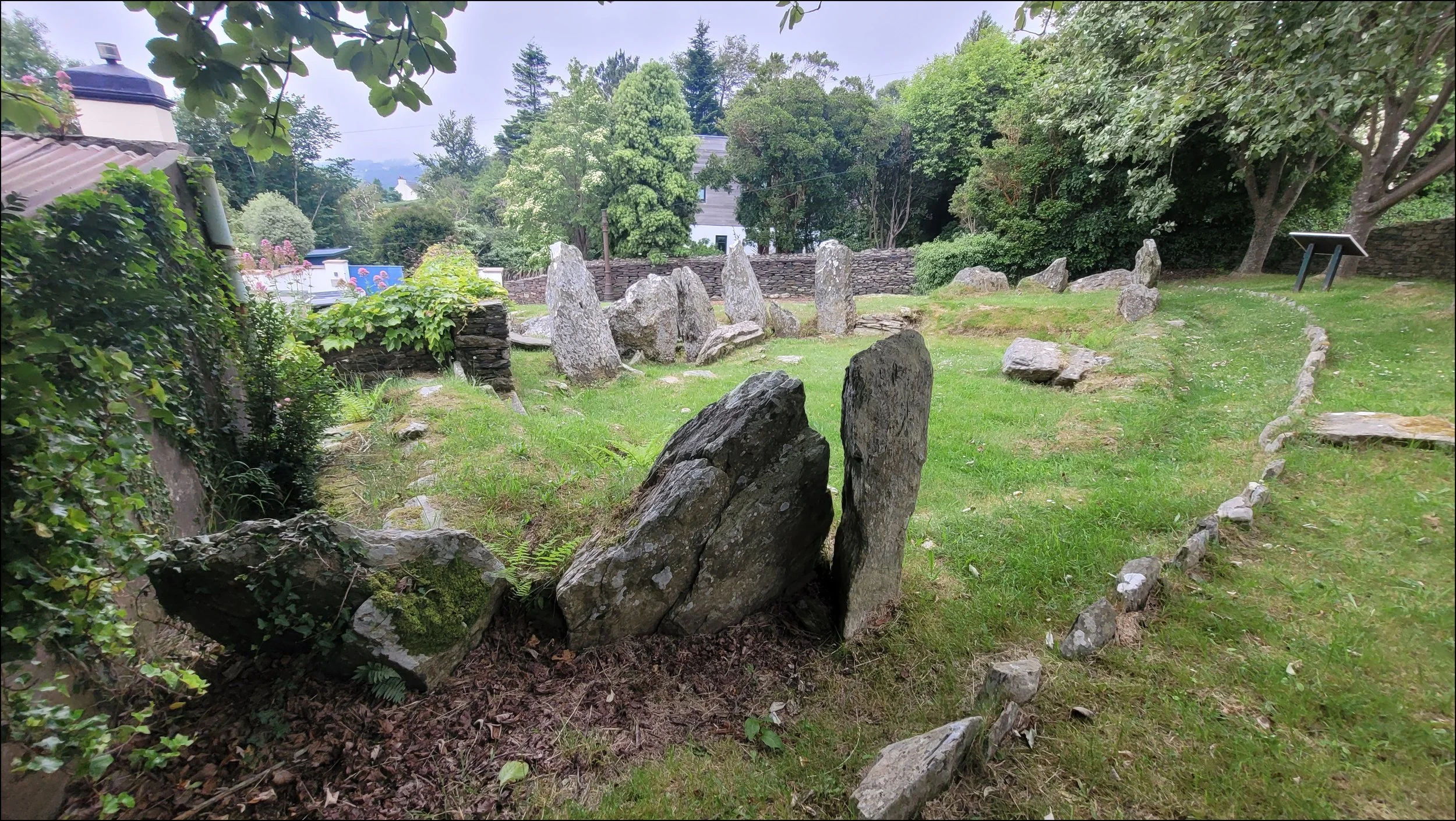
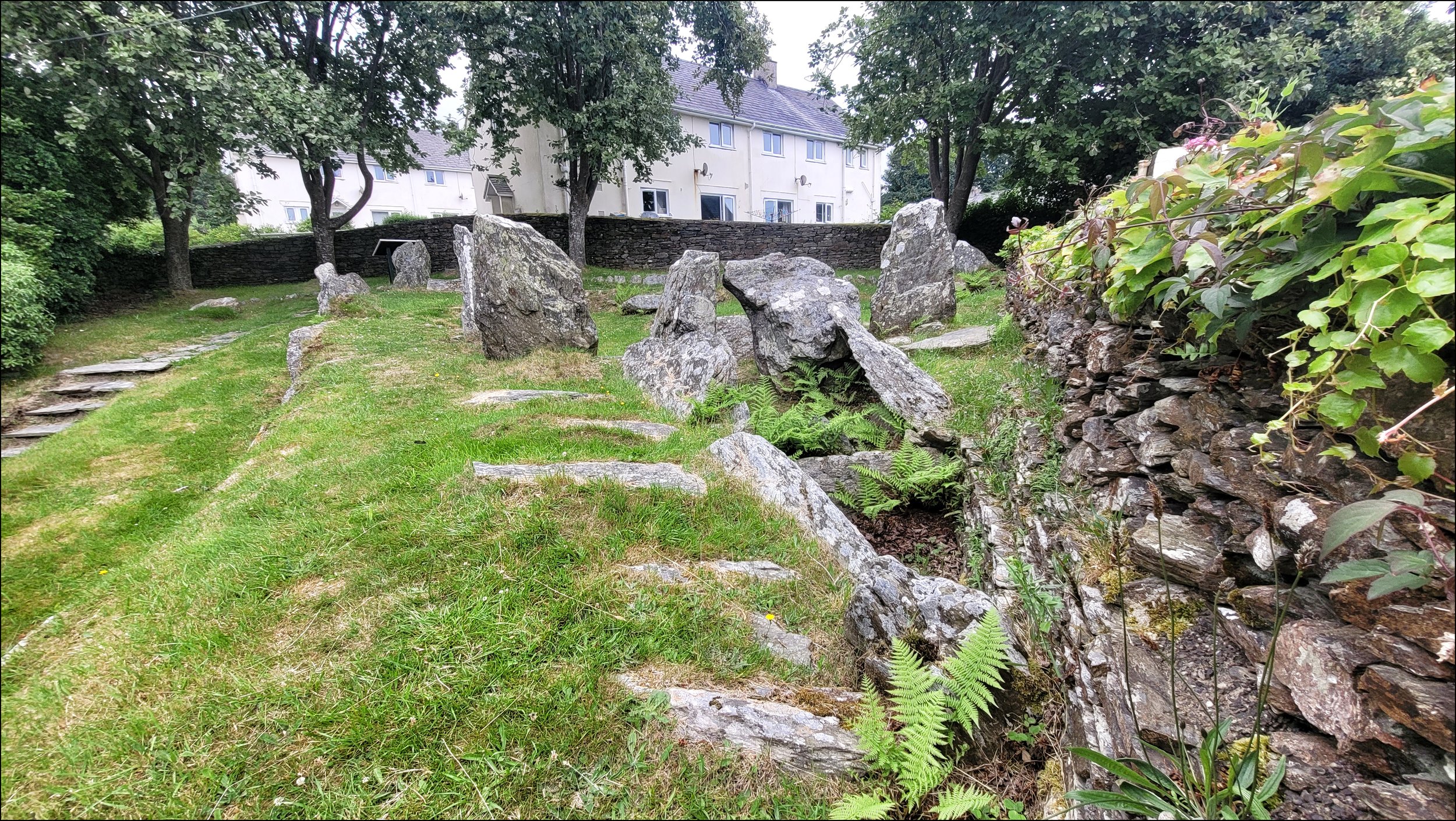
I arrived at a residential road on the north side of Laxey and found a place to park on the main road just down the hill. I walked back up to the burial chamber known as King Orry’s Grave, named after the first Norse ruler in the eleventh century, known also as Godred. The position of the tomb is somewhat incongruous to say the least, with the road butting up to it’s western edge and houses surrounding the rest of the mound. In fact some of the curbstones come to a halt at a garden wall to the south. It all felt a bit crowded and undignified for this five thousand year old monument. This was another of the Clyde Style type cairns, but this one has an east facing portal entrance. A modern set of stone steps built into the mound gets you up into forecourt. Immediately, the curbstone footprint indicates the enormous scale of it’s construction and how much of it has been lost. Beyond the four foot high portal stones the line of roofless cists collide with the same garden wall.
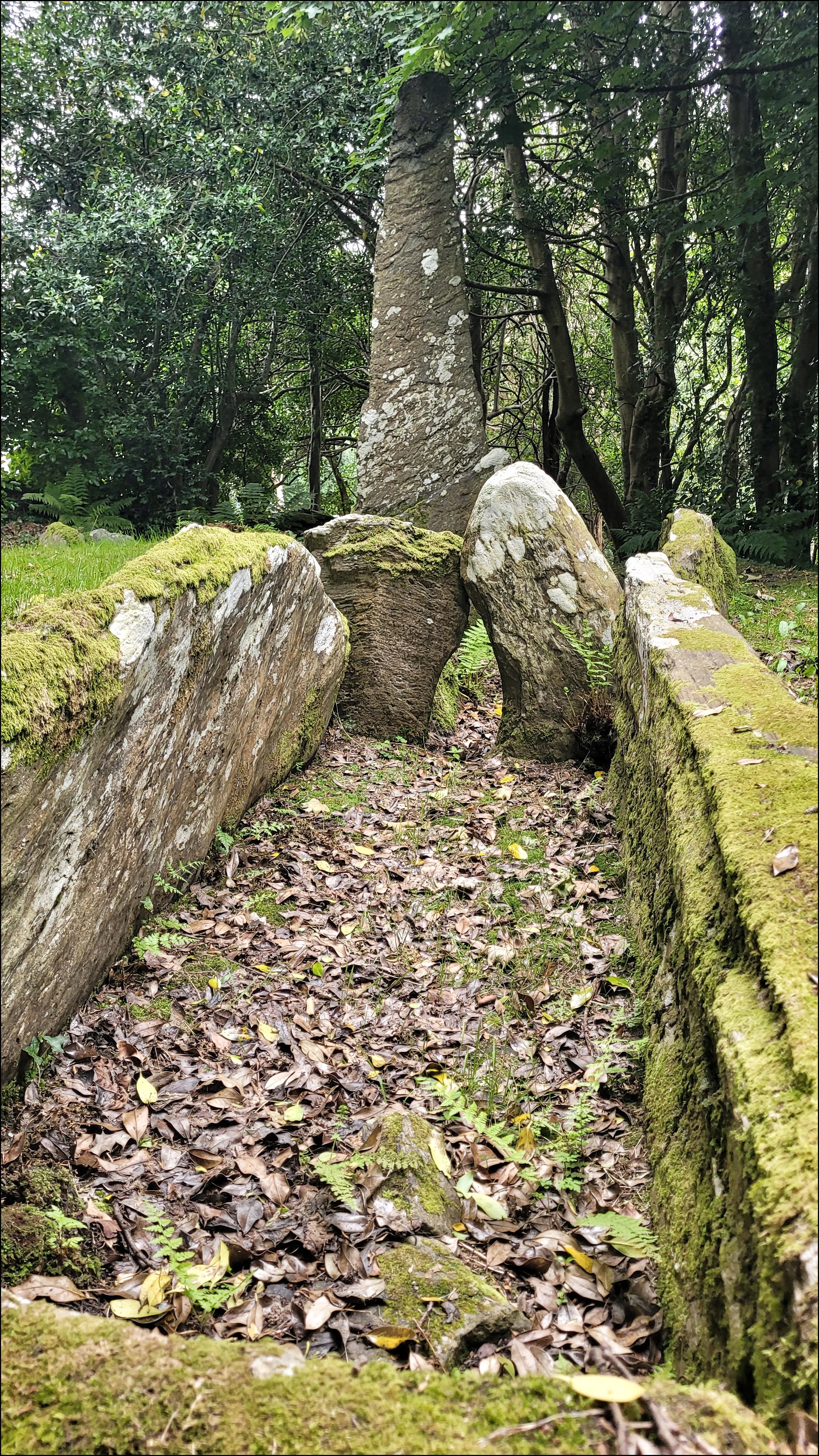
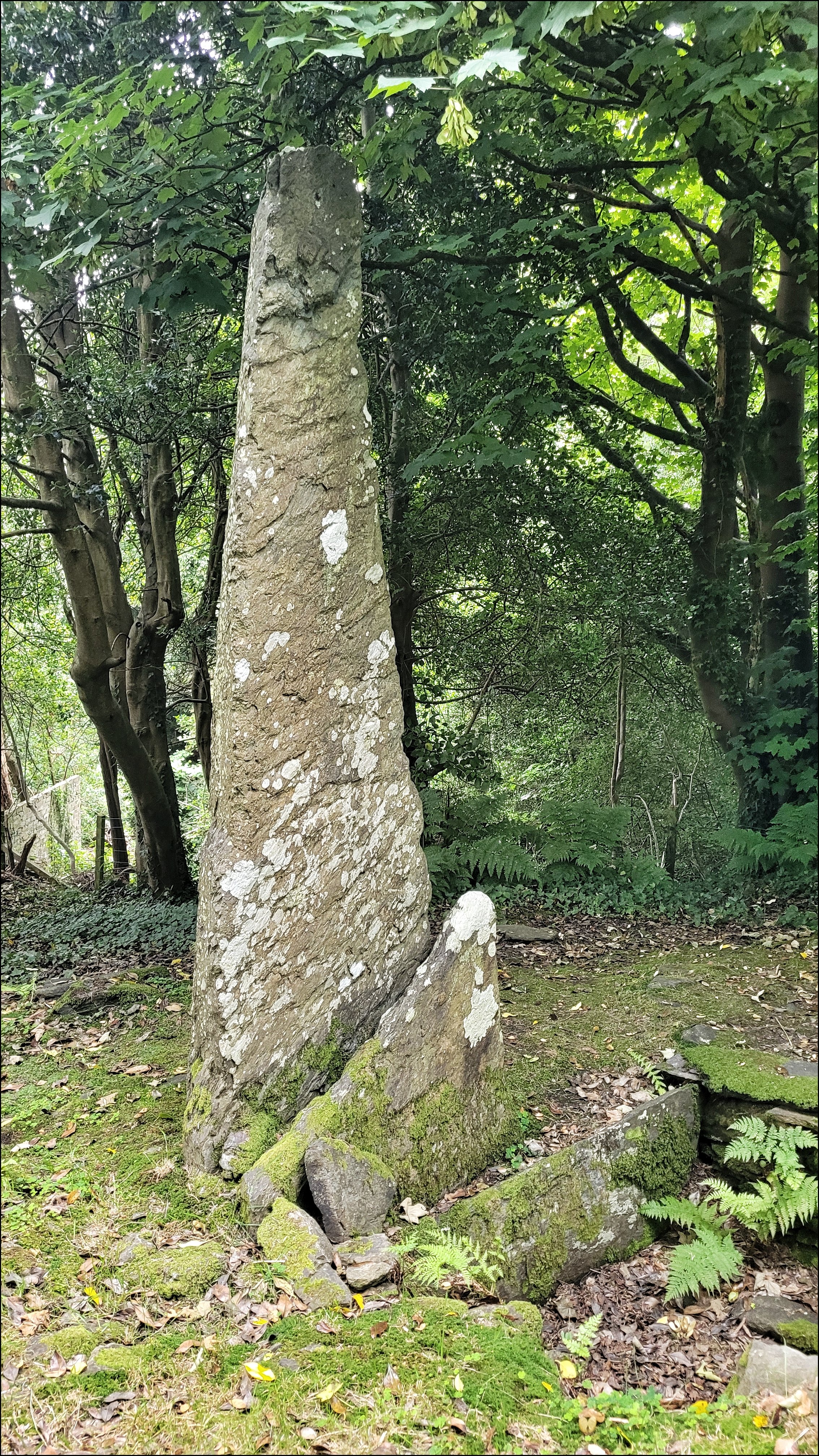
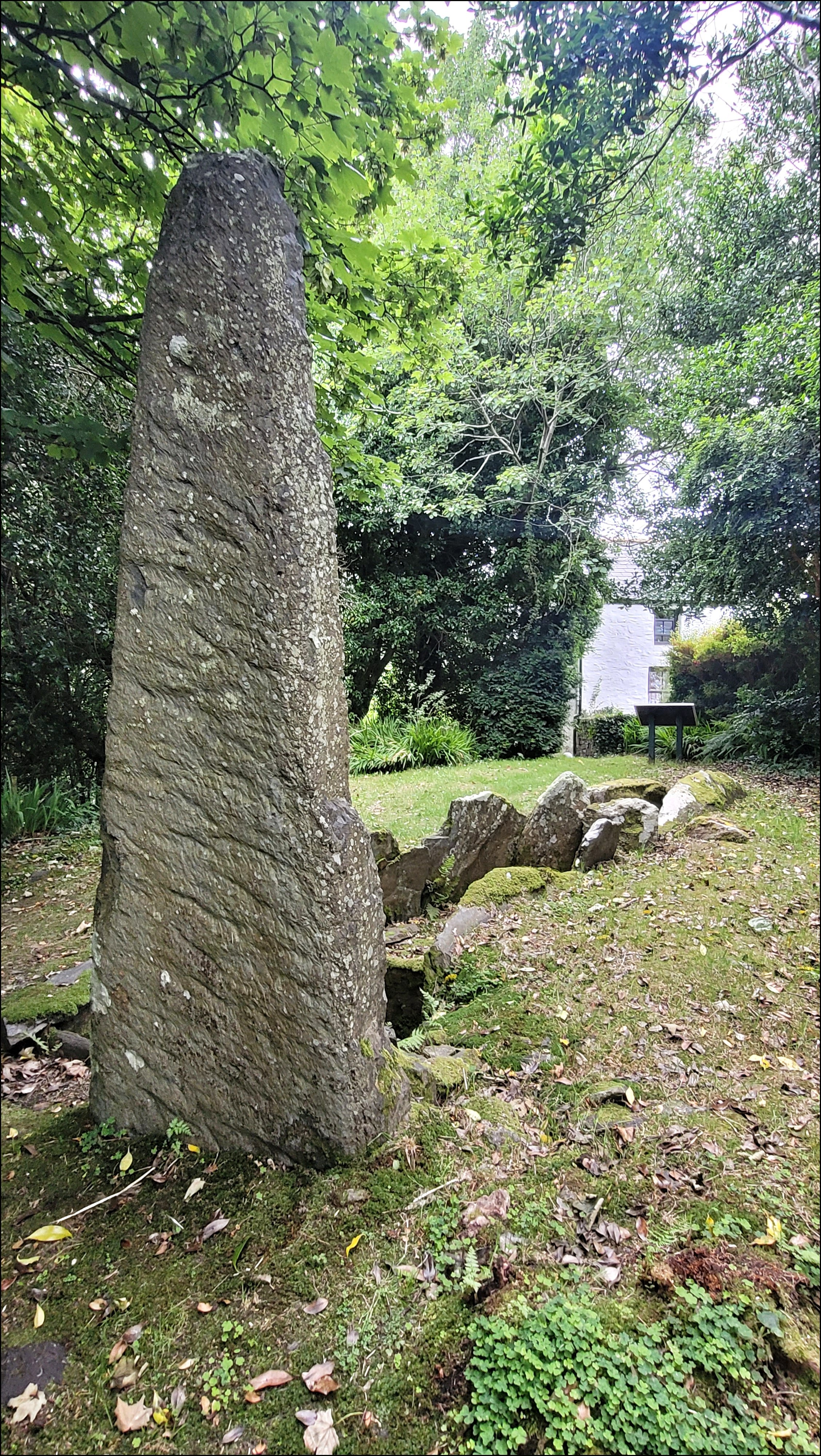
The circumstances of this victim of urban development became even more bizarre, when across the road I saw the sign for another chamber hidden around the back of a house in a small dark clearing of trees. Covered in ground moss were two cists end to end with an unusually tall portal or blocking stone at it’s western end. This was a less visited place and the presence of a football suggested it had become a secret playground. The shape of the three metre high portal stone was peculiar in that it resembled an obelisk rather than a stone placed to support an earthen roof. If this stone was a supporting stone then the chamber would have been of a considerable height. The alignment of the chambers corresponded with those across the road, suggesting this was the tail of a cairn comparable in size to Cairn Holy and Belas Knap. This seems unlikely however as the giant cairn would have had a portal entrance and forecourt at both ends.
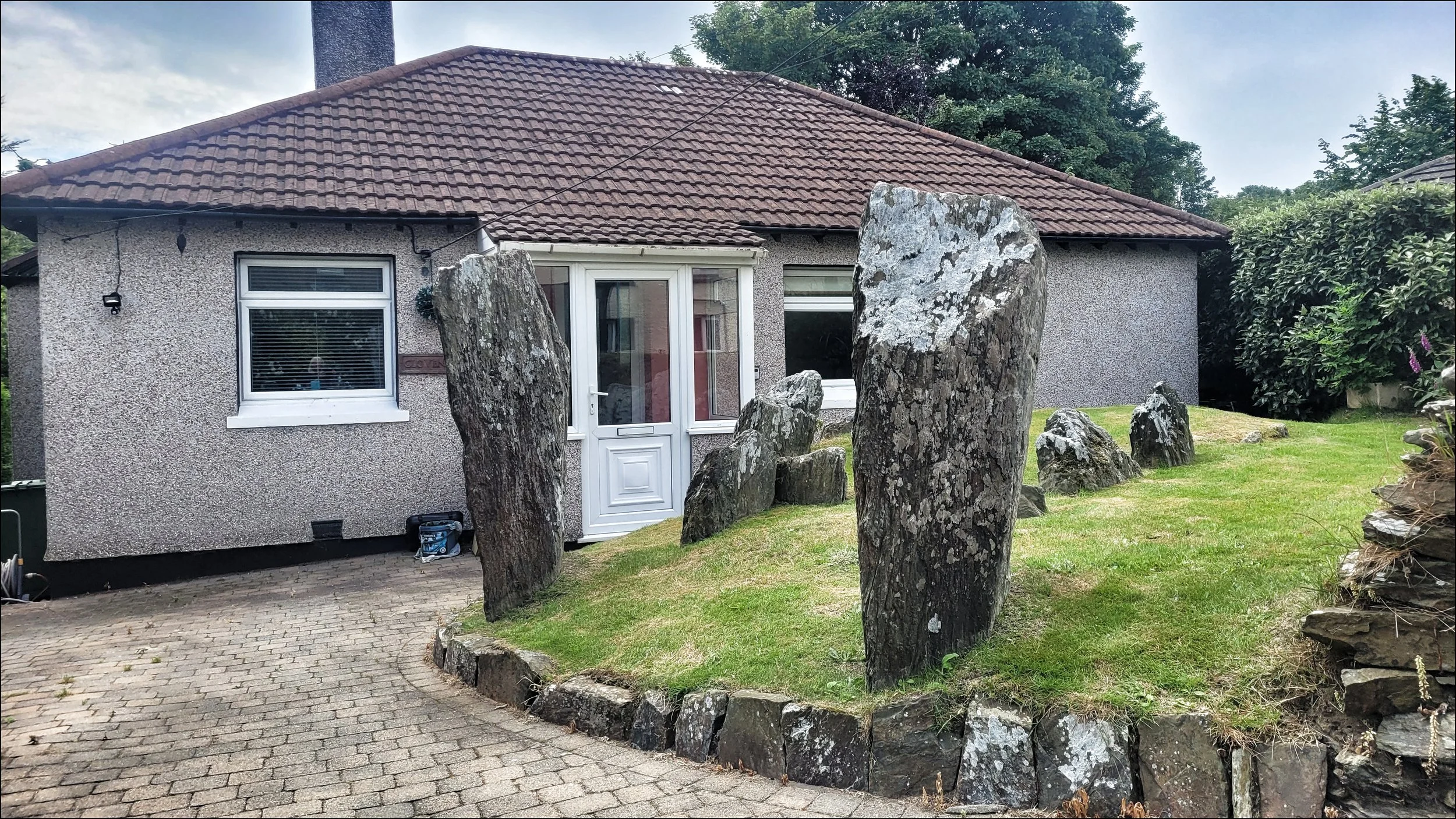
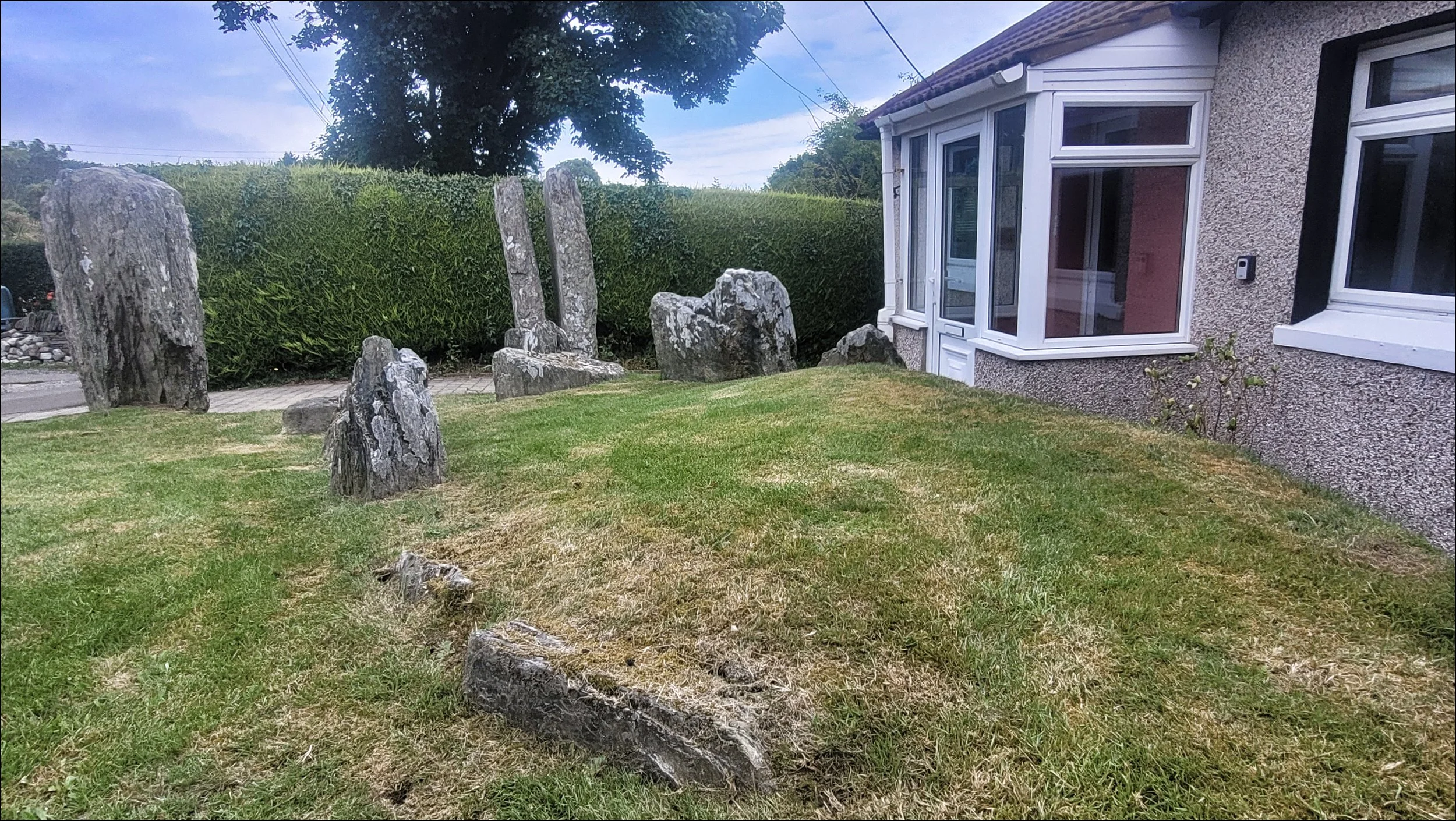
The last of the three burial sites was the Cloven Stones, further south and close by the A2 north of Douglas in the village of Baldrine. A side road dropped down fifty yards to an ordinary looking bungalow with an extraordinary front garden. Entirely occupying the lawn was a small grass barrow with two large portal stones and a row of shallow upright slabs indicating a passage chamber. I knocked on the door and spoke with the owner, a retired cavalry regiment Colonel. He had lived with the stones for a few years but didn’t know much about them other than what locals had told him. With wide eyes he told me they were haunted. This was no surprise to me as the Isle of Man had many supernatural stories attached to ancient sites, including ghost riders who haunted Meayll Hill.
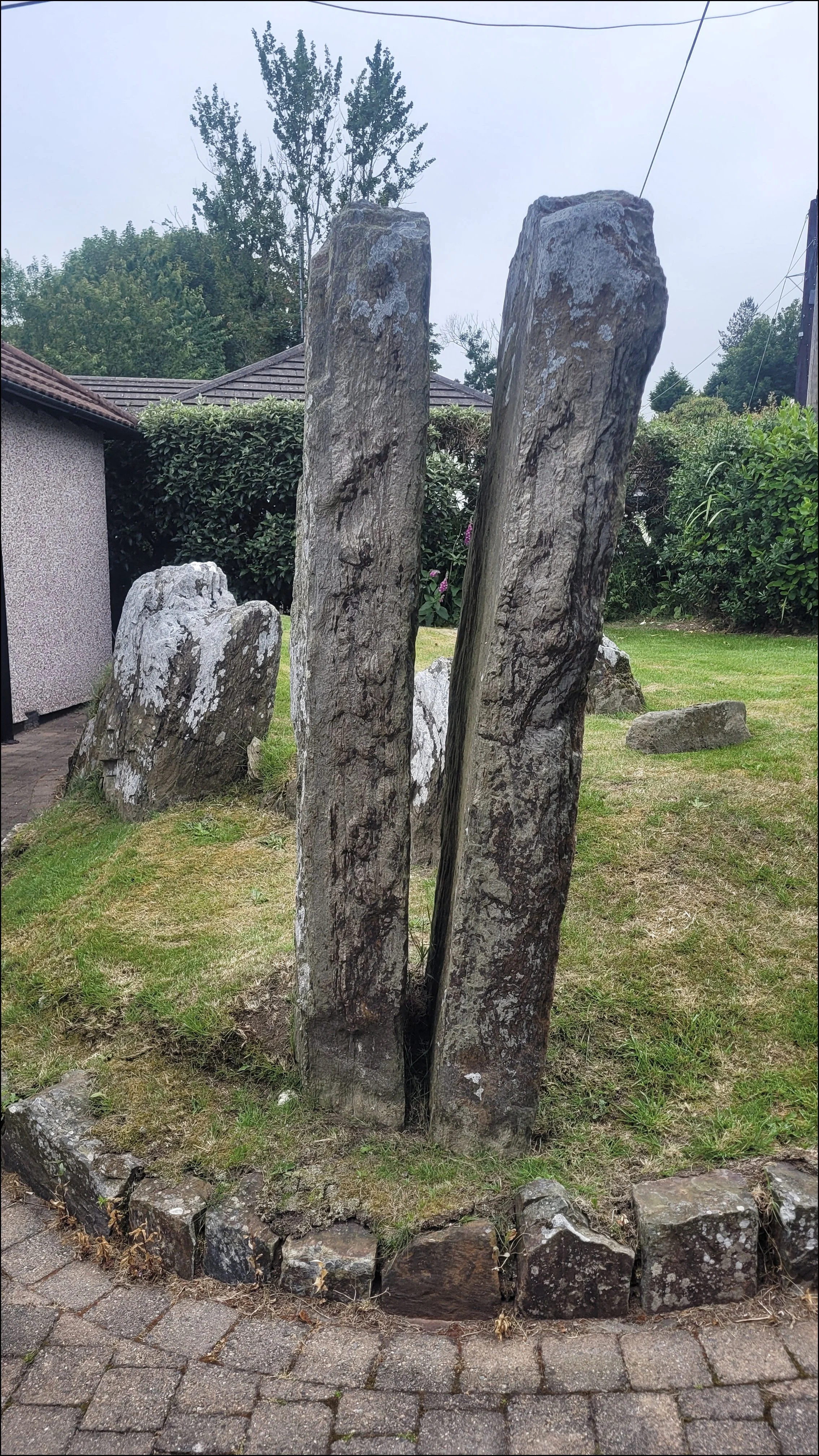
The Cloven Stones refers to one of the portal uprights which is split in two from top to bottom, some believing the result of a sword brought down upon it by a king of old. Charmingly, it is also believed the two halves clap in the dead of night. The number of chambers here is up for debate but it is likely the cairn is Bronze Age and so does not date back as far as the former two. The curbstones here are quite deep and look quite odd edged with the modern brick paving of the driveway. Like at King Orry’s Grave the back half of the barrow is truncated, here by a laurel and holly hedge. This site had undergone a precarious existance and I was amazed any of it had survived at all.