The Duns of Inishmore
22.07.2026
I had taken the ferry over to Inishmore from Rossaveel in County Galway to walk the island to find the wedge tombs at Oghill and Dun Eochla. The Aran Isles has a distinctive landscape of limestone pavement that has provided building stone for the many drystone walls and Duns across the islands. Whilst the tombs are from the Bronze Age, the ring forts were built much later. However, one fort has revealed evidence of settlements from the Bronze Age with finds of cremated human remains along with bronze bracelets, spearheads, knives and axe heads. The axe heads were found with their molds proving that they had been made on the islands.
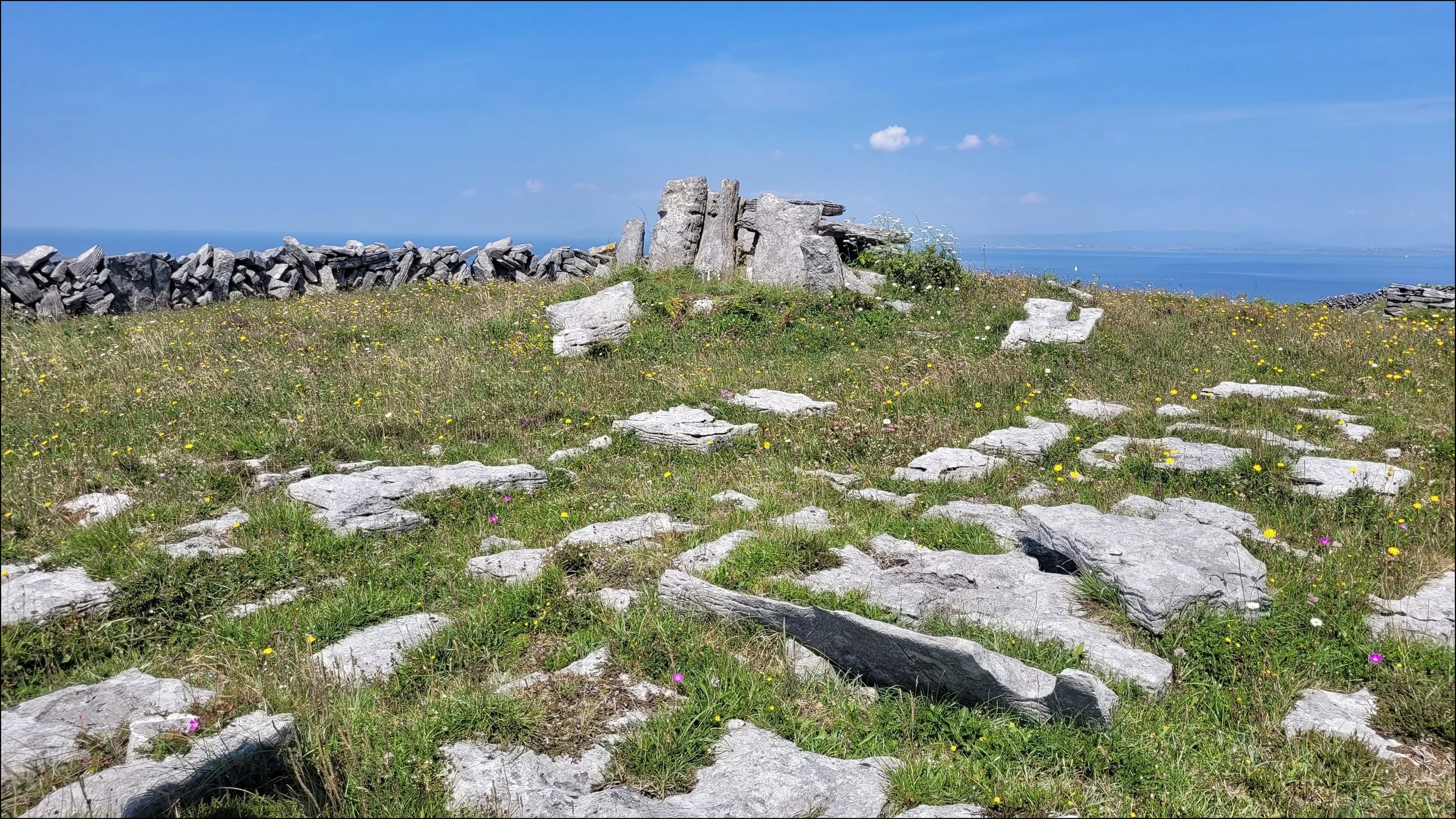
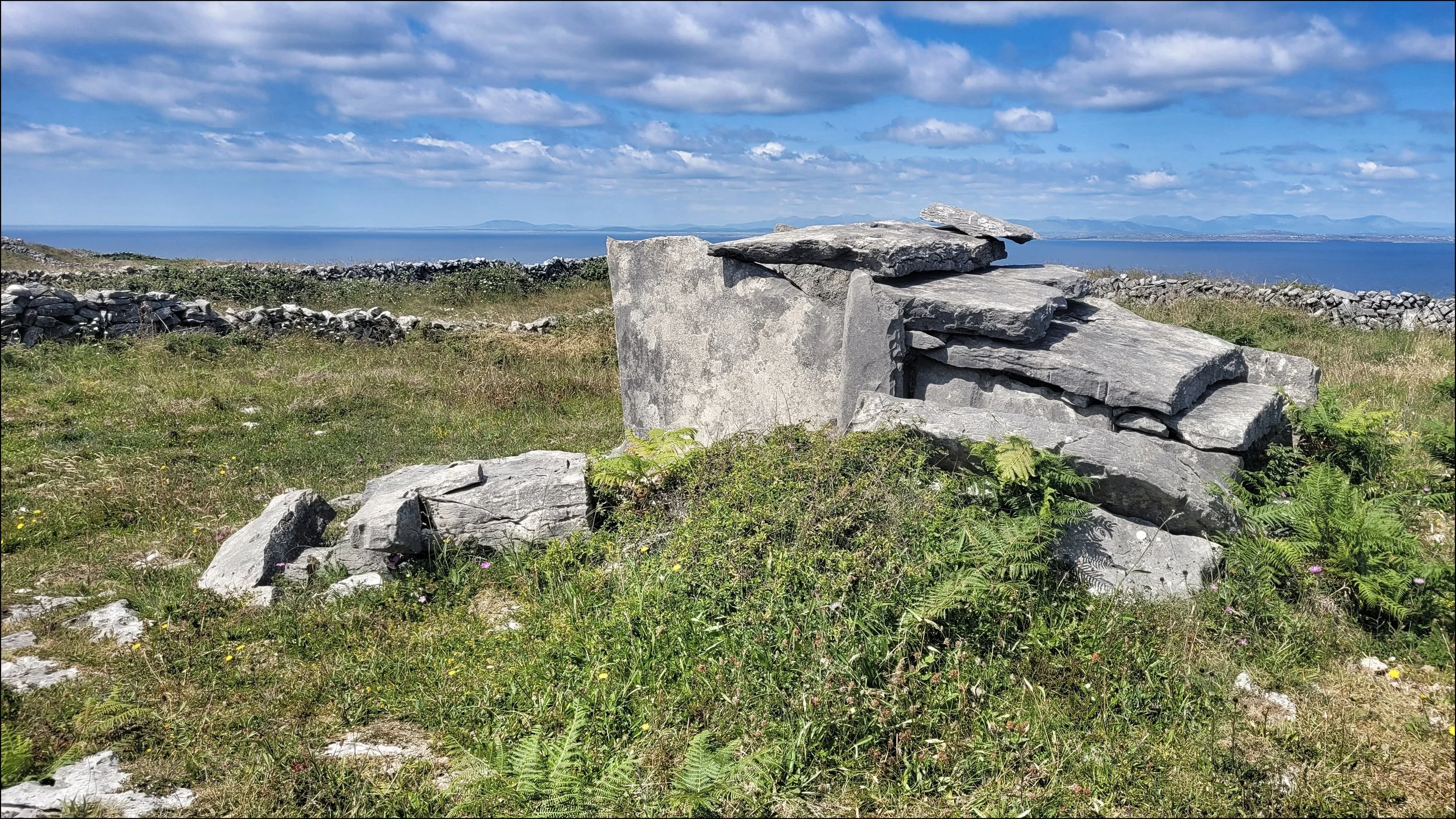
After an hour’s walk from the port of Kilronan, I was amongst the uniquely built walls that traverse the island. I left the path and found the wedge tomb of Oghill or Dun Beag perched up on the limestone pavement, surrounded by wild flowers with views of both the north and south shore. The chamber had been built from the copious amounts of exposed stone on the surface which looked easy enough to extract. The chamber had two lines of upright slabs on either side supporting three square roof stones that overlapped each other down to the ground at the rear. This was a structure very exposed to the elements, which had survived thousands of years of winter winds. A legend claims the chamber was the resting place for the fleeing daughter of an ancient king of Ireland who had eloped with her lover. It was a hot day and I was tempted to try it out, but I decided to retreat to the shade of a cafe I’d passed on the way up near Dun Eochla.
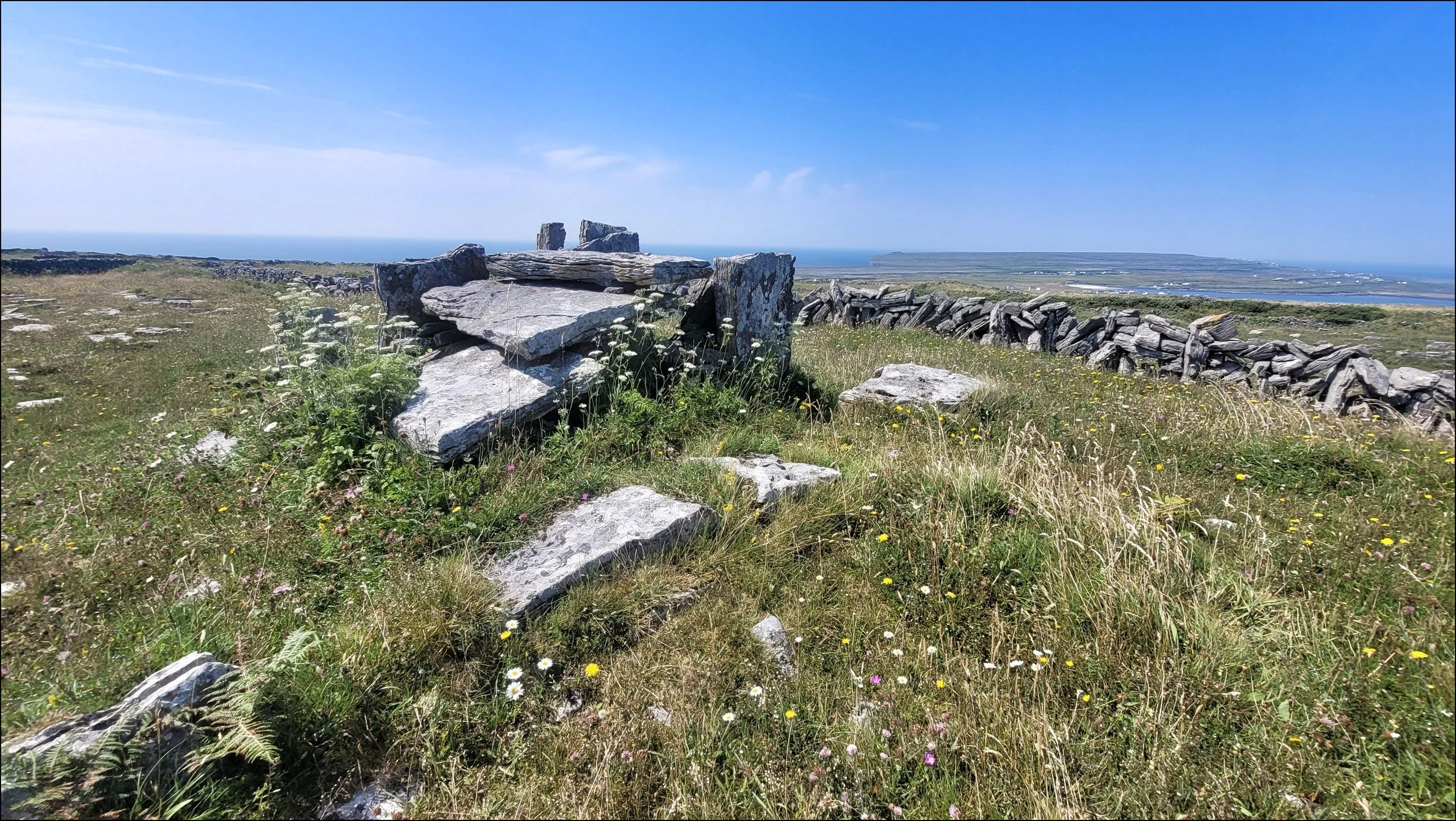
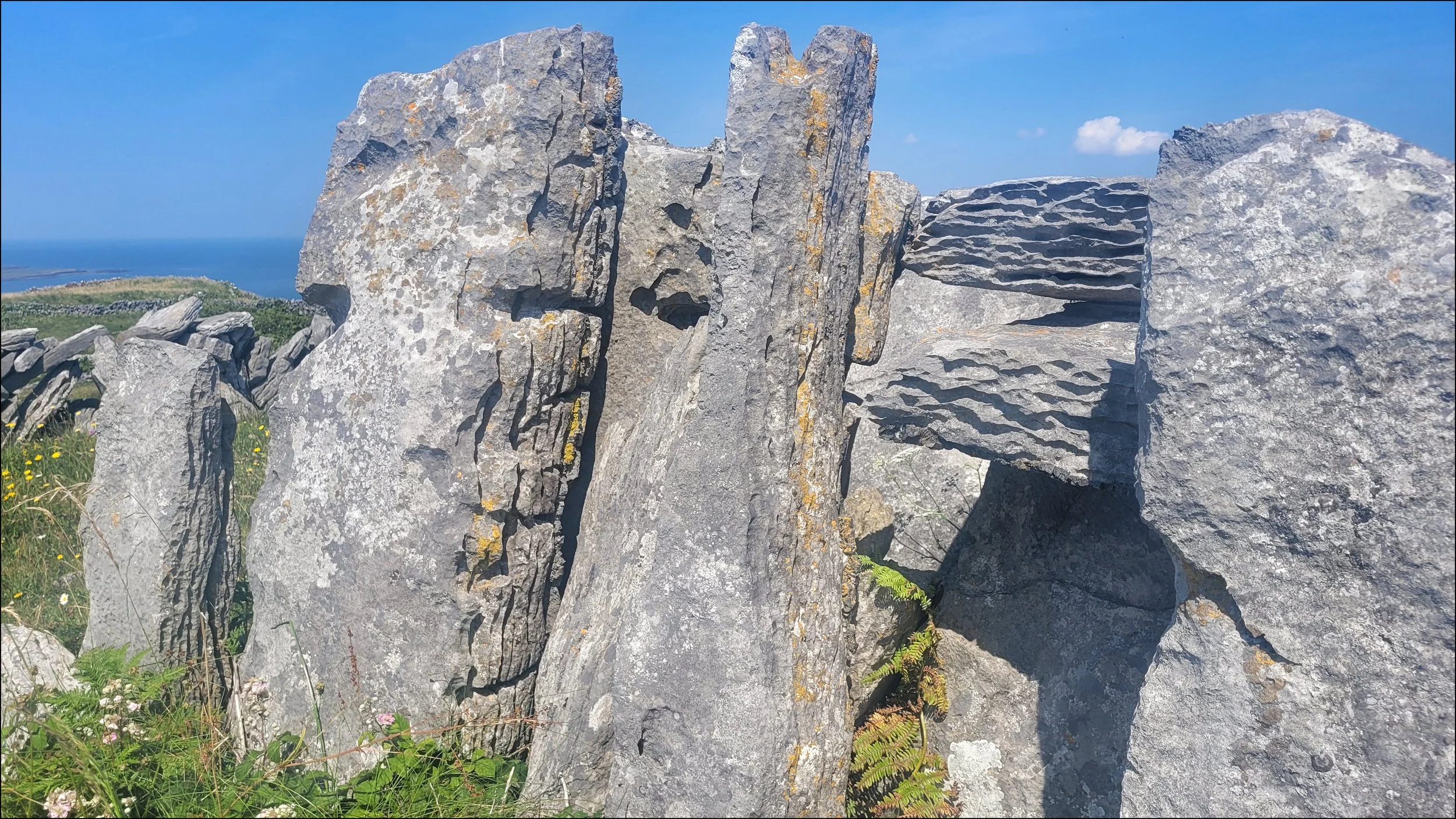
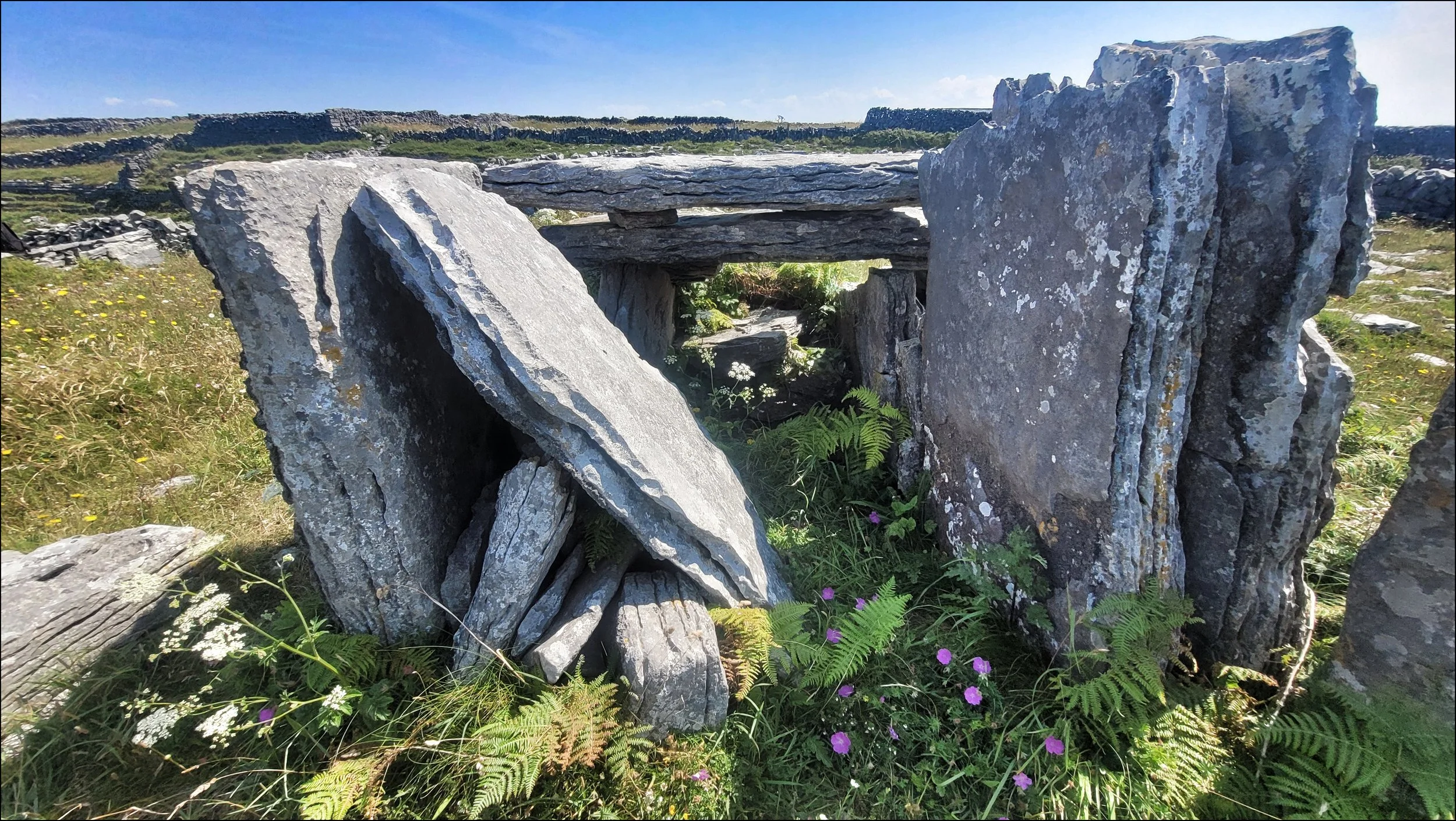
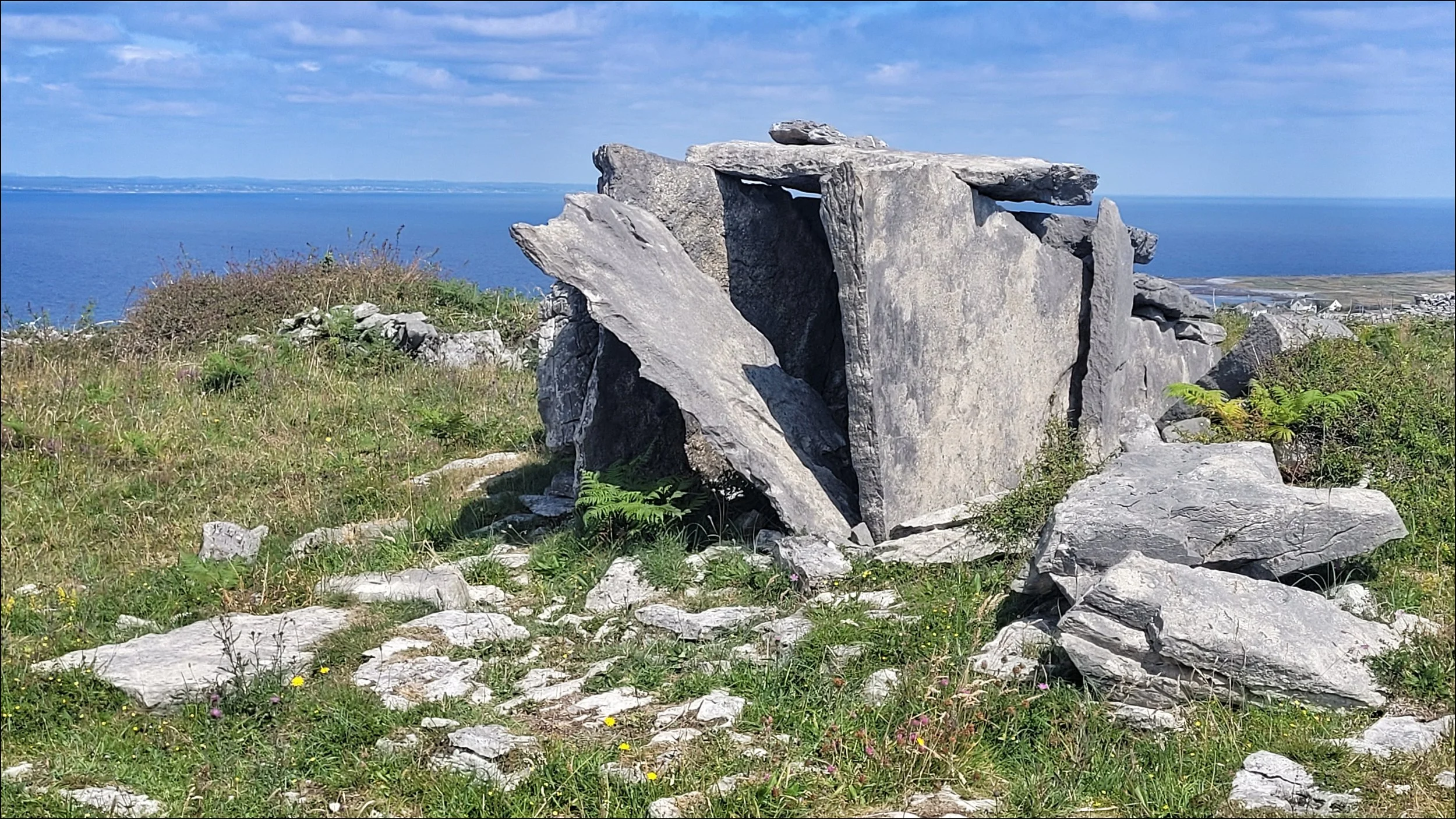
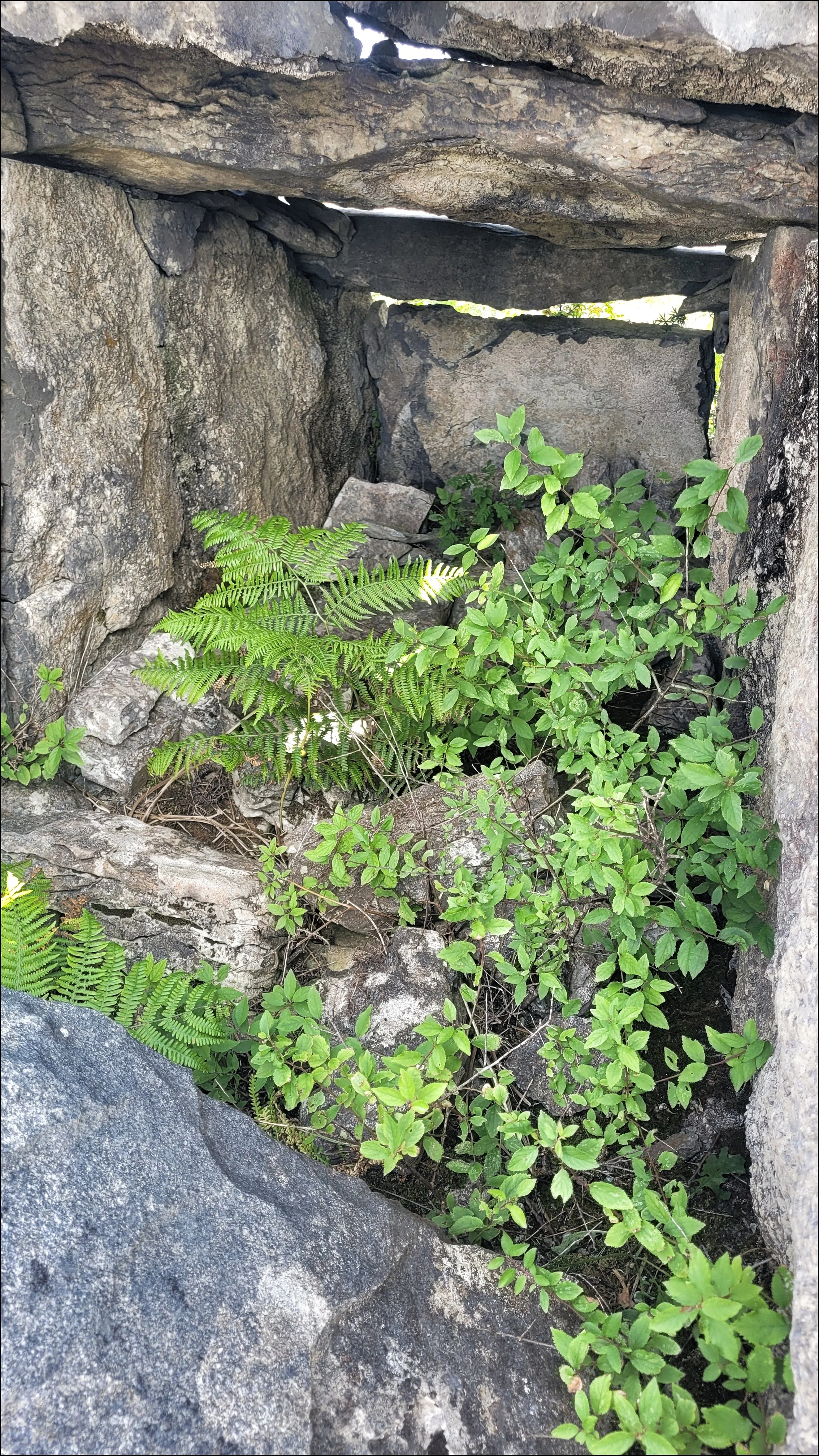
At the site of Dun Eochla, one of the seven ring forts on the Isles of Aran, is the nearby wedge tomb of the same name. Access to it was up another track from the road that runs along the spine of Inishmore. A path then leads through an old derelict lighthouse station to the tomb which on first impression was very similar to Oghill. It seemed to be in better condition than Oghill and identical in construction, with straight double stone uprights supporting not three capstones but four. One slab rested diagonally at the front that may have been a fifth roof stone or a leaning upright. The chamber’s interior was more box like and enclosed and it’s overall appearance seemed more pleasing to the eye. Both tombs are aligned east to west and the reason for their location on the high point of the island could have been to maximise the effects of the setting sun. This tomb however, was now playing second fiddle as a group of day trippers arrived, walking straight past it to look at the ring fort.
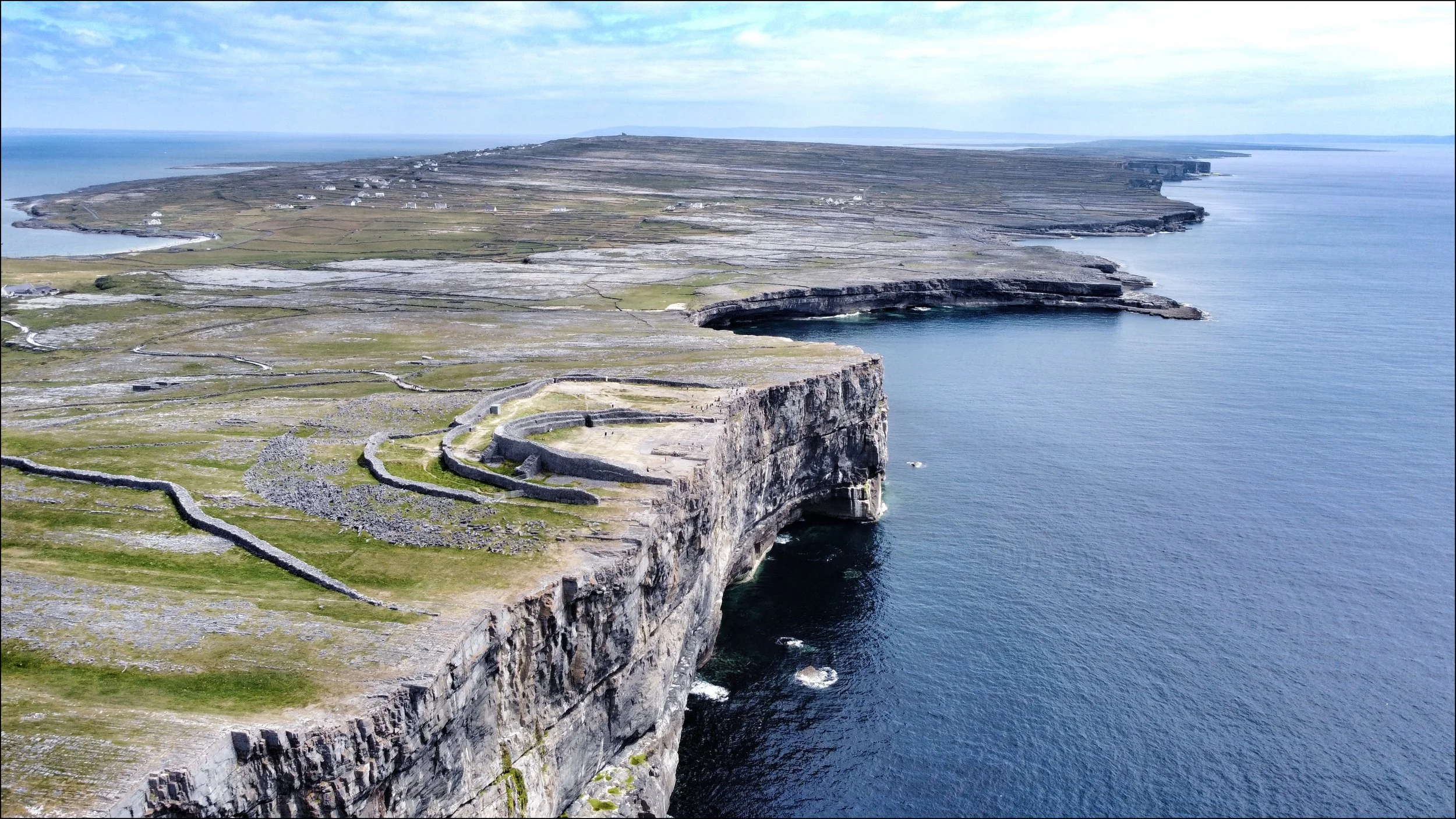
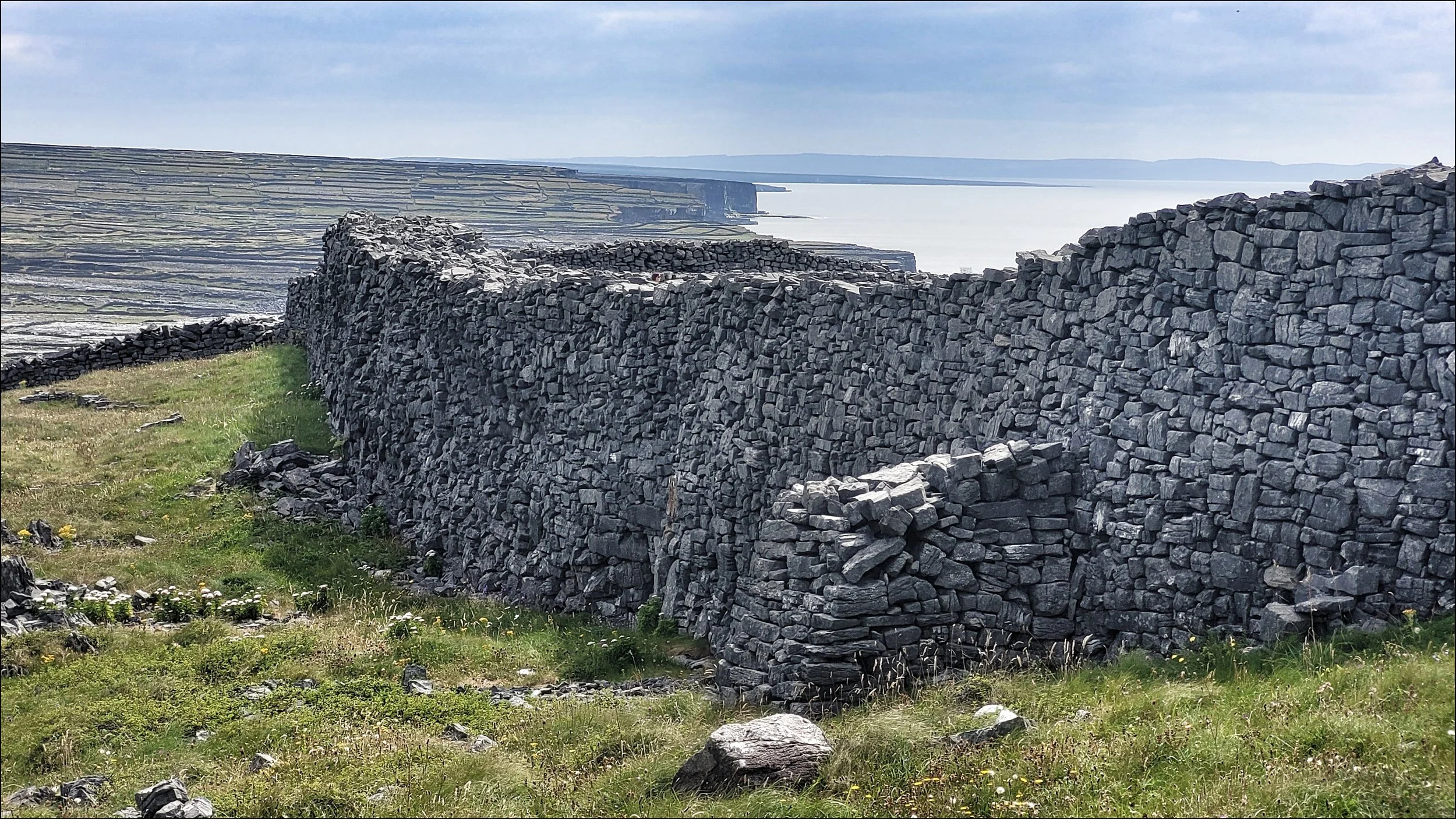
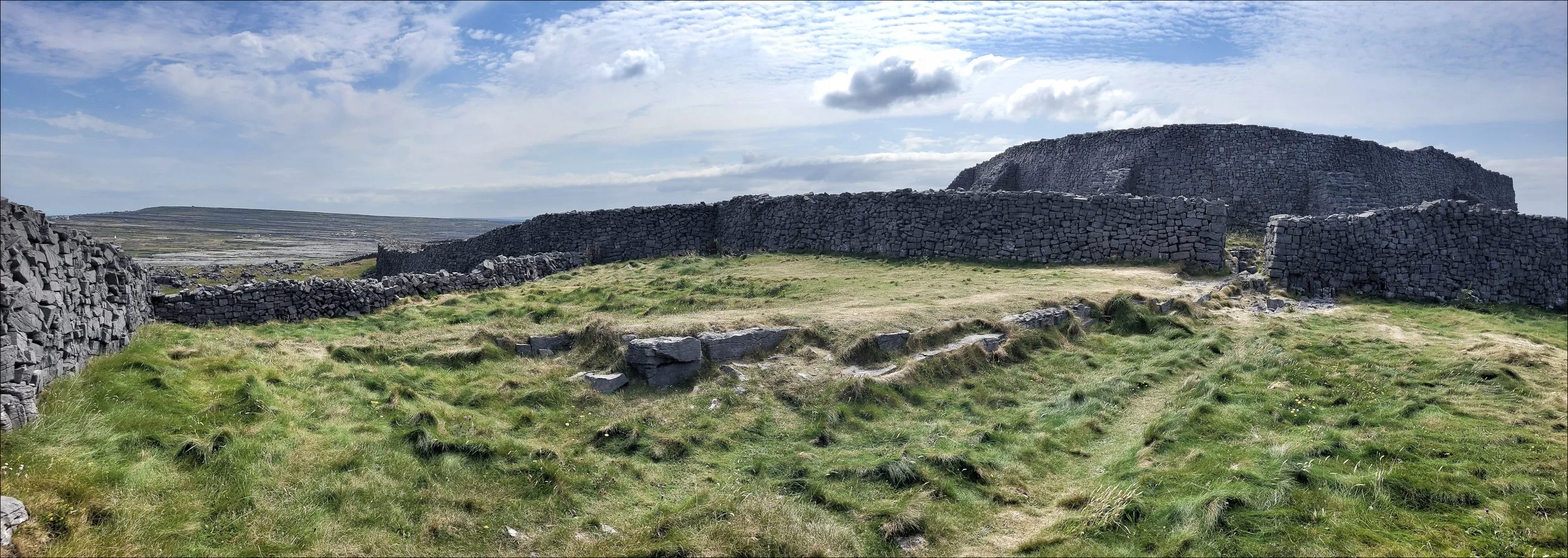
And so to the ring forts which although constructed from the early medieval period were sited on Bronze Age settlements. Near to the wedge tomb named Dun Eochla is the ring fort of the same name with its thick circular high wall of a drystone construction. Two other fortresses sited on Inishmore are crescent shaped on the very edge of the southern cliffs. Dun Duchathair has not been extensively excavated, but Dun Aonghasa is known to be a Bronze Age site from the cremation remains and bronze objects found there. Other finds have proven the ancient people of the island were acquiring objects from mainland Ireland and further afield.
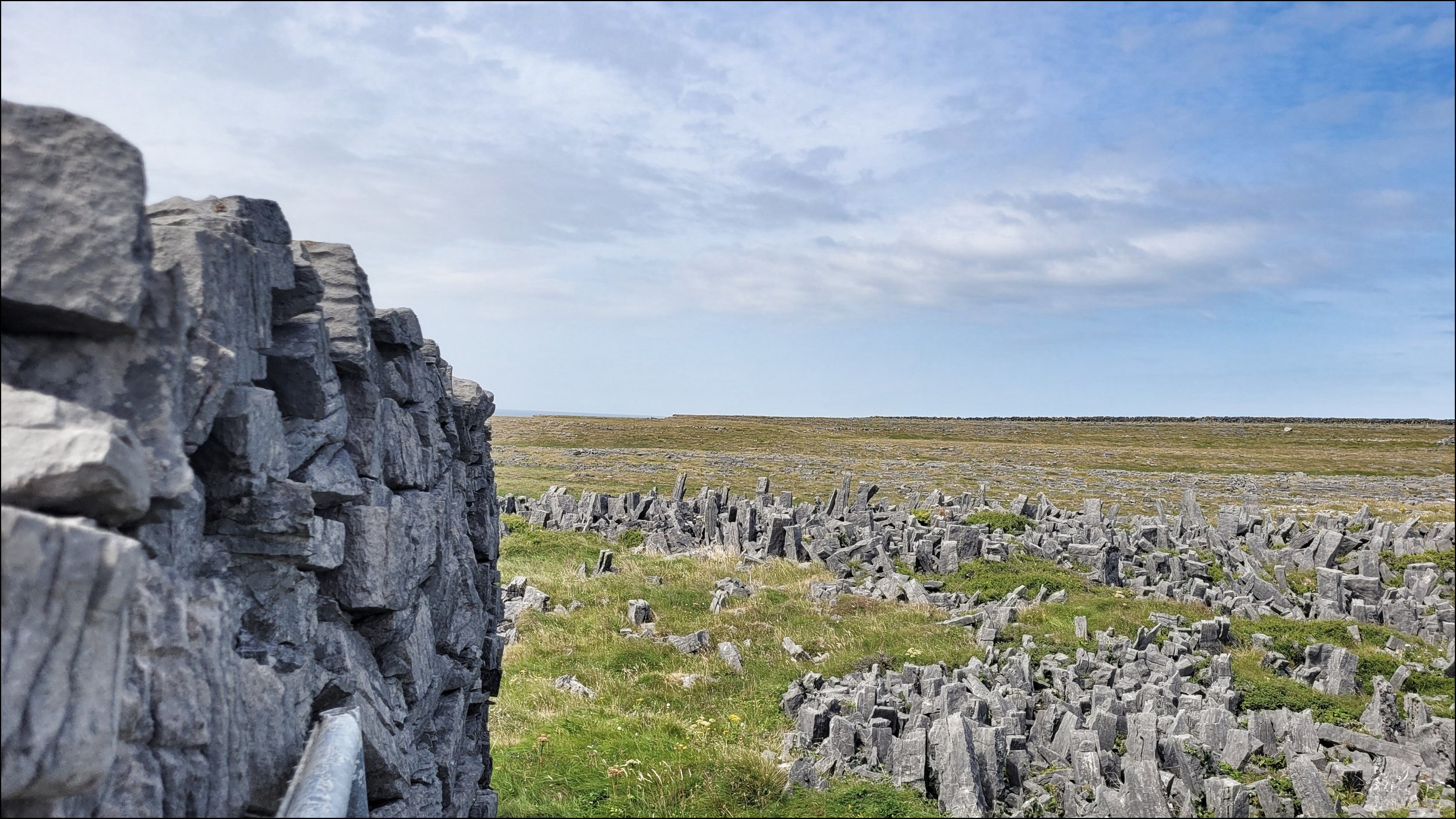
Dun Aonghasa is reached via a visitors centre which explains the history of the Fort and the geology beneath it with a display of some of the items found there. A path leads up to the outer walls built at different time periods. Around the second wall a field of jagged rocks encircle the Fort. This ‘Chevaux de Frise’ was a defensive barrier to attacking forces. The inner wall is the largest and the main body of the Fort extending around to the cliff edge at both ends. With no safety barriers in place, it was possible to peer over and down to the sea three hundred feet below. It would have been a dramatic and sometimes terrifying place to live for the early Bronze Age settlers. Along with the objects found here, the cremated remains of adults and children were found interred in what is left of Dun Aonghasa's hut circles.