On a gentle archipelago
14.06.2025
Two and a half hours from Penzance by ferry and I was on St Mary’s in the Isles of Scilly. I had four hours to walk around the island before my return sailing and my plan was to visit two very well preserved Scillonian burial chambers on it’s northern edge. Like on the mainland there’s a very clear coastal path hugging the shoreline and from Hugh Town up the western side of the island with spectacular views across to Tresco and St Martins I started out.
The day trippers thinned out. Many of them had peeled off into an idyllic terraced restaurant over looking Porthloo Beach. The air was cleaner here and even the smell of the flora was different to the mainland. Cornwall felt laid back but here the calm tranquility was palpable. I passed Carn Morval Point and the site of an old Battery. Ordnance Survey showed there were many dotted all around the island along with the many cairns. I reached the north shoreline and came across the Iron Age settlement of Halangy. There had been a presence here in Bronze Age times but it was the remnants of the Iron Age dwellings that were now left to us. The footprint of the dwellings were clear to make out on the terraced slope and pottery shards and glass beads found here proved that there had been contact with the outside world.
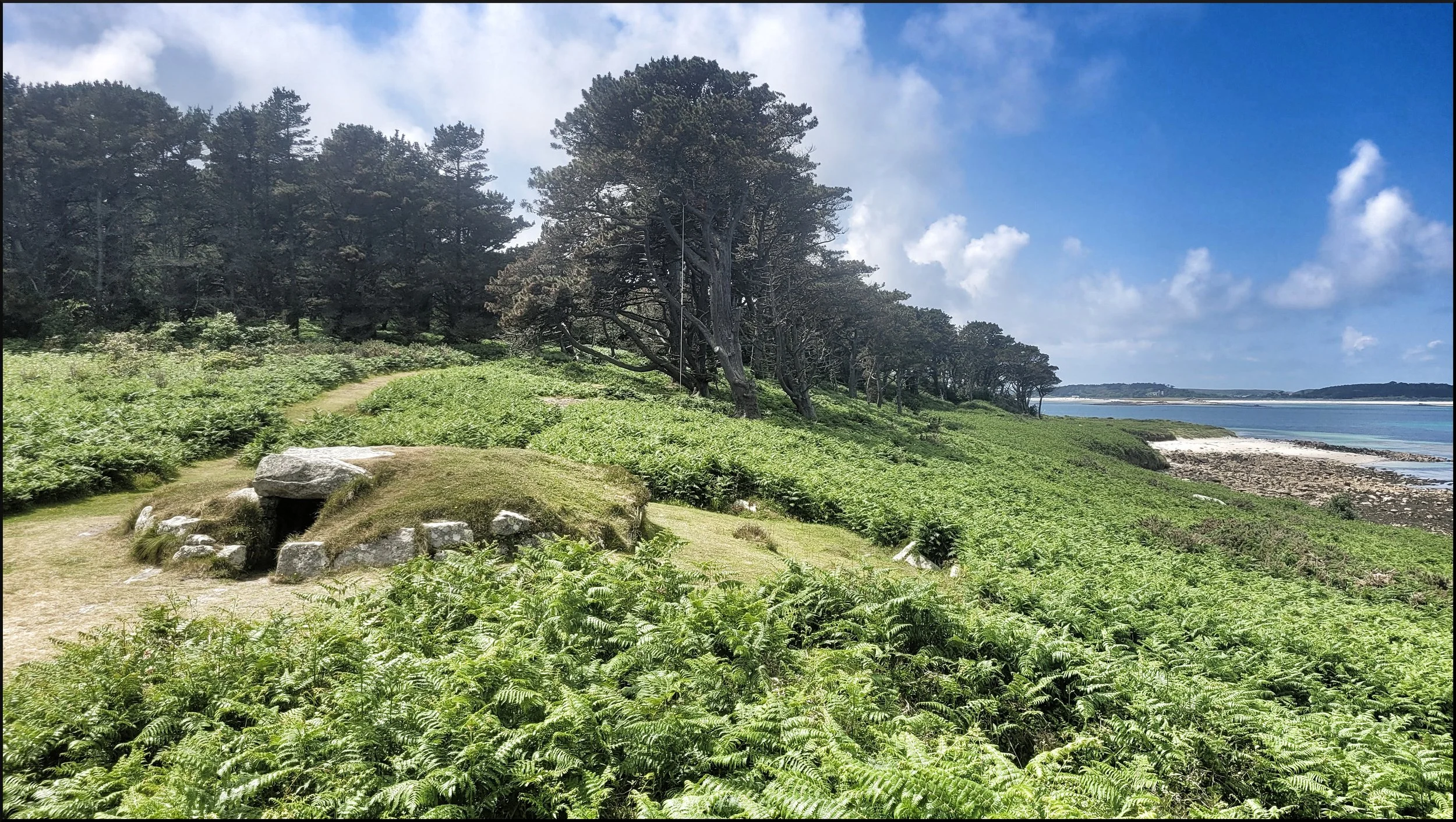
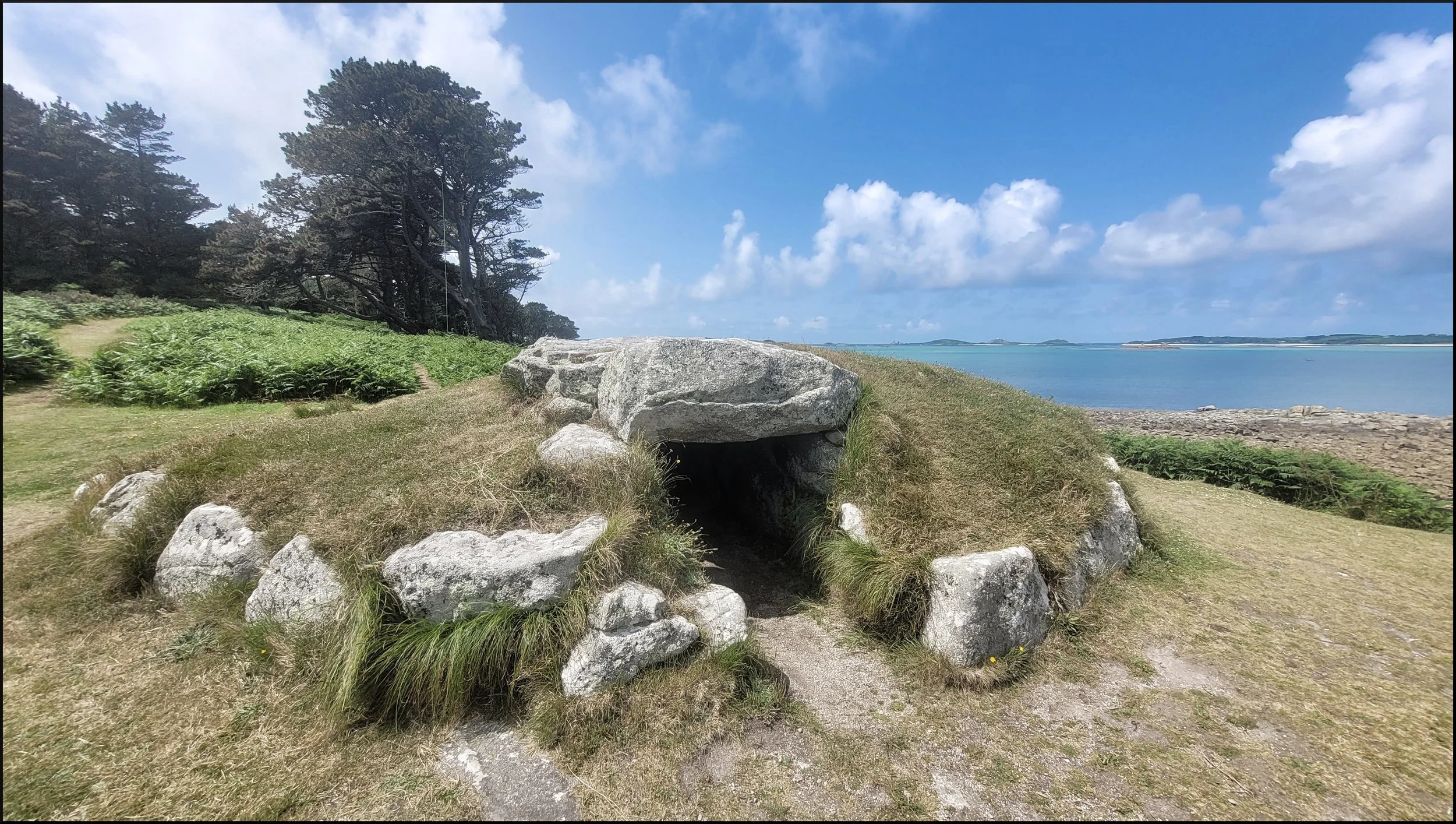
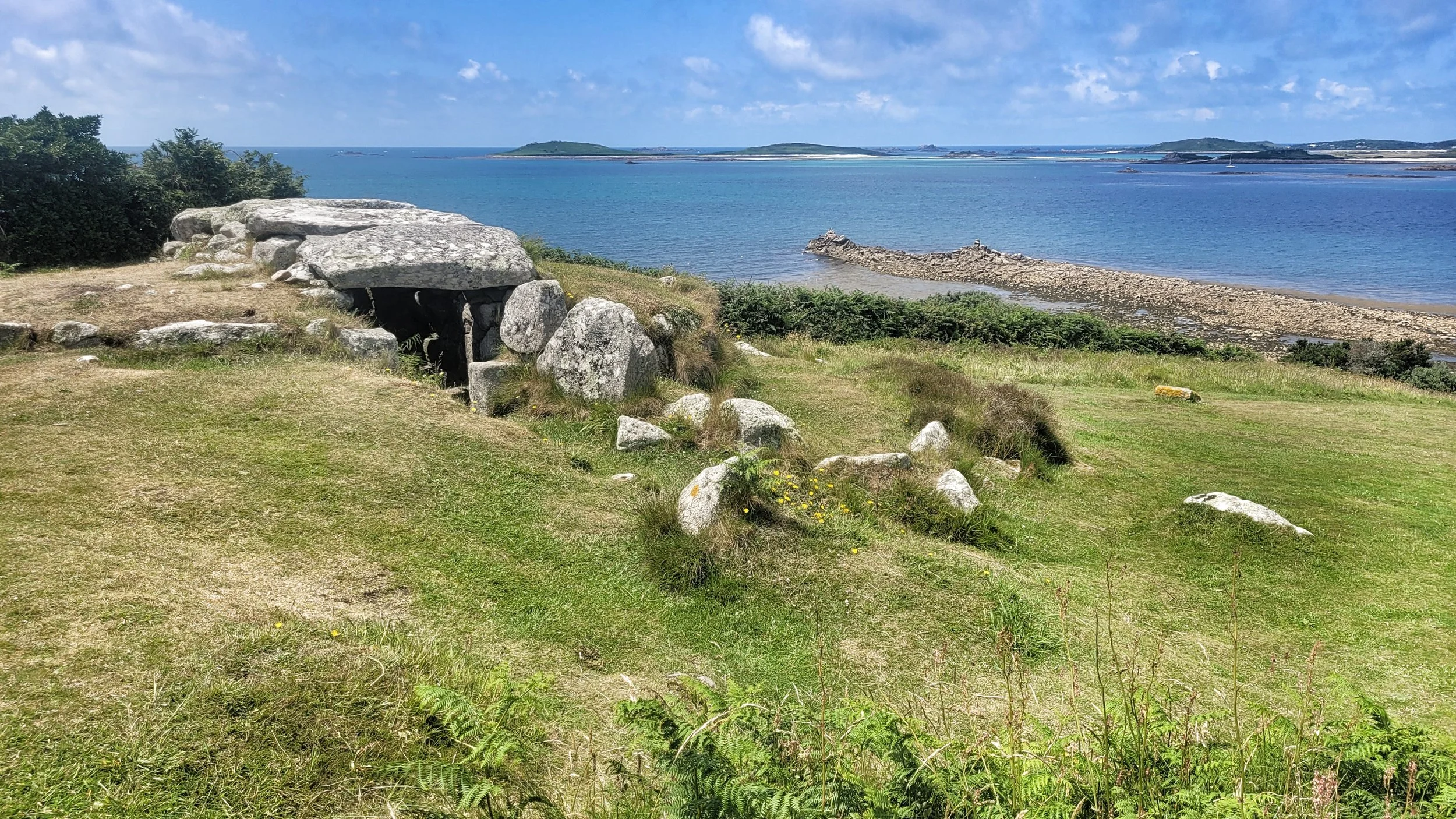
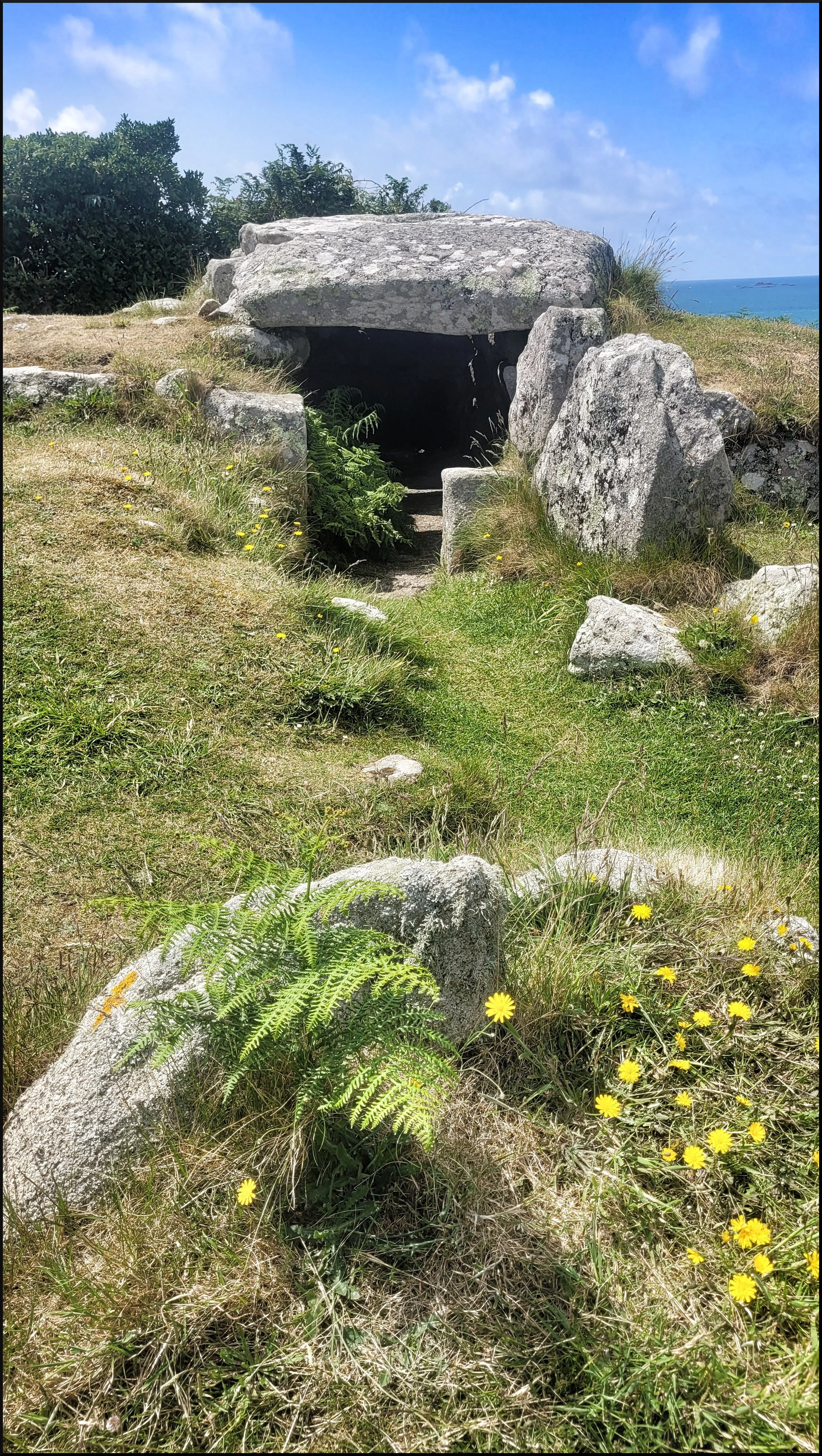
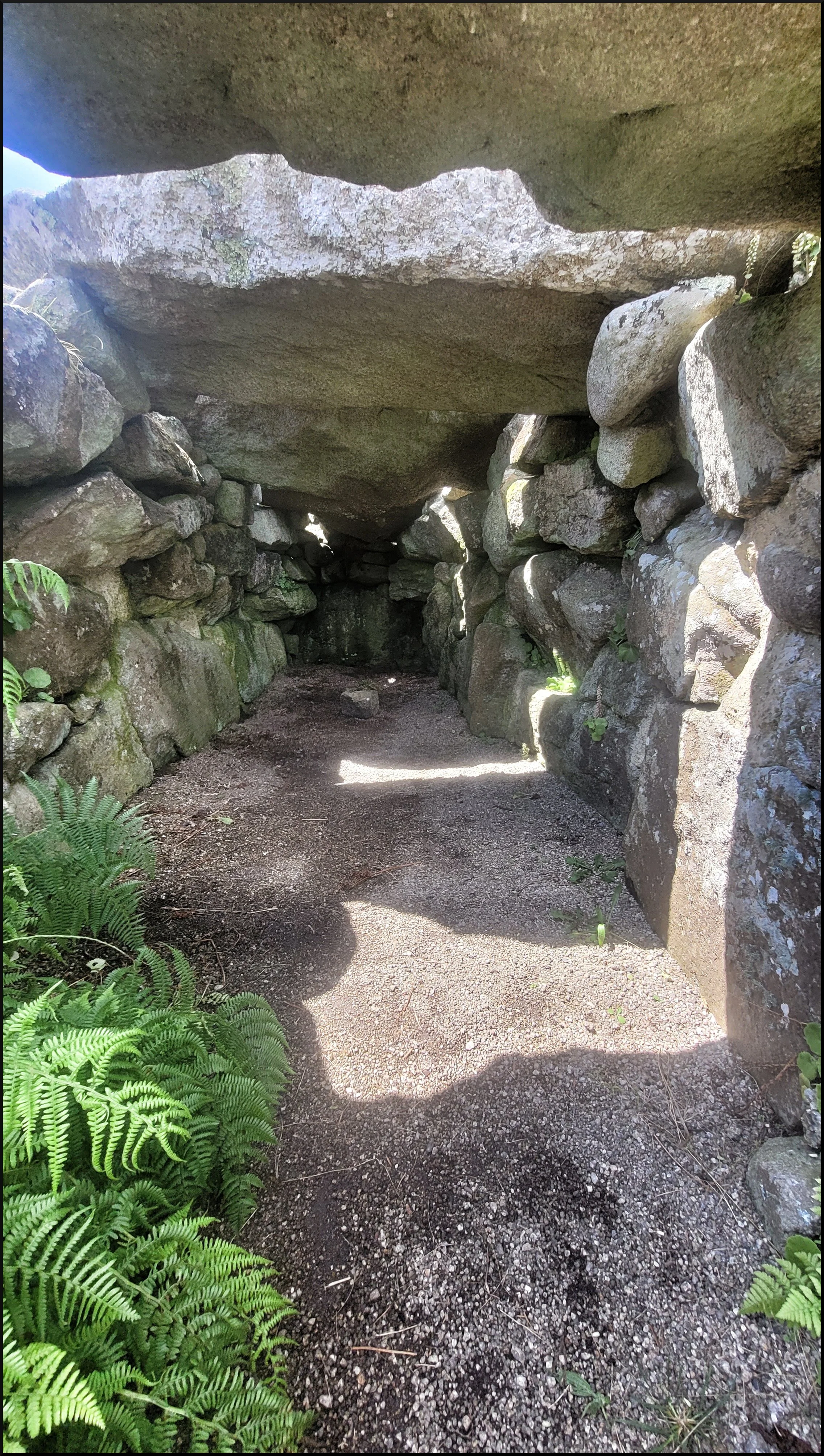
Just up from the settlement was Bant’s Carn, a beautiful example of the island’s burial chambers. It was small in circumference but had a distinct dome like character with large curb stones around the base. The chamber entrance set down into the earthen bank around it invited me to look in at it’s cool interior. As well as being a place of burial it is thought the space may have been used for seasonal rituals. It was clearly evident that respect for the status of this chamber had continued on from it’s initial construction well into the time of the Iron Age community.
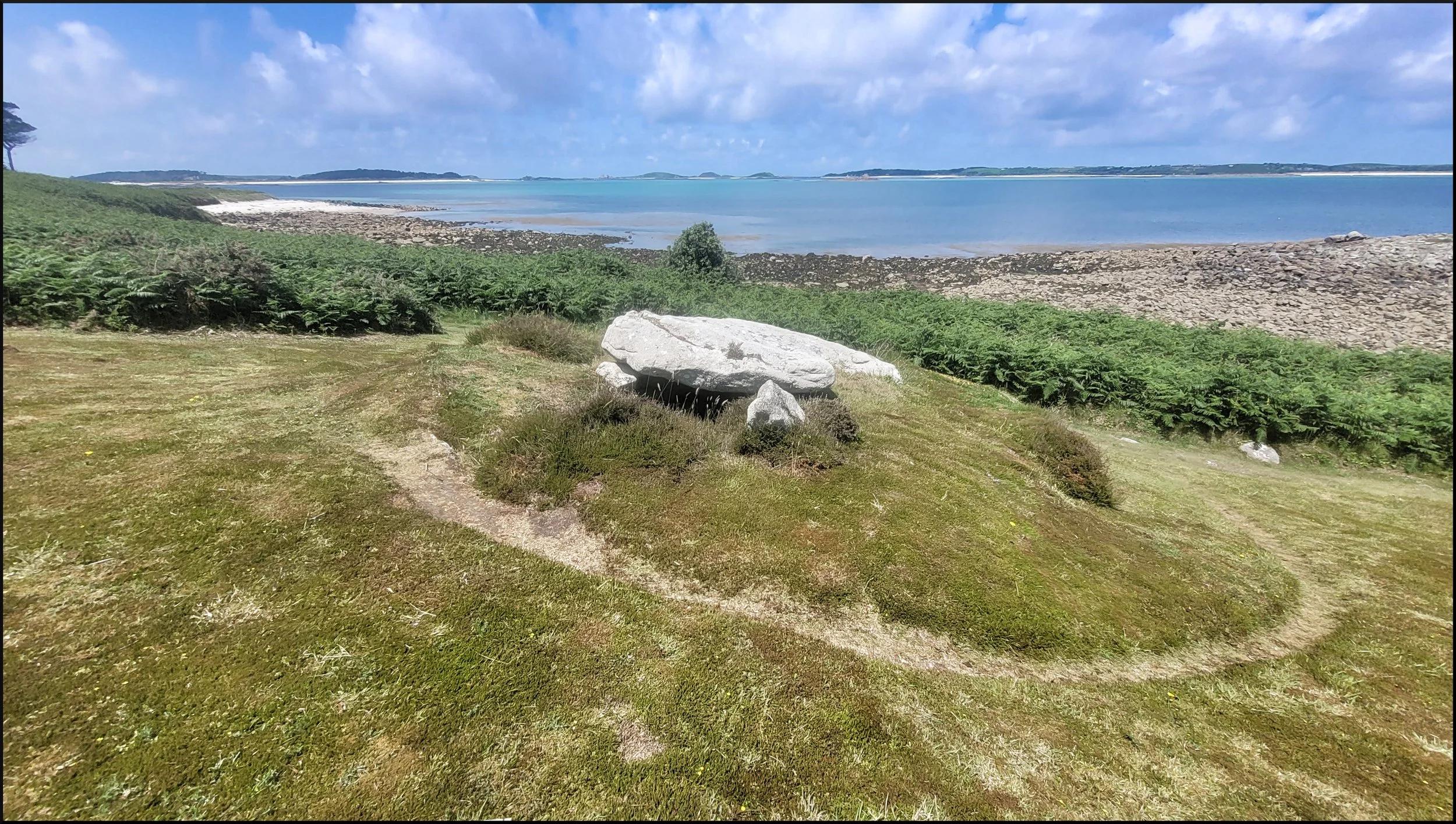
Further around the shoreline the golden beaches of St Martins came into view across the blue green waters of Crow Sound. I came across the cairn known as Innisidgen Lower in a clearing where I sat to take in the stunning beauty of my surroundings. Looking out across the Sound I imagined a Bronze Age landscape where the sea level would have been lower allowing movement between the isles more possible, and forests that over the centuries would have been cleared for resources and farming.
Innisidgen Lower was a shallower cairn with very little stone defining it’s circular edges. The chamber was set deeper and was open at both ends in a north/south orientation like at Bant’s Carn. It had remained intact and overgrown until it was looted in the 1950’s, but pottery shards had been discovered here too, dating it to the late Neolithic around 4000 years ago.

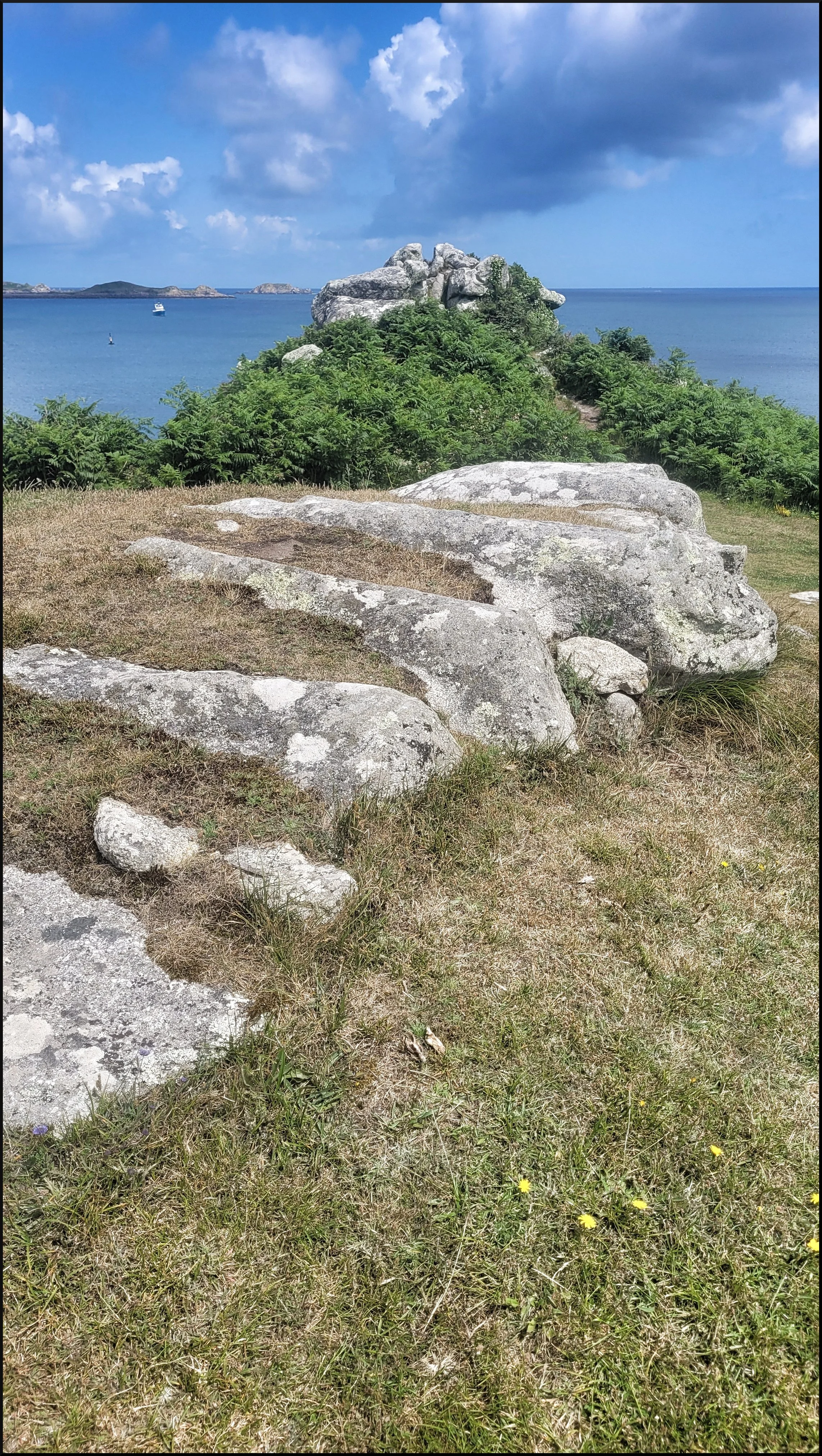
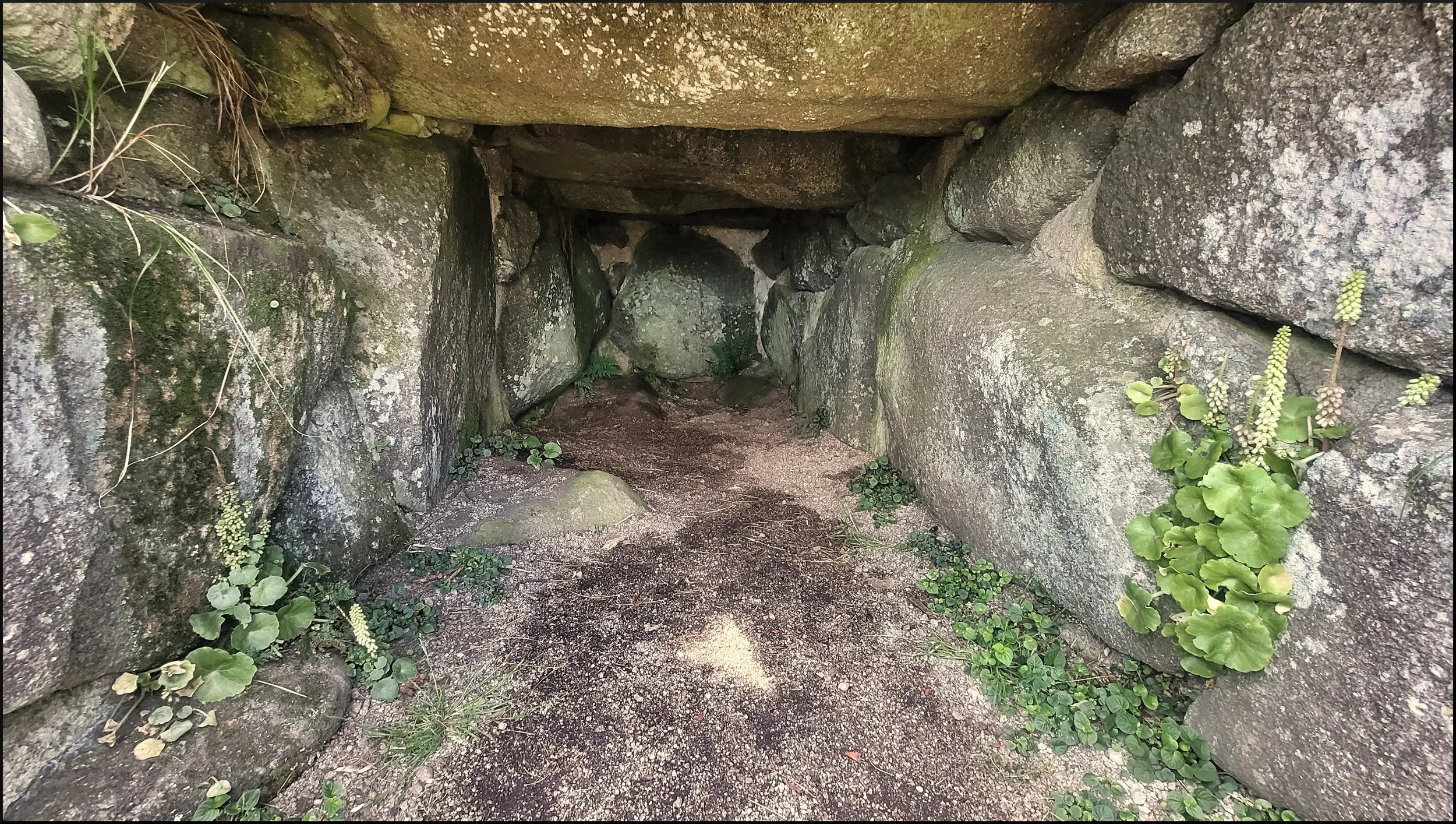
Further on up the slope on Holvear Down was a high outcrop of rock and the better preserved cairn of Innisidgen Upper. Like Bant’s Carn the curbstones were well defined with an earthen bank rising six feet to the height of the capstones. Again it was a step down portal entrance into a neatly lined chamber that tapered slightly to the back wall. The roof was made up of five transverse capstones with well sealed joints of soil and grass. It was a hard place to leave but I only had an hour and a half left on St Mary’s. I made my way along the narrow empty lanes that dissected the island passing nothing that hinted I was in the twenty first century. There would be another visit sometime and more burial chambers to see.