Within Easy Reach
20.10.2025
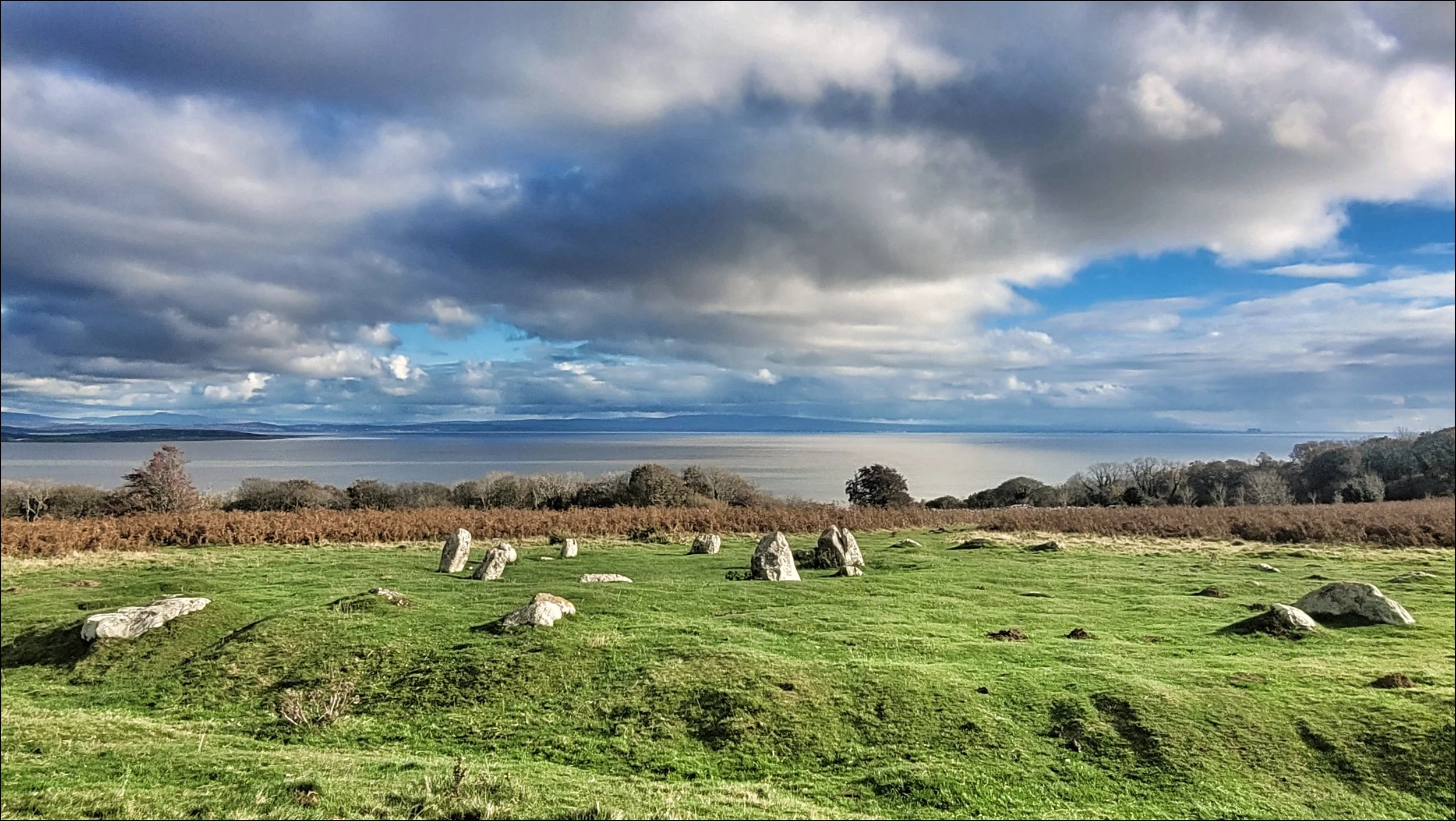
A road closure had delayed my arrival at Blakeley Raise. Instead of a direct route up from the south I had been forced to approach it from Egremont up a series of steep narrow lanes. It was a rewarding drive with fine views of the coast when I reached the top. It was easy parking and only a stones throw to the Blakeley Raise Stone Circle next to the road.
I had read that the circle had undergone various transformations around the early part of the twentieth century. There was some uncertainty as to which of the stones had been tampered with and then restored. My first impression was that it looked fairly authentic and that over the years it had survived quite well. It was a strange feeling to be standing so close to a Neolithic site that had required very little effort to get to. I felt like the circle had been delivered to me on a plate and this had shaped my reaction to it to some extent. The eleven stones are of a similar size, around a metre in height, sharing the space with clumps of long grass. One of the eleven had collapsed and a few others still anchored in the ground, leaned at an acute angle. It was none the less a great location and without the road in view looked as remote as Brat’s Hill the previous day. As I was parked so close to it I managed to get a few images from the roof of the van before heading off.
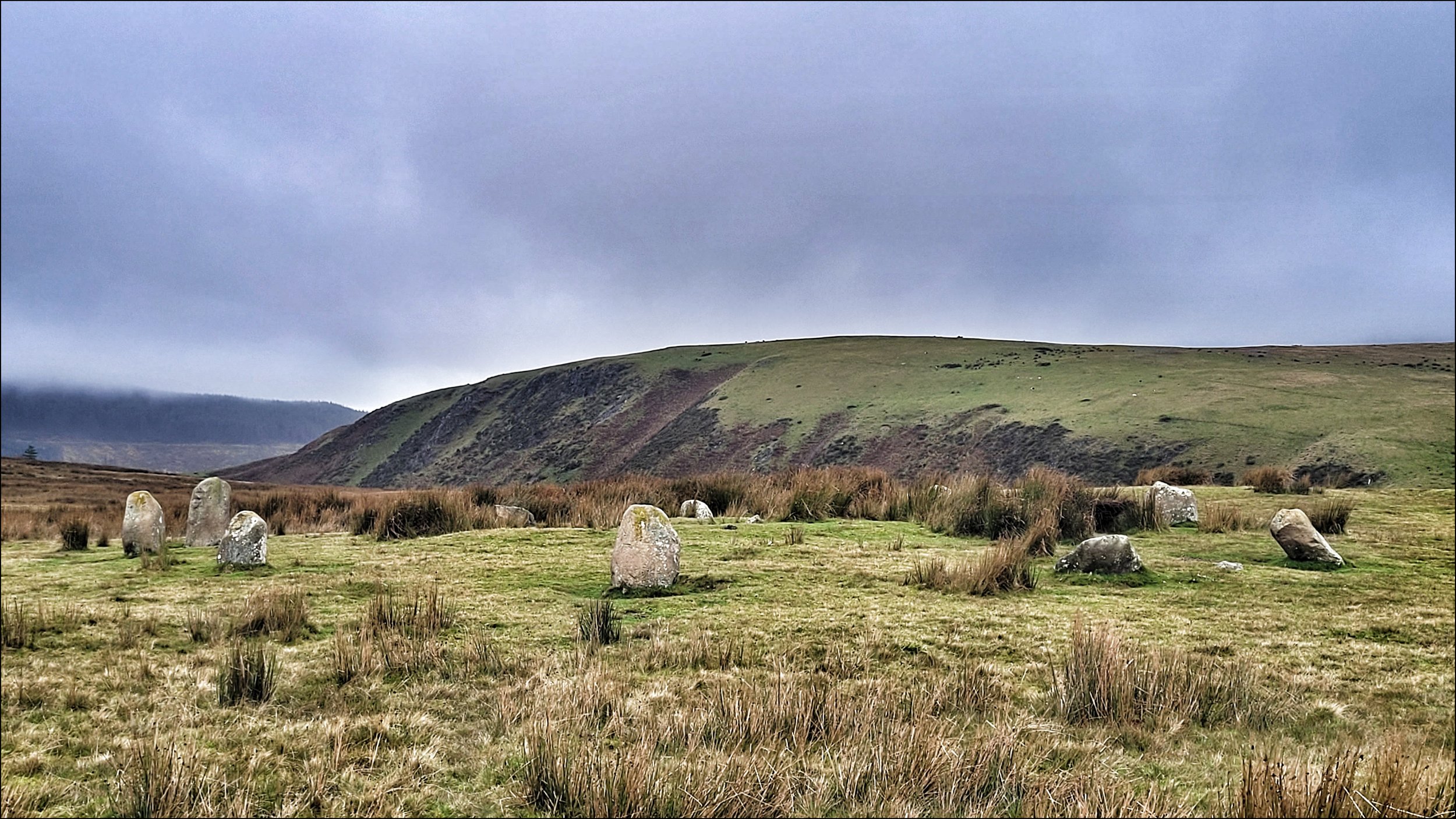
This was as far north as I would go on this trip. I got back on to the coast road and headed south past Ravensglass and on to Ulverston. I had visited the Druid’s Temple Stone Circle nearby a few days before with two friends but the weather had been atrocious. I was hopeful this time the rain would hold off. Once off the A595 I headed for the Sir John Barrow Monument on the outskirts of Ulverston, cutting through the town and then south on the road to Birkrigg Common.
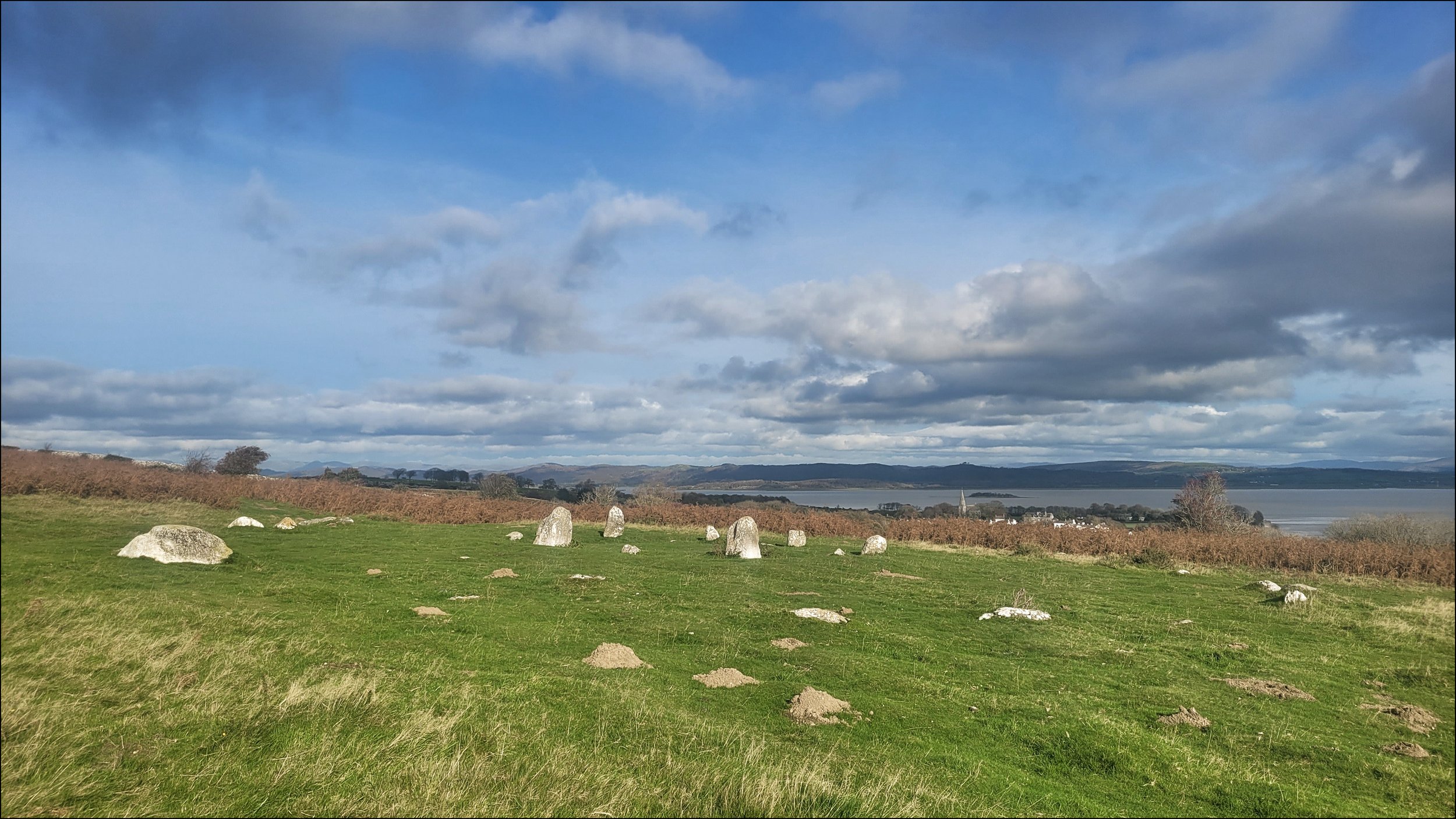
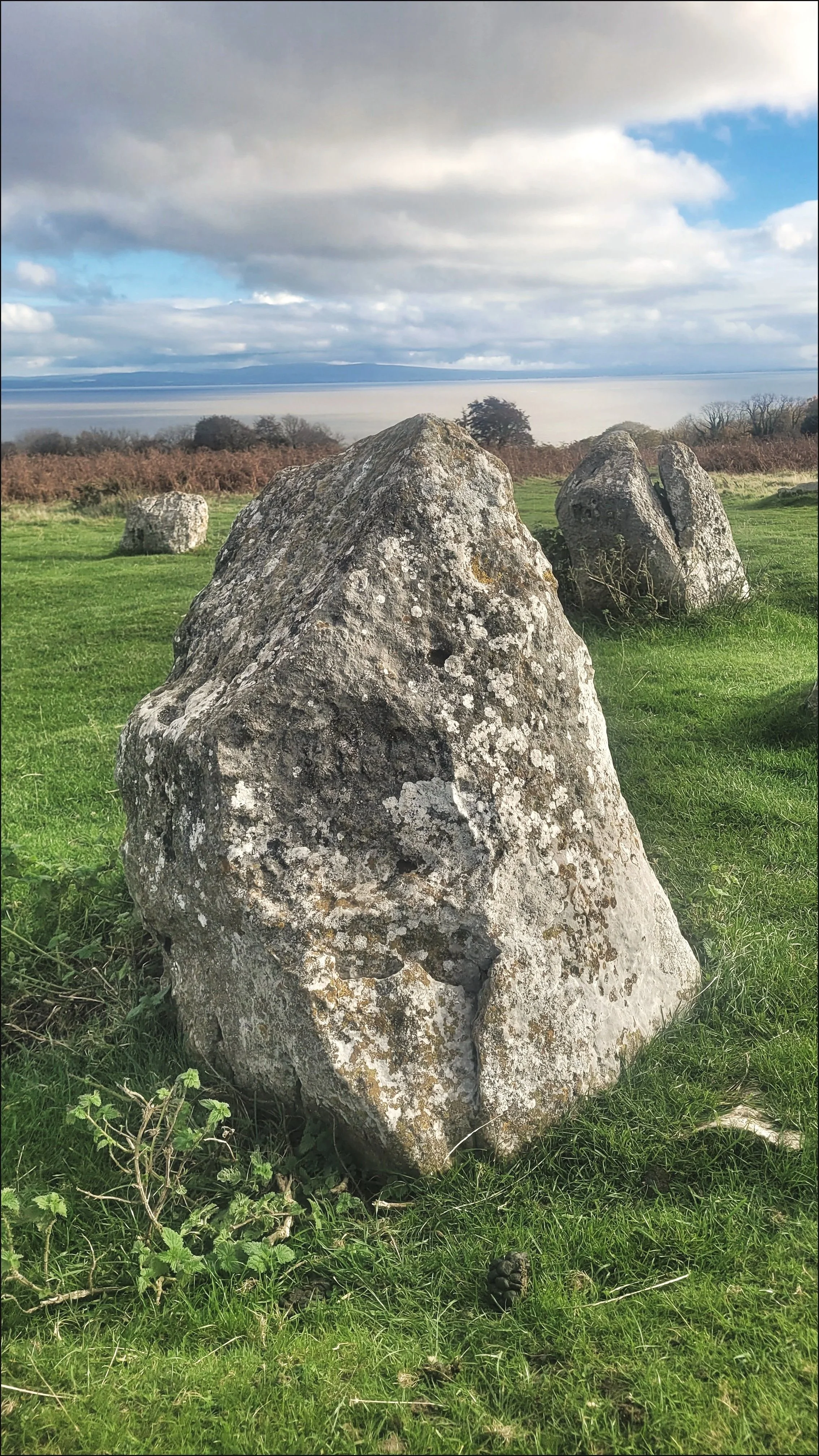
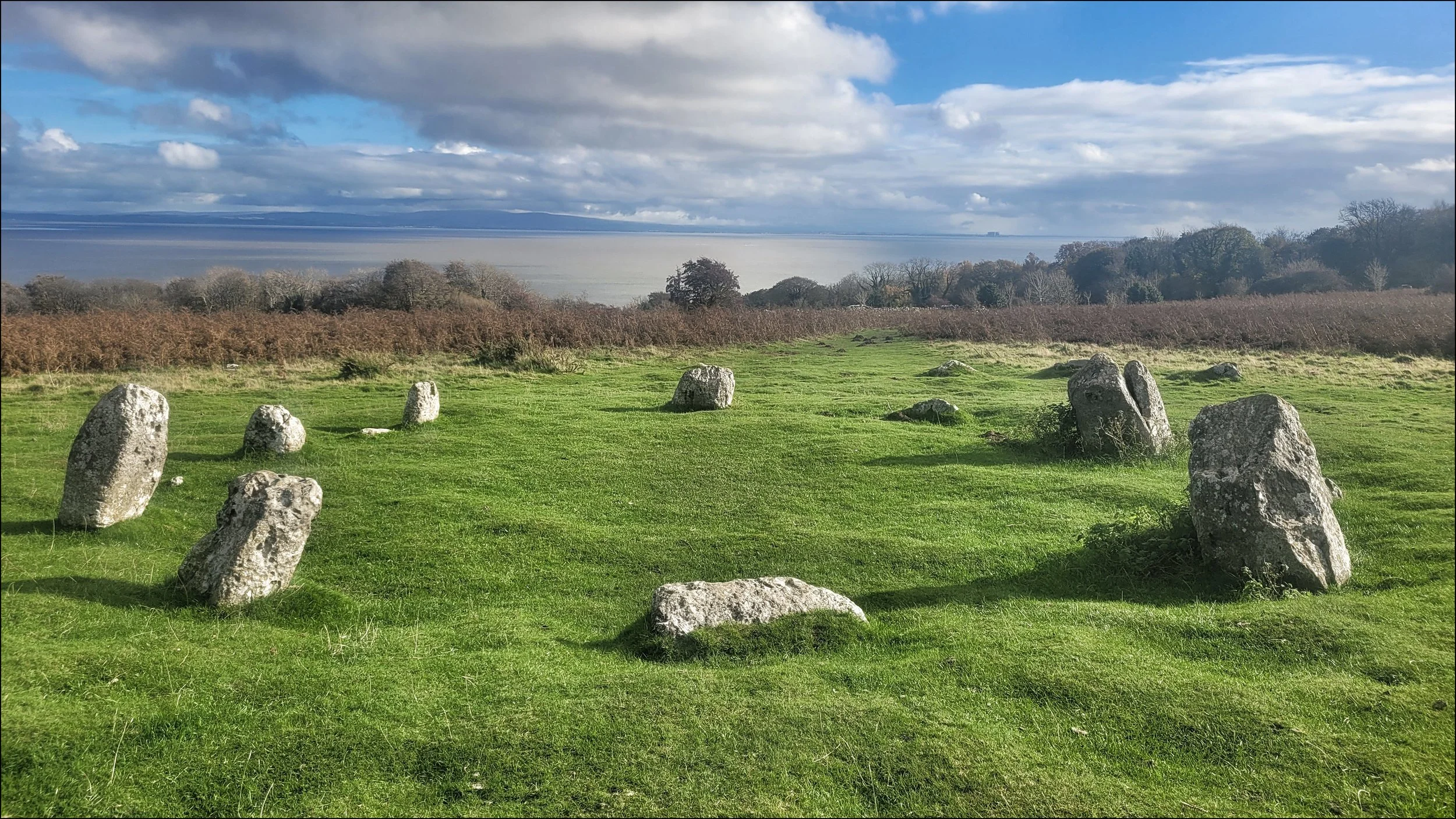
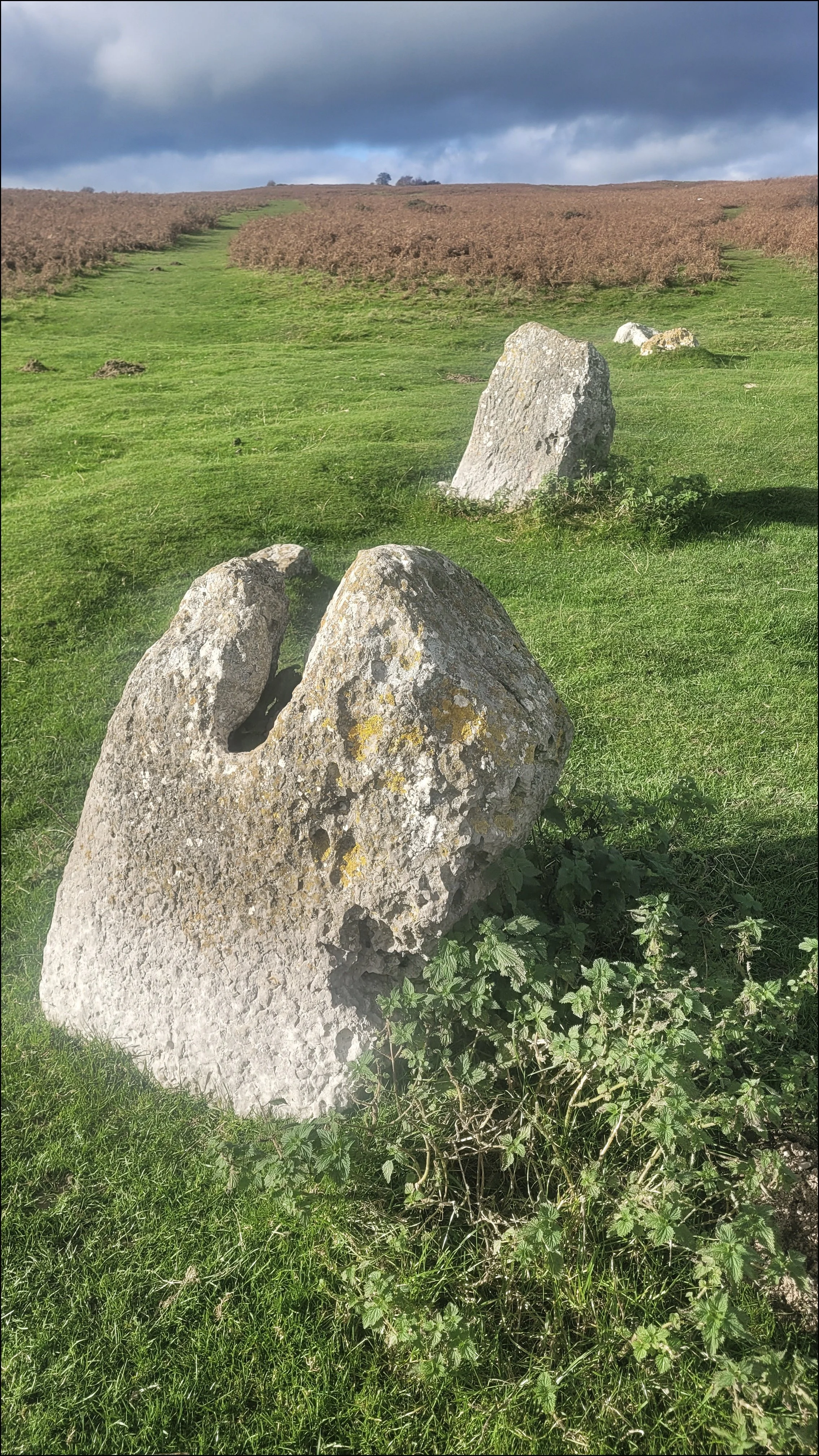
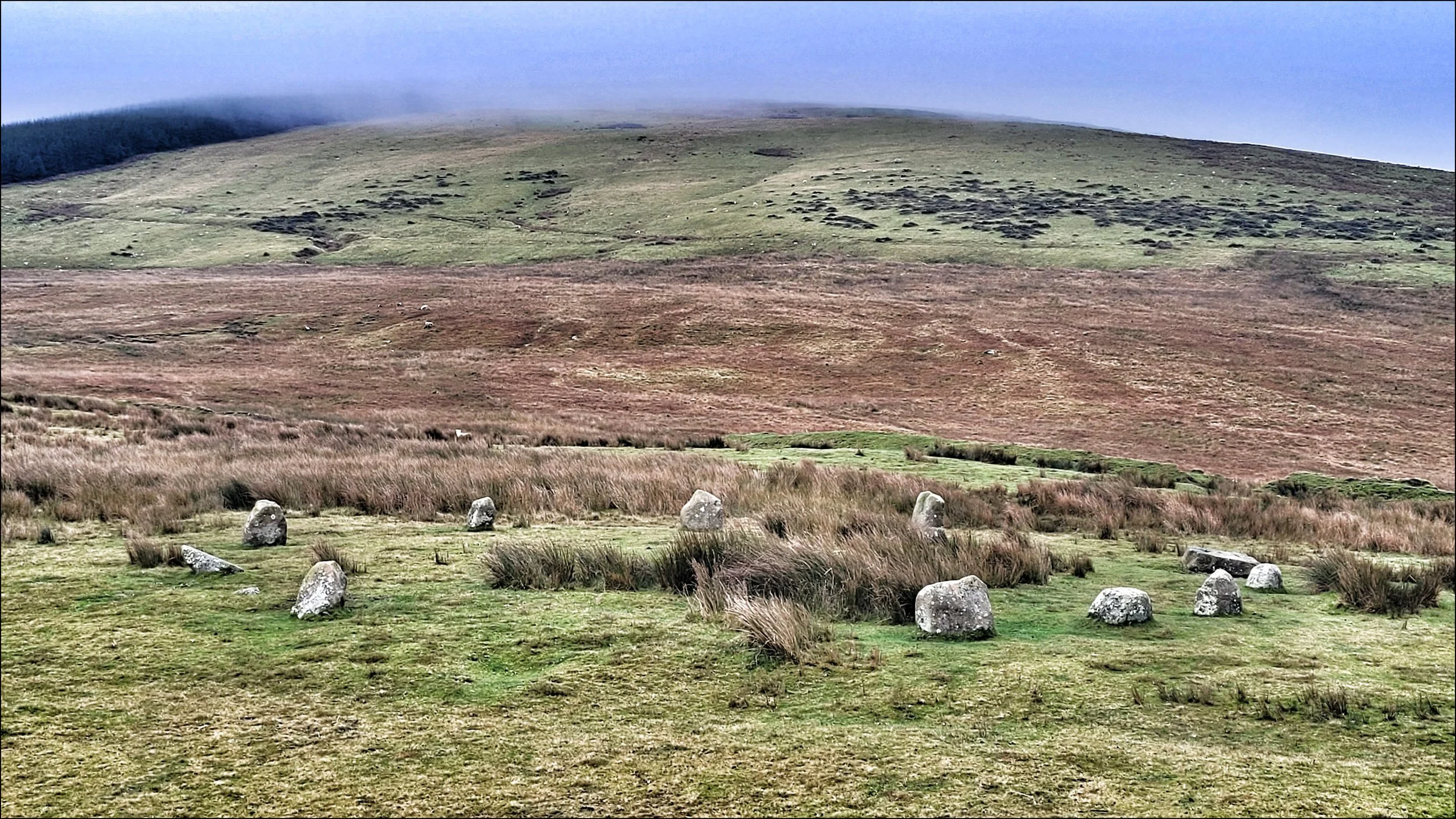
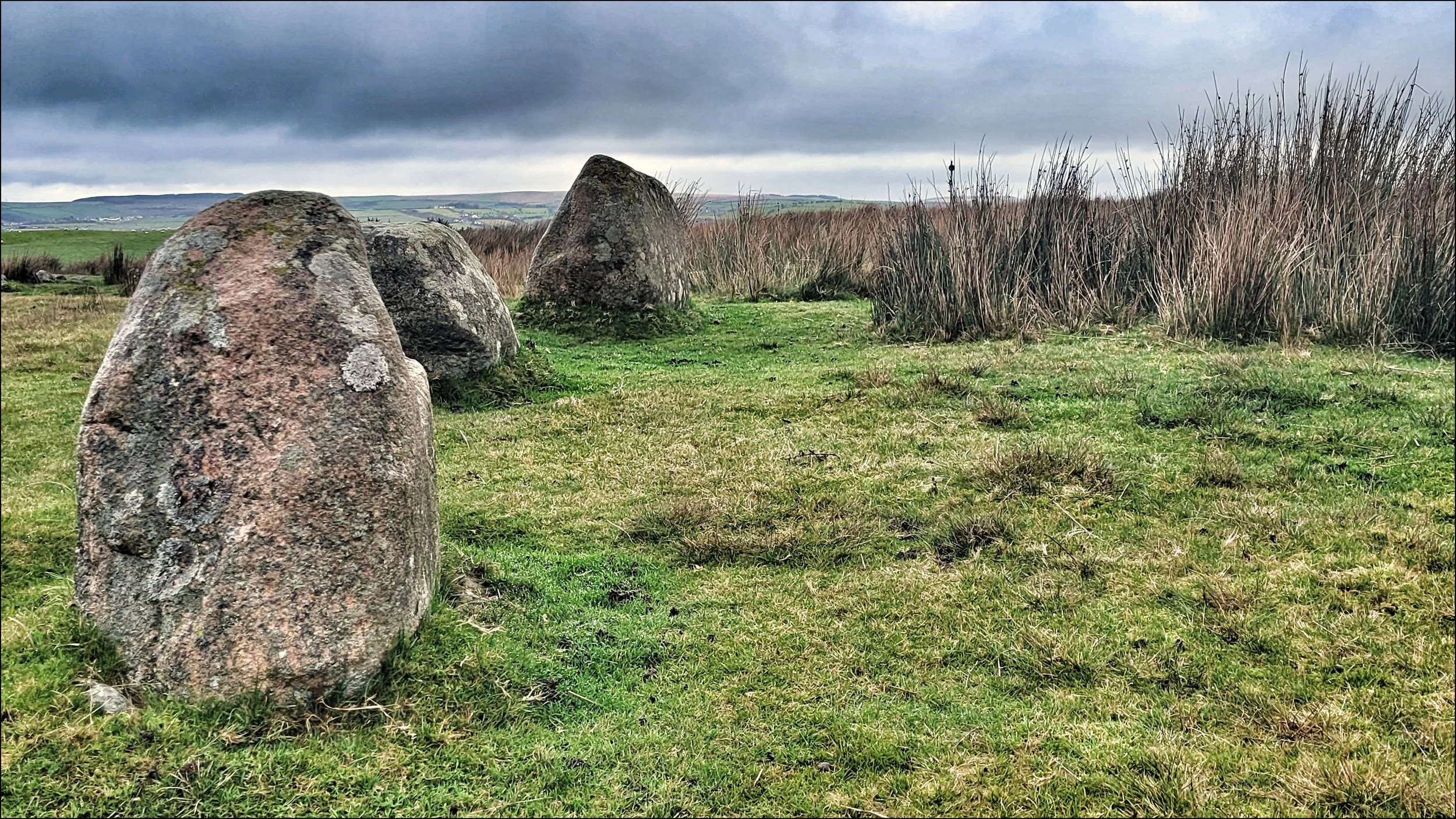
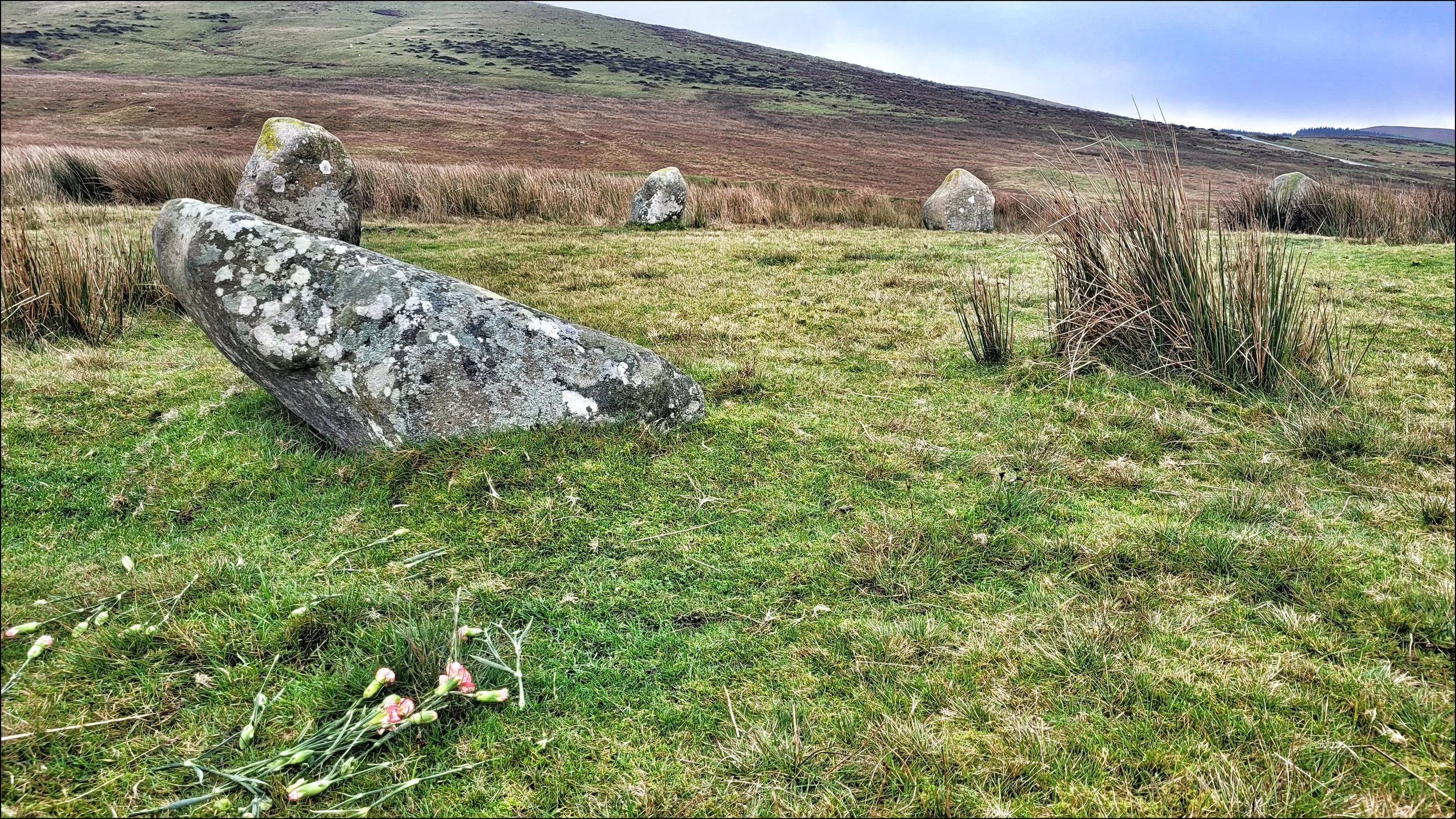
There was plenty of parking space on a grassy clearing amongst the ferns but I stayed close to the road in case the ground was soft. Again the circle was close by and only a two minute walk was required along a wide path through the ferns. A clearing came into view before me with the wide double circle raised up on a shallow flat mound and the winding estuary of the River Leven beyond. The fifteen stones of the outer ring were not as distinct as the ten stones of the inner circle. Many of them had fallen and were half buried in the bank of the mound. I moved around it to the other side and began to make sense of the layout. The inner circle was the main act here. Five cremations had been discovered in it’s centre under a cobbled pavement that was now buried or absent. Some of the stones were taller and leaned in a little, with others barely poking out the ground. This it seemed was a popular spot for dog walkers and I could see why as I glanced up to see the sun glinting on Morecombe Bay and the distant Lancashire coastline.