The Cotswold-Severns
05.03.2026
There is evidence that along the ridge of the Cotswold Hills from Somerset to Oxford are around 150 burial sites. Many of them have been lost in the ever changing landscape but some have stood the test of time. Two well preserved long barrows are sited close together on the Cotswold Way west of Nympsfield in Gloucestershire and one further north near Winchcombe also on the Cotswold Way.
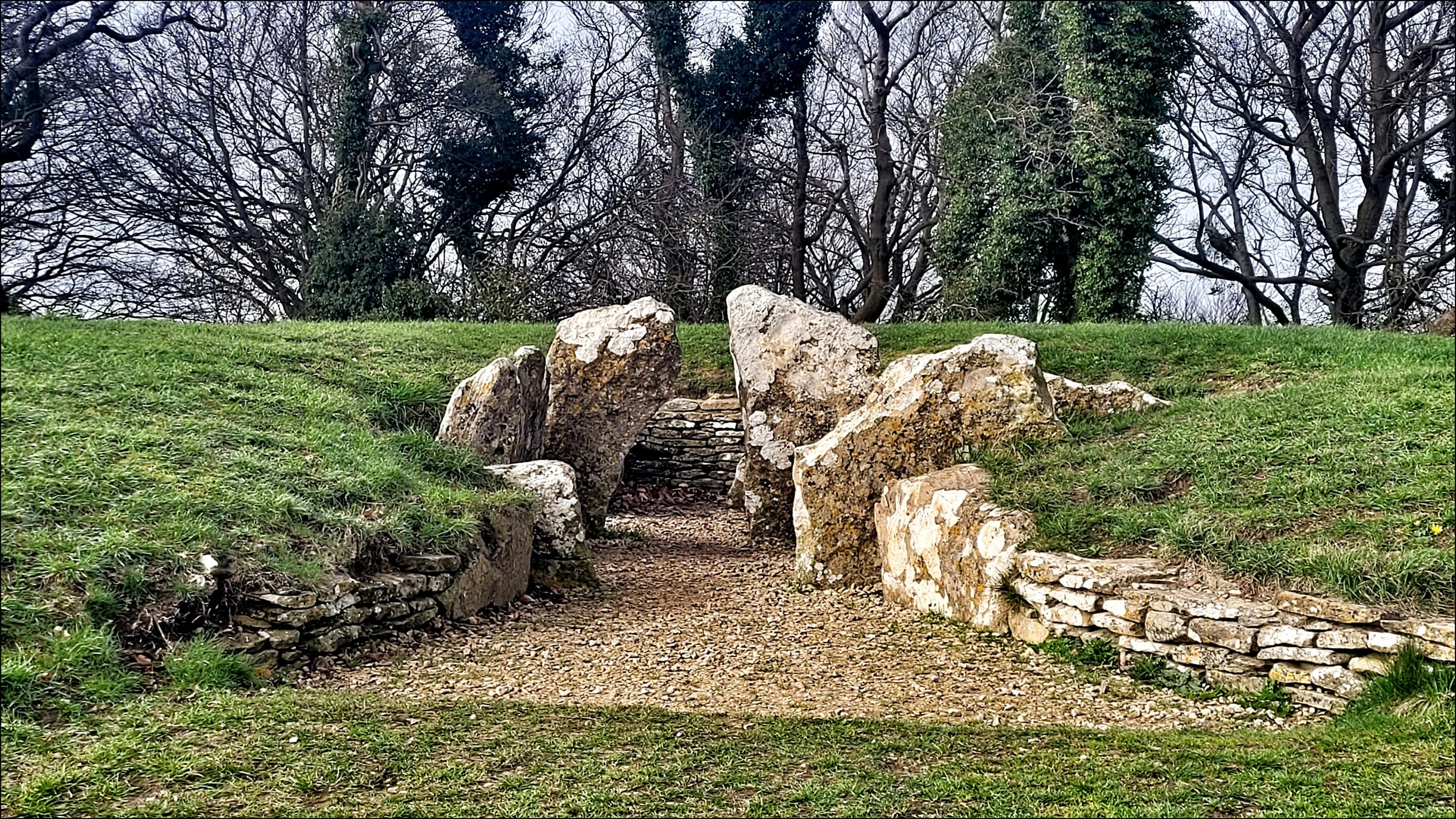
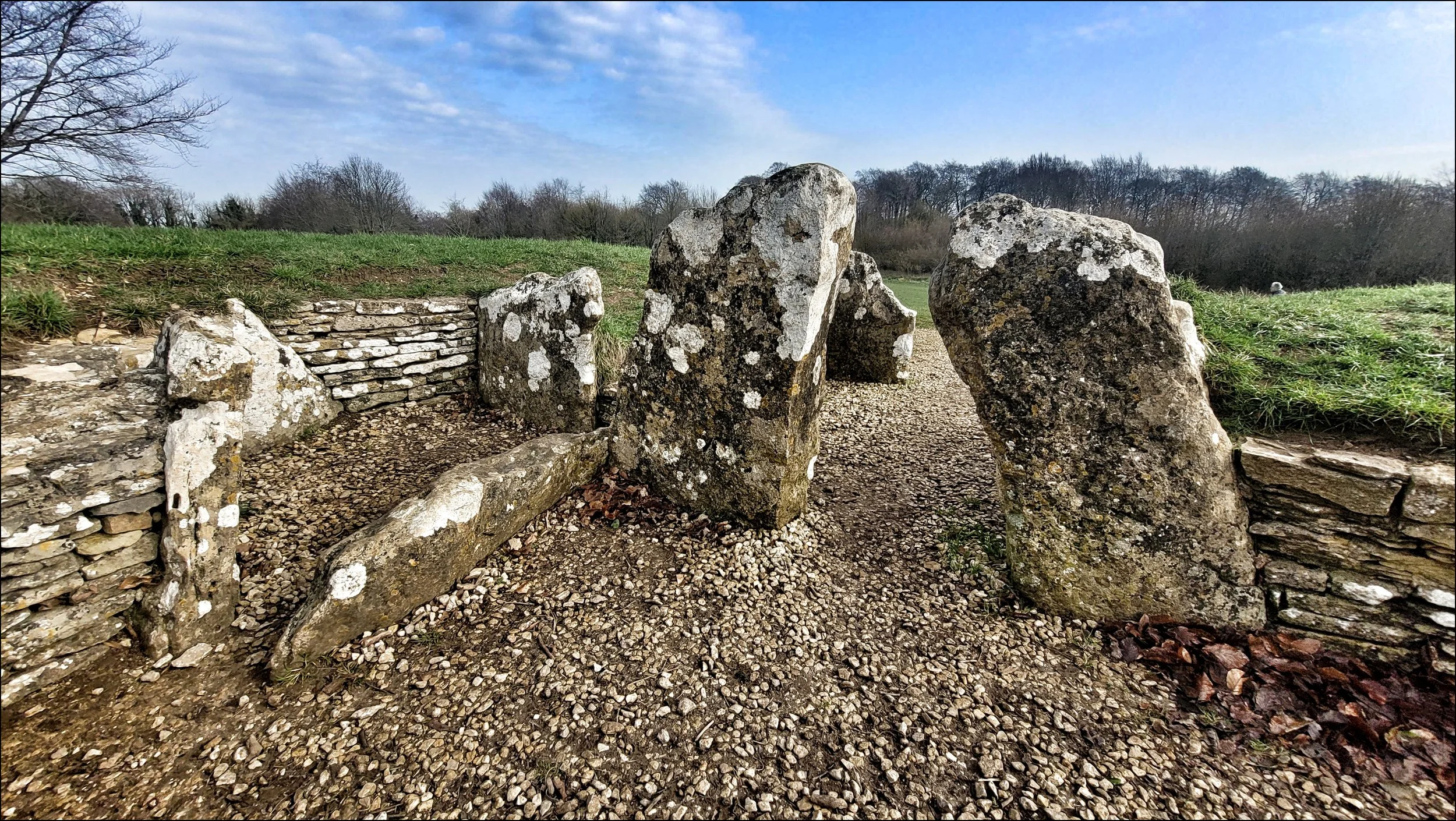
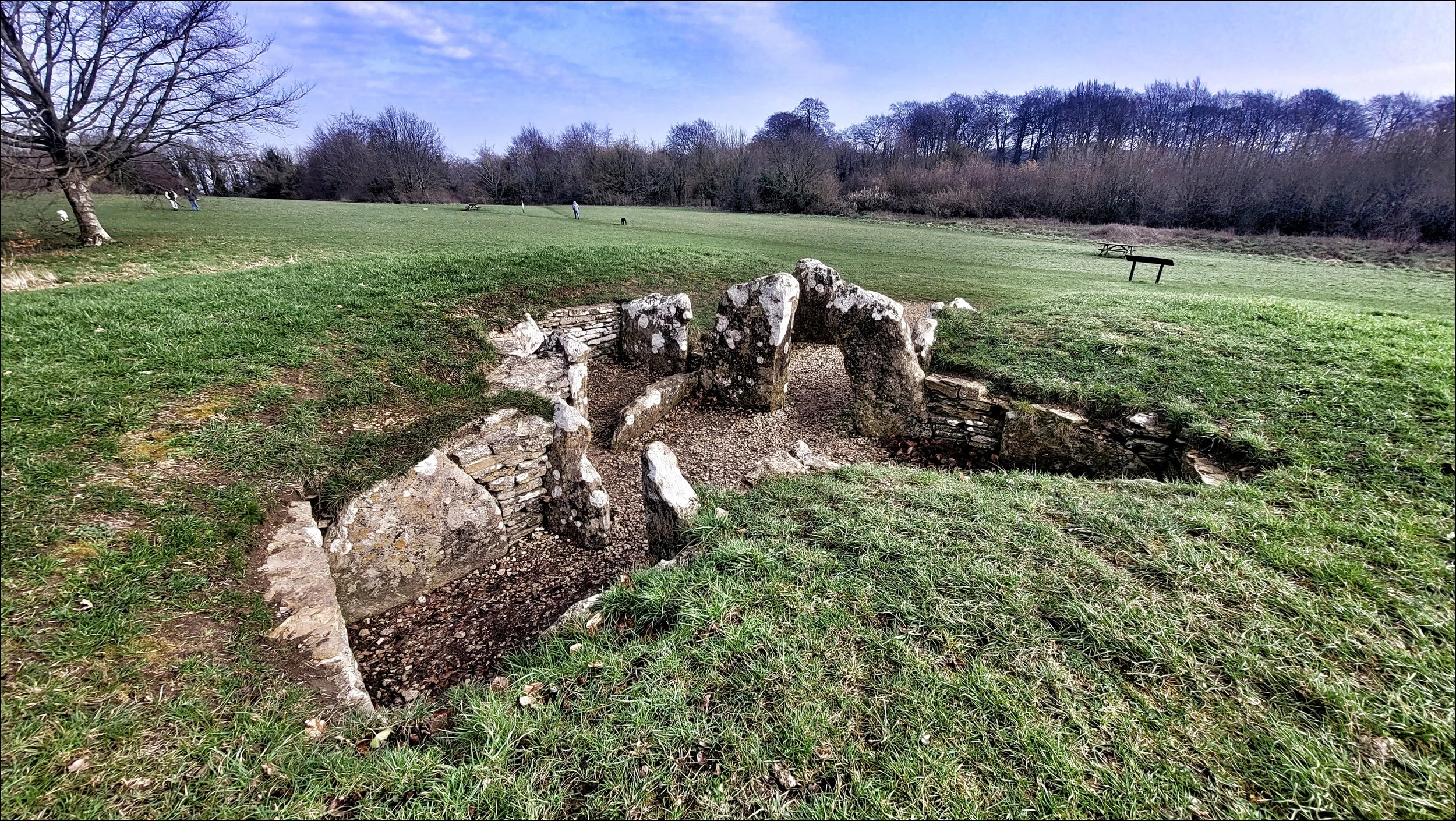
Nympsfield Long Barrow is typical of the Cotswold-Severn type barrows and is easy to access with nearby parking off the B4066. A short walk brings you to the barrow with its curving funnel forecourt facing the east and two standing entrance stones. It was just possible to squeeze between them and on the other side was a cruciform layout of three small chambers open to the skies. There had been three excavations over a period of one hundred years, the last in 1974 with the discovery of multiple skeletal remains. The barrow dates back to the early Neolithic around 3800BC and was in continual use for about two hundred years. It’s renovation contains a mixture of modern manicured small dry stone walling with some of the original large upright slabs that would have had capping stones covered in an earthen mound two metres high. The western end no longer exists but would have tapered down to the edge of the ridge. At the time of construction there would have been stunning views down to the Severn flood plain.
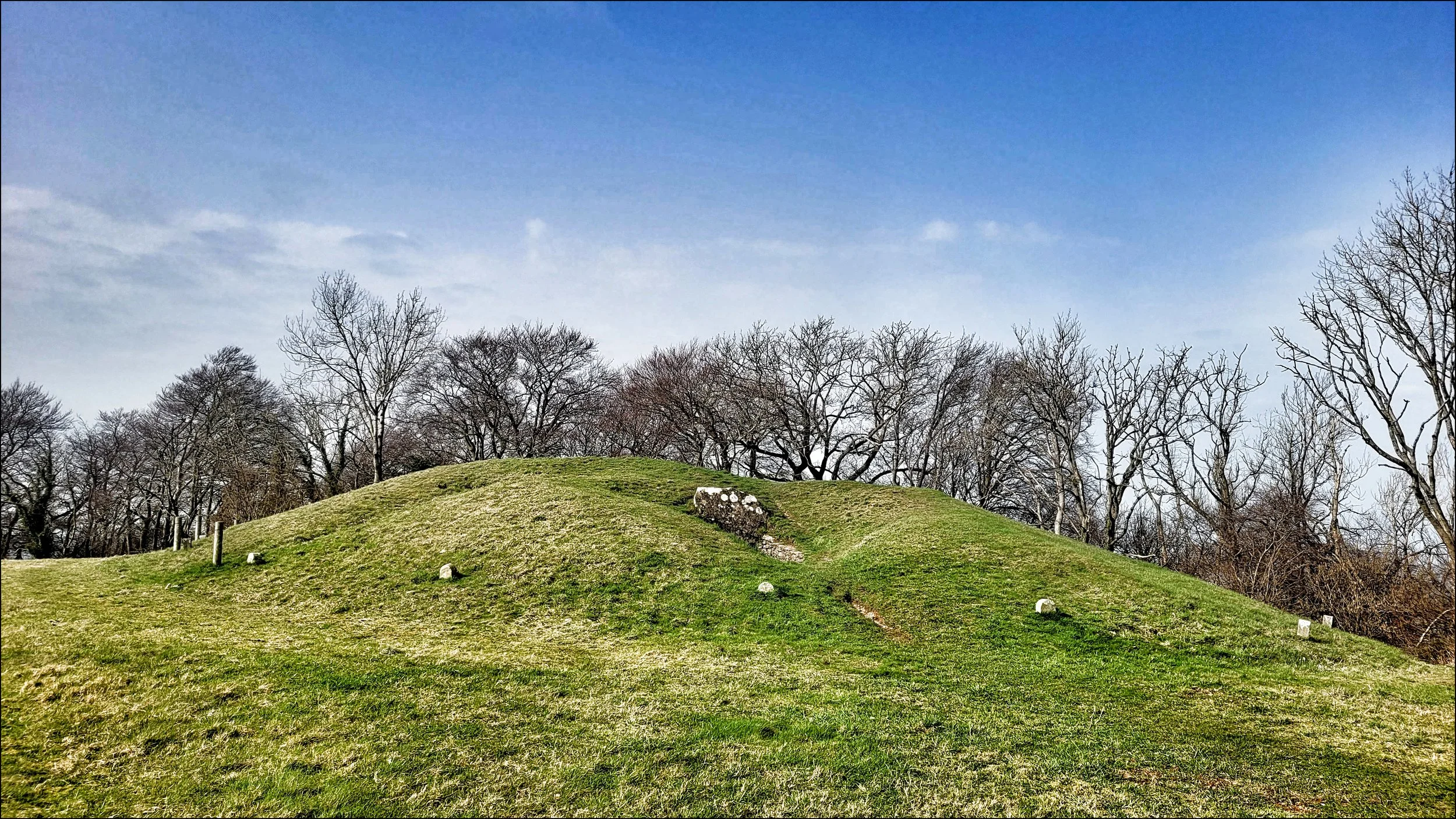
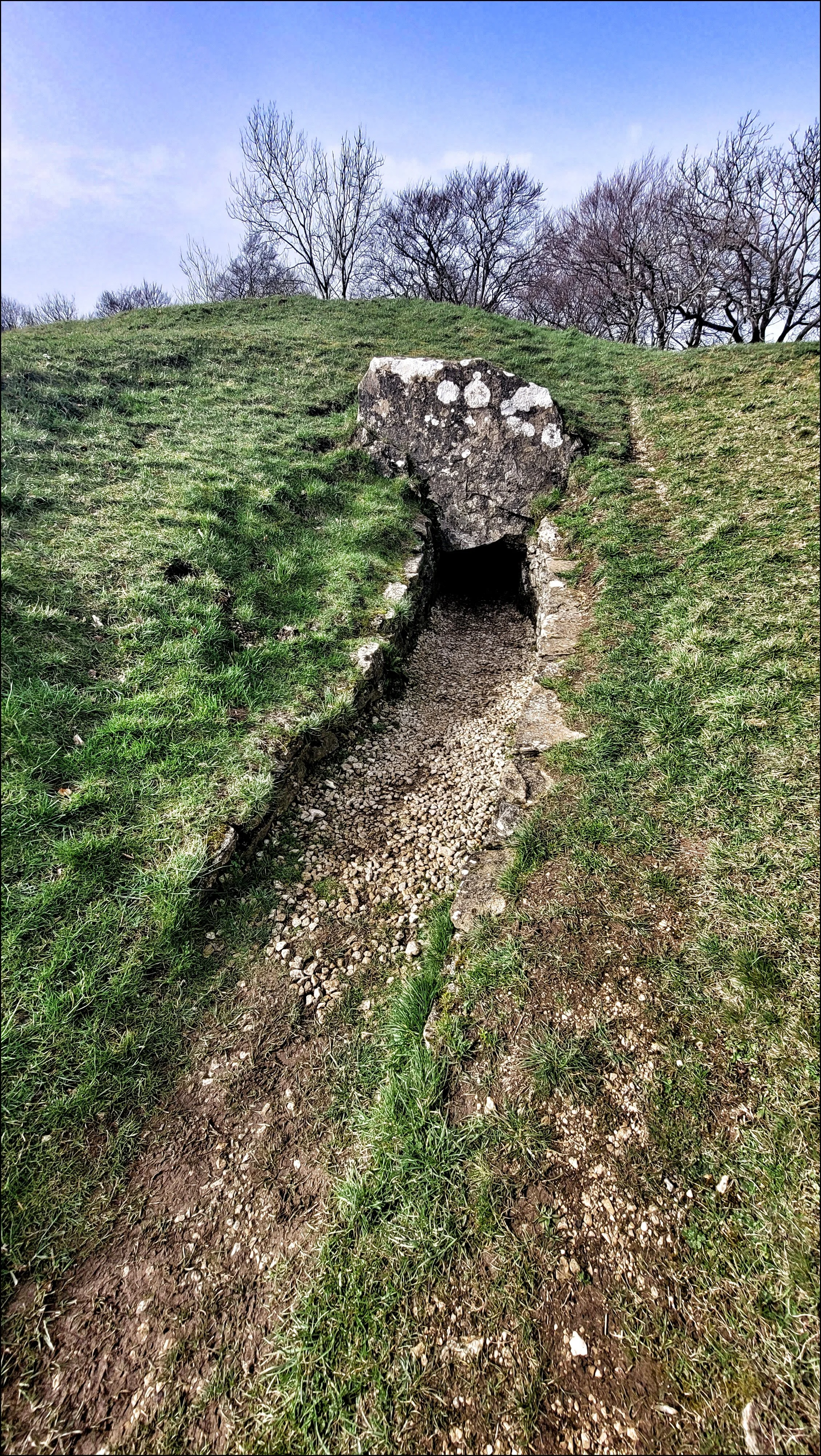
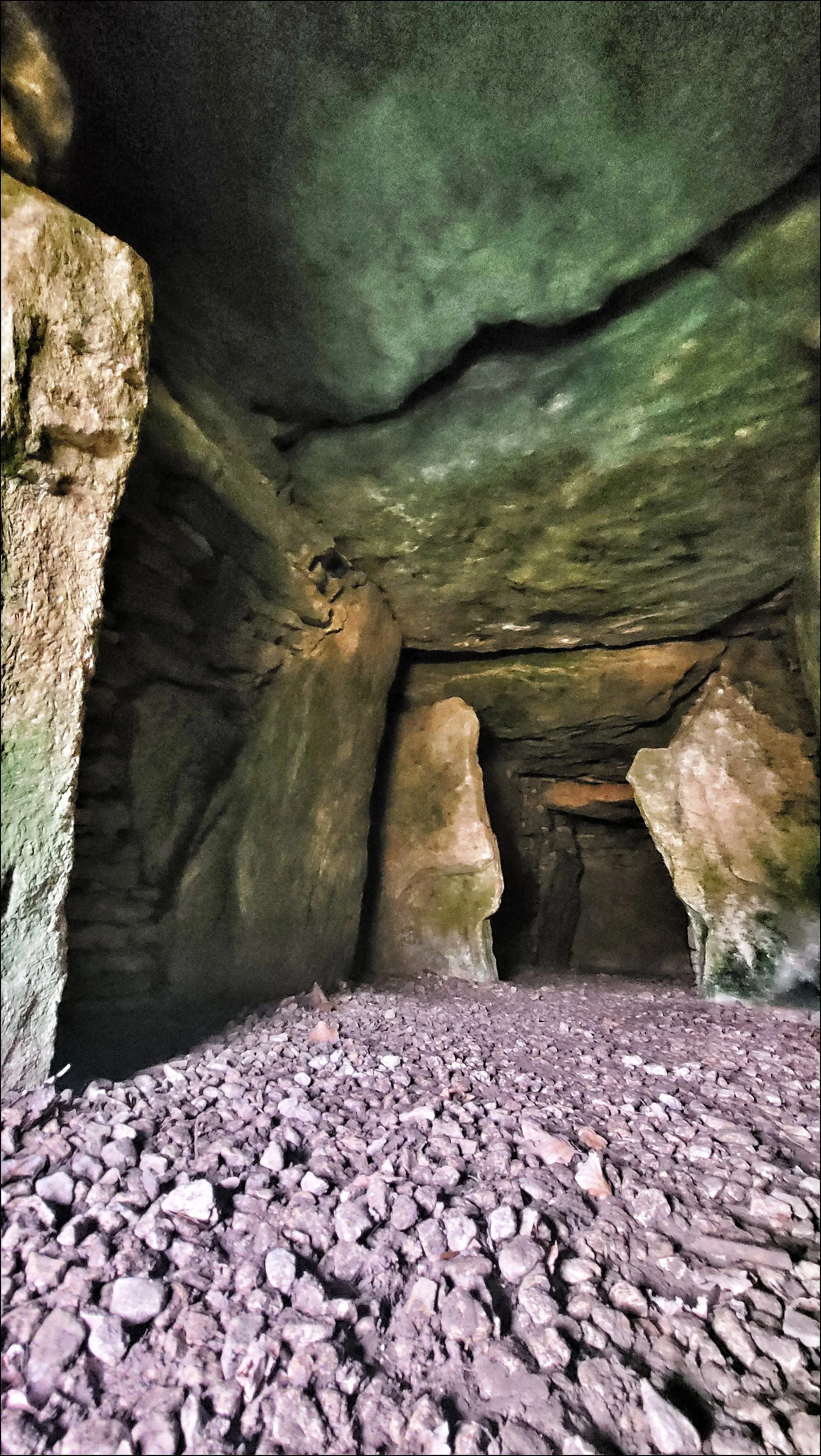
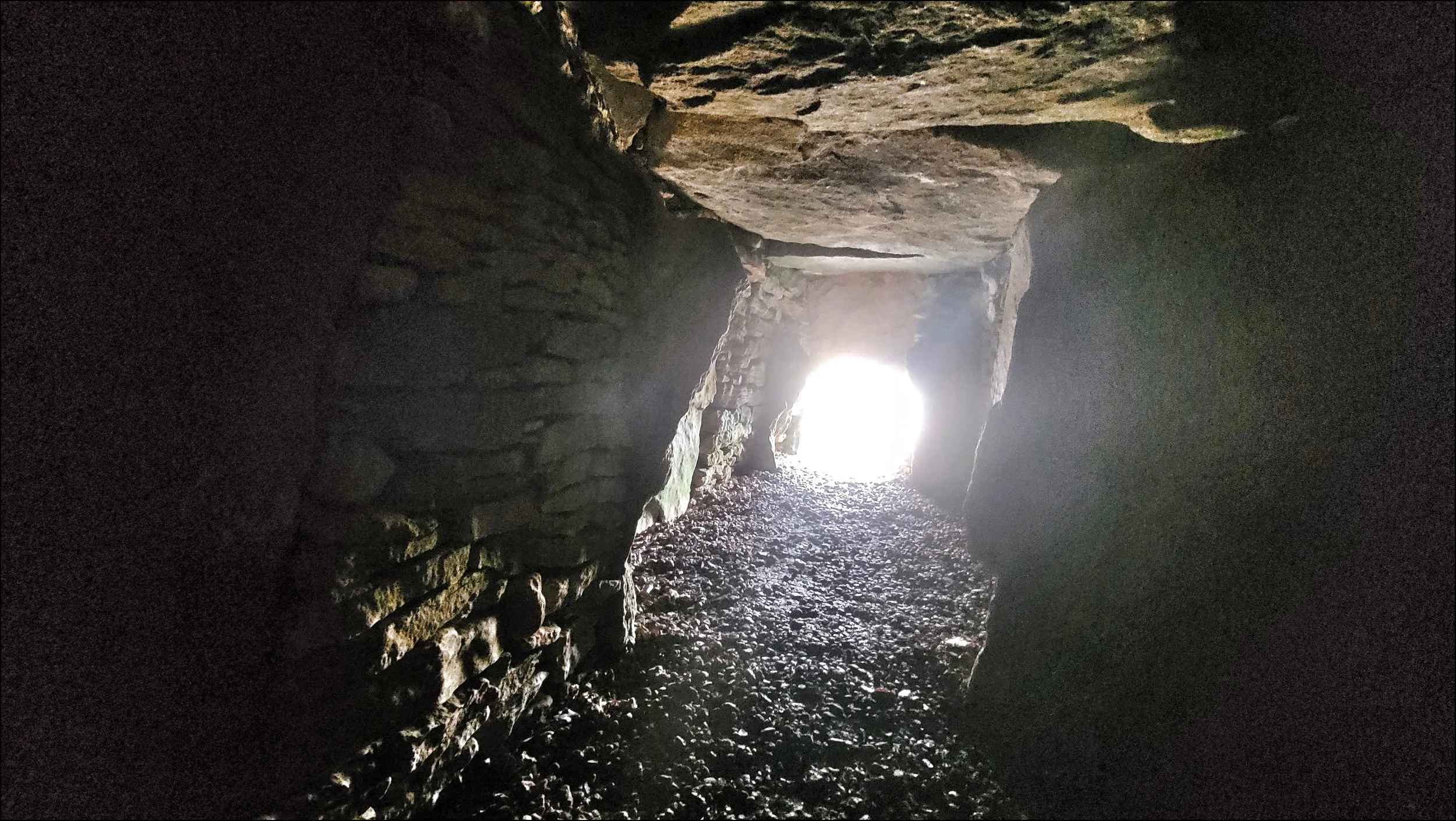
Twenty minutes walk south along the Cotswold Way is the bigger burial mound of Uley Long Barrow or Hetty Pegler’s Tump, named after Hester Pegler who owned the land it stands on in the eighteenth century. It rises to a height of nearly four metres and still has a domed earth covering unlike Nympsfield. Again, the barrow is aligned to the east but it’s original footprint is still intact. As I approached the barrow the entrance passage came into view recessed into the mound with a large vertical slab suspended off the ground acting as a lintel. Below the slab was a metre high opening that allowed me to crawl into the antechamber. There were two square shaped chambers to my left and one at the end in front of me all divided by large uprights stained green and black by the dark damp interior. The two chambers to my right had been blocked off. The most astonishing feature here were the enormous ceiling slabs that ran the length of the passageway. Some of the burial chambers I had visited had had offerings place inside them but the only evidence of a contemporary presence was the odd scribing of initials on some of the uprights. As well as human and animal bones, pottery and a boar tusk pendant had been excavated. I walked around the perimeter of the barrow to find the mound had depressions on the sides and summit suggesting there might have been other ways in when it was built.
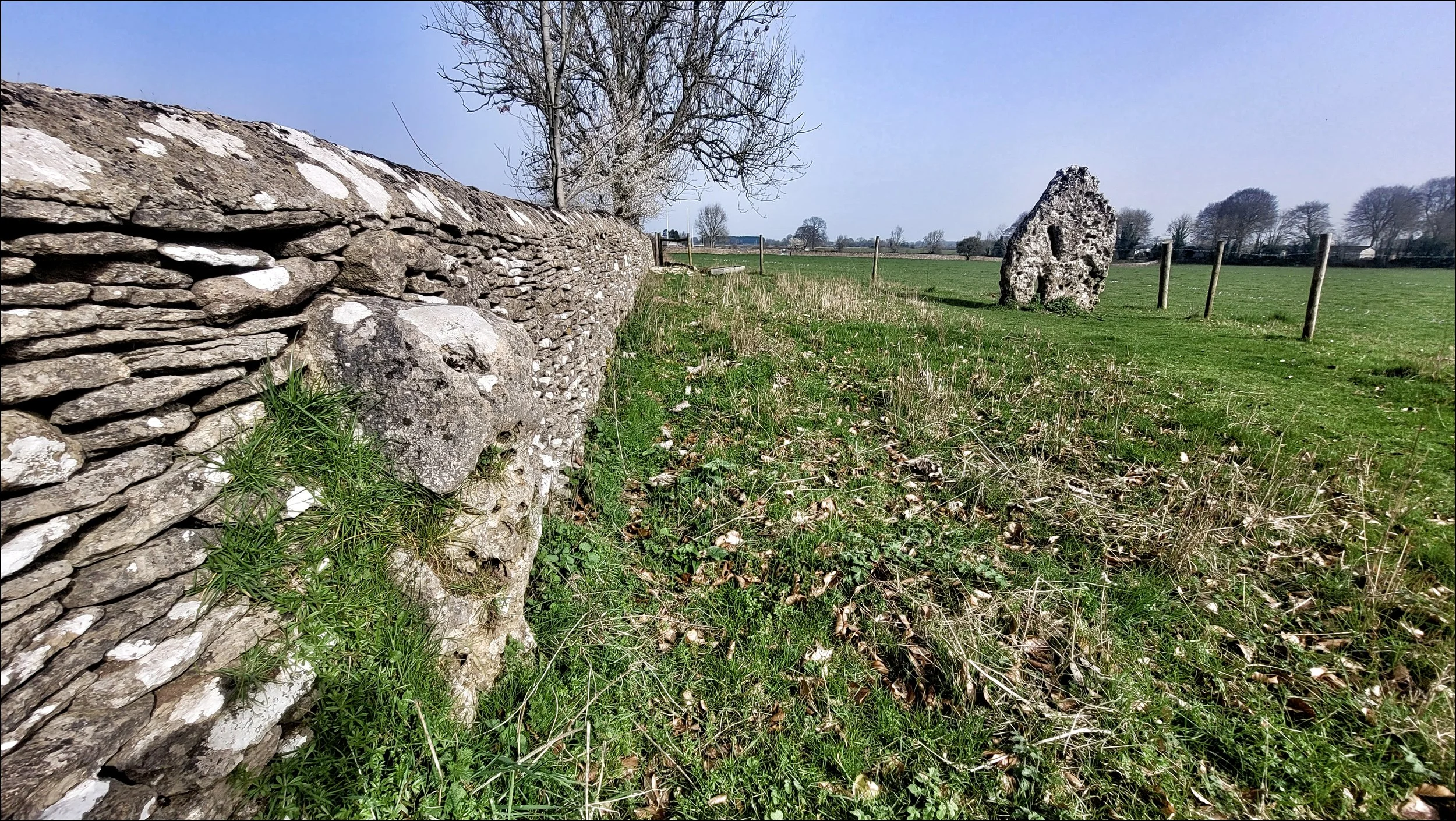
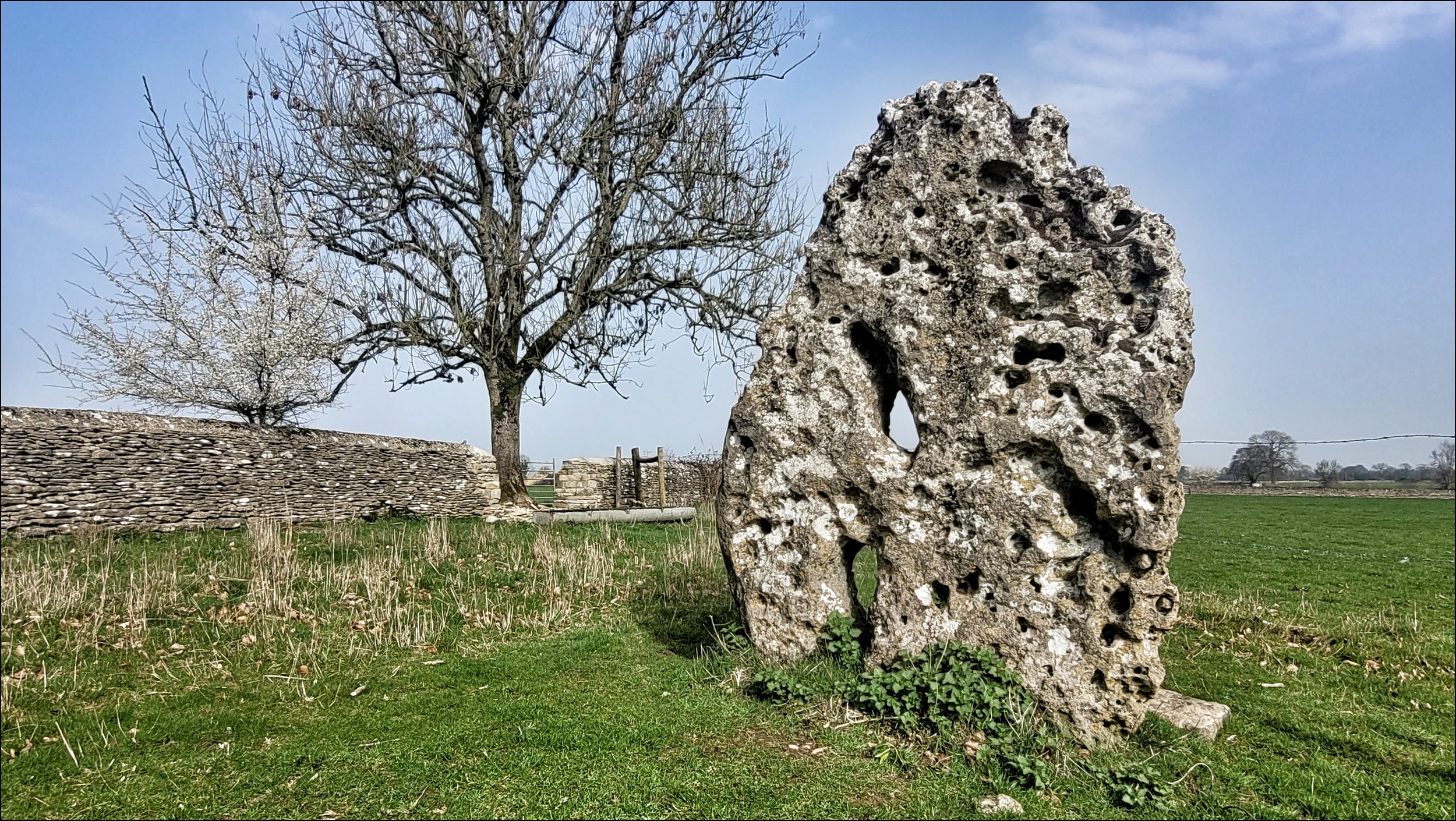
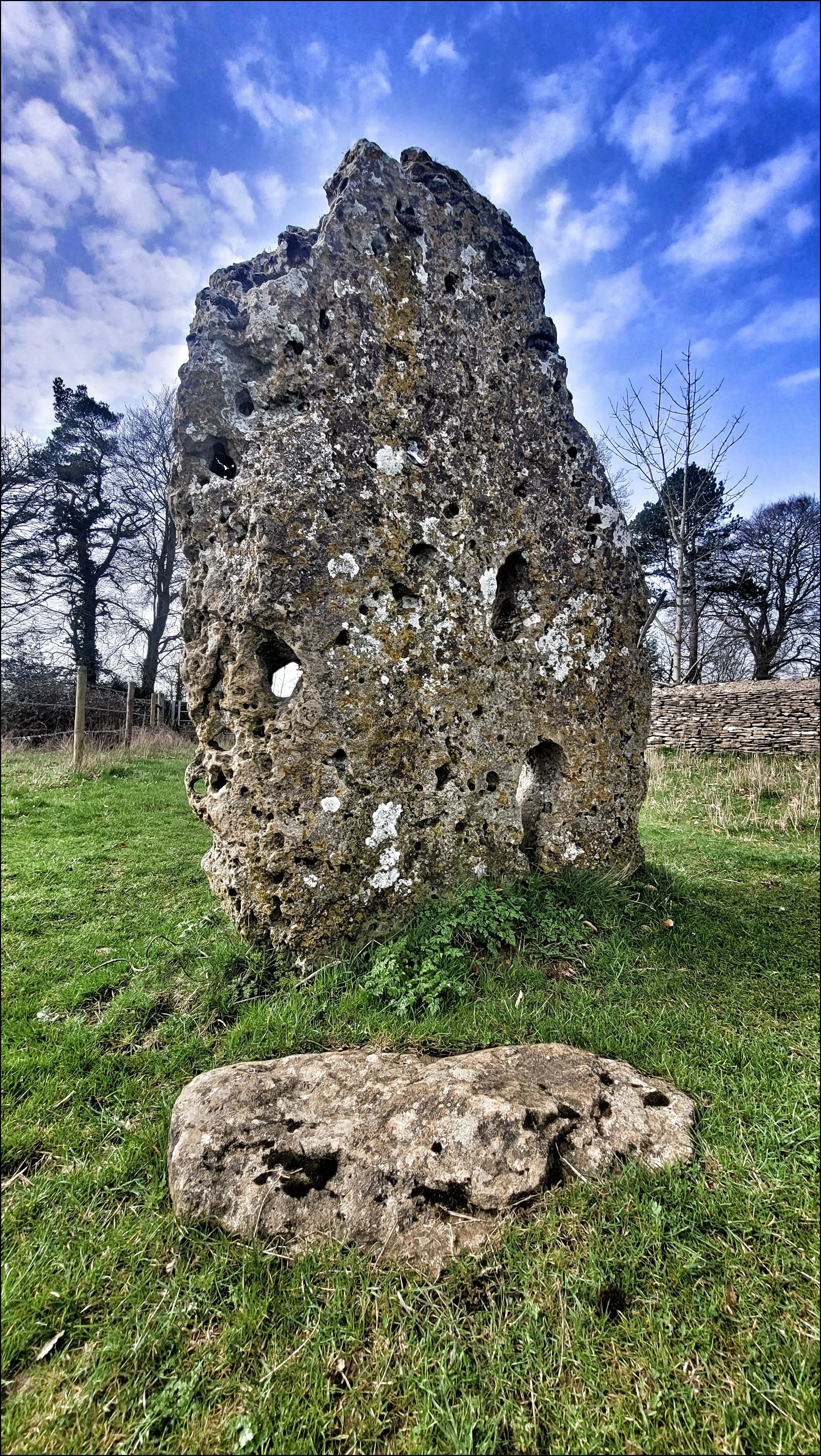
I left the barrows behind to head east to Michinhampton to find The Long Stone. I had been intrigued by the character of this stone from photographs and was expecting to discover an ancient monolith that had been under siege by the elements for over five millennia. It too stands on high ground, not on Michinhampton Common as I’d thought but tucked into a corner of a field to the south, with it’s own small private compound beyond a metal gate. At first sight it appeared to be solitary, but there were two other stones close to it, one integrated into a boundary wall and the other half buried in it’s shadow. Standing well over two metres high and a metre and a half wide, it’s entire surface was pock marked with eroded holes and recesses, some of which had worn through to the other side of it’s thin edge. Many of the holes had objects placed in them; fir cones, coins, flower heads and even a piece of scrunched up cloth. More than at most stones I had faced there was a feeling of impermanence here, like the stone was slowly dissolving in ultra slow motion. There were stories of The Long Stone having healing properties, so before I said goodbye to it I placed my hand in one of the holes. My well being had been sought at other stones and the placing of a hand or a lean into them had sometimes triggered vibrations. Whatever powers this stone possessed would be of benefit to someone, somehow, sometime.
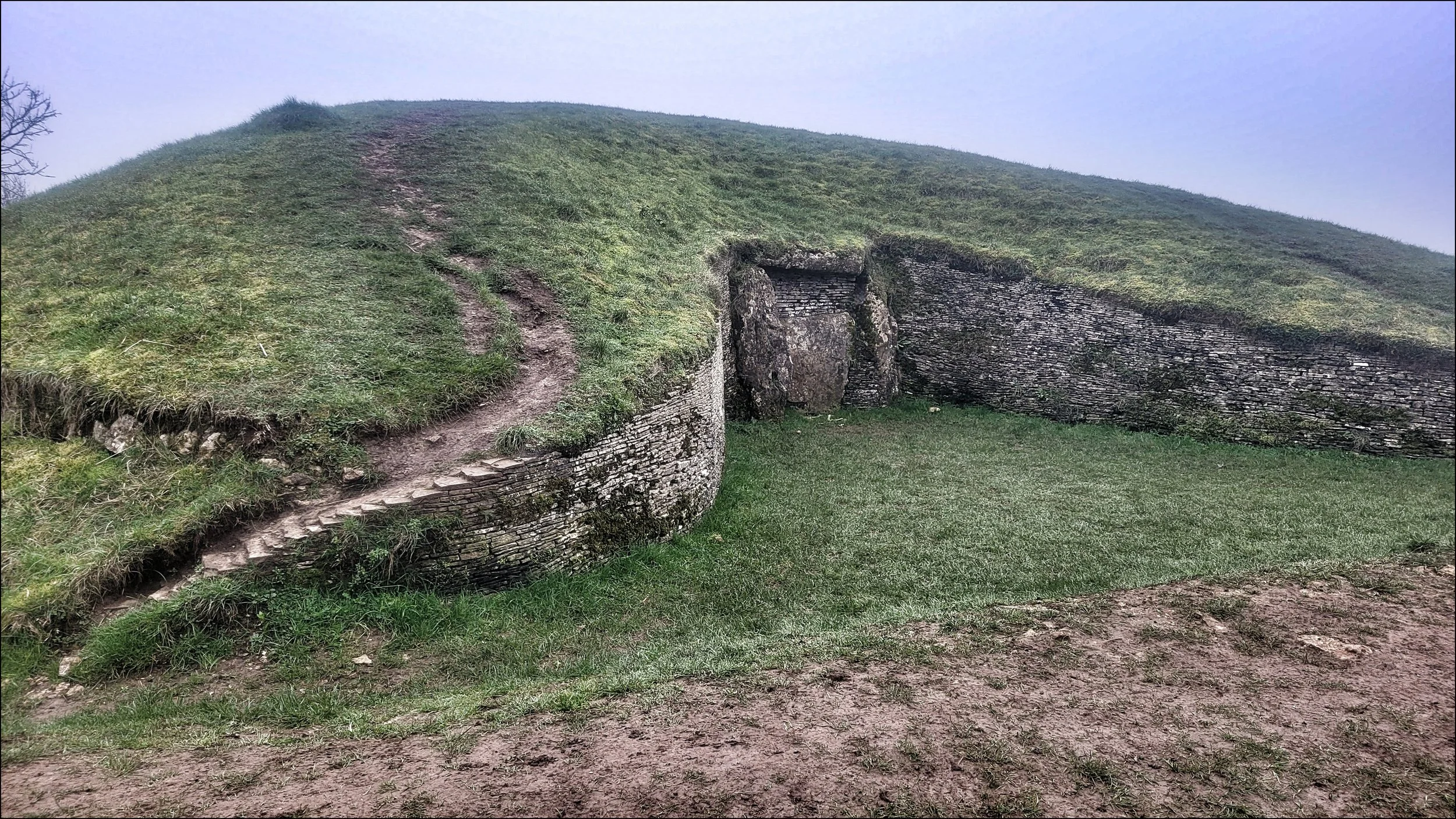
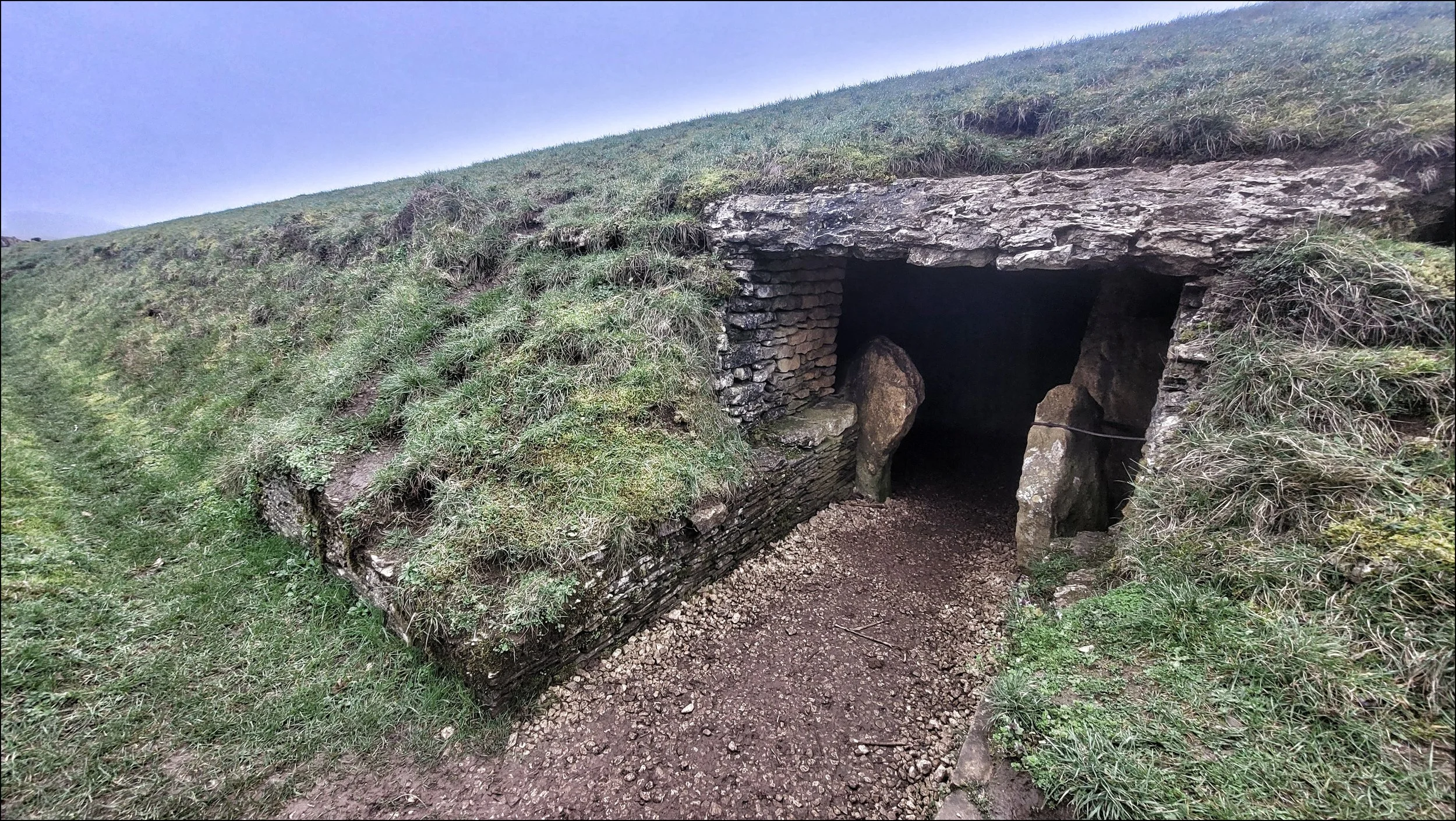
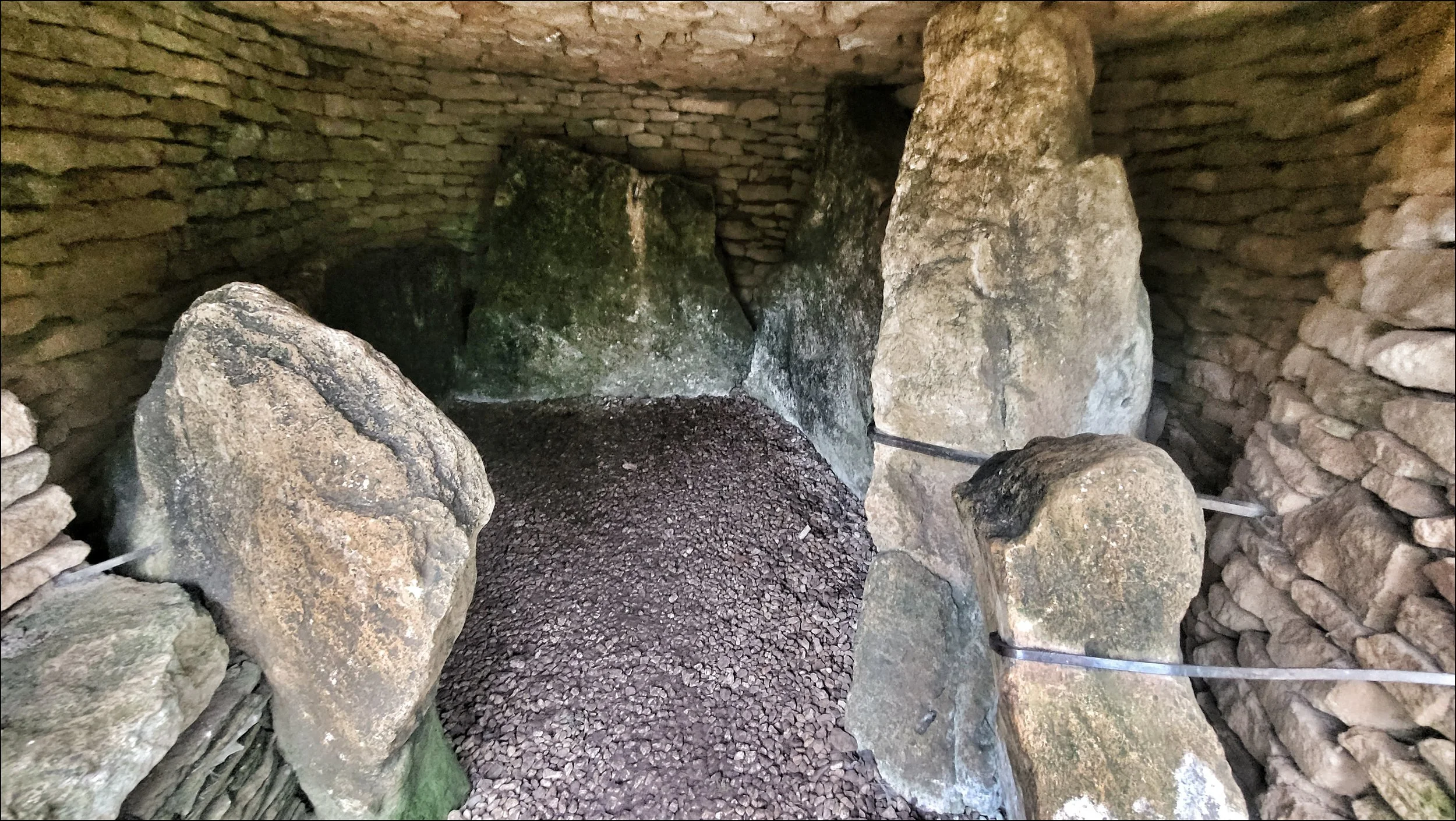
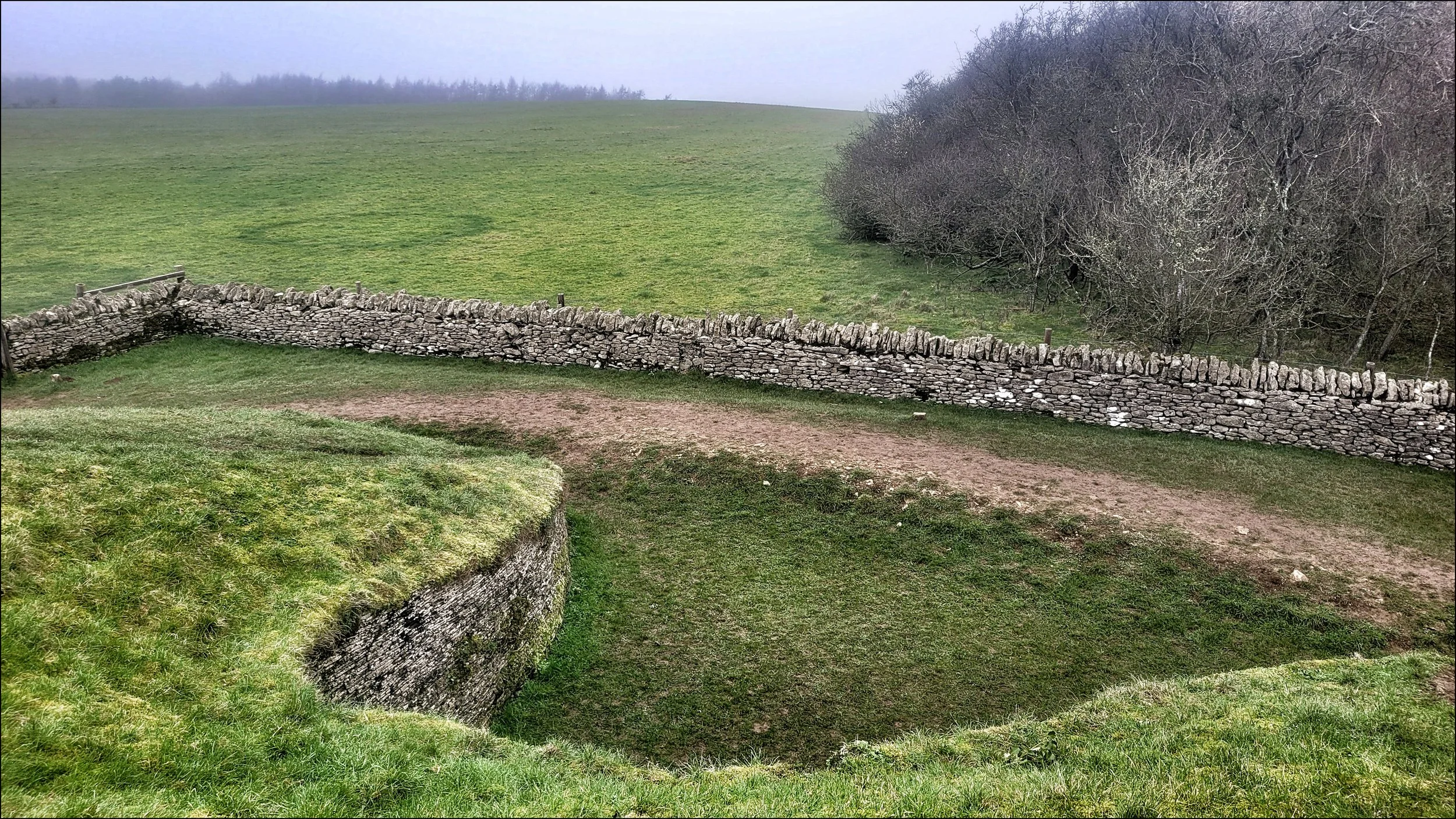
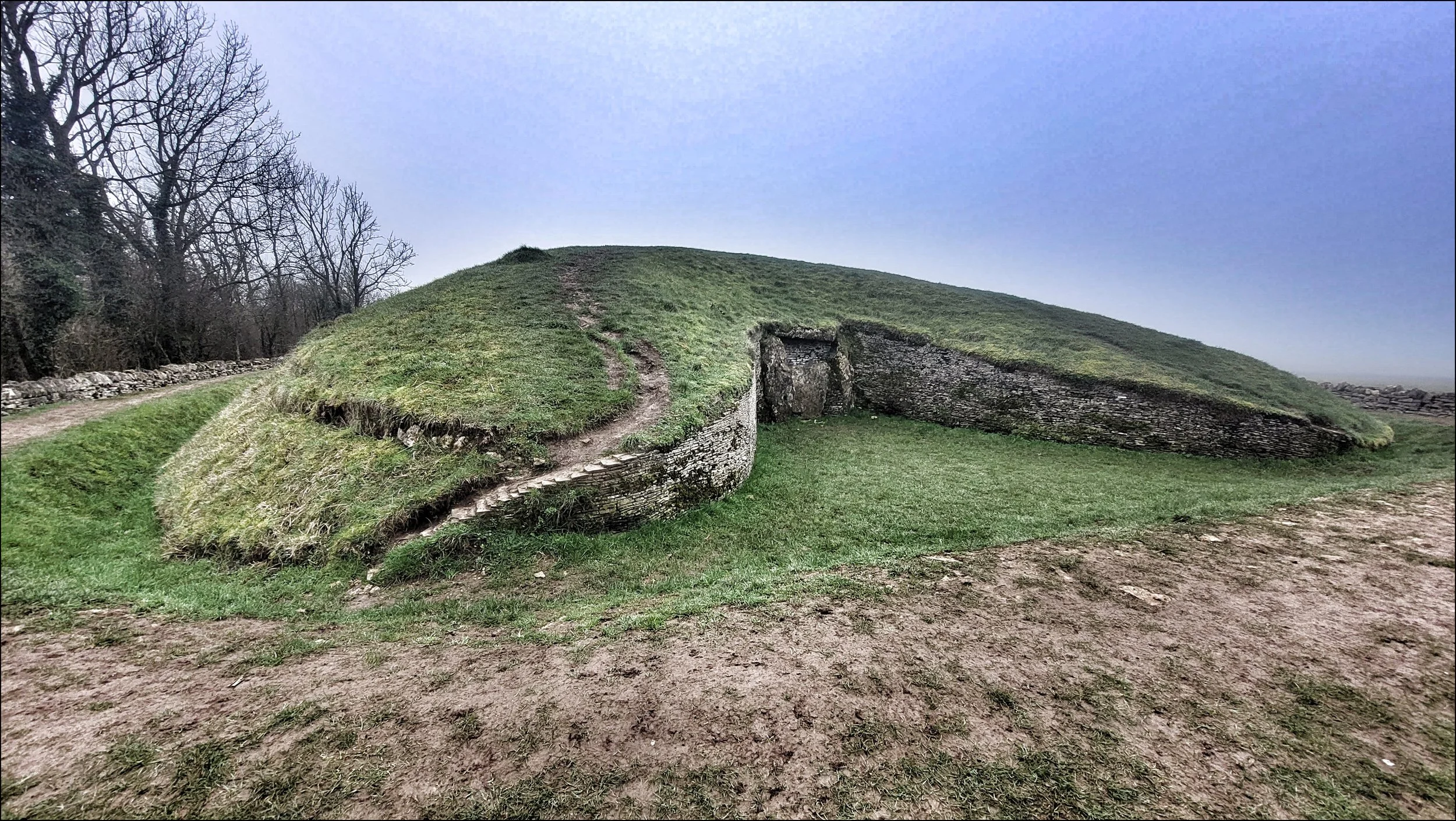
I made my way north to Cleeve Hill north east of Cheltenham to visit the largest and most famous of the Cotswold -Severn barrows. I parked in a wooded layby on a narrow lane with a brown sign indicating the continuation of the Cotswold Way. The pathway took me up a tree covered slope to a ridge of open farmland and then through more trees to the corner of a field where the footpath doglegged to the right to pass the huge compound of Belas Knap Long Barrow. My eyes were first drawn to the large sweep of the funneled forecourt which ate into the southern end of the barrow. At the recessed centre were three vertical slabs of stone under another acting as a lintel. This was a false entrance that had been blocked off long ago. Above it the mound rose up four metres and then gradually descended to a tapered end fifty five metres away to the north. The curving forecourt wall was clearly part of a restoration job from 1928 and continued behind the blocking stones placed there over five and half thousand years ago. I made my way around the barrow to find short passageways leading to smallish square chambers containing original uprights. Two of the chambers were positioned half way along on either side, with two more at the rear of the barrow at the north end. Remains of adults and children had been found in all four, as well as in a chamber behind the false entrance. The fortified ceilings looked alarmingly new and had compromised the atmosphere of these resting places. I climbed up onto the mound to view the landscape beyond the perimeter wall. There would have been a lot of activity and settlements around in Neolithic times. I scanned to the right where I could make out a couple of distinct circle markings in the adjacent field. They were close together and both about the size of a round house. I closed my eyes and suddenly the quiet of the landscape gave way to a soundscape of the rural life of long ago days.