Up on the Burren
24.07.2026
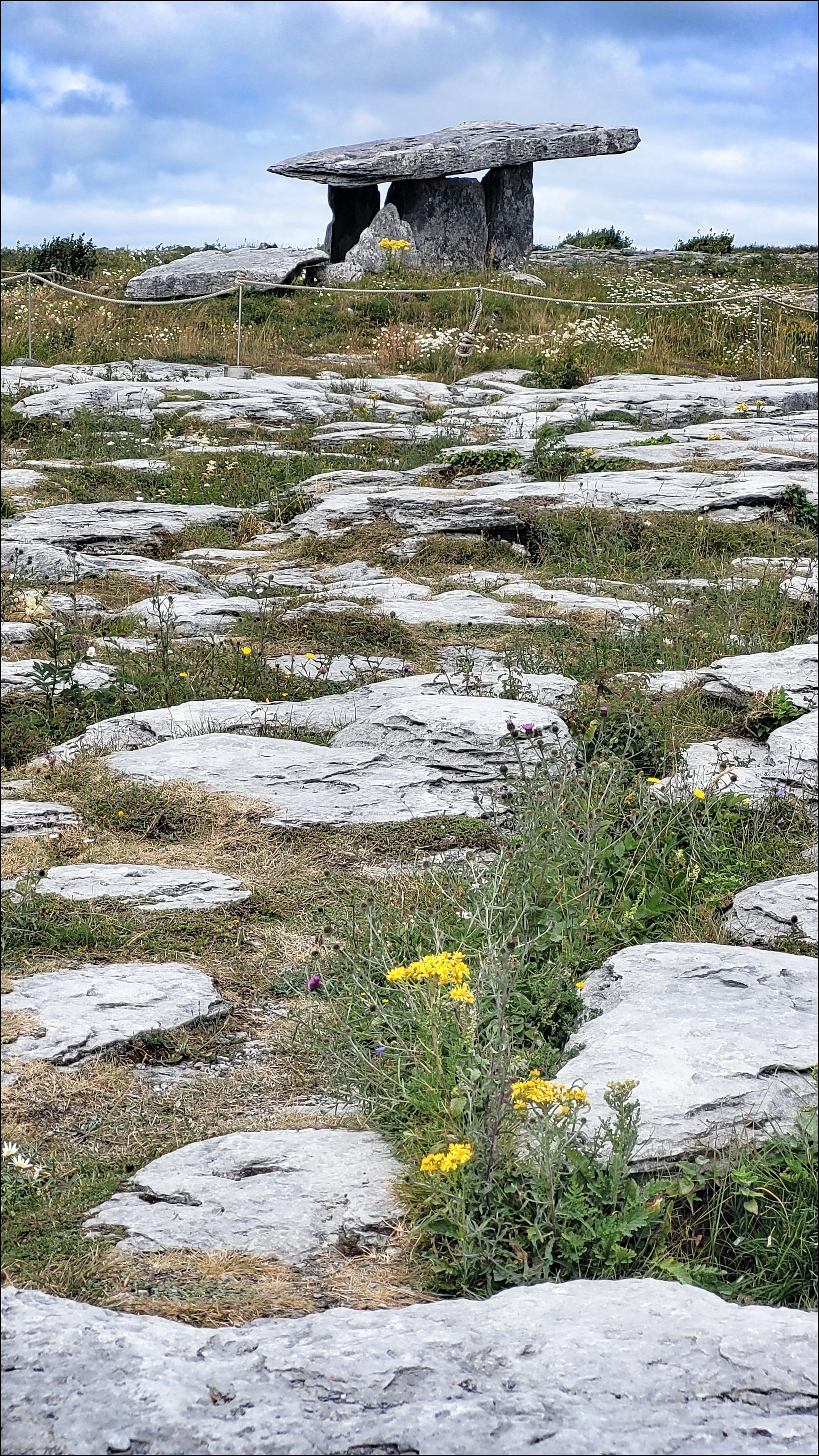
In the north west corner of County Clare a harsh barren landscape of exposed limestone pavement dominates the region. The hills and plateaus formed 325 million years ago have been difficult for human habitation and for animals to graze on, but traces have been left of an occupying culture some 5000 years ago. Some of these traces are in the form of burial chambers with some of them very challenging to get to.
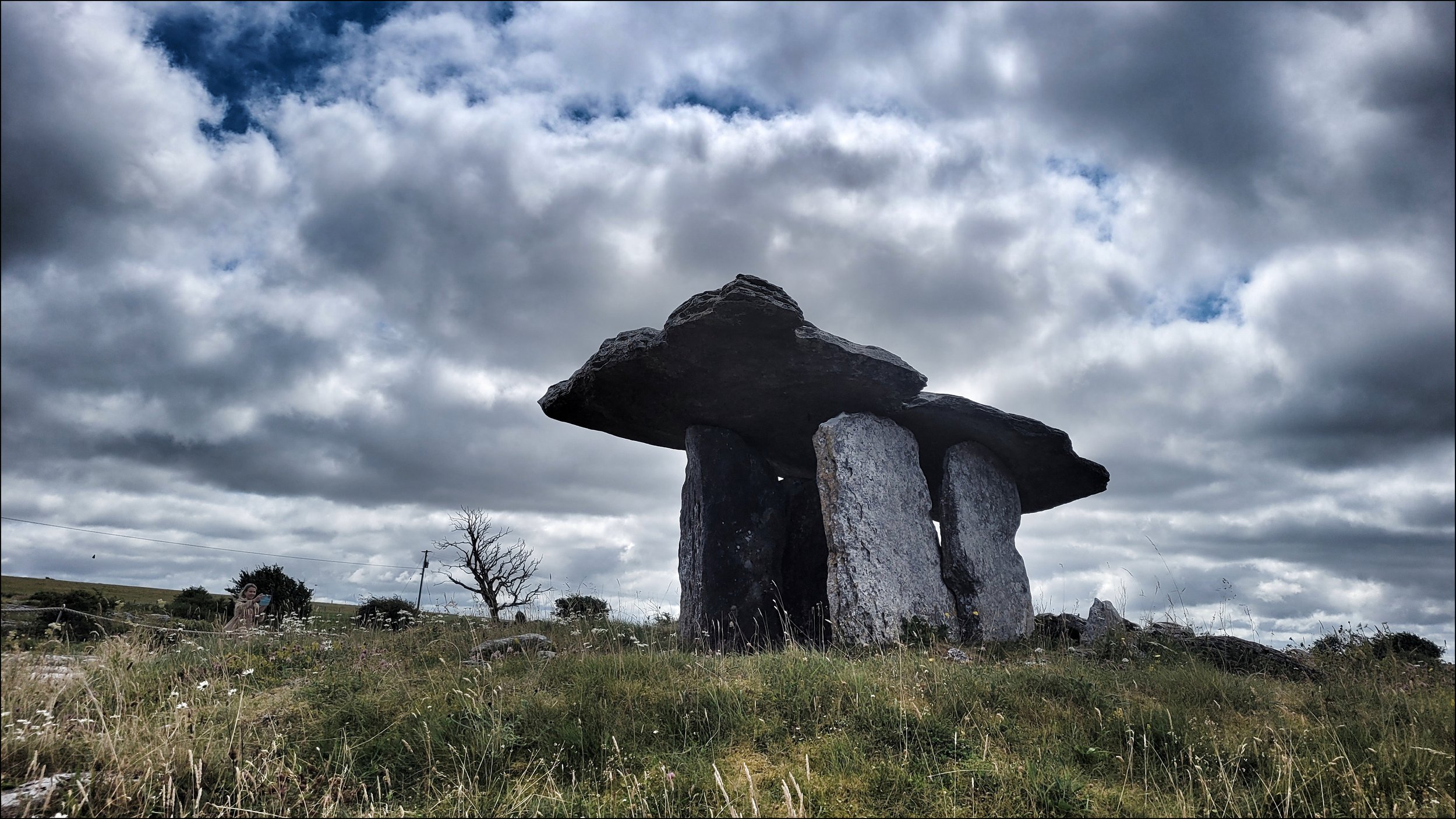
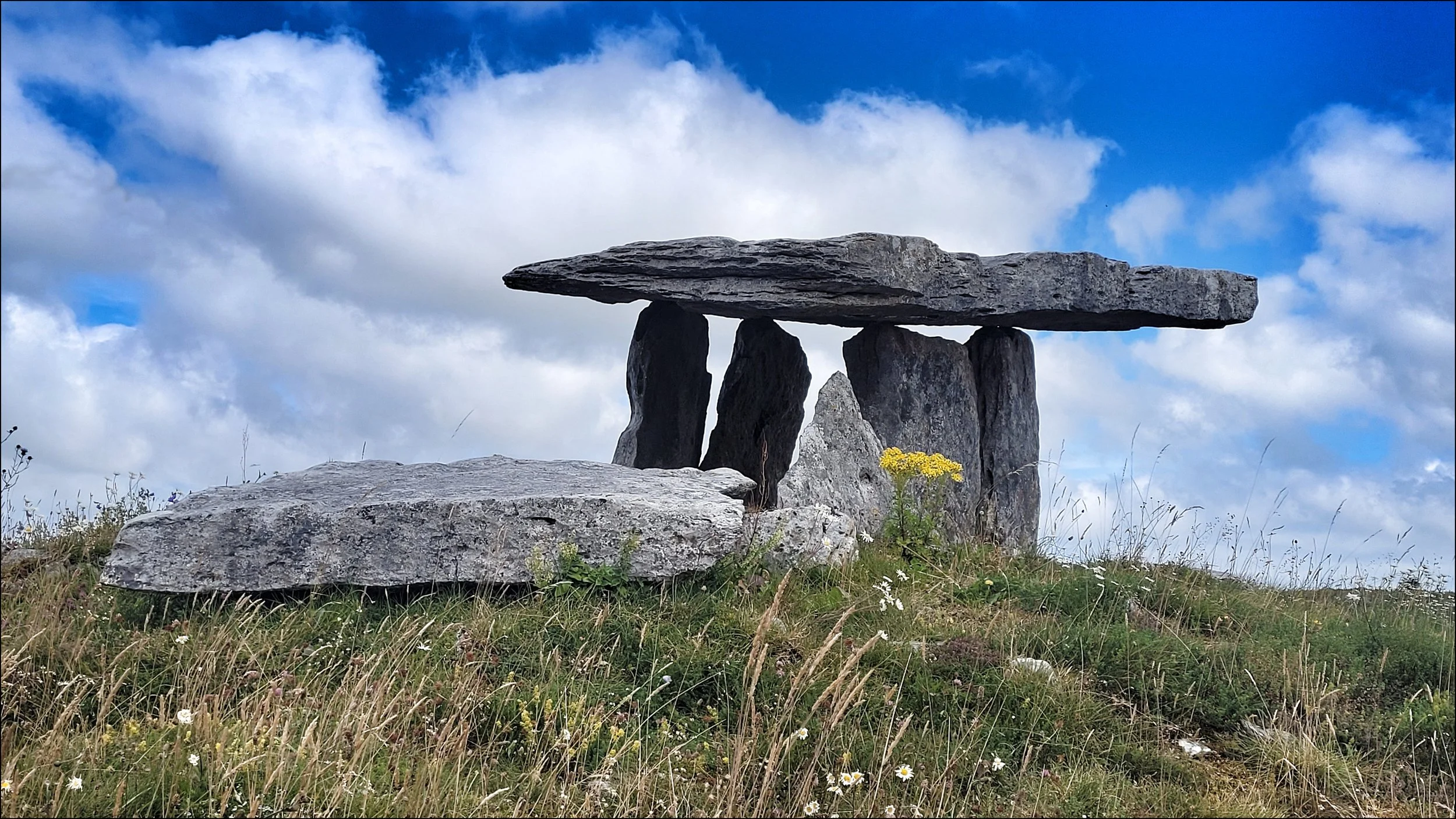
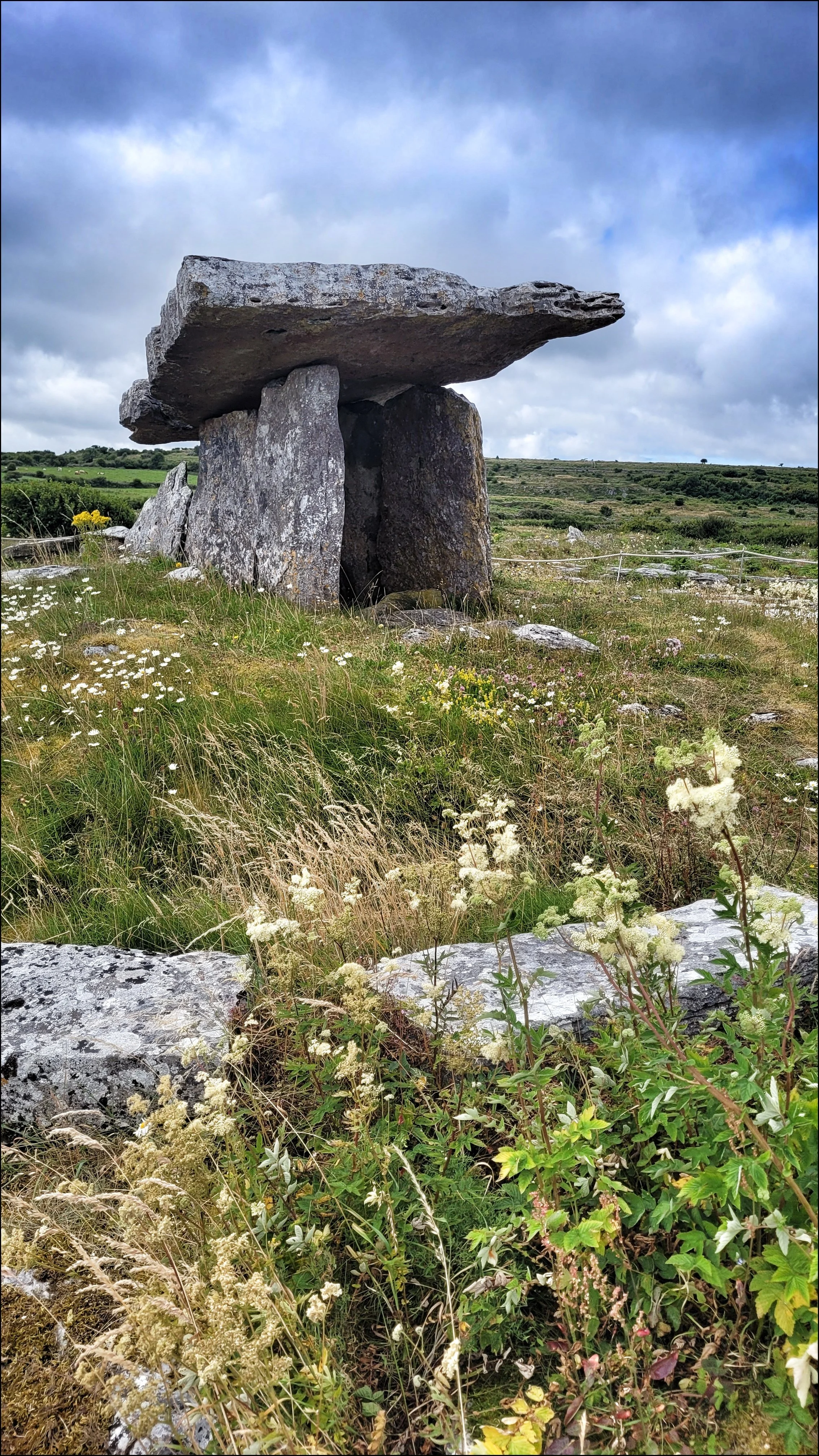
A quiet road up from Ballyallaban leveled off onto an eerie treeless plateau. Then suddenly a busy car park appeared on the left hand side with people spilling out of coaches and minibuses. They had come to see one of Ireland's more famous Neolithic sites, the portal tomb of Poulnabrone. A winding path leads up to an area of flat pavement where the large but elegant dolmen stands six feet tall, made up of four slender uprights supporting a sleek flat roofstone, twelve by nine feet. As with the building stone on Inishmore the limestone slabs were lifted and shaped very nearby and now stand wedged between the pavement. Lying on the ground only a few feet away on the south west side was a large upright now redundant.
The dolmen is now roped off enabling an array of wild flowers to grow around it's base. A warden from OWP was on hand and explained it was now a necessary measure to prevent further damage from people climbing on it and lighting fires inside it. He said it had given the tomb back the respect it deserved. Repairs to cracks had been undertaken after excavation work where the bones of thirty five individuals had been found along with pottery sherds, body adornments and stone tools, including a polished stone axe head. I had to agree with the warden. This was a resting place for the dead after all, and maybe more dolmens should be considered in this way.
The karst landscape continues on twenty minutes south to an area known as Parknabinnia. I passed a few farms and wondered how it was possible to make a living rearing livestock on this rocky and uneven ground. I found a layby on a narrow lane that put me within eyesight of one of the wedge tombs I had come to see. This was as different to Poulnabrone as it could be. There were no signs or information boards here and certainly no coaches.
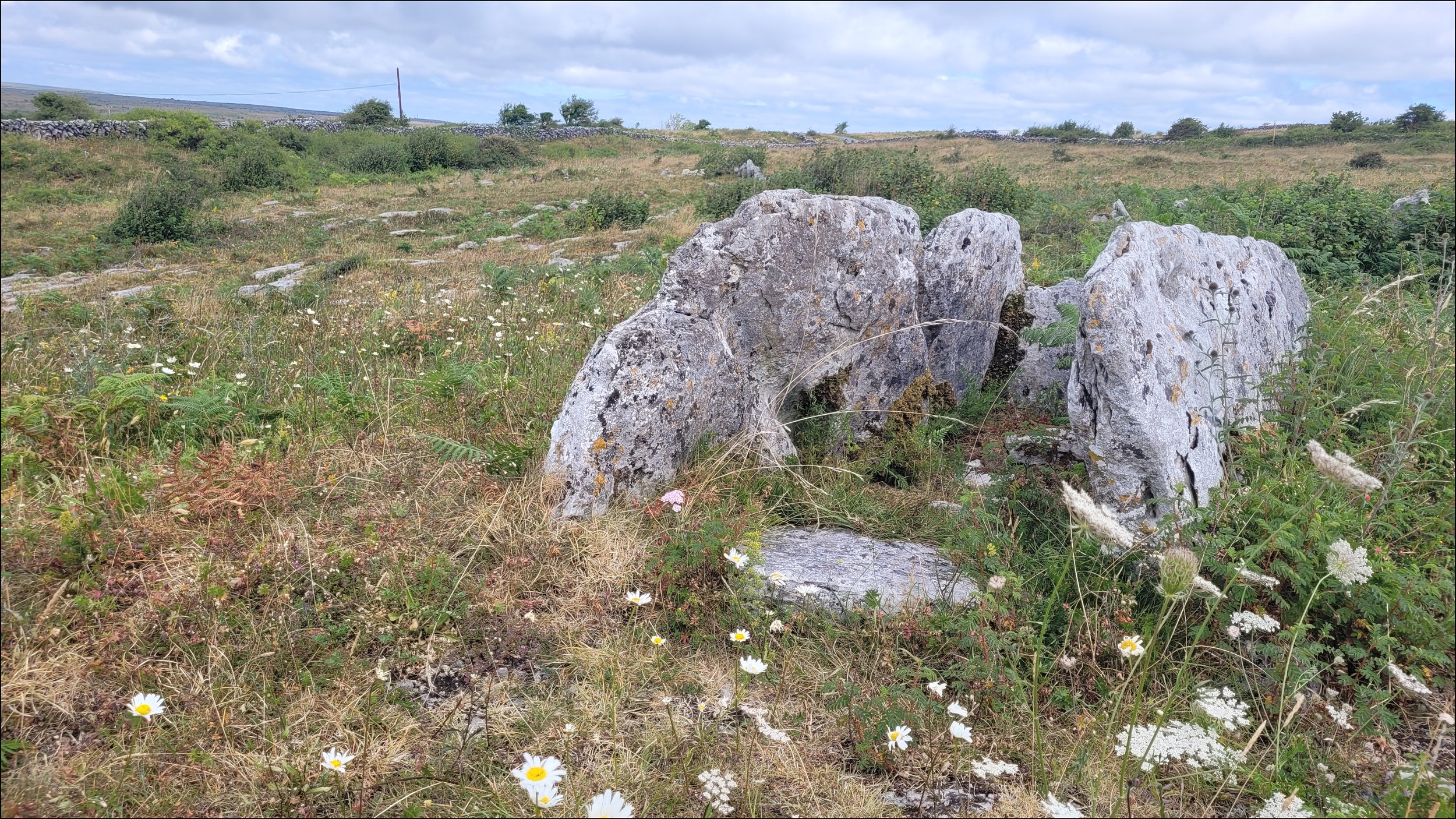
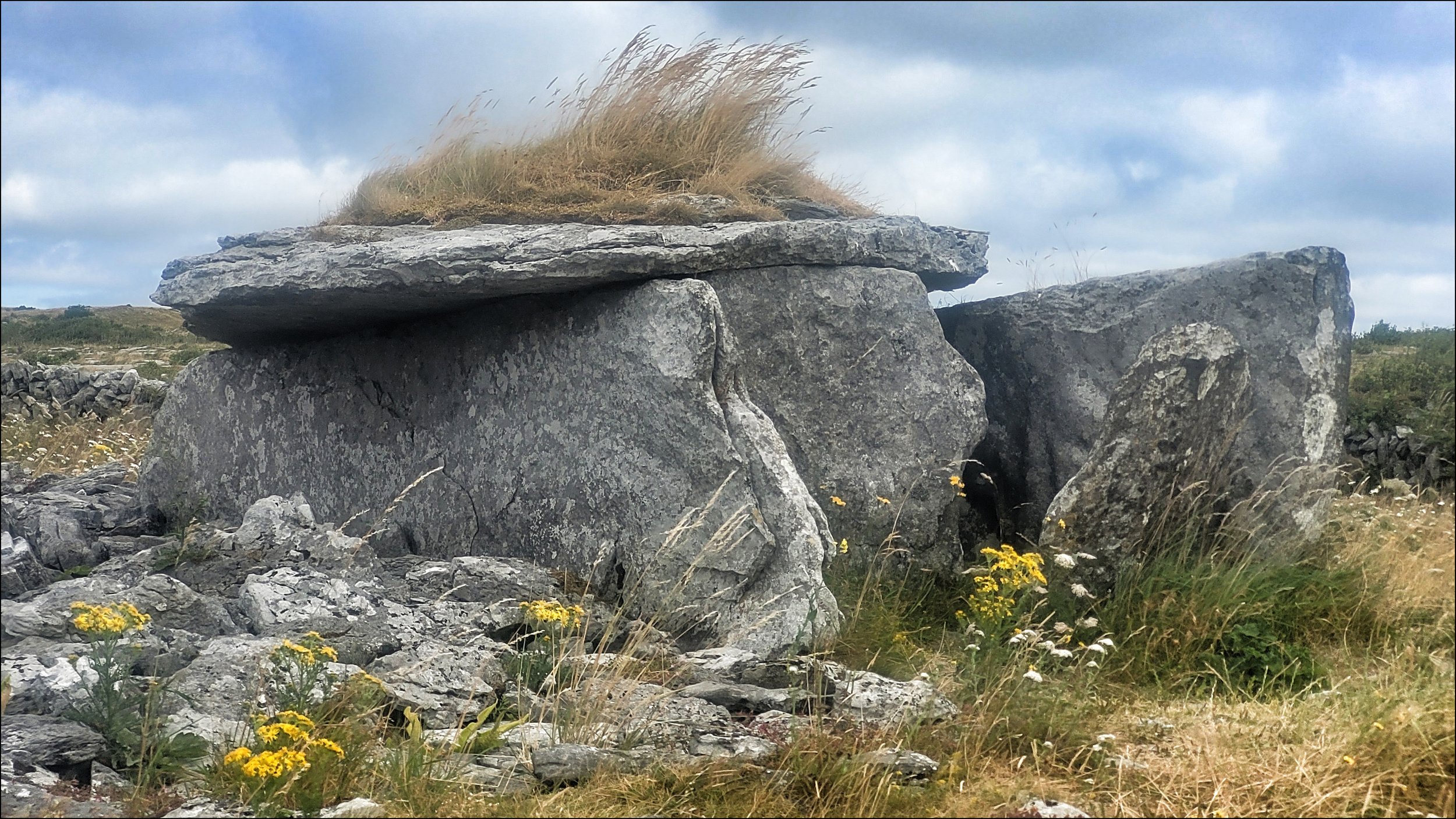
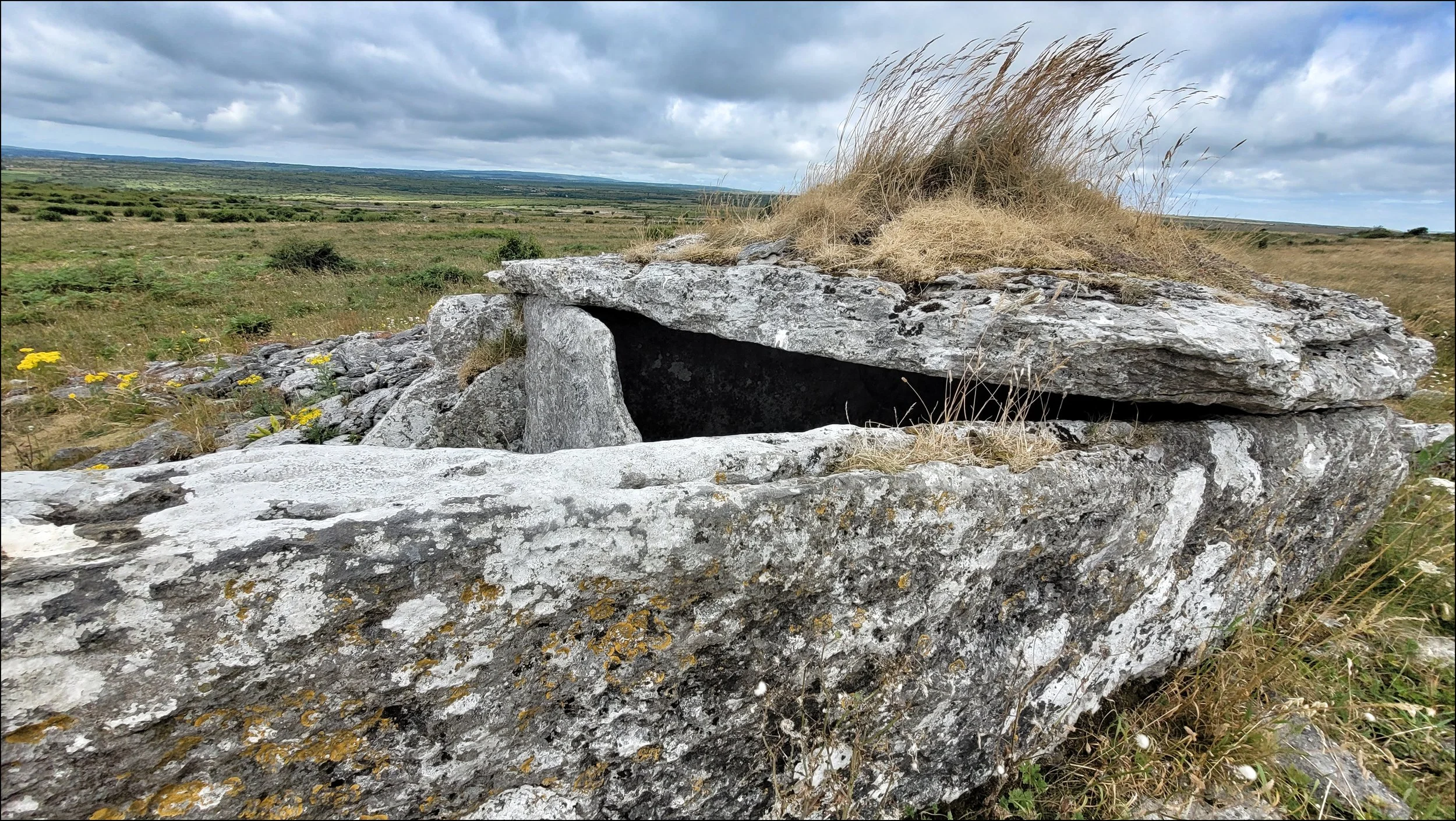
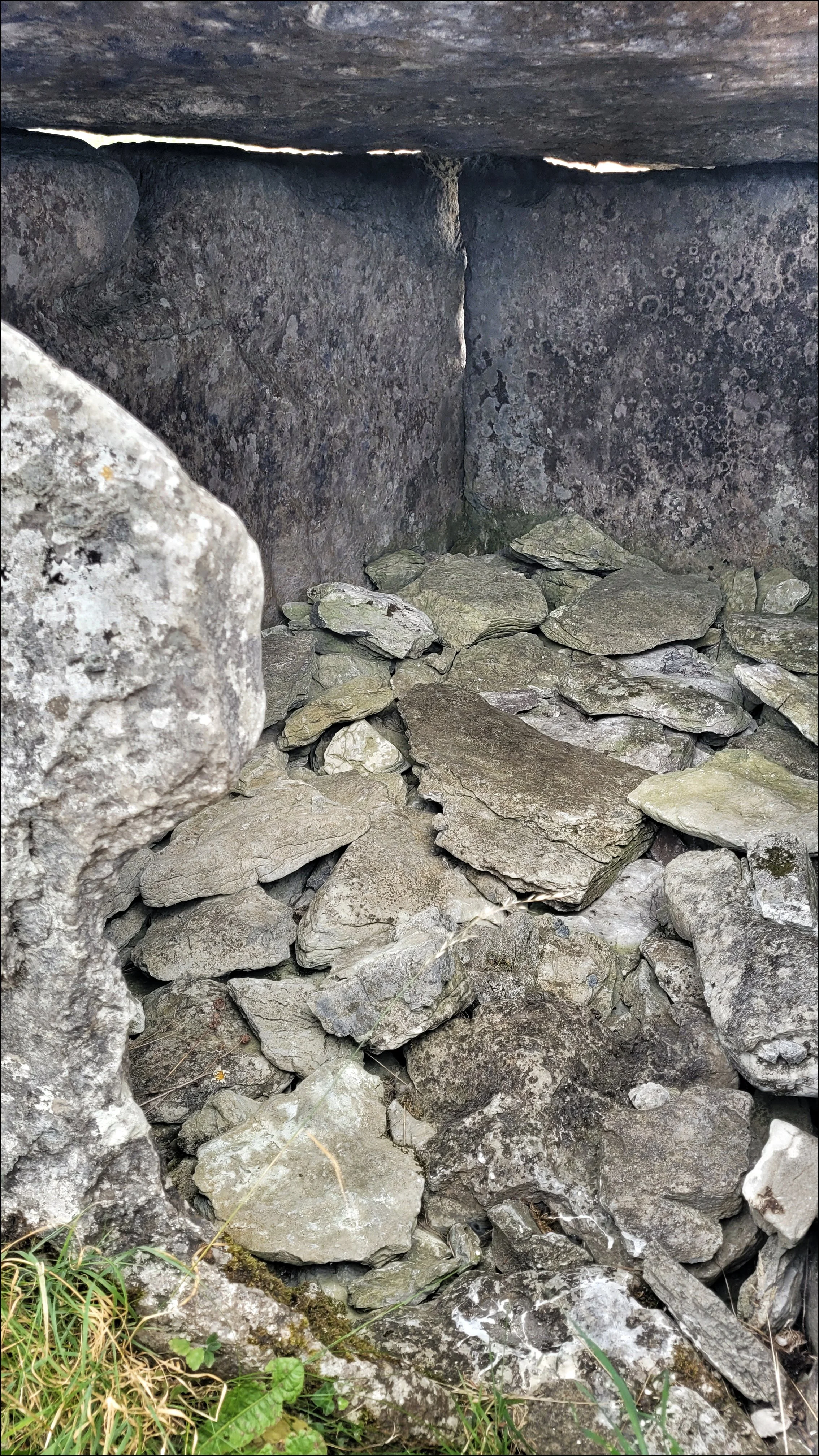
The gate was easy enough to get over but when I began to pick my way over the fern covered cracked pavement I knew it would be slow and risky. It took me twice as long as it should have to cover the distance over to Parknabinnia 5, a three sided cist with no roof stone. There was a scattering of other stones around and it looked in a pretty ruinous state. There were many tombs like this in a few square miles that lay hidden in undergrowth and covered by walls. I had an idea where they were and made an attempt to get to them but I was increasingly unsure of my footing. I began stumbling and bleeding from the bramble scratches on my legs and arms and decided I was on a fool hardy mission. Turning back was not something I was use to but this terrain was the worst I had encountered. On my way back I glanced over to the right and saw a box like structure in the distance. The route to it seemed no more difficult, so I made my way over to it to discover it was one of the better preserved tombs in the complex. Parknabinnia 3 was a four sided chamber of giant slabs very neatly assembled surrounded by a mound of loose stones. The roof stone was a near perfect fit and had a large tuft of grass growing from it. It looked quite comical and was the antidote I needed for the body assault I’d just been through. It was just possible to peer inside beyond the slab walls where the skeletons of an adult and child had been discovered. Weary and battered I returned to my van to lick my wounds and to contemplate how I had managed to avoid a broken ankle.